
Riberhus Slotsbanke (Riberhus Castle Bank)
Grassy castle banks, calm moats and Queen Dagmar’s bronze silhouette keep Ribe’s medieval royal fortress alive in a quiet, wide-open corner of town.
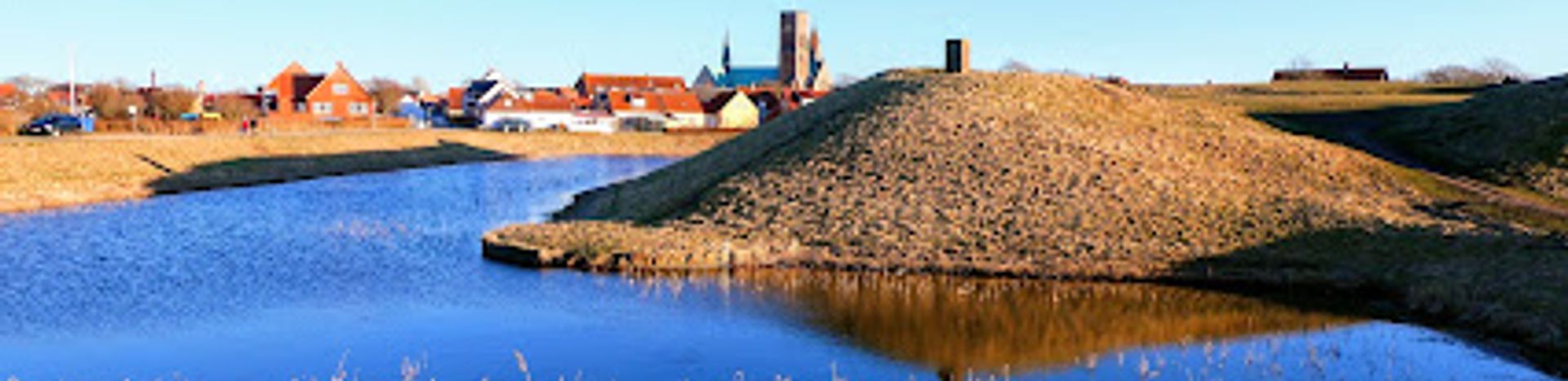
Riberhus Slotsbanke is a grassy castle mound on the edge of Ribe’s old town, where the royal stronghold of Riberhus once guarded Denmark’s southwest coast. Today the former fortress survives as moats, low ruins and the evocative bronze statue of Queen Dagmar, created by sculptor Anne Marie Carl-Nielsen. From the embankment, which rises about eight metres and measures roughly 90 by 90 metres, you get wide, wind-brushed views over Ribe’s red roofs, the flat marshland and the Wadden Sea hinterland, making this one of the town’s most atmospheric open-air historic sites.
A brief summary to Riberhus Slotsbanke
- Erik Menveds Vej, Ribe, 6760, DK
- Click to display
- Duration: 0.5 to 1.5 hours
- Free
-
 Outdoor
- Mobile reception: 4 out of 5

Know before you go
Hi, I'm Eve. Here are a few practical things to know before exploring Riberhus Slotsbanke.
- Allow extra time to walk a full loop around the top of the bank; the changing views over Ribe and the surrounding marshes are one of the site’s main highlights.
- Bring a light jacket or windproof layer, as the exposed mound can feel breezy even on warmer days, especially along the moat and open sides.
- Look for the low stone remains of the old writing room on the eastern edge and use on-site information boards to picture where the rest of the castle once stood.
- Photographers should aim for early morning or late afternoon when the low sun adds depth to the embankment and casts dramatic light on the Queen Dagmar statue.
- Combine a visit with a stroll through Ribe’s old town and cathedral area; the short walk between them helps connect the castle bank to the wider medieval landscape.
Do you manage this location?
Take control to get all the benefits, like improved information, better appearance, and stronger visibility across AI-powered discovery. Learn more
Activate your presence
Getting There
-
Regional train and walking
From Esbjerg, take a regional train to Ribe Station, with departures typically two to three times per hour and a travel time of about 35–40 minutes. A standard adult single ticket usually costs around 60–80 DKK depending on time and ticket type. From Ribe Station, allow roughly 10–15 minutes on foot through the historic centre along mostly flat, paved paths; the approach includes some cobblestones, which may feel uneven for wheelchairs or prams.
-
Car from Esbjerg and short walk
Driving from central Esbjerg to Ribe takes about 30–40 minutes via main roads across flat countryside. Fuel costs will vary, but expect roughly 25–40 DKK each way in fuel for a small car at typical Danish prices. In Ribe, public parking areas are available within a 10–15 minute walk of Riberhus Slotsbanke; some spaces are time-limited or paid, so always check local signs. The final stretch to the castle bank is on foot along level streets and paths, with gentle slopes up the mound itself.
-
Local bus within Ribe area
Local and regional buses connect Esbjerg and nearby towns with Ribe in about 40–55 minutes, depending on route and stops. Single tickets generally cost in the range of 40–70 DKK and can usually be bought on board or via regional transport apps. Most buses stop near Ribe’s historic centre; from typical stops it is approximately 10–15 minutes’ walk on flat ground to reach Riberhus Slotsbanke, making this a practical option if you prefer not to drive.
For the on-the-go comforts that matter to you
-
 Seating Areas
-
 Trash Bins
-
 Information Boards
Discover more about Riberhus Slotsbanke
From Royal Stronghold to Gentle Green Hill
Riberhus Slotsbanke looks modest today – just a square grassy mound ringed by water and scattered ruins – yet for centuries this was one of Denmark’s key royal castles. The fortress of Riberhus rose here in the Middle Ages on the western edge of Ribe, guarding trade routes, controlling access to the marshes and symbolising royal power across Jutland. Kings stayed here regularly, and the castle gave its name to the surrounding royal fief, underlining its political weight.By the 15th century the proud stronghold had slipped into neglect. Later renovations extended its life, but after the Swedish wars of the 17th century the castle’s strategic role faded, and its stonework was gradually stripped and reused in churches and buildings around the region. Time, weather and human hands reduced towers and halls to low walls and buried foundations, leaving only the earthen bank and moat as clues to its former scale.Moats, Ruins and a Sculpted Queen
Walking up onto the plateau, you stand on an almost square embankment about 90 metres on each side and eight metres above the surrounding meadows. The shape is still clearly defined, with grassy slopes dropping to water-filled moats that were cleaned and restored in the 20th century to match the medieval layout. On the eastern side you can pick out the remains of the old writing room, once part of the castle’s administrative heart.The most eye-catching feature, however, is the bronze statue of Queen Dagmar at the southern corner. Sculpted by Anne Marie Carl-Nielsen and unveiled in 1913, it shows the beloved queen gazing toward Ribe and the marshes beyond. Her calm, slightly inward expression and flowing cloak give the statue a quiet gravity that matches the open landscape, tying together legend, monarchy and the soft Danish light that washes across the bank.Stories of Queens, Kings and Lost Power
The history of Riberhus is tightly woven with Denmark’s medieval fortunes. Built in the high Middle Ages, the castle became one of the crown’s most important residences in Jutland. Monarchs negotiated alliances and administered royal lands from here, and its name appears in key political documents that shaped the kingdom. Over the centuries, the stronghold was pawned, reclaimed and refortified as dynasties rose and fell.Queen Dagmar, remembered as gentle and just, is closely linked with the site in Danish tradition. Her life and early death have inspired ballads, giving Riberhus a layer of romance that contrasts with the harder stories of warfare and taxation. Standing by her statue, it is easy to imagine royal processions crossing the drawbridges and courtiers moving between timbered halls that no longer exist, their outlines now hinted at only by slight ridges in the turf.Landscape Vistas and Quiet Contemplation
Beyond its historical interest, Riberhus Slotsbanke is simply a beautiful place to pause. From the top of the bank, Ribe’s cathedral towers rise above orange-tiled rooftops, while in the opposite direction the landscape opens into wide sky, low fields and the distant Wadden Sea. Changing weather is part of the experience: bright days bring sharp views and long shadows, while mist or fast-moving clouds lend the ruins a softer, more introspective mood.The site invites unhurried wandering rather than checklist sightseeing. Grassy paths encourage slow circuits around the rim, with changing angles on town and marsh. Benches and low walls offer spots to sit, feel the wind and listen to birdsong mixed with the faint sounds of Ribe. It is a place where history feels spacious rather than crowded, with enough room for the imagination to fill in vanished walls.An Open-Air Chapter of Ribe’s Story
Today Riberhus Slotsbanke works as an informal outdoor extension of Ribe’s historic core. There are no grand visitor facilities or dense layers of interpretation; instead, simple information panels and the visible earthworks guide you. The combination of ruin, sculpture and landscape makes it particularly rewarding for photographers, sketchers and anyone who enjoys reading history directly from the ground.Because the site is open and gently sloping, it can be visited in many seasons: in spring and summer the banks are lush and green; in autumn the low sun floods the moat with golden reflections; in winter the stark outlines of the mound and queen take on a more dramatic character. However long you stay, the sense of standing where a royal castle once dominated the horizon remains the defining impression of Riberhus Slotsbanke.Explore the best of what Riberhus Slotsbanke has to offer













More about The North Sea Islands
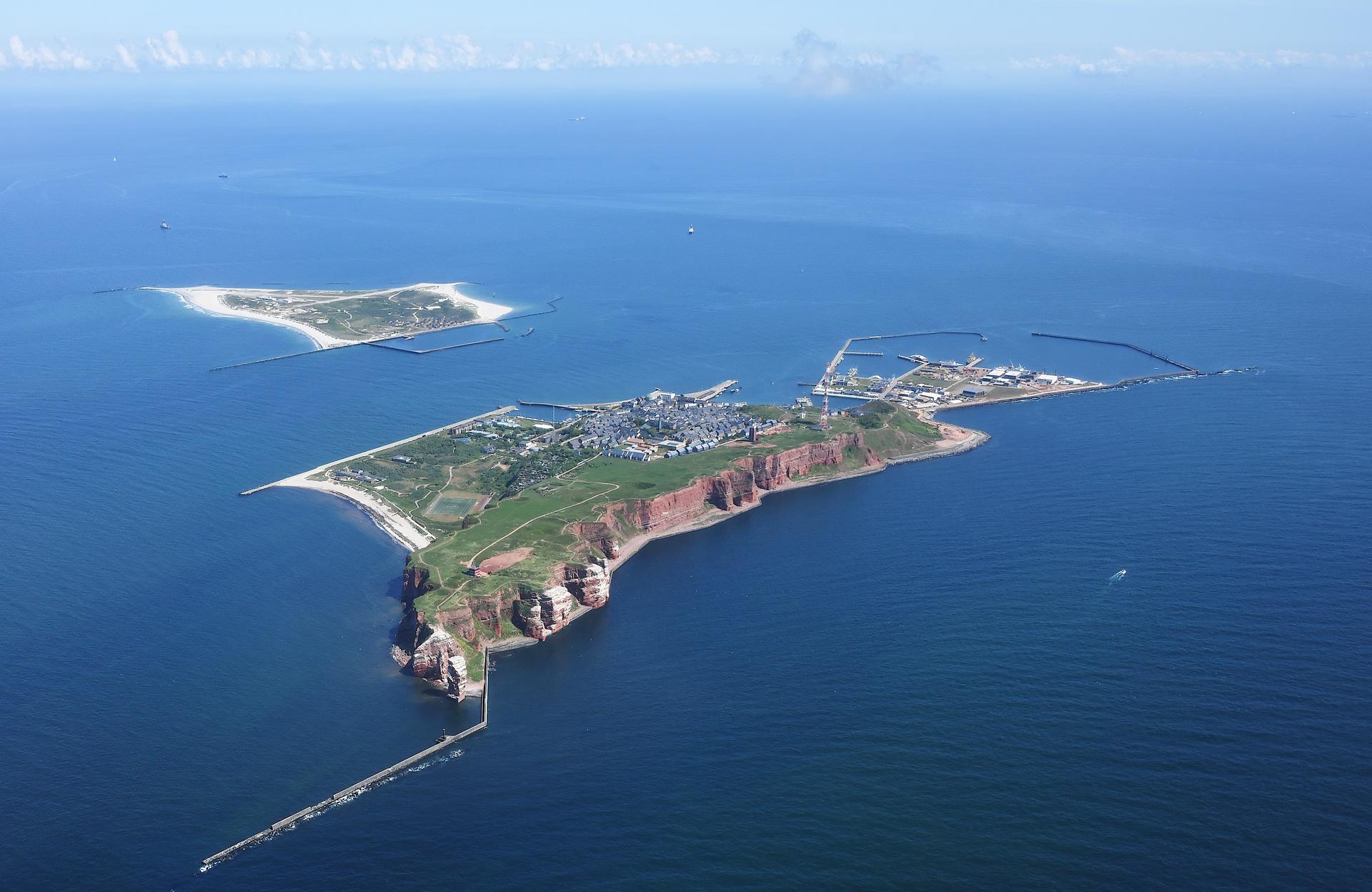
Discover the North Sea Islands of Denmark: idyllic sandy beaches, vibrant local culture, and unique natural landscapes await you on Fanø, Rømø, and Mandø.
Tell me more about The North Sea Islands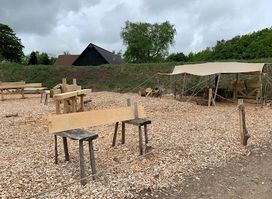
A compact Viking stronghold on Ribe’s outskirts, Vikingborg offers an atmospheric glimpse of fortifications and frontier life in Denmark’s oldest town.
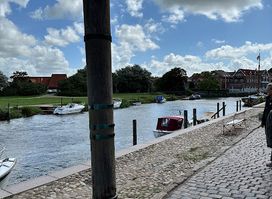
A slender wooden column on Ribe’s harbour that turns tranquil waterfront views into a powerful, six-metre-high lesson in storm surges, memory and resilience.
