
Cisternerne – The Cisterns in Søndermarken
A vast 19th‑century water reservoir beneath Søndermarken, now a cool, dripping underground art space where concrete vaults, stalactites and contemporary installations meet.
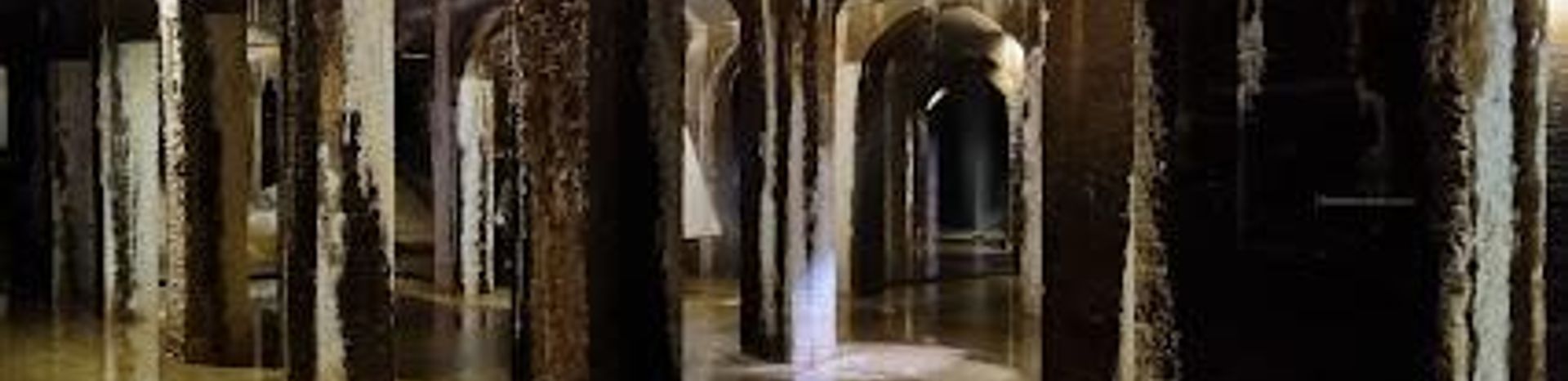
Hidden beneath Frederiksberg Hill in Søndermarken park, Cisternerne is a former 19th‑century water reservoir transformed into a subterranean exhibition space for contemporary art. Once holding up to 16 million litres of drinking water for Copenhagen, it now offers a cool, damp, cathedral‑like maze of columns, pools, and Denmark’s only true dripstone cave, where site-specific installations play with darkness, echoes, and the slow reclaiming power of nature.
A brief summary to Cisterns in Søndermarken
- Roskildevej 25A, Frederiksberg, 2000, DK
- Click to display
- Click to display
- Duration: 1 to 2 hours
- Mid ranged
-
 Indoor
- Mobile reception: 3 out of 5

Know before you go
Hi, I'm Eve. Here are a few practical things to know before exploring Cisterns in Søndermarken.
- Bring a warm layer and closed shoes; the temperature stays around 8–10°C year-round and the floor can be damp and uneven.
- Check current exhibition dates and opening times in advance, as Cisternerne often closes between large site-specific installations.
- Allow time to wander Søndermarken and enjoy views of Frederiksberg Palace before or after your underground visit.
- Photography is possible but challenging; consider using a camera or phone that handles low light well rather than flash.
- If you are sensitive to humidity, be aware that the air is almost saturated and there may be light dripping throughout the space.
Do you manage this location?
Take control to get all the benefits, like improved information, better appearance, and stronger visibility across AI-powered discovery. Learn more
Activate your presence

Getting There
-
Public transport from central Copenhagen
From central Copenhagen, take an S-train to Valby Station and transfer to bus line 6A or 26 towards Frederiksberg; the ride to the stops near Søndermarken takes about 10–20 minutes depending on traffic. A standard two-zone ticket or city travel card covers the journey, typically costing around 24–30 DKK one way. Buses run frequently during the day, but services thin out later in the evening, so check the timetable if you plan a late visit.
-
Metro and short walk from Frederiksberg area
If you are already in the Frederiksberg district, use the M1 or M2 metro to Frederiksberg station and continue by bus or on foot through the neighbourhood towards Søndermarken; the onward trip usually takes 15–25 minutes in total. A single metro ticket within the city centre costs about 24–30 DKK, and the walk from nearby stops is along paved urban streets and park paths that are generally suitable for most visitors.
-
Cycling within Copenhagen
Cisternerne sits in a very bike-friendly part of Copenhagen, about 15–20 minutes by bicycle from City Hall Square for most riders. Dedicated cycle lanes cover almost the entire route, but expect mild hills as you approach Frederiksberg Hill and be cautious near the busy zoo junction. City bikes and rental bicycles are widely available, with typical short-term rentals starting around 75–150 DKK for a few hours.
-
Taxi or rideshare within the city
A taxi from central Copenhagen to Søndermarken usually takes 10–20 minutes depending on traffic. Fares commonly range between 120 and 200 DKK one way, with supplements in the late evening and on weekends. Taxis can drop you close to the park entrances, but they cannot enter the park itself, so expect a brief walk on level paths to reach the glass pyramid entrance.
For the on-the-go comforts that matter to you
-
 Restrooms
-
 Seating Areas
-
 Information Boards
-
 Trash Bins
Discover more about Cisterns in Søndermarken
A subterranean world beneath a city park
Buried below the lawns and tree-lined paths of Søndermarken park lies Cisternerne, a vast underground reservoir turned art space directly beneath Frederiksberg Hill. Descending through discreet glass pyramids, you swap daylight for semi-darkness, cool air and the echo of dripping water. The concrete vaults stretch out in long corridors supported by rows of pillars, creating a sense of walking into a hidden cathedral under the city.Covering more than four thousand square metres, the cisterns consist of interconnected chambers that were once completely filled with water. Today, shallow pools, reflections, and a fine mist in the air remind you that this monumental structure was engineered for one essential purpose: securing clean drinking water for a growing capital.From cholera crisis to engineering marvel
Cisternerne was conceived in the mid‑19th century after serious water supply problems and a devastating cholera outbreak pushed Copenhagen to rethink how it stored and distributed drinking water. Excavation began in 1856, and within three years a new underground reservoir system could hold up to 16 million litres of water, dramatically improving public health and pressure in the pipes reaching upper floors.Originally an open basin, the reservoir was later sealed with a molded concrete roof to reduce contamination risks. For decades it formed a crucial part of the city’s infrastructure until changing technology and new waterworks made it redundant. Its role in the water network ended in 1933, and by 1981 the cisterns were finally drained, leaving behind an empty but extraordinary shell of brick and concrete.Nature carving a dripstone cave in concrete
Once the water disappeared, a slower transformation began. Moisture seeping through the concrete ceiling dissolved minerals and redeposited them as delicate formations. Over decades this process created stalactites and stalagmites that hang from beams and rise from the floor like something from a natural limestone cave. Cisternerne is now regarded as Denmark’s only real dripstone cave, even though it is entirely man‑made at its core.These dripstones are both beautiful and fragile, a visible sign of the building’s gradual decay. They underline how the structure has shifted from being a tool of human control over water to a space where nature and architecture are entwined. Moving through the chambers, you notice tiny crystal-like fringes along edges and uneven textures on the ceiling where water continues its slow work.Immersive art in darkness and damp
In the 1990s, the empty cisterns were reborn as an exhibition venue. Initially used as a museum of modern glass art, they have since become part of Frederiksberg Museums and now host one major site-specific art project at a time. Artists are invited to respond to the unusual climate and architecture, often incorporating water, sound and carefully controlled light.Installations may fill sections of the floor with reflective pools, create glowing corridors of color, or add subtle soundscapes that play with the long echo of the vaults. The almost total absence of daylight means that even a single spotlight or lantern feels dramatic. Exhibitions typically run seasonally, with periods of closure in between to prepare the space, so each visit can be a quite different multi-sensory experience.A sensory encounter in Søndermarken
Visiting Cisternerne is as much about atmosphere as it is about visual art. The temperature hovers around 8–10°C year-round, the air is close to saturated with humidity, and your footsteps reverberate through the chambers. The smell is damp, mineral, and slightly earthy, an underground contrast to the fresh greenery in the park above.The transition from sunlit Søndermarken into the shadowy depths gives the visit a ritual quality: you enter, acclimatise to the gloom, and gradually pick out details in the darkness. Above ground, Frederiksberg Palace and the park’s avenues provide a stately backdrop; below, you explore a former lifeline of the city, now dedicated to contemplation, art and the quiet drama of water, stone, and time.Planning your time in the cisterns
Cisternerne is compact enough to explore in under an hour, yet rich enough in detail to reward a longer, slower visit. The floor can be wet and uneven in places, and the low lighting encourages a careful pace. Exhibitions may include sound, projections, or small boats and walkways over water, but the core experience remains the same: an immersive, low‑lit journey through a once hidden piece of Copenhagen’s infrastructure, now one of its most atmospheric cultural spaces.Explore the best of what Cisterns in Søndermarken has to offer













More about North Zealand
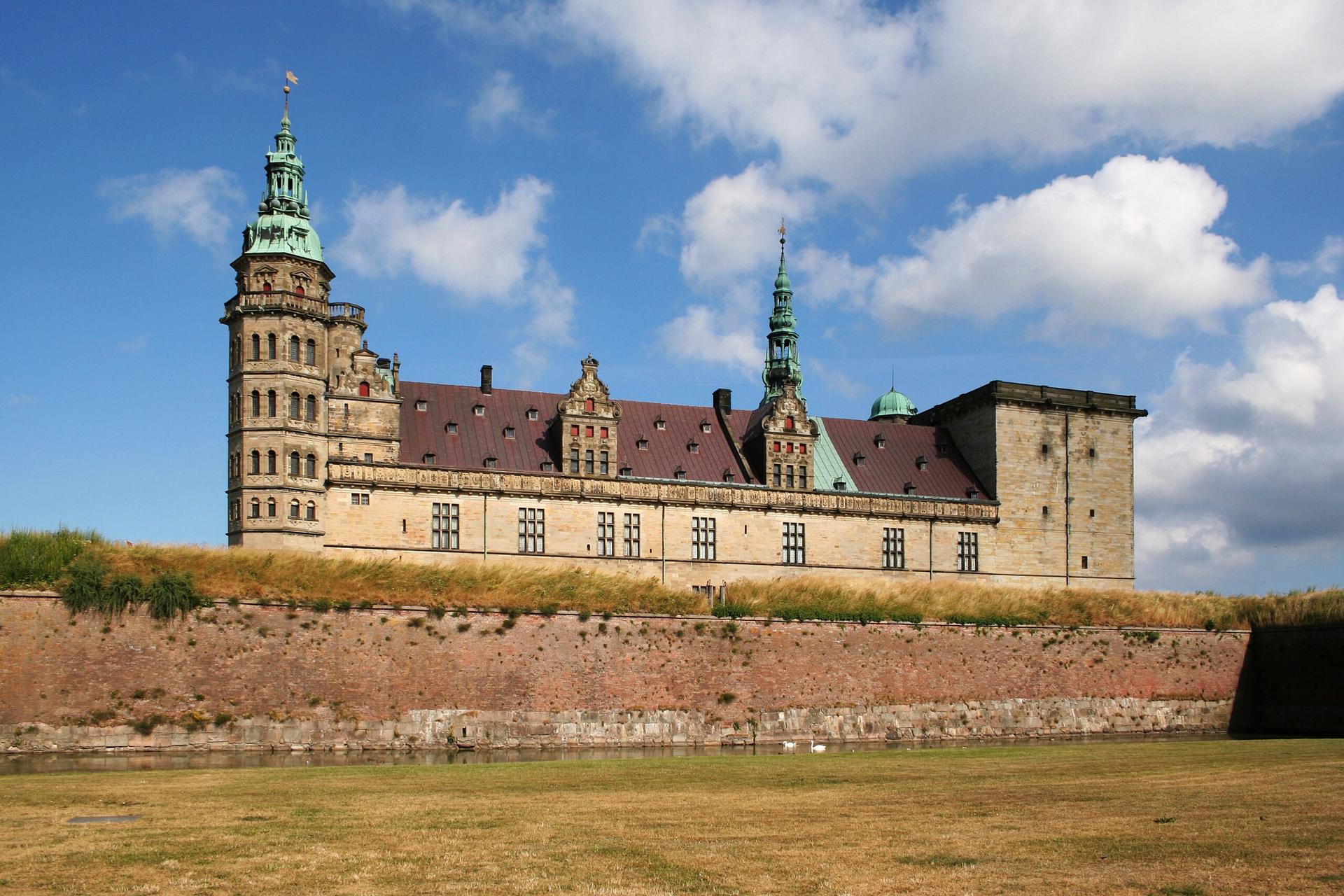
Explore North Zealand, Denmark's enchanting region of castles, beaches, and royal estates, perfect for history buffs, nature enthusiasts, and seaside lovers.
Tell me more about North Zealand
Gritty, creative and endlessly watchable, Istedgade is Vesterbro’s main strip and Copenhagen’s classic showcase of everyday city life with an edge.
Historic canal in Indre By weaving past royal palaces, stately bridges, and cultural icons—offering tranquil walks and quintessential Copenhagen views.
