Det Ny Teater
A lavish 1908 Belle Époque playhouse turned musical powerhouse, Det Ny Teater blends historic grandeur, modern stagecraft and an atmospheric city passage in central Copenhagen.
A Belle Époque landmark in Copenhagen’s theater district
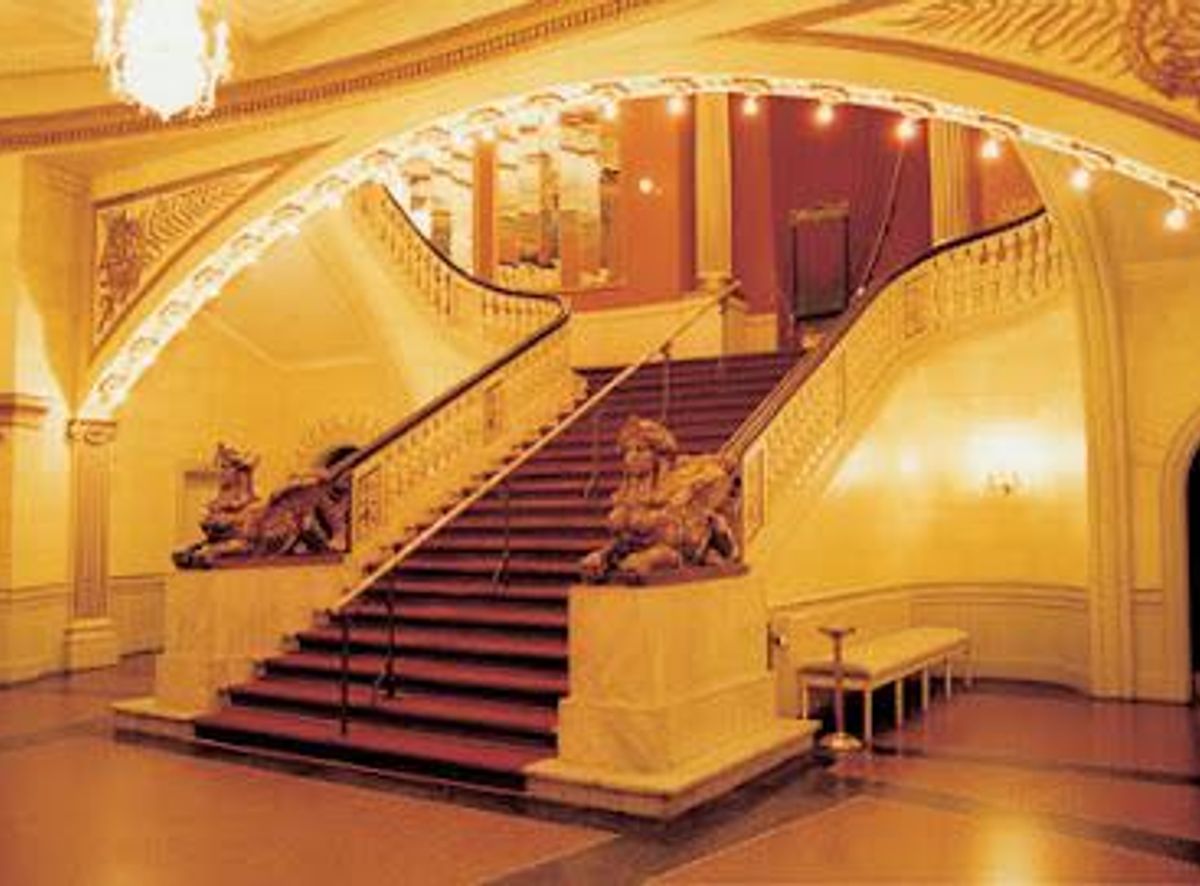
Det Ny Teater rises from Gammel Kongevej as a richly ornamented palace of culture, its stone façade anchoring a historic passage that links Vesterbrogade with Frederiksberg’s main boulevard. Step inside and you are immediately immersed in early‑20th‑century grandeur: sweeping marble staircases, gilded balustrades, and glittering chandeliers set the tone long before the curtain goes up. Built in 1908 as one of Denmark’s largest and most ambitious theatres, it quickly became a prestigious address in the city’s flourishing entertainment quarter. The building is more than just a single auditorium. Conceived as a complete urban complex, it integrates theaters, foyers and surrounding properties into a continuous architectural statement. High ceilings, richly painted ceilings and decorative plasterwork create a sense of ceremony from the entrance hall all the way to the upper levels. Even on a quiet afternoon, wandering its corridors gives a vivid impression of Copenhagen’s Belle Époque confidence and taste.From early drama to a powerhouse of musical theatre
When Det Ny Teater opened in 1908, it was second only to the Royal Theatre in size, and from the outset it aimed to compete in artistic ambition. In its early decades it staged contemporary drama, classics and large ensemble pieces, helping to promote new Danish actors and playwrights. Directors gradually experimented with programming, mixing European works with local productions and using the generous stage to mount visually bold sets. By the mid‑20th century the theatre had become an influential stage in Danish cultural life, often regarded as a livelier counterpart to the more formal national theatre across town. Financial difficulties eventually forced a closure around 1990, but an extensive restoration and a clear new focus brought Det Ny Teater roaring back in 1994. Since then, it has concentrated on grand‑scale musical theatre, presenting elaborate productions of international hits alongside European operettas, underlining its role as a specialist house for lavish, music‑driven storytelling.Inside the main auditorium and its hidden stages
The heart of Det Ny Teater is its main auditorium, seating roughly a thousand people beneath a richly decorated ceiling. Horseshoe‑shaped balconies, plush seats and traditional boxes hug the proscenium, creating intimate sightlines despite the room’s size. The stage itself is equipped with advanced technology, reflecting a long tradition of innovation that once included one of the country’s first revolving stages. Today complex set changes, dynamic lighting and large orchestras are routine, allowing productions to rival international West End‑style shows. Beyond the principal hall, smaller spaces such as an underground stage and a ballet or studio hall host more intimate performances and special events. These areas often reveal a different side of the building, with lower ceilings, exposed details and atmospheric lighting. Together they allow the theatre to offer everything from blockbuster musicals to experimental pieces and seasonal storytelling, making a single visit feel like an exploration of multiple venues under one historic roof.The restored passage and the life around the theatre
One of Det Ny Teater’s defining features is the passage that threads beneath and around it, connecting two of Copenhagen’s busiest streets. This covered walkway, lined with shopfronts and café terraces, turns the theatre into a kind of urban gateway. Before performances, the area hums with anticipation as guests gather over drinks, scan posters of current and past shows, and watch the ebb and flow of city life through the arches. The restoration in the 1990s carefully revived the building’s historic character while upgrading comforts such as seating, acoustics and technical systems. Today the theatre feels both nostalgic and contemporary: brass fixtures gleam, wall paintings are crisp, and the bar areas are designed for relaxed mingling during intervals. The location on the border of lively Vesterbro and elegant Frederiksberg makes it an easy addition to an evening out, with restaurants and bars just steps from the ornate entrance.Planning your visit to a performance
Most of Det Ny Teater’s programme revolves around ticketed performances, many of them large‑scale musicals with full orchestras, ensembles and elaborate designs. Shows typically run in long seasons, and while dialogue and lyrics are often in Danish, the visual storytelling, choreography and orchestrations make them accessible even to visitors with limited language skills. Occasional guided tours open up backstage corridors and technical spaces, revealing the machinery that powers rainstorms, flying effects and rapid scene transformations. Arriving a little early allows time to appreciate architectural details in the foyer and upper galleries before taking your seat. The theatre bars serve drinks and light snacks, and cloakrooms help keep the aisles clear once performances begin. With its blend of historic splendor and polished production values, Det Ny Teater offers not just a night at the theatre, but an immersion in over a century of Copenhagen stagecraft and cultural history.Local tips
- Arrive at least 30 minutes before curtain to explore the ornate foyers and upper galleries; the architecture is a major part of the experience.
- Most productions are in Danish; choose well‑known musicals if you do not speak the language so you can follow the story visually and through familiar songs.
- Legroom can be tight in some rows; if you are tall or have mobility needs, consider aisle seats or enquire about more spacious seating when booking.
- Use the interval to stroll the passage between Gammel Kongevej and Vesterbrogade, where you can soak up the theatre’s urban setting and grab a quick refreshment.
- Keep your ticket handy after the show: some nearby bars and cafés occasionally offer themed drinks or specials tied to current productions.
A brief summary to Det Ny Teater
- Gl. Kongevej 29, Copenhagen, Vesterbro/Kongens Enghave, 1610, DK
- +4533256005
- Visit website
Getting There
-
Metro
From central Copenhagen, take the M3 Cityringen or M4 metro line to København H station, then walk about 10–15 minutes along Vesterbrogade toward Frederiksberg to reach Det Ny Teater on Gammel Kongevej. Metro trains run every few minutes throughout the day, and a single adult ticket within the city zones typically costs around 20–30 DKK. All metro stations and trains have step‑free access, but pavements on the walk can be busy before evening performances.
-
S‑train and walk
Use any S‑train line serving Vesterport or København H, then continue on foot to the theatre in roughly 10–20 minutes depending on your station. The route is straightforward along main streets with shops and cafés, and the terrain is flat and paved, suitable for most mobility levels. A standard city S‑train ticket is in the same 20–30 DKK range as metro fares, and trains generally run every 5–10 minutes until late evening.
-
Bus
Several city bus lines run along Vesterbrogade and Gammel Kongevej, with stops a short walk from Det Ny Teater. From the city centre, expect a 10–20 minute ride depending on traffic, plus a brief walk on level pavements. Buses accept the same ticket types as metro and S‑train, with typical fares around 20–30 DKK, and services are frequent before and after standard performance times, though late‑night departures thin out toward midnight.
-
Bicycle or taxi
Copenhagen’s cycle lanes make it easy to reach Det Ny Teater by bike from most central districts in 10–20 minutes, though traffic can be dense around show times and you must park only in designated racks nearby. Taxis offer a comfortable alternative, with typical journeys from the inner city taking 5–15 minutes depending on congestion and costing roughly 100–200 DKK. Vehicles can drop passengers close to the entrance, but brief queues are common after the evening performances finish.