Cykelslangen (The Bicycle Snake)
A vivid orange bicycle bridge that snakes above Copenhagen’s harborfront, turning a once-awkward shortcut into a graceful symbol of the city’s cycling culture.
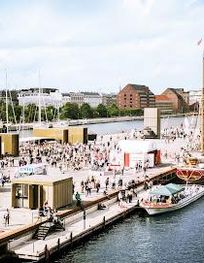
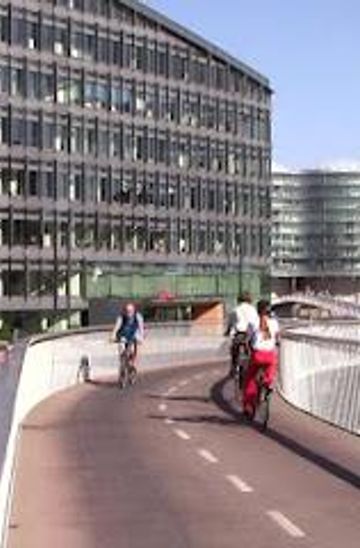
Cykelslangen, or The Bicycle Snake, is Copenhagen’s striking elevated cycle bridge that swoops between Vesterbro and the harborfront near Fisketorvet. Opened in 2014 and painted a vivid orange, the snaking, bike‑only route curves above the water and quayside, gliding riders between buildings and over Gasværkshavnen. Part urban shortcut, part design icon, it showcases the city’s cycling culture and offers unusual vantage points over the harbor and modern waterfront architecture.
A brief summary to Cykelslangen
- Cykelslangen, Vesterbro/Kongens Enghave, Vesterbro/Kongens Enghave, 1560, DK
- Duration: 0.5 to 1.5 hours
- Free
-
 Outdoor
- Mobile reception: 5 out of 5
- Monday 12 am-12 am
- Tuesday 12 am-12 am
- Wednesday 12 am-12 am
- Thursday 12 am-12 am
- Friday 12 am-12 am
- Saturday 12 am-12 am
- Sunday 12 am-12 am

Know before you go
Hi, I'm Eve. Here are a few practical things to know before exploring Cykelslangen.
- Ride the bridge in both directions if you can; the approach from Vesterbro and the glide toward the harbor each offer different views and sensations.
- Visit around golden hour on a clear day to see the orange deck glow against the water and capture strong architectural photos of the curves.
- If you are on foot, use the quayside paths below to watch the continuous stream of cyclists overhead without blocking the cycling lane.
- In wet or icy weather, ride cautiously—the bridge surface is designed for grip, but the gentle curves and elevation call for controlled speed.
Do you manage this location?
Take control to get all the benefits, like improved information, better appearance, and stronger visibility across AI-powered discovery. Learn more
Activate your presenceOther nearby places you may find interesting
Getting There
-
Metro and short walk
From Copenhagen Central Station, take the M3 or M4 metro one stop to København H–Frederiksberg line interchange and continue to Dybbølsbro Station; the ride typically takes 5–10 minutes and is covered by a standard zone 1–2 ticket, usually around 24–30 DKK. From Dybbølsbro, expect a 10–15 minute walk on mostly flat pavements through the Vesterbro side streets to reach the harborfront near Fisketorvet, where the orange bridge becomes clearly visible. The route is suitable for most visitors, though those with limited mobility should allow extra time for the walk.
-
City bus
Several city buses stop by the Fisketorvet shopping center on the Vesterbro side of the harbor, typically taking 10–20 minutes from central Copenhagen depending on traffic, with single tickets in the 24–30 DKK range for travel within the inner zones. From the bus stops, it is a 5–10 minute walk on level ground to the base of Cykelslangen. Buses run frequently throughout the day, but can be crowded during commuting hours and weekends when the mall is busy.
-
Bicycle from the city center
Hiring a city bike from the inner districts and riding to Cykelslangen usually takes 10–20 minutes, following Copenhagen’s extensive network of segregated cycle lanes almost the entire way. Standard city bike rentals are widely available on an hourly basis, often starting around 25–40 DKK per half hour depending on the provider. The approach is largely flat and well signed for cyclists, making it accessible to riders with basic urban cycling experience, though extra caution is advised near major junctions.
-
Harborfront walk
If you are already exploring the central harborfront, you can reach Cykelslangen on foot in roughly 20–35 minutes by following continuous quayside promenades and bridges that connect different waterfront quarters. The terrain is flat, mostly paved and stroller‑friendly, but can feel exposed in windy or wet weather. This option is free and gives you the chance to approach the bridge gradually, watching its orange structure appear between the buildings.
For the on-the-go comforts that matter to you
-
 Restrooms
-
 Drink Options
-
 Drinking Water
-
 Food Options
-
 Seating Areas
-
 Sheltered Areas
-
 Trash Bins
-
 Information Boards
Discover more about Cykelslangen
An orange ribbon through Copenhagen’s harborfront
Cykelslangen, the aptly named Bicycle Snake, unfurls as a vivid orange ribbon that threads between glass facades, highway ramps and the harbor basin at Kalvebod Brygge. Purpose-built for cyclists, this elevated bridge peels away from the busy quayside and lifts you into a separate world a few metres above the water.Stretching roughly 220 metres with a slim, 4.6‑metre width, the bridge feels unexpectedly intimate for a piece of infrastructure. Its gentle curves and steady gradient make it easy to ride, yet its hovering position over the harbor and waterfront plaza gives the crossing a cinematic quality.From awkward staircase to cycling showcase
Before Cykelslangen was completed in 2014, cyclists moving between Vesterbro, Fisketorvet and the harbor bridge system had to wrestle bikes up and down long staircases or weave slowly through crowded pedestrian areas. The city commissioned architects Dissing+Weitling to solve this bottleneck and underline Copenhagen’s commitment to everyday cycling.Their answer was not just a ramp but an elevated route that snakes above ground, touching down only on slender columns. The meandering line lengthens the path just enough to soften the slope, turning what was once an obstacle into a smooth, continuous ride that can be completed in under a minute.Design details in steel, light and motion
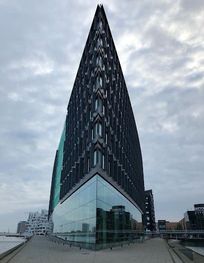
Seen from below, the Bicycle Snake rests on a rhythm of slim white supports, its underside a clean structural sweep that mirrors the water surface beneath. Above, the bright orange deck provides clear visual contrast with the grey harborfront and dark water, instantly signaling that this is a dedicated cycling artery.The balustrades are kept low and transparent, giving riders unbroken views while subtly encouraging a sense of flow. At night, integrated lighting traces the curve so the bridge becomes a glowing line across the harbor, highlighting its sculptural form and extending its role as a piece of urban scenery after dark.Experiencing the bridge by bike and on foot
The purest way to experience Cykelslangen is in the saddle, letting the gentle slope pull you along while the city slips past at eye level. As you travel, you glimpse the harbor, the Bryggebroen connection and the evolving waterfront skyline, all while remaining separated from pedestrians and cars.On foot, you can pause on nearby quays, watch the constant stream of cyclists glide overhead and appreciate how the bridge threads between mall, hotel and harbor. The interplay between those passing above and those lingering below brings a human scale to an area once dominated by roads and blank facades.A symbol of a cycle-first city
Beyond its eye-catching form, Cykelslangen has become shorthand for Copenhagen’s broader ambitions. It connects directly into a wider network of harbor crossings and super cycle routes that stretch deep into surrounding districts, making two‑wheeled travel faster and more appealing than driving for many daily journeys.In doing so, the bridge is both infrastructure and emblem: a practical shortcut that saves time for thousands of commuters and a visible statement that this is a city willing to elevate bicycles—literally—above conventional traffic, turning a once-awkward corner of the harbor into a small stage for urban life.Explore the best of what Cykelslangen has to offer















More about North Zealand
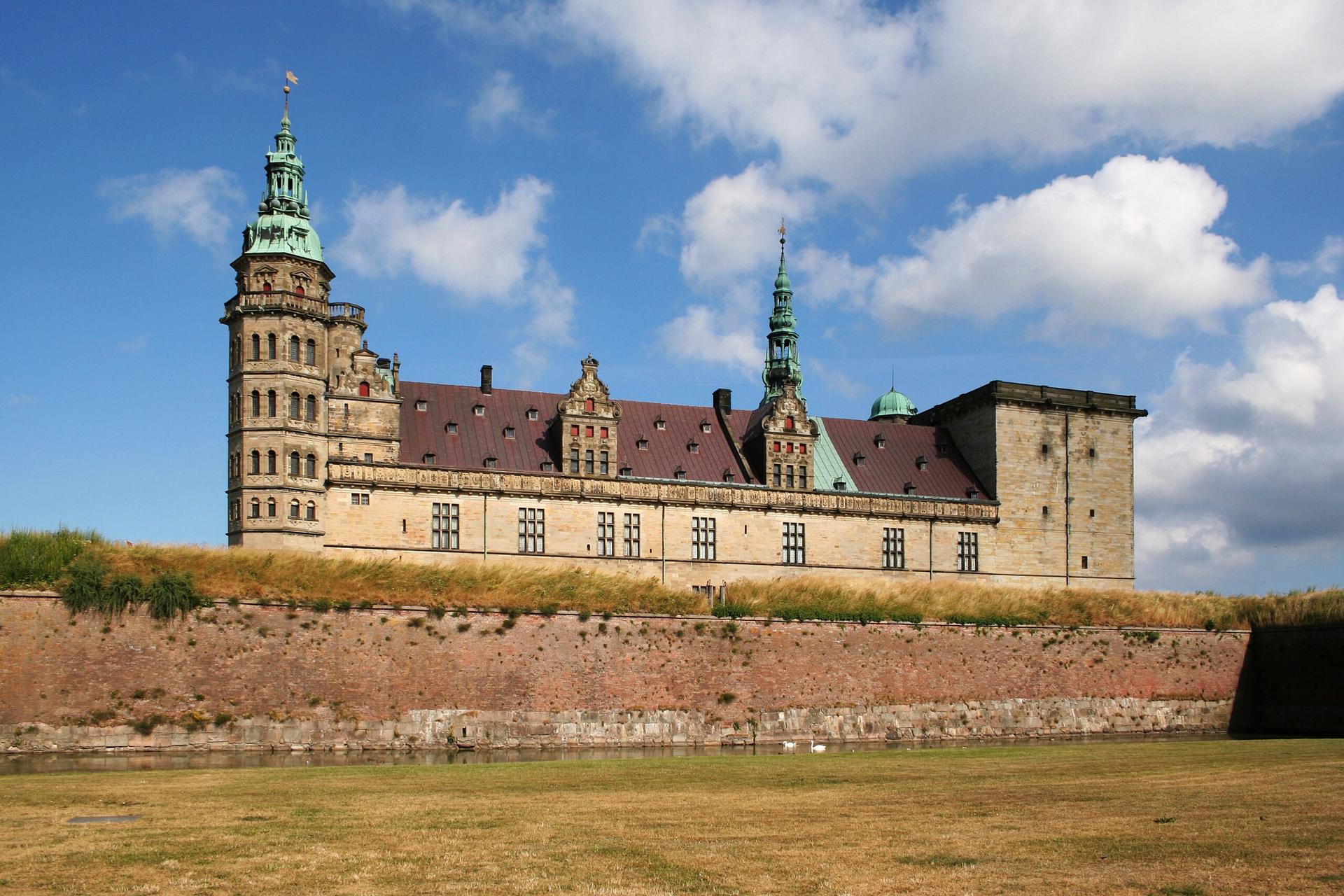
Explore North Zealand, Denmark's enchanting region of castles, beaches, and royal estates, perfect for history buffs, nature enthusiasts, and seaside lovers.
Tell me more about North Zealand