

Faddersbøl Mølle Travel Guide
Free Guide: Restored 19th‑century windmill on the edge of Thy National Park, blending milling history, gentle walking trails and open North Jutland landscapes.


A brief summary of Faddersbøl Mølle
Restored 19th‑century windmill on the edge of Thy National Park, blending milling history, gentle walking trails and open North Jutland landscapes.
Faddersbøl Mølle is a beautifully restored 19th‑century Dutch windmill set on the gentle boundary between coastal dunes and cultivated fields in Thy National Park near Thisted. Once a working mill until the late 1960s, it now serves as a small museum with exhibits on local landscape, milling history and rural life. Marked walking trails and a large fenced dog forest begin right by the mill, making it an inviting stop for cyclists, hikers, families and anyone seeking a quiet pause in classic North Jutland scenery.
On-site amenities
 Seating areas
 Picnic areas
 Information boards
 Trash bins
Opening hours
- Every day9 am–7 pm
Opening hours as listed on the venue’s Google Business Profile. Hours can change for services and special events, so check with the venue before you go.
- Address
- 7700 Thisted
Getting there
Car from Thisted
Bike via coastal route
Bus plus walk from Thisted
Discover more about Faddersbøl Mølle
Wind Power on the Edge of the Dunes
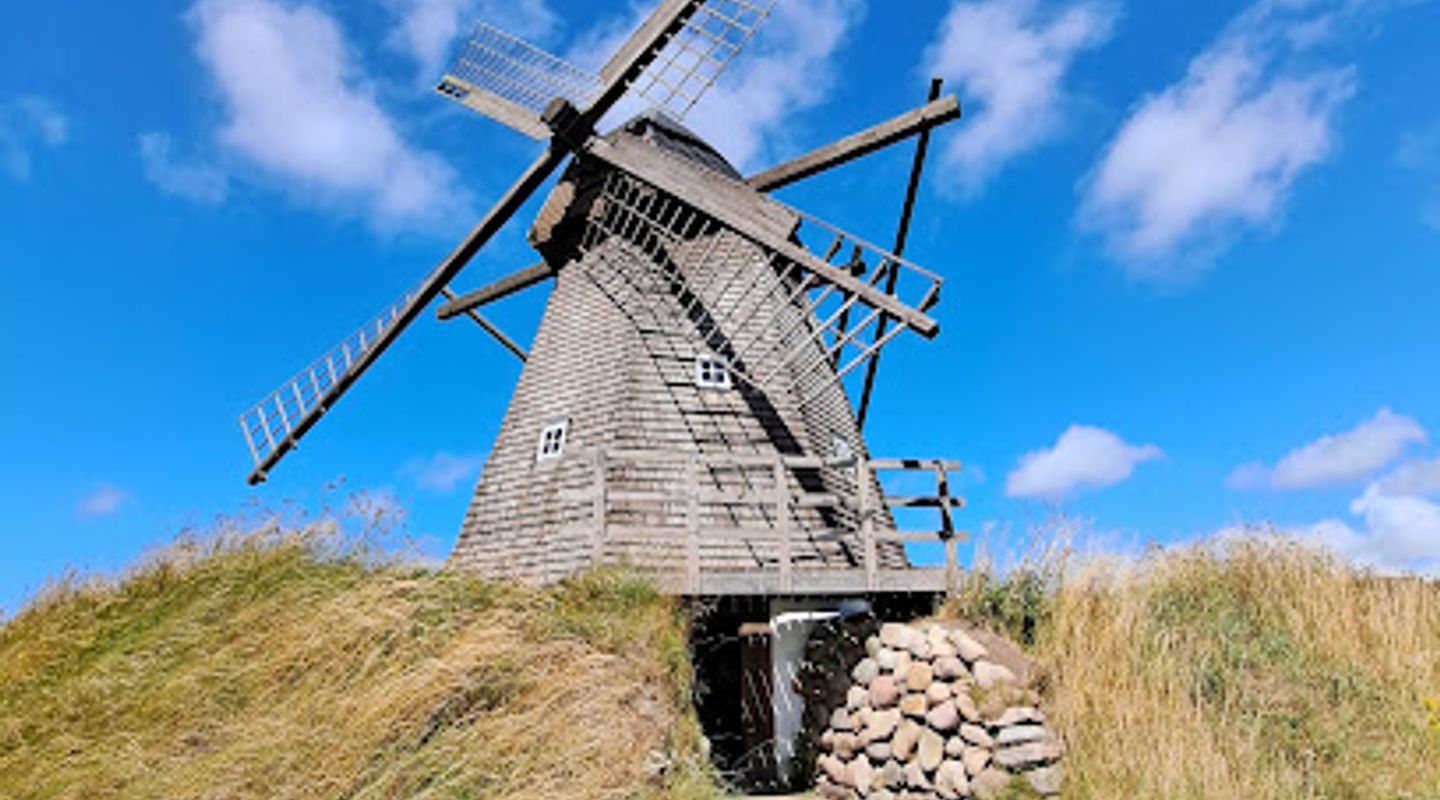
Faddersbøl Mølle rises on a slight hill where Thy's windswept dune landscape meets orderly farmland, a classic Dutch-style windmill silhouetted against the big North Jutland sky. Built in the mid-19th century, it replaced an older watermill once fed by the small stream that still runs below the slope. The location was chosen carefully: here the westerly winds are strong and steady, yet the mill remains within reach of the surrounding farms that once depended on its grinding stones.As you walk around the base, you can see how the mill is anchored into the landscape, its whitewashed tower and dark cap giving it a distinctive profile. The restored sails, added again after a period standing bare, suggest motion even on still days, a reminder of the time when flour production here was tied directly to the weather.
From Working Mill to Intimate Museum
Inside, Faddersbøl Mølle has been transformed into a compact museum, but much of the original machinery remains in place. The mill operated until around 1968, and the structure you see today still carries that industrial heritage in its gears, shafts and timber beams. In the cellar level, a panel exhibition explains how windmills like this one worked, and how milling shaped the surrounding community’s economy and daily routines.The displays also trace the specific story of Faddersbøl Mølle: its construction in the 1800s, its years of activity serving local farmers, and its later restoration when the sails were returned and the building secured for future generations. Text and diagrams introduce the different floors, allowing you to understand how grain moved from sack to stone and finally to flour.
Landscape Stories and Quiet Paths
Stepping back outside, the connection between the mill and its environment becomes clear. Around Faddersbøl Mølle you will find several marked walking routes that loop through the surrounding fields, shelterbelts and the fringes of the Thy National Park landscape. These paths invite slow exploration, offering viewpoints over the flat farmland, glimpses of distant dunes and a sense of the open, breezy character that defines this corner of Jutland.Information boards near the mill outline the local topography and the gradual shaping of the land by wind, water and agriculture. Following the paths, it is easy to imagine farmers arriving with carts of grain, or the miller watching the sky for changing winds that might speed or slow the work inside the tower.
A Haven for Dogs, Cyclists and Daydreamers
One of the striking features near the mill is an extensive fenced dog forest, providing a generous area where dogs can run freely within a natural enclosure. For travelers with four-legged companions, it turns the site into a particularly practical stop, combining cultural history with an opportunity for exercise and play. Benches and open grassy areas around the mill make it a pleasant place to unpack a picnic or simply pause between walks.Faddersbøl Mølle also sits directly on a long-distance coastal cycle route, which threads its way along the west coast between Agger and Bulbjerg. Cyclists often include the mill as a natural break point: the gentle approach roads, the mix of shelter and open views, and the easy access to short walking loops make it an ideal spot to stretch legs and absorb the landscape at a slower pace.
Seasonal Atmosphere and Changing Light
The mill is generally open to visitors from spring through early autumn, reflecting both weather conditions and the rhythm of the local holiday season. During these months the long daylight hours emphasize the changing moods of the site: bright mornings with crisp shadows on the tower, soft golden evenings where the sails glow against the sky, and overcast days when the building feels like a quiet refuge from wind and drizzle.Even when the interior is closed, the outdoor setting remains appealing. The wide horizon, the sound of wind moving through grasses and trees, and the interplay of agricultural land and near‑wild nature create a strongly atmospheric stop in Thy. Faddersbøl Mølle may be modest in size, but it offers a concentrated experience of history, landscape and the enduring partnership between wind and human ingenuity.
Evendo Review Centre
 Google
Guest reviews
Best time to go
Quietest: Jan, Feb & Dec · before 7am or from 8pm
Busy times are Evendo estimates for a typical year, to help you plan. Actual crowds vary with events, school holidays and the weather.
Explore Faddersbøl Mølle on the map
A handpicked selection of must-see spots near Faddersbøl Mølle, mapped for you.
Get your free copy of our complete guide to Faddersbøl Mølle, delivered straight to you.
Everything on this page, from opening hours and how to get there to Eve’s tips and the best time to go, in one PDF you can read offline, print or share.
Already have an account? Sign in
Your Faddersbøl Mølle guide is ready.
We'll send it to · Not you? Sign out

Getting your guide ready…
We are putting together a fresh copy of the Faddersbøl Mølle guide. This can take up to a minute.
This can take a few moments. If your browser asks, choose Allow so the download can start. You'll find the guide in your Downloads folder.
Nothing happened? Download it again
Sorry, the guide is taking longer than usual. Please try again in a minute, or get it by email instead.
Other nearby places you may find interesting
The closest places of the same kind, if this one is not quite what you had in mind.
-
-
-
-
-


Swipe for more places
More to explore near Faddersbøl Mølle

 Best experiences near Faddersbøl Mølle
 Best hotels near Faddersbøl Mølle
 Best landmarks near Faddersbøl Mølle
 Best attractions near Faddersbøl Mølle
 Best shops near Faddersbøl Mølle
 Best restaurants near Faddersbøl Mølle
 Best bars near Faddersbøl Mølle
Do you manage this location?
Take control to get all the benefits, like improved information, better appearance, and stronger visibility across AI-powered discovery.
Explore more

Explore more of Thy National Park
Discover Thy National Park, Denmark's first national park, a coastal wilderness offering diverse landscapes, rich wildlife, and countless outdoor activities for nature lovers.
Explore Thy National Park
Explore more of Denmark
Discover Denmark: A perfect blend of history, modern design, and the cozy concept of hygge. Explore vibrant cities, serene landscapes, and world-class cuisine.
Explore Denmark
