

Egebaksande Travel Guide
Free Guide: Charred manor walls, open skies and quiet fields meet at Egebaksande, a hauntingly beautiful estate ruin on the wild fringe of Thy near Thisted.


A brief summary of Egebaksande
Charred manor walls, open skies and quiet fields meet at Egebaksande, a hauntingly beautiful estate ruin on the wild fringe of Thy near Thisted.
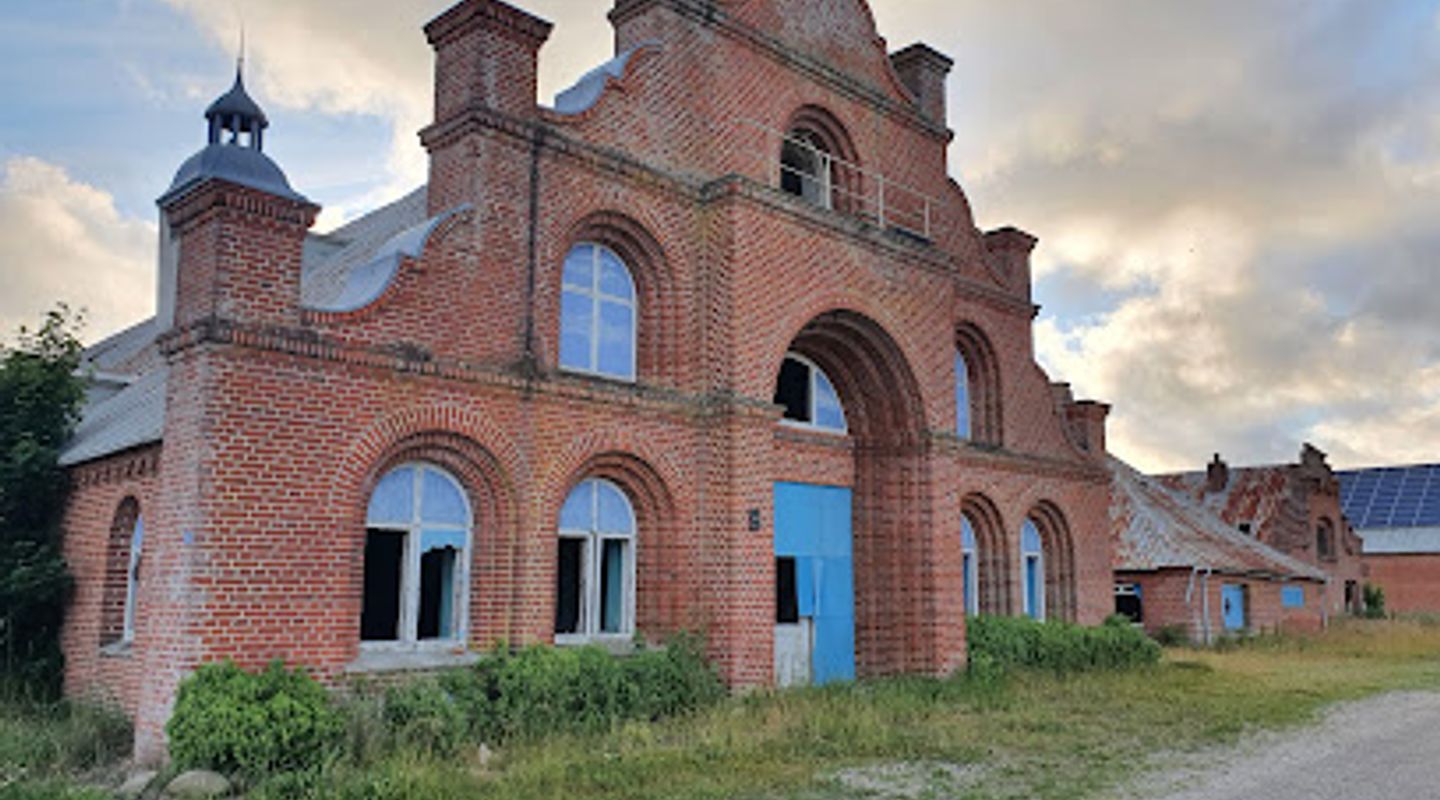
Hidden in the windswept landscapes near Thisted, Egebaksande is the atmospheric ruin of a once-grand manor house, now standing roofless amid trees, dunes and heath. Charred brick walls, gothic-style window frames and scattered foundations hint at its former elegance, while nature steadily reclaims the site. It is a quiet, slightly eerie stop for cyclists, walkers and photographers exploring the wild fringes of Thy and the broader National Park Thy area.
- Address
- Egebaksandevej 18, 7700 Thisted
Getting there
Car from Thisted town
Bicycle from Thisted and Thy area
Regional bus plus walking
Discover more about Egebaksande
A forgotten manor on the edge of Thy
Egebaksande sits in the gentle countryside north of Thisted, where farmland gives way to dunes, plantation forest and the rugged coast that defines Thy. Once a stately rural manor, the building was badly damaged by fire and gradually abandoned. Today, you find only its skeletal remains: tall brick walls open to the sky, collapsed interiors and ghostly window openings framing fragments of cloud and treetops.The ruin lies slightly apart from main roads, reached by a quiet country lane that feels more like a local secret than a headline attraction. There are no grand gates or visitor infrastructure, just the sudden appearance of masonry and stone in a clearing, hinting that something important once stood here.
Architecture reduced to outlines and shadows
Even in ruin, Egebaksande’s architecture is striking. A central block with traces of a gabled roof, ornamental brickwork and a large pointed or arched window suggests a romantic, almost gothic influence that would have felt distinctive in rural Jutland. The fire burned out the interior, leaving blackened bricks and exposed chimneys that give the place a dramatic, cinematic quality.Walk slowly around the footprint and you can still read the manor’s layout in the foundations and wall stubs: main rooms, side wings and service areas, all now carpeted in grass and weeds. On bright days, sunlight pours through the empty frames, turning the ruin into a play of light and shadow; on overcast days it can feel moody and introspective, especially when wind whips through the open shell.
Nature reclaiming a man-made past
Part of Egebaksande’s charm is the way nature is steadily reclaiming the site. Moss clings to bricks, wildflowers sprout from cracks, and young trees grow close to the outer walls. Birdsong competes with the rustle of leaves, softening the hard edges of the ruin and tying it visually to the surrounding fields and plantations.This corner of Thisted sits on the fringe of National Park Thy, and you sense that wider landscape in the salty air and big sky. The low horizon, distant tree lines and glimpses of dunes or heathland invite you to combine a short stop at the ruin with longer walks or bike routes through the region’s coastal nature.
An atmospheric pause for cyclists and photographers
Egebaksande works best as a contemplative stop rather than a standalone destination. Cyclists following local routes often detour here for a break, leaning bikes against the old walls and pacing the site in a few quiet circuits. The ruin photographs well in all seasons: frost on the bricks in winter, bright greens in spring, flowers and tall grasses in summer, and warm tones in autumn.Because facilities are minimal, visits tend to be short and self-guided. The absence of signage leaves room for your own imagination: you supply the inhabitants, the furnishings and the everyday life that once filled these rooms, making it an appealing place for creative minds and lovers of slightly offbeat locations.
Quiet moments and safety awareness
The atmosphere at Egebaksande is tranquil, with little traffic noise and few distractions. It can feel almost meditative to stand inside the former manor, listening to wind and birds where people once talked, worked and celebrated. That sense of solitude is part of the experience, especially outside the main summer months.Because the structure is a genuine ruin, some walls are unstable and surfaces uneven. Sensible footwear is important, and it is wise to keep a little distance from the highest remaining sections of masonry. With a bit of care, however, the site offers a memorable, low-key encounter with both local history and the slow, patient work of nature over time.
Evendo Review Centre
 Google
Guest reviews
Best time to go
Quietest: Jan, Feb & Mar · before 8am or at 7pm
Busy times are Evendo estimates for a typical year, to help you plan. Actual crowds vary with events, school holidays and the weather.
Explore Egebaksande on the map
A handpicked selection of must-see spots near Egebaksande, mapped for you.
Get your free copy of our complete guide to Egebaksande, delivered straight to you.
Everything on this page, from opening hours and how to get there to Eve’s tips and the best time to go, in one PDF you can read offline, print or share.
Already have an account? Sign in
Your Egebaksande guide is ready.
We'll send it to · Not you? Sign out

Getting your guide ready…
We are putting together a fresh copy of the Egebaksande guide. This can take up to a minute.
This can take a few moments. If your browser asks, choose Allow so the download can start. You'll find the guide in your Downloads folder.
Nothing happened? Download it again
Sorry, the guide is taking longer than usual. Please try again in a minute, or get it by email instead.
Other nearby places you may find interesting
The closest places of the same kind, if this one is not quite what you had in mind.
-
-
-
-
-


Swipe for more places
More to explore near Egebaksande

 Best experiences near Egebaksande
 Best hotels near Egebaksande
 Best landmarks near Egebaksande
 Best attractions near Egebaksande
 Best shops near Egebaksande
 Best restaurants near Egebaksande
 Best bars near Egebaksande
Do you manage this location?
Take control to get all the benefits, like improved information, better appearance, and stronger visibility across AI-powered discovery.
Explore more

Explore more of Thy National Park
Discover Thy National Park, Denmark's first national park, a coastal wilderness offering diverse landscapes, rich wildlife, and countless outdoor activities for nature lovers.
Explore Thy National Park
Explore more of Denmark
Discover Denmark: A perfect blend of history, modern design, and the cozy concept of hygge. Explore vibrant cities, serene landscapes, and world-class cuisine.
Explore Denmark
