

Tirpitz Museum Travel Guide
Free Guide: A bunker-turned–“invisible museum” buried in the dunes, Tirpitz blends cutting-edge design, wartime history and North Sea stories in one striking coastal complex.


A brief summary of Tirpitz Museum
A bunker-turned–“invisible museum” buried in the dunes, Tirpitz blends cutting-edge design, wartime history and North Sea stories in one striking coastal complex.
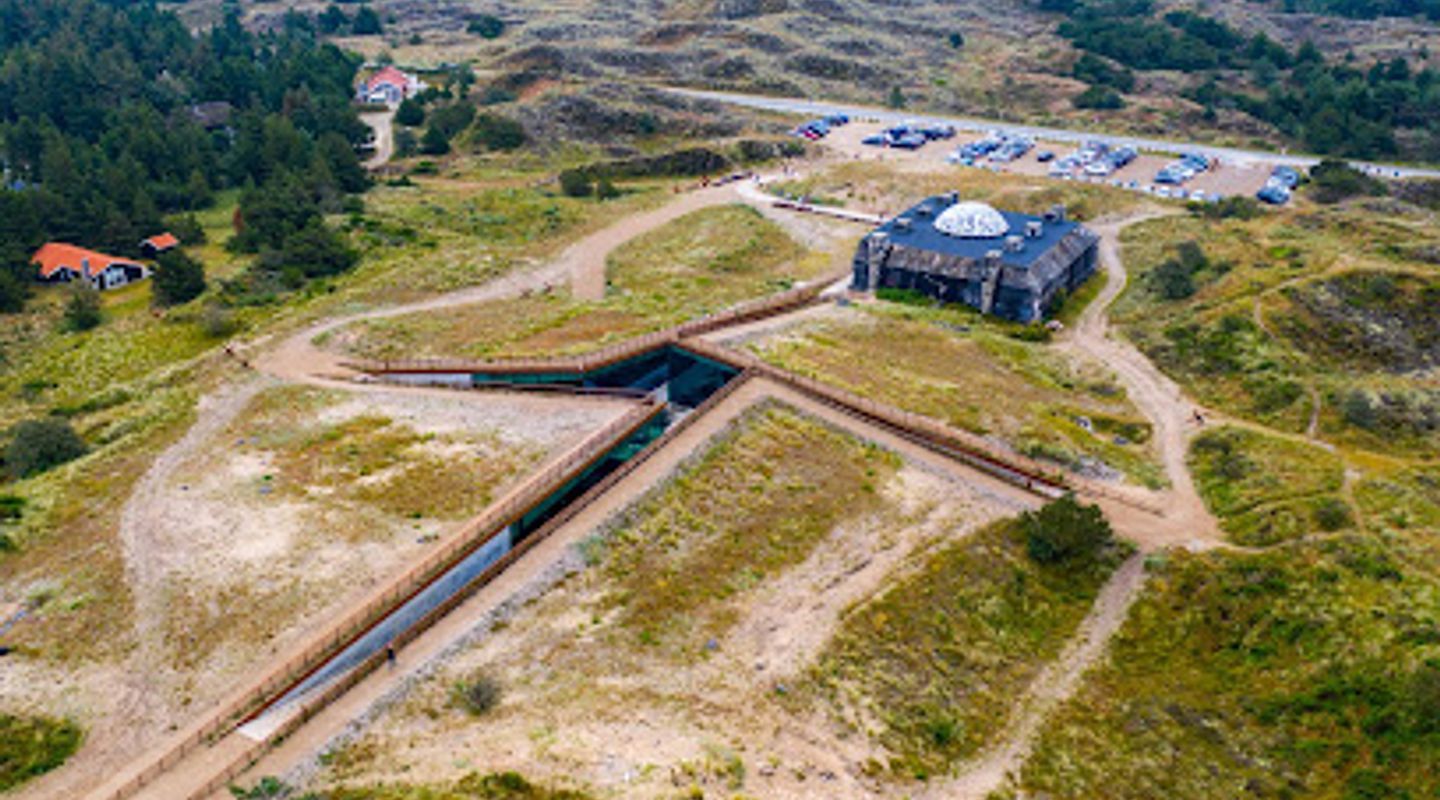
Sunk discreetly into the dunes near Blåvand, Tirpitz Museum transforms an unfinished German WWII bunker into a striking, light-filled cultural complex. Designed by Danish architects BIG, the “invisible museum” explores the Atlantic Wall, 20,000 years of Denmark’s west coast history and Denmark’s largest amber collection, all linked by a dramatic concrete bunker you can walk through via underground passages.
On-site amenities
 Restrooms
 Drink options
 Drinking water
 Food options
 Seating areas
 Sheltered areas
 Trash bins
 Information boards
 Visitor centre
Opening hours
- Every day10 am–5 pm
Opening hours as listed on the venue’s Google Business Profile. Hours can change for services and special events, so check with the venue before you go.
- Address
- Tirpitzvej 1, 6857 Blåvand
- Phone
- Website
Getting there
Car from Esbjerg
Bus from Varde or Esbjerg
Bicycle from Blåvand center
Discover more about Tirpitz Museum
A hidden museum beneath the dunes
Tirpitz Museum lies almost invisible in the sandy landscape just outside Blåvand, its low concrete lines and glass walls buried into the dunes. Rather than dominating the scenery, the complex appears as a series of sharp cuts in the heath, leading you gently down into a sheltered central courtyard. From here, four broad corridors open into underground galleries, creating the sense of entering a secret world concealed beneath the coastal sand.Despite being mostly below ground, the museum feels surprisingly bright and open. Floor‑to‑ceiling glass brings natural light into the interiors, and the architecture plays with long perspectives and generous ceiling heights. The design by Bjarke Ingels Group deliberately contrasts the weight of war fortifications with calm, airy spaces, so you move from windswept dunes into a tranquil, almost meditative environment.
From Atlantic Wall stronghold to cultural landmark
At the heart of the site stands the massive Tirpitz bunker, started by German forces in 1944 as part of the Atlantic Wall defensive system guarding the approaches to Esbjerg. The concrete shell, built to hold huge naval guns, was never completed before the war ended, and for decades it sat abandoned among the dunes. Eventually it was opened as a small bunker museum, telling the story of coastal defenses and occupation along Denmark’s west coast.In the 2010s the vision broadened dramatically. A major redesign buried a new 2,500‑plus square metre museum complex alongside the old bunker, connecting old and new via an underground tunnel. Today you can walk directly from refined exhibition halls into the raw, echoing bunker, still marked by narrow passageways, thick concrete walls and steel remnants. The journey links strategic wartime planning with the quiet coastal landscape that surrounds it today.
Exhibitions that bring history to life
Inside, three permanent exhibitions and a large gallery for temporary shows fill the four wings around the courtyard. “An Army of Concrete” focuses on the Atlantic Wall, mixing immersive scenography, soundscapes and personal stories from soldiers, workers and local residents. Models, projections and objects explain how the bunkers were built, what life was like inside them and how they reshaped the coastline.“West Coast Stories” zooms out, tracing roughly 20,000 years of life along Denmark’s west coast, from Ice Age landscapes and early settlements to fishing communities, storms and shipwrecks. Interactive elements, tactile displays and a cinematic 4D show are designed to engage children as much as adults, making complex time spans feel tangible and immediate.
Nordic gold and treasures from the sea
A third main exhibition, often referred to as “Gold of the Sea,” is dedicated to amber, sometimes called Nordic gold. Denmark’s largest amber collection is displayed here, ranging from tiny prehistoric insects trapped in resin to elaborate carved pieces and modern jewellery. Creative installations, including dramatic lighting and playful large‑scale amber forms, highlight how these glowing stones have fascinated people from the Stone Age to the present.The sea theme runs subtly throughout the museum, from references to wrecks and lifeboat rescues to displays about shifting sands and currents. Together, the galleries connect military history, natural forces and human stories, showing how this stretch of coastline has always been both a barrier and a lifeline.
An architecture of lightness beside a heavy bunker
One of the most striking aspects of Tirpitz is the dialogue between architecture and landscape. The four gallery volumes are arranged around a sunken square, with long concrete roofs cantilevering far over glass facades, creating deep shade yet preserving expansive views. From the dunes above, the museum almost disappears, leaving the original bunker as the lone visible object on the horizon.Inside, rotating wall elements and flexible gallery layouts allow spaces to change while maintaining clear circulation. The materials palette is deliberately restrained: raw concrete, glass, steel and warm touches of wood and textiles. This simplicity lets sound, light and projected imagery become central elements in the storytelling, and reinforces the feeling of a quiet refuge carved out of sand and concrete.
A family‑friendly, full‑day coastal stop
Tirpitz is designed as an all‑ages experience. Audioguides in multiple languages are included with admission and are integrated into most exhibits, guiding you through stories at your own pace. Children’s zones, hands‑on installations and hidden rooms keep younger visitors engaged, while the bunker and war narratives appeal to history enthusiasts.A café overlooking the courtyard serves meals and snacks, making it easy to break up your visit, and a substantial shop offers books, design objects and amber pieces linked to the themes of the museum. Combined with nearby dunes, beaches, bunkers and the Blåvand lighthouse, Tirpitz works well as the cultural anchor of a wider day out on Denmark’s wild west coast.
Evendo Review Centre
 Google
Guest reviews
Best time to go
Quietest: Jan, Feb & Nov · before 8am or at 9pm
Busy times are Evendo estimates for a typical year, to help you plan. Actual crowds vary with events, school holidays and the weather.
Explore Tirpitz Museum on the map
A handpicked selection of must-see spots near Tirpitz Museum, mapped for you.
Get your free copy of our complete guide to Tirpitz Museum, delivered straight to you.
Everything on this page, from opening hours and how to get there to Eve’s tips and the best time to go, in one PDF you can read offline, print or share.
Already have an account? Sign in
Your Tirpitz Museum guide is ready.
We'll send it to · Not you? Sign out

Getting your guide ready…
We are putting together a fresh copy of the Tirpitz Museum guide. This can take up to a minute.
This can take a few moments. If your browser asks, choose Allow so the download can start. You'll find the guide in your Downloads folder.
Nothing happened? Download it again
Sorry, the guide is taking longer than usual. Please try again in a minute, or get it by email instead.
Other nearby places you may find interesting
The closest places of the same kind, if this one is not quite what you had in mind.
-
-
-
-
-


Swipe for more places
More to explore near Tirpitz Museum

 Best experiences near Tirpitz Museum
 Best hotels near Tirpitz Museum
 Best landmarks near Tirpitz Museum
 Best attractions near Tirpitz Museum
 Best shops near Tirpitz Museum
 Best restaurants near Tirpitz Museum
 Best bars near Tirpitz Museum
Do you manage this location?
Take control to get all the benefits, like improved information, better appearance, and stronger visibility across AI-powered discovery.
Explore more

Explore more of West Jutland
Discover West Jutland: Denmark's scenic coastal region with vast beaches, historic towns, and rich cultural heritage, perfect for nature lovers and history enthusiasts.
Explore West Jutland
Explore more of Denmark
Discover Denmark: A perfect blend of history, modern design, and the cozy concept of hygge. Explore vibrant cities, serene landscapes, and world-class cuisine.
Explore Denmark
