

Planetarium Travel Guide
Free Guide: Step from Copenhagen’s lakeside promenade into Europe’s largest tilted dome, where cutting-edge projections, exhibits and art bring the universe within reach.


A brief summary of Planetarium
Step from Copenhagen’s lakeside promenade into Europe’s largest tilted dome, where cutting-edge projections, exhibits and art bring the universe within reach.
Set beside Copenhagen’s inner lakes, Planetarium – officially Tycho Brahe Planetarium – is Denmark’s leading gateway to the cosmos. Inside its striking modern dome you step into Europe’s largest tilted fulldome theatre, where 8K projections and immersive sound launch you through star fields, nebulae and distant planets. Hands-on exhibitions, space-tech displays and family-friendly science shows make this an inspiring stop for anyone curious about astronomy, from children meeting the night sky for the first time to dedicated stargazers.
On-site amenities
 Restrooms
 Drink options
 Drinking water
 Food options
 Seating areas
 Sheltered areas
 Trash bins
 Information boards
 Visitor centre
Opening hours
- Mon12 pm–6:30 pm
- Tue9:30 am–8 pm
- Wed9:30 am–8 pm
- Thu9:30 am–8:30 pm
- Fri9:30 am–9:30 pm
- Sat9:30 am–8:30 pm
- Sun9:30 am–7 pm
Opening hours as listed on the venue’s Google Business Profile. Hours can change for services and special events, so check with the venue before you go.
- Address
- Gl. Kongevej 10, 1610 København V
- Phone
- Website
Getting there
Train and walking from Copenhagen Central Station
City bus from central Copenhagen
Bicycle from inner-city districts
Taxi or ride-hire within Copenhagen
Discover more about Planetarium
A modern gateway to the Danish night sky
Planetarium rises like a copper-clad cylinder at the edge of Skt Jørgens Sø, its bold silhouette instantly marking it out as a contemporary temple to the stars. Opened in 1989 and named after the Renaissance astronomer Tycho Brahe, it was conceived as Denmark’s most advanced hub for communicating astronomy and space science to a broad public. Inside, dim lighting, cool concrete and warm wood details create a purposeful atmosphere that feels part science centre, part observatory.The building’s circular footprint is no coincidence: everything converges on the dome, echoing the way the night sky seems to wrap around you when you stand outdoors on a clear evening. Displays along the entrance route introduce Tycho Brahe’s meticulous observations, the evolution of telescopes and the big ideas that underpin modern cosmology, priming you for the more immersive experiences to come.
Europe’s largest tilted fulldome
At the heart of the experience is the vast Planetarium Dome, the largest tilted dome of its kind in Europe. The screen curves up and over your head, filling your entire field of vision, while a sophisticated 8K laser projection system renders stars, planets and galaxies with striking clarity. As the auditorium darkens and the first pinpricks of light appear, the familiar Copenhagen skyline falls away and you are gently carried out into space.Each show begins with a live or pre-programmed journey through the current night sky over Denmark, highlighting prominent constellations, planets and seasonal phenomena. From there, the programme might take you to erupting volcanoes on Earth, tumble with comets in the outer Solar System or drift between nebulae at the edge of the Milky Way. Sound design is as carefully engineered as the visuals, with spatial audio adding a physical sense of motion and depth to the cosmic scenery.
Exhibitions that make the universe tangible
Beyond the dome, Planetarium’s permanent exhibitions translate abstract astrophysics into tactile, engaging installations. Models of spacecraft and satellites sit alongside meteorites you can touch, while interactive displays let you manipulate gravity, explore planetary orbits or trace the life cycle of a star from stellar nursery to supernova. Complex concepts such as dark matter or exoplanets are broken into clear narratives supported by graphics, light and motion.Families are particularly well catered for. Younger visitors can crawl into small-scale space habitats, experiment with light and color, or follow dedicated trails through the galleries. Weekends and school holidays often bring extra demonstrations and short science shows in open spaces, where enthusiastic explainers use simple experiments to unpack big questions about the cosmos.
Art, atmosphere and lakeside setting
Recent renovations have added a more artistic dimension to the experience, including large-scale installations that interpret cosmic structures as woven light and sound. These pieces shift Planetarium beyond a purely educational venue into a space where science and contemporary art meet, encouraging you to feel as well as understand the universe’s vastness.Stepping back outside, the mood changes again. The building’s geometric lines are mirrored in the calm surface of Skt Jørgens Sø, and the lakeside promenade offers one of central Copenhagen’s more relaxed urban vistas. As daylight fades, the planetarium’s illuminated form reflects in the water, a quiet reminder of the distant stars you have just explored on the dome above.
Planning your visit inside the dome
A single ticket typically includes access to all exhibitions plus one screening in the dome, so timing your visit around show schedules helps you get the most out of it. Most programmes are presented in Danish, but wireless headsets with English narration are usually available, making the experience accessible to international visitors. Seating inside the dome is steeply raked to maximise the immersive effect, so every row has a wide view of the screen.Allow at least an hour and a half if you want to linger over the exhibits before or after your film. A small restaurant and café area provides a chance to pause between activities, and a shop stocked with space-themed books, toys and design objects makes it easy to take a piece of the cosmos home with you. Whether you arrive as a casual visitor or a devoted space enthusiast, Planetarium offers a concentrated, indoor journey far beyond Copenhagen’s city lights.
Evendo Review Centre
 Google
Guest reviews
Best time to go
Quietest: Jan, Feb & Mar · before 8am or from 11pm
Busy times are Evendo estimates for a typical year, to help you plan. Actual crowds vary with events, school holidays and the weather.
Explore Planetarium on the map
A handpicked selection of must-see spots near Planetarium, mapped for you.
Get your free copy of our complete guide to Planetarium, delivered straight to you.
Everything on this page, from opening hours and how to get there to Eve’s tips and the best time to go, in one PDF you can read offline, print or share.
Already have an account? Sign in
Your Planetarium guide is ready.
We'll send it to · Not you? Sign out

Getting your guide ready…
We are putting together a fresh copy of the Planetarium guide. This can take up to a minute.
This can take a few moments. If your browser asks, choose Allow so the download can start. You'll find the guide in your Downloads folder.
Nothing happened? Download it again
Sorry, the guide is taking longer than usual. Please try again in a minute, or get it by email instead.
Unlock the best of Planetarium
Skip-the-line tickets, guided tours with entry, and walking tours of the area, booked in a few clicks.



Other nearby places you may find interesting
The closest places of the same kind, if this one is not quite what you had in mind.
-
-
-
-
-


Swipe for more places
More to explore near Planetarium

 Best experiences near Planetarium
 Best hotels near Planetarium
 Best landmarks near Planetarium
 Best attractions near Planetarium
 Best shops near Planetarium
 Best restaurants near Planetarium
 Best bars near Planetarium
Do you manage this location?
Take control to get all the benefits, like improved information, better appearance, and stronger visibility across AI-powered discovery.
Explore more
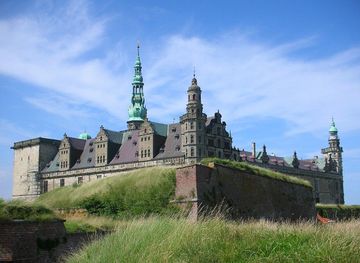
Explore more of Zealand
Discover the charm of Zealand, Denmark's largest island, blending vibrant city life in Copenhagen with serene coastal beauty and rich cultural heritage.
Explore Zealand
Explore more of Denmark
Discover Denmark: A perfect blend of history, modern design, and the cozy concept of hygge. Explore vibrant cities, serene landscapes, and world-class cuisine.
Explore Denmark
