Roskilde Cathedral Travel Guide
Free Guide: UNESCO‑listed brick Gothic masterpiece and royal mausoleum where a thousand years of Danish kings, queens and architecture meet above Roskilde Fjord.


A brief summary of Roskilde Cathedral
UNESCO‑listed brick Gothic masterpiece and royal mausoleum where a thousand years of Danish kings, queens and architecture meet above Roskilde Fjord.
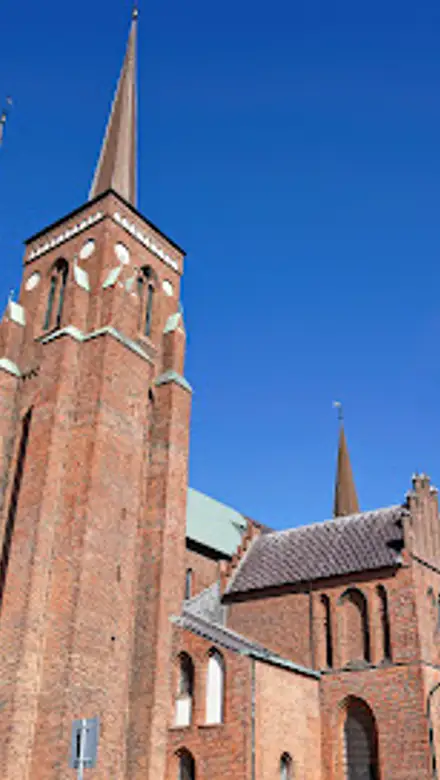
Roskilde Cathedral rises above the old royal city as Denmark’s great brick Gothic landmark and the burial church of its monarchs. Built mainly in the 12th and 13th centuries, this UNESCO World Heritage Site brings together 800 years of European architecture in a single, soaring red‑brick basilica. Inside, richly decorated royal chapels, frescoes, a grand organ and more than 40 royal tombs tell the story of Danish power, faith and art, from Viking king Harald Bluetooth to today’s modern monarchy.
On-site amenities
 Restrooms
 Drinking water
 Seating areas
 Sheltered areas
 Trash bins
 Information boards
 Visitor centre
- Address
- Domkirkepladsen 3, 4000 Roskilde
- Phone
- Website
Getting there
Train from Copenhagen
Car from greater Copenhagen
Regional bus within Zealand
Leisure cycling from Copenhagen area
Discover more about Roskilde Cathedral
Royal church on a hill above the fjord
Roskilde Cathedral dominates the skyline of this former Danish capital, its twin copper‑tipped spires rising from a low hill that looks towards Roskilde Fjord. Approaching across the cobbled square, the vast red‑brick façade feels almost fortress‑like, yet the detailing around the portals and windows hints at the refinement within. The setting still reflects the medieval town plan, with narrow streets, old houses and glimpses of water that underline how important Roskilde once was as a royal and ecclesiastical centre.Step through the heavy doors and the space suddenly opens into a tall, light‑filled basilica. Slender pillars, pointed arches and ribbed vaults draw the eye along the nave towards the high choir, while the semi‑circular gallery that runs around the church adds another rhythm of arches above head height. Even before you look closely at the tombs and chapels, the sheer volume of space, the echo of footsteps and the faint smell of stone and wax give a sense of centuries of worship layered into the building.
From Viking kings to brick Gothic innovation
The site’s story reaches back to the Viking Age: Harald Bluetooth is traditionally believed to have been buried here around the late 10th century, long before the present cathedral rose above his resting place. The brick church you see today was begun in the 1100s and largely completed in the 13th century as one of Scandinavia’s very first Gothic cathedrals built in brick rather than stone. This experiment would shape church building across northern Europe, helping to spread the Brick Gothic style.The core structure cleverly blends lingering Romanesque solidity with the vertical emphasis and pointed arches of the new Gothic. Over the following 800 years, successive rulers added chapels, porches and royal burial spaces in the styles of their own eras. Walking around the exterior, you can trace these additions as projections and towers that break up the long brick walls, each revealing another layer of political ambition and artistic taste.
Mausoleum of Danish monarchs
Inside, Roskilde Cathedral is above all a royal burial church. More than 40 kings and queens rest here, their tombs arranged in side chapels, along the nave and around the choir. Perhaps the most striking is the elevated limestone sarcophagus of Queen Margrete I, architect of the Kalmar Union that briefly joined Denmark, Norway and Sweden under a single crown. Placed behind the high altar, it occupies the symbolic heart of the church.Elsewhere you find the richly carved Renaissance monument of Christian IV, Denmark’s great builder king, Baroque coffins gleaming with gilded ornament, and restrained modern sarcophagi that echo contemporary design. The variety turns a simple walk into a visual timeline of royal self‑presentation: every tomb is a statement of power, piety or personal style. In a side chapel, the prepared monument for Queen Margrethe II, still alive, quietly reminds visitors that this is a living royal tradition rather than a closed chapter.
Chapels, organ loft and hidden stories
Beyond the main nave, a network of chapels, crypts and galleries invites slow exploration. Some spaces preserve late‑medieval frescoes of saints, dragons and moral tales that survived the Reformation’s iconoclasm. Others showcase elegant Renaissance vaulting, neo‑classical restraint or 19th‑century historicism. Nowhere else in Denmark offers such a compact survey of changing European church architecture under one roof.High on the west end stands the great organ, whose 17th‑century façade is decorated with carved angels and scrollwork. When it sounds during services or concerts, the whole brick shell seems to vibrate softly. In the upper gallery, a small museum displays models, liturgical objects and fragments that explain how the building evolved from a Romanesque predecessor into the present complex structure.
Experiencing the cathedral today
Roskilde Cathedral remains an active Lutheran parish church as well as a national monument. Regular services, royal ceremonies and a year‑round programme of concerts and special events keep the building firmly rooted in contemporary Danish life. At quieter times, the atmosphere shifts towards contemplation: shafts of light pick out the dust in the air, a bell tolls from the tower, and the murmur of visitors dies away beneath the high vaults.For many travellers, the visit pairs naturally with Roskilde’s Viking Ship Museum and a wander through the old streets and down towards the fjord. Yet it is the cathedral that provides the city’s emotional anchor. Whether you are drawn by architecture, royal history or simply the calm of an ancient sacred space, this UNESCO‑listed church offers a dense, memorable encounter with a thousand years of Danish identity.
Evendo Review Centre
 Google
Guest reviews
Best time to go
Quietest: Jan, Feb & Nov · before 8am or from 8pm
Busy times are Evendo estimates for a typical year, to help you plan. Actual crowds vary with events, school holidays and the weather.
Explore Roskilde Cathedral on the map
A handpicked selection of must-see spots near Roskilde Cathedral, mapped for you.
Get your free copy of our complete guide to Roskilde Cathedral, delivered straight to you.
Everything on this page, from opening hours and how to get there to Eve’s tips and the best time to go, in one PDF you can read offline, print or share.
Already have an account? Sign in
Your Roskilde Cathedral guide is ready.
We'll send it to · Not you? Sign out

Getting your guide ready…
We are putting together a fresh copy of the Roskilde Cathedral guide. This can take up to a minute.
This can take a few moments. If your browser asks, choose Allow so the download can start. You'll find the guide in your Downloads folder.
Nothing happened? Download it again
Sorry, the guide is taking longer than usual. Please try again in a minute, or get it by email instead.
Unlock the best of Roskilde Cathedral
Skip-the-line tickets, guided tours with entry, and walking tours of the area, booked in a few clicks.




Other nearby places you may find interesting
The closest places of the same kind, if this one is not quite what you had in mind.
-
-
-
-
-


Swipe for more places
More to explore near Roskilde Cathedral

 Best experiences near Roskilde Cathedral
 Best hotels near Roskilde Cathedral
 Best landmarks near Roskilde Cathedral
 Best attractions near Roskilde Cathedral
 Best shops near Roskilde Cathedral
 Best restaurants near Roskilde Cathedral
 Best bars near Roskilde Cathedral
Do you manage this location?
Take control to get all the benefits, like improved information, better appearance, and stronger visibility across AI-powered discovery.
Explore more
Explore more of Zealand
Discover the charm of Zealand, Denmark's largest island, blending vibrant city life in Copenhagen with serene coastal beauty and rich cultural heritage.
Explore Zealand
Explore more of Denmark
Discover Denmark: A perfect blend of history, modern design, and the cozy concept of hygge. Explore vibrant cities, serene landscapes, and world-class cuisine.
Explore Denmark