Tuborgflasken Travel Guide
Free Guide: A 26‑metre green beer bottle by the Hellerup waterfront, Tuborgflasken blends quirky novelty architecture with the living history of Copenhagen’s brewing past.


A brief summary of Tuborgflasken
A 26‑metre green beer bottle by the Hellerup waterfront, Tuborgflasken blends quirky novelty architecture with the living history of Copenhagen’s brewing past.
Rising 26 metres above the redeveloped waterfront of Tuborg Havn in Hellerup, Tuborgflasken is a giant green beer bottle turned enduring landmark of Denmark’s brewing heritage. Built in 1888 as a wooden observation tower promoting Denmark’s first mass‑market bottled beer, it once housed a pioneering water‑powered lift and later a spiral staircase to a viewing platform. Today you admire it only from the outside, as it stands beside modern offices, housing and a small harbour, a quirky relic linking Copenhagen’s industrial past with its sleek seaside present.
On-site amenities
 Restrooms
 Drink options
 Food options
 Seating areas
 Trash bins
 Information boards
Opening hours
- Every dayOpen 24 hours
Opening hours as listed on the venue’s Google Business Profile. Hours can change for services and special events, so check with the venue before you go.
- Address
- Dessaus Blvd. 4, 2900 Hellerup
Getting there
S‑train and bus from central Copenhagen
Metro and coastal bus via Østerbro
Cycling along the waterfront
Taxi or ride‑hail from the city centre
Discover more about Tuborgflasken
A giant green bottle by the harbour
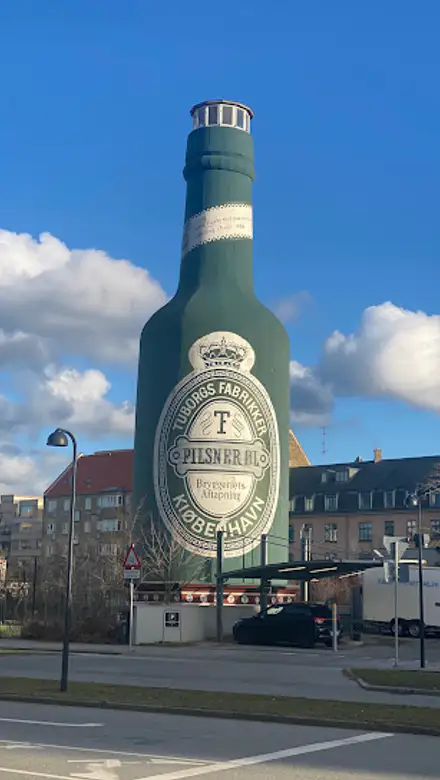
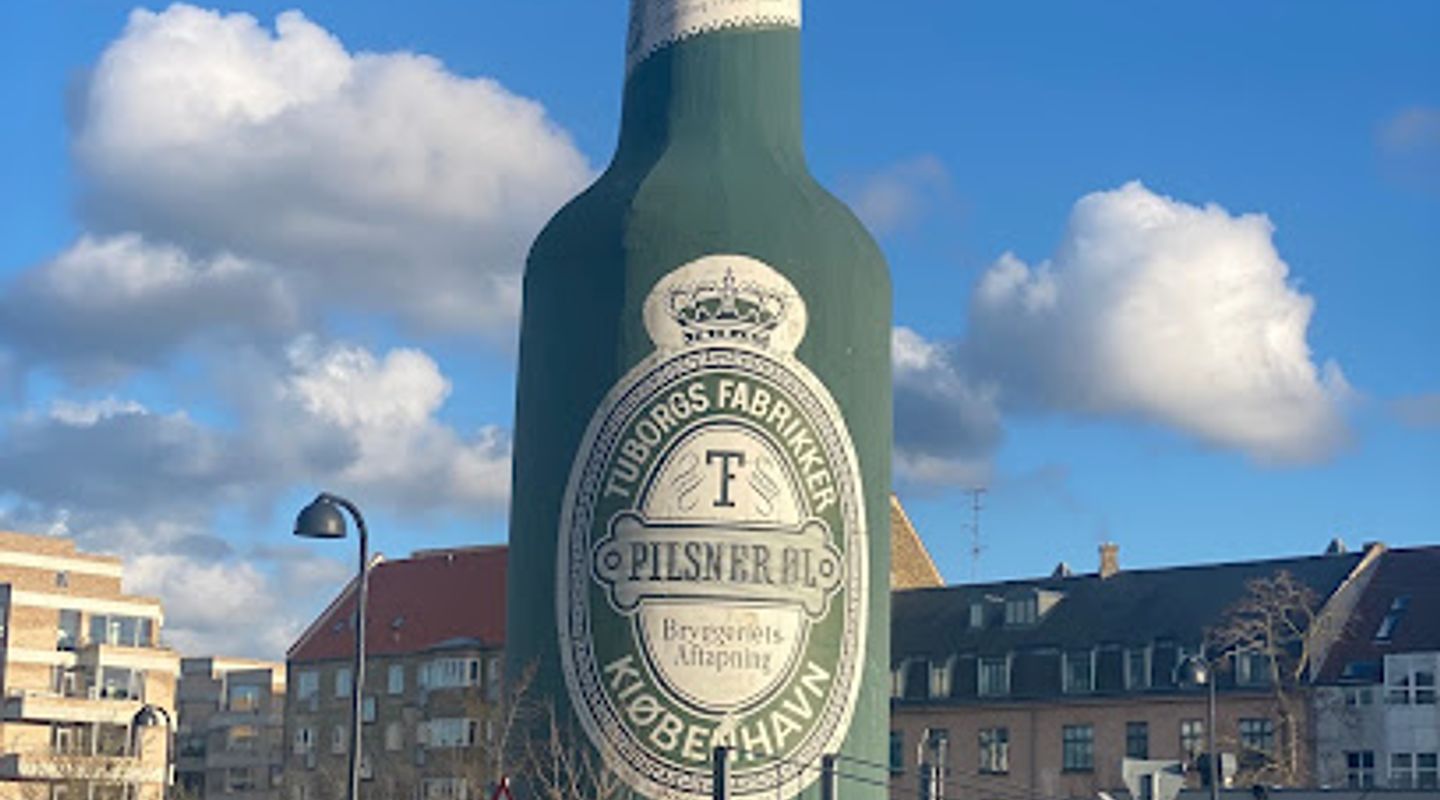
Standing beside the calm waters of Tuborg Havn in Hellerup, Tuborgflasken immediately catches your eye: a 26‑metre‑tall bottle in Tuborg’s familiar green livery, planted like a colossal prop between glassy offices and upscale residences. It marks the site of the former Tuborg brewery, once a major industrial complex on Copenhagen’s northern fringe, now transformed into a polished waterfront district of marinas, restaurants and corporate headquarters. Against this contemporary backdrop, the bottle’s playful silhouette feels both nostalgic and slightly surreal.Up close, you can see how the structure mimics a real beer bottle, down to the sweeping neck, painted label and metal‑effect cap. Traffic hums past and boats rock gently in the harbour, but the bottle stands still, an instantly recognisable beacon for anyone arriving in the area. There is no interior access today; the experience is all about its exterior presence and its role in the story of Danish beer.
From world’s fair showpiece to coastal icon
Tuborgflasken began life in 1888 as Tuborg Breweries’ showstopper contribution to the Nordic Exhibition in Copenhagen, at the time when the company was pioneering bottled beer in a market dominated by barrel tapping. It originally stood where the city hall now rises, acting as a bold, three‑dimensional advertisement for this new way of drinking beer. Architect Viggo Klein designed the tower, while a theatrical painter, Carl Lund, gave it its convincing bottle appearance.After the exhibition closed, the bottle was relocated to Hellerup, beside Tuborg’s headquarters at the junction of Strandvejen and Carolinevej. Here it became a roadside attraction on the coastal route north of Copenhagen, welcoming travellers with the promise of refreshment. For decades the surrounding pavilion operated as a beer garden and restaurant, making the bottle a familiar part of local leisure as well as industrial identity.
An early thrill ride in a beer bottle
Beyond its novelty shape, Tuborgflasken embodied technological ambition. Inside, Denmark’s first mechanical lift whisked visitors up through the hollow core to an observation platform behind small windows in the bottle’s shoulder. The lift ran on water pressure from the municipal supply, driving a system of pistons and pulleys that felt almost magical in the late 19th century. At night, electric lights traced the bottle’s outline, turning it into a luminous advert for modernity as much as for beer.Later, as technology and safety standards evolved, the original lift was replaced by a spiral staircase winding its way upward. Canvas cladding eventually gave way to more durable fibreglass panels, but the overall form stayed true to the 1888 design. The label, however, did change: originally advertising Tuborg’s red lager, it was updated to the now‑iconic green pilsner branding as tastes shifted.
Changing fortunes and brief disappearances
The beer garden around Tuborgflasken closed in the 1920s after complaints from other Strandvejen restaurateurs about competing with their own supplier. The pavilion was repurposed as an automobile showroom and repair workshop before being demolished in the 1930s, leaving the bottle as a free‑standing curiosity. When Tuborg later merged with Carlsberg and large‑scale brewing moved to Jutland, the Hellerup site gradually turned from industrial yard to waterfront redevelopment.In 1988 the bottle temporarily left its harbour home, returning to central Copenhagen to mark the centenary of its creation and the anniversary of the Industrial Council. Planted on City Hall Square once more, it briefly reprised its role as a city‑centre spectacle before being moved back to Hellerup. A renovation in the early 2000s refreshed its surfaces and detailing, ensuring it would continue to serve as a visual anchor for the new Tuborg Havn district.
Visiting a nostalgic piece of novelty architecture
Today, a visit to Tuborgflasken is about appreciating its form and context rather than entering it. You can stroll the promenades of Tuborg Havn, watch sailboats and kayaks in the basin and pause beneath the towering bottle for photos. The nearby streets are lined with offices, cafés and a mixed‑use complex that subtly incorporates references to the old brewery, from branding motifs to street names, though the heavy industry has vanished.Because it sits by a busy road and near a modern petrol station, the scene blends the everyday with the whimsical. The bottle feels almost like a historic signpost, pointing back to a time when beer advertising could literally tower over the city. For architecture and design enthusiasts, it is a textbook example of novelty architecture: a building shaped like the product it promotes. For most visitors, it is a quick, charming stop that pairs neatly with a longer wander along the Øresund coast or a visit to nearby museums and attractions in Hellerup and northern Copenhagen.
Industrial heritage on a human scale
Although Tuborgflasken is modest compared with castles or grand civic buildings, it captures key threads of Danish history: the rise of industrial production, the embrace of technical innovation and the gradual transformation of waterfront factories into residential and leisure quarters. Standing beneath it, you get a sense of how marketing, engineering and urban change intersect.The bottle’s continued presence, after relocations, closures and corporate mergers, underlines its symbolic power. It no longer pours visitors into an observation platform, but it still pours memories of a pioneering brewery into the surrounding neighbourhood. Seen against the open sky and low northern light, the silhouette remains unmistakable—a giant green toast to the story of Copenhagen’s beer and its ever‑evolving shoreline.
Evendo Review Centre
 Google
Guest reviews
Best time to go
Quietest: Jan, Feb & Mar · before 7am or from 11pm
Busy times are Evendo estimates for a typical year, to help you plan. Actual crowds vary with events, school holidays and the weather.
Explore Tuborgflasken on the map
A handpicked selection of must-see spots near Tuborgflasken, mapped for you.
Get your free copy of our complete guide to Tuborgflasken, delivered straight to you.
Everything on this page, from opening hours and how to get there to Eve’s tips and the best time to go, in one PDF you can read offline, print or share.
Already have an account? Sign in
Your Tuborgflasken guide is ready.
We'll send it to · Not you? Sign out

Getting your guide ready…
We are putting together a fresh copy of the Tuborgflasken guide. This can take up to a minute.
This can take a few moments. If your browser asks, choose Allow so the download can start. You'll find the guide in your Downloads folder.
Nothing happened? Download it again
Sorry, the guide is taking longer than usual. Please try again in a minute, or get it by email instead.
Other nearby places you may find interesting
The closest places of the same kind, if this one is not quite what you had in mind.
-
-
-
-
-


Swipe for more places
More to explore near Tuborgflasken

 Best experiences near Tuborgflasken
 Best hotels near Tuborgflasken
 Best landmarks near Tuborgflasken
 Best attractions near Tuborgflasken
 Best shops near Tuborgflasken
 Best restaurants near Tuborgflasken
 Best bars near Tuborgflasken
Do you manage this location?
Take control to get all the benefits, like improved information, better appearance, and stronger visibility across AI-powered discovery.
Explore more
Explore more of Zealand
Discover the charm of Zealand, Denmark's largest island, blending vibrant city life in Copenhagen with serene coastal beauty and rich cultural heritage.
Explore Zealand
Explore more of Denmark
Discover Denmark: A perfect blend of history, modern design, and the cozy concept of hygge. Explore vibrant cities, serene landscapes, and world-class cuisine.
Explore Denmark