

Free Savo Travel Guide & Mobile App
Explore Savo with free travel guides. Discover regional history, expert tips, proposed trips, and audio guides on web or mobile app.


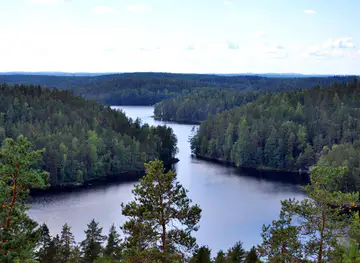
Explore Savo’s Finnish lake landscapes, medieval Olavinlinna, Kuopio food culture, forest trails and Saimaa’s island national parks.
Read more about Savo
When is the best time to visit Savo?
Best: June–August · 20–22°C| Month | High (°C) | Rainfall (mm) |
|---|---|---|
| January | -5 | 40 |
| February | -3 | 35 |
| March | 2 | 40 |
| April | 8 | 45 |
| May | 16 | 50 |
| June (best) | 21 | 60 |
| July (best) | 22 | 70 |
| August (best) | 20 | 70 |
| September | 14 | 60 |
| October | 7 | 50 |
| November | 2 | 45 |
| December | -2 | 40 |
Getting to and around Savo
How to get there
Transportation
Top city travel guides in Savo
The cities of Savo, and the easiest places to base yourself.
-

-
-

-


Swipe for more cities
Destinations in Savo
Resorts, valleys and scenic spots worth a trip of their own.
-
-

-

-


Swipe for more destinations
Best attractions in Savo
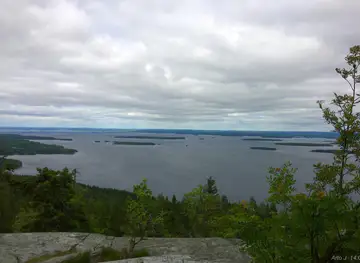
Savo’s attractions are organised around lakes, forests and historic inland settlements rather than a single metropolitan centre. Kuopio offers the strongest urban programme, with the Puijo outdoor area, museums, galleries, a market-square food culture and lakefront recreation. Savonlinna combines a compact historic setting with Olavinlinna Castle, boat trips and the summer opera season, while Mikkeli adds wartime history, manor-house culture and access to the southern lakeland. The region’s natural highlights include Linnansaari and Kolovesi national parks, where visitors can hike, paddle and explore island landscapes associated with the Saimaa ringed seal. Heinävesi is home to Valamo Monastery and Lintula Holy Trinity Convent, important religious and cultural destinations in a wooded lake setting. Astuvansalmi’s prehistoric rock paintings near Ristiina provide a more remote encounter with the ancient history of the region. Around Varkaus, industrial heritage illustrates the economic importance of timber, engineering and water transport. Summer brings cruises, swimming, fishing and cycling, while winter shifts the focus towards cross-country skiing, snowshoeing and other cold-weather activities when conditions allow.
-
Tourist attraction
Santa Claus Village
Experience the magic of Christmas in Santa Claus Village, the enchanting home of Santa Claus, filled with festive activities and Arctic adventures.
-
Plaza
Senate Square
Explore the iconic Senate Square in Helsinki, a stunning architectural masterpiece and cultural hub at the heart of the city, rich in history and charm.
-
 Tourist attraction
Olavinlinna
Explore Olavinlinna, a stunning medieval castle in Savonlinna, Finland, blending history, culture, and breathtaking natural beauty.
-
Tourist attraction
Kuopio Market
Experience the colorful atmosphere and authentic flavors at Kuopio Market, a must-visit destination for food lovers and cultural enthusiasts in Finland.


Best landmarks in Savo
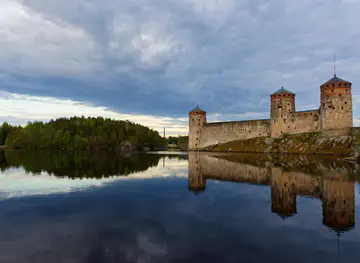
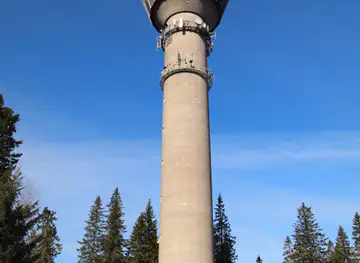
Olavinlinna is Savo’s defining architectural landmark: a fifteenth-century castle built on an island in Savonlinna, with thick stone walls and towers that demonstrate the strategic importance of the eastern frontier. Kuopio’s Puijo Tower and hill form a recognisable urban landmark, rising above Lake Kallavesi and the surrounding forested landscape. In Mikkeli, the headquarters museum at Sairila preserves the city’s association with Finnish military command during the Second World War, while the cathedral provides an important historic presence in the centre. The Orthodox Valamo Monastery at Heinävesi is both a religious landmark and a notable example of a living cultural institution within the lake district. Astuvansalmi’s rock paintings near Ristiina are less monumental in scale but carry exceptional archaeological significance, presenting images made on a lakeside rock face thousands of years ago. The island landscapes and waterways of Linnansaari and Kolovesi national parks also function as natural landmarks, illustrating the geological and ecological character of Saimaa more clearly than any built monument.
-
Market
Helsinki Market Square
Experience the vibrant culture of Helsinki at the iconic Market Square, where local flavors and artisan crafts come together by the beautiful waterfront.
-
Theme park
Santa Claus Village
Experience the year-round magic of Santa Claus Village in Rovaniemi, Finland, where festive charm and winter adventures await every traveler.
-
Plaza
Senate Square
Explore Senate Square, Helsinki's architectural gem, surrounded by historic landmarks and vibrant culture, perfect for leisurely strolls and unforgettable experiences.
-
Park
Esplanadi
Discover Esplanadi, Helsinki's enchanting park filled with greenery, culture, and vibrant public life, perfect for relaxation and exploration.


Explore Savo on the map
Plan your trip on one map. See where the top cities, national parks and sights are, and book hotels and experiences in a few clicks.
Best hotels in Savo
Best restaurants in Savo
Savo’s food culture is rooted in eastern Finnish produce and the resources of the lake and forest. Kuopio is the best place to encounter kalakukko, a rye-crusted pie traditionally filled with fish and pork, alongside market stalls selling pastries, berries, mushrooms and seasonal vegetables. Freshwater fish, especially vendace, appears in homes, cafés and restaurants, while local menus may also feature game and carefully sourced forest ingredients. Mikkeli and Savonlinna provide a mixture of contemporary restaurants, traditional Finnish eateries, hotel dining rooms and lakeside establishments, with summer terraces becoming particularly popular. Rural inns, farm cafés and food producers offer a more seasonal experience, though opening dates and hours vary considerably. Finnish coffee culture is visible throughout the region, and rye breads, cinnamon buns, berry desserts and cheeses are common accompaniments. Local breweries and other Finnish drinks complement the dining scene, but visitors should distinguish genuinely Savonian specialities from dishes and customs shared across the country.
-
Finnish
Nili Restaurant
Experience authentic Finnish flavors at Nili Restaurant in Rovaniemi - where tradition meets modern culinary artistry.
-
Finnish
Restaurant Savotta
Experience authentic Finnish flavors at Restaurant Savotta in Helsinki - where tradition meets taste in every dish.
-
Finnish
Muikkuravintola Sampo
Experience authentic Finnish cuisine at Muikkuravintola Sampo in Kuopio, where tradition meets flavor in every dish.
-
Finnish
Restaurant Kuu
Experience the essence of Finnish cuisine at Restaurant Kuu in Helsinki – where tradition meets modern culinary art.


Best bars in Savo
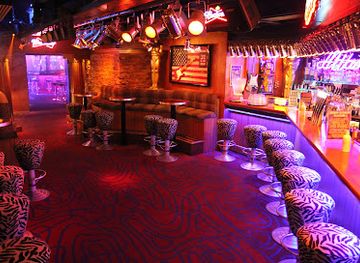
Evening life in Savo is generally modest and social rather than centred on a large club scene. Kuopio has the broadest choice of pubs, cocktail bars, live music venues and late-opening restaurants, supported by its student population and sizeable urban audience. Mikkeli and Savonlinna offer traditional pubs, hotel bars, restaurants and seasonal terraces, with Savonlinna becoming busier during the opera festival and summer lake season. In smaller communities, evenings usually revolve around local pubs, community events, dance venues or a lakeside restaurant rather than a succession of dedicated nightclubs. Brewery taprooms and bars can provide a taste of contemporary Finnish drinks culture, while historic inns offer a quieter setting. Opening arrangements vary by town and season, so check locally rather than assuming that rural venues operate late. During summer, daylight lasts late into the evening; in winter, indoor cultural events and relaxed dining are often more significant than nightlife.
-
Bar
Kaisla
Discover Kaisla, a vibrant bar in Helsinki offering a wide selection of craft beers and a lively atmosphere perfect for tourists and locals alike.
-
Pub
Henry's Pub Helsinki
Discover the lively Henry's Pub in Helsinki, where delicious chicken wings meet an exciting nightlife in the heart of the city.
-
Bar
The Riff
Experience the vibrant nightlife of Helsinki at The Riff, where eclectic drinks and live music create unforgettable moments.
-
Pub
Kitty's Public House
Discover the lively charm of Kitty's Public House, where Finnish hospitality meets a vibrant pub atmosphere in the heart of Helsinki.


Best nightclubs in Savo
Evening life in Savo is generally modest and social rather than centred on a large club scene. Kuopio has the broadest choice of pubs, cocktail bars, live music venues and late-opening restaurants, supported by its student population and sizeable urban audience. Mikkeli and Savonlinna offer traditional pubs, hotel bars, restaurants and seasonal terraces, with Savonlinna becoming busier during the opera festival and summer lake season. In smaller communities, evenings usually revolve around local pubs, community events, dance venues or a lakeside restaurant rather than a succession of dedicated nightclubs. Brewery taprooms and bars can provide a taste of contemporary Finnish drinks culture, while historic inns offer a quieter setting. Opening arrangements vary by town and season, so check locally rather than assuming that rural venues operate late. During summer, daylight lasts late into the evening; in winter, indoor cultural events and relaxed dining are often more significant than nightlife.
-
Night club
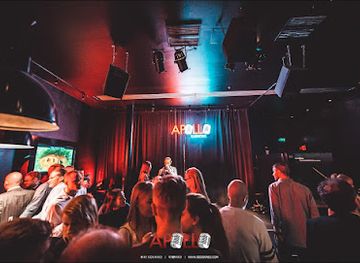
Apollo Live Club
Discover the heart of Helsinki's nightlife at Apollo Live Club, where live music and comedy create unforgettable experiences in a vibrant setting.
-
Hotel
Scandic Mikkeli
Discover the heart of Mikkeli at Scandic Mikkeli, where modern comfort meets Finnish hospitality for an unforgettable stay.
-
Night club
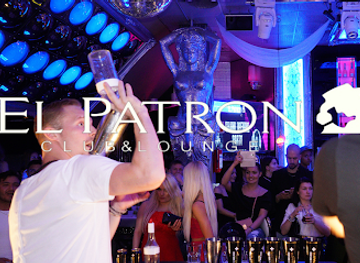
El Patron Club & Lounge
Unleash the night at El Patron Club & Lounge, Helsinki's ultimate destination for electrifying nightlife and unforgettable experiences.
-
Night club
Night Club Marilyn
Dive into the electrifying nightlife at Night Club Marilyn, Turku's premier venue for dancing, themed events, and vibrant entertainment.

Best shops in Savo
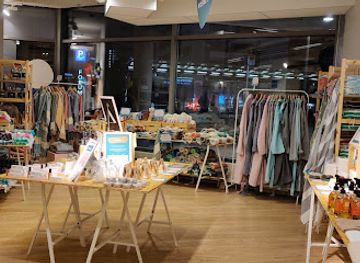
Kuopio Market Hall and the surrounding market square are useful starting points for Savo’s food shopping, with local and regional products such as kalakukko, rye baking, fish, berries and preserves. Market activity is more seasonal in smaller towns, where farm shops and roadside stalls may offer produce directly from nearby farms and forests. Savonlinna, Mikkeli and Kuopio have independent food shops, bookshops, galleries, design retailers and craft businesses, while rural areas are better suited to seeking pottery, textiles, wooden objects and handmade gifts than to conventional high-street shopping. Monastery shops at Valamo and Lintula offer religious items, books and selected food products in keeping with their communities. Finnish design is widely available across the country, but shopping in Savo is most distinctive when it focuses on edible regional specialities, forest products and locally made crafts. Retail hours and market days vary, especially outside the largest towns, so plan practical shopping before travelling to remote lake districts.
-
Market
Savonlinna Market Square
Explore the vibrant Savonlinna Market Square, where local flavors, crafts, and culture come together in a picturesque setting.
-
Shopping mall
Forum
Explore Forum Shopping Mall in Jyväskylä for a unique shopping and dining experience, featuring local and international brands in a vibrant atmosphere.
-
Shopping mall
Kämp Galleria
Discover the ultimate shopping experience at Kämp Galleria, Helsinki's luxury shopping mall offering fashion, fine dining, and cultural delights.
-
Shopping mall
Shopping Centre Stella
Explore Shopping Centre Stella in Mikkeli - your ultimate shopping destination with diverse shops, dining, and entertainment.



Get your free copy of our complete guide to Savo, delivered straight to you.
Everything on this page, from attractions and restaurants to essentials and local phrases, in one PDF you can read offline, print or share.
Already have an account? Sign in
Your Savo guide is ready.
We'll send it to · Not you? Sign out

Getting your guide ready…
We are putting together a fresh copy of the Savo guide. This can take up to a minute.
This can take a few moments. If your browser asks, choose Allow so the download can start. You'll find the guide in your Downloads folder.
Nothing happened? Download it again
Sorry, the guide is taking longer than usual. Please try again in a minute, or get it by email instead.
Savo essentials
Currency and Payment
Safety
Emergency Situations
Do's and Don'ts
Local Tips
From Eve
Local phrases worth knowing
You don't need to get them perfect. A few words go a long way, and locals appreciate the effort.
Basics
| English | Local | Say it |
|---|---|---|
| Hello | Moikka | [Moy-kah] |
| Goodbye | Näkemiin | [Nah-keh-meen] |
| Yes | Kyllä | [Kew-lah] |
| No | Ei | [Ay] |
| Please/You're welcome | Ole hyvä | [Oh-leh hoo-vah] |
| Thank you | Kiitos | [Kee-tos] |
| Excuse me/Sorry | Anteeksi | [Ahn-teh-ksee] |
| How are you? | Miten voit? | [Mee-ten voyt] |
| Fine. And you? | Hyvin. Entä sinä? | [Hoo-vin. En-tah see-nah] |
| Do you speak English? | Puhutko englantia? | [Poo-hoo-t-koh eng-lan-tee-ah] |
| I don't understand | En ymmärrä | [En um-mah-rah] |
Eating & Drinking
| English | Local | Say it |
|---|---|---|
| I'd like to see the menu, please | Haluaisin nähdä ruokalistan, kiitos | [Hah-loo-ais-in nah-dah roo-kah-lees-tan, kee-tos] |
| I don't eat meat | En syö lihaa | [En sy-oh lee-hah] |
| Cheers! | Kippis! | [Kip-pis] |
| I would like to pay, please | Haluaisin maksaa, kiitos | [Hah-loo-ais-in mak-sah, kee-tos] |
Emergencies
| English | Local | Say it |
|---|---|---|
| Help! | Apu! | [Ah-poo] |
| Go away! | Mene pois! | [Meh-neh po-is] |
| Call the Police! | Soita poliisi! | [Soy-tah poh-lee-see] |
| Call a doctor! | Soita lääkäri! | [Soy-tah leh-kah-ree] |
| I'm lost | Olen eksynyt | [Oh-len ex-y-noot] |
| I'm ill | Olen sairas | [Oh-len sigh-ras] |
Shopping
| English | Local | Say it |
|---|---|---|
| I'd like to buy... | Haluaisin ostaa... | [Hah-loo-ais-in os-tah] |
| I'm just looking | Katselen vain | [Kat-se-len vain] |
| How much is it? | Paljonko se maksaa? | [Pal-yon-koh seh mak-sah] |
| That's too expensive | Se on liian kallis | [Se on lee-ahn kal-lis] |
| Can you lower the price? | Voitko laskea hintaa? | [Voyt-koh las-keh-ah hin-tah] |
Time & Numbers
| English | Local | Say it |
|---|---|---|
| What time is it? | Mitä kello on? | [Mee-tah kel-lo on] |
| It's one o'clock | Kello on yksi | [Kel-lo on yook-si] |
| Half past (10) | Puoli yli (10) | [Poo-li yoo-lee (10)] |
| Morning | Aamu | [Ah-moo] |
| Afternoon | Iltapäivä | [Eel-tah-pai-vah] |
| Evening | Ilta | [Eel-tah] |
| Yesterday | Eilen | [Ay-len] |
| Today | Tänään | [Tah-nan] |
| Tomorrow | Huomenna | [Hoo-men-nah] |
| 1 | Yksi | [Yook-si] |
| 2 | Kaksi | [Kahk-si] |
| 3 | Kolme | [Kol-meh] |
| 4 | Neljä | [Nel-yah] |
| 5 | Viisi | [Vee-si] |
| 6 | Kuusi | [Koo-si] |
| 7 | Seitsemän | [Sate-se-man] |
| 8 | Kahdeksan | [Kah-dek-sahn] |
| 9 | Yhdeksän | [Yuh-dek-sahn] |
| 10 | Kymmenen | [Kum-meh-nen] |
Transport & Directions
| English | Local | Say it |
|---|---|---|
| Where's a/the...? | Missä on...? | [Mee-sah on] |
| What's the address? | Mikä on osoite? | [Mee-kah on oh-soh-teh] |
| Can you show me (on the map)? | Voitko näyttää minulle (kartalla)? | [Voyt-koh now-tah-eh min-o-leh (kar-tahl-lah)] |
| When's the next (bus)? | Milloin seuraava (bussi)? | [Mil-loin say-rah-vah (bus-see)] |
| A ticket (to ....) | Lippu (....) | [Lip-poo (....)] |
History of Savo
Prehistoric Settlement and Eastern Lake Trade
Savo’s lakes and waterways have supported human activity since prehistoric times. Fishing, hunting and seasonal movement connected communities across the Lakeland, while waterways provided practical routes through a difficult forest environment. Rock paintings at Astuvansalmi near Ristiina, now within Mikkeli, preserve images created thousands of years ago and are among the region’s most important prehistoric traces. Later settlement developed around farming, fishing and woodland resources, with lakes acting as corridors between communities rather than barriers.
The Medieval Eastern Frontier
During the Middle Ages, Savo lay within the shifting political and religious frontier between the Swedish kingdom and Novgorod, and later Russia. The construction of Olavinlinna at Savonlinna began in 1475 under Swedish rule to strengthen control of the eastern waterways and frontier. Its island position reflects the strategic importance of Lake Saimaa’s interconnected routes. Conflicts and negotiated border changes repeatedly affected the region, leaving castles, churches and settlement patterns shaped by the long competition between western and eastern powers.
Savonian Settlement and Slash-and-Burn Agriculture
From the sixteenth century, the Swedish Crown encouraged settlement in the interior, and Savonian farmers expanded into forested lake districts. Slash-and-burn cultivation, known in Finland as kaskiviljely, involved burning woodland to enrich the soil temporarily before moving to another patch. The practice supported population growth in areas where permanent fields were difficult to establish and contributed to Savonian migration into neighbouring parts of Finland and beyond. Its legacy survives in regional cultural history, although modern Savo is no longer shaped by this agricultural system.
War, Border Changes and the Growth of Market Towns
Savo endured repeated upheaval during the wars between Sweden and Russia, including the Great Northern War and the Russo-Swedish War of 1808–09. In 1809 Finland became an autonomous Grand Duchy of the Russian Empire, changing the political framework in which the region developed. Improved roads and waterways gradually strengthened market towns such as Kuopio, Mikkeli and Savonlinna. The expansion of timber trade and lake transport linked inland producers with wider Finnish and international markets.
Industrialisation, Timber and Water Transport
During the nineteenth and twentieth centuries, Savo’s forests became central to industrial development. Sawmills, pulp and paper production, and associated engineering expanded in places such as Varkaus, while steamships and later railways transformed movement across the lakes and connected inland industries with ports elsewhere in Finland. Varkaus remains particularly associated with industrial heritage and the energy of the modern forest industry. The region’s waterways therefore served both traditional local travel and the large-scale export economy that helped shape independent Finland.
Mikkeli and Finland’s Second World War Headquarters
Mikkeli was the headquarters of Finland’s army during much of the Second World War, making the city a significant centre of military command during the Winter War and Continuation War. The headquarters operated through a network of offices and communications facilities in and around the town, including the preserved wartime headquarters museum at Sairila. This history is important not only for understanding Finland’s wartime experience but also for recognising Mikkeli’s strategic location within the country’s eastern interior.
Modern Lakeland Culture and Conservation
After the Second World War, Savo combined industrial growth with an expanding identity as a destination for lake holidays, cultural festivals and outdoor recreation. Savonlinna Opera Festival developed into one of Finland’s best-known summer arts events, while Kuopio became a major urban and cultural centre in eastern Finland. Conservation efforts created national parks including Linnansaari and Kolovesi, protecting islands, forests and habitats for the Saimaa ringed seal. Contemporary Savo consequently balances working landscapes with tourism and environmental stewardship.
Savo in Photos
Browse through our photo collection highlighting the charm and character of the destination.
Neighbouring regions of Savo
The closest regions to Savo, if you have time for more than one.
-
-

-

-

-


Swipe for more regions
Explore more

Explore more of Finland
Explore Finland, where the Midnight Sun meets the Northern Lights, offering a unique blend of natural beauty, rich culture, and unforgettable experiences.
Explore Finland