

Coral Gables (Miami) Travel Guide - Free
Explore Coral Gables in Miami with Evendo's free guide. Find the best shops, historic streets, restaurants, and gems on web or mobile.


Coral Gables, Miami, pairs Mediterranean Revival architecture with Venetian Pool, Miracle Mile, tropical gardens, galleries, dining and shady boulevards.
A Planned Garden City
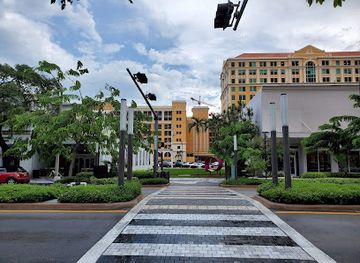
Coral Gables occupies a leafy section of southwest Miami shaped by boulevards, canals, courtyards and Mediterranean Revival architecture. Developed by George Merrick in the 1920s, it was conceived as a carefully planned suburb rather than an improvised extension of the city. Coral-coloured stucco, decorative gateways, arcades and tiled roofs still give parts of the city a visual coherence that is unusual in metropolitan South Florida, although later development has added modern offices, apartments and commercial centres.Read more about Coral Gables
Architecture, Water and Public Spaces
Culture and Everyday Life
Best attractions in Coral Gables
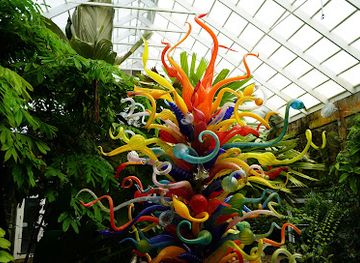
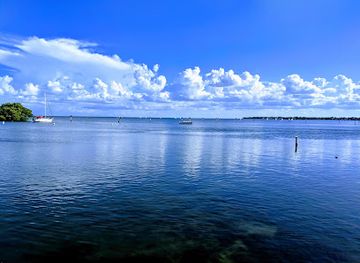
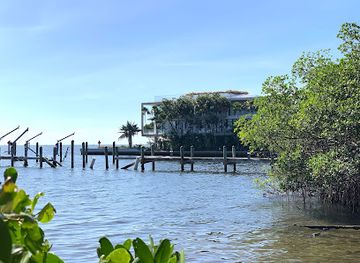
Coral Gables' attractions reflect its planned-city origins and tropical setting. The Venetian Pool is the best-known local experience: a historic swimming complex formed from a coral-rock quarry and designed with bridges, grottos and Mediterranean details, subject to seasonal access arrangements. Miracle Mile and nearby Giralda Avenue provide a walkable concentration of shops, restaurants, galleries and the Actors' Playhouse at the Miracle Theatre. The Biltmore Hotel is a major architectural presence, while the broad boulevards and decorative entrances around the residential streets reward an unhurried architectural walk. In the wider Coral Gables area, Fairchild Tropical Botanic Garden offers extensive collections of tropical plants and landscaped paths, and Matheson Hammock Park adds mangroves, waterfront scenery and a tidal lagoon. The Lowe Art Museum, on the University of Miami campus, brings an important cultural institution to the neighbourhood's eastern side.
-
Botanical garden
Fairchild Tropical Botanic Garden
Explore Fairchild Tropical Botanic Garden, a lush paradise in Coral Gables, FL, showcasing tropical plants, art, and serene landscapes for a unique experience.
15 min drive · 5.0 km from neighbourhood centre
-
Park
Peacock Park
Explore the beauty of Peacock Park in Coconut Grove, Miami - a lush urban oasis perfect for relaxation and vibrant outdoor activities.
8 min drive · 2.8 km from neighbourhood centre
-
Park
The Barnacle Historic State Park
Experience the rich history and serene beauty of The Barnacle Historic State Park, a tranquil oasis in Coconut Grove, Miami.
8 min drive · 2.6 km from neighbourhood centre
-
Park
Ingraham Park
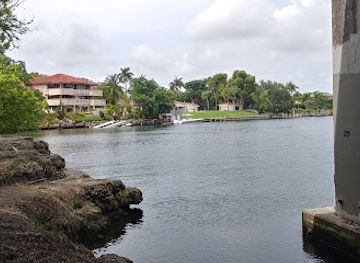
Discover the tranquility of Ingraham Park in Coral Gables, a beautiful green space perfect for relaxation, picnics, and enjoying the Florida sunshine.
5 min drive · 1.8 km from neighbourhood centre
Best landmarks in Coral Gables
Coral Gables' landmarks express the ambitions of its 1920s planned development. The Venetian Pool is both a public swimming facility and a carefully designed architectural ensemble, using coral rock, arches, bridges and water features to evoke a Mediterranean setting. The Biltmore Hotel, with its monumental scale and highly recognisable tower, remains the most prominent historic building in the city. Along Ponce de Leon Boulevard and nearby residential avenues, gateways, arcades, stucco façades and tiled details preserve the visual language associated with George Merrick's original plan. The Miracle Theatre on Miracle Mile is a significant cultural building now used by Actors' Playhouse, while the Coral Gables Congregational United Church of Christ and other established civic and religious buildings contribute to the area's historic streetscape. The University of Miami campus adds a contrasting institutional landmark landscape nearby.
-
Shopping mall
Miracle Mile & Downtown Coral Gables
Explore the enchanting Miracle Mile & Downtown Coral Gables, a vibrant destination for shopping, dining, and artistic cultural experiences in Florida.
10 min drive · 3.2 km from neighbourhood centre
-
Park
Merrick Park
Discover the serene beauty of Merrick Park in Coral Gables, a vibrant urban oasis with lush gardens and engaging community events.
9 min drive · 3.1 km from neighbourhood centre
-
Museum
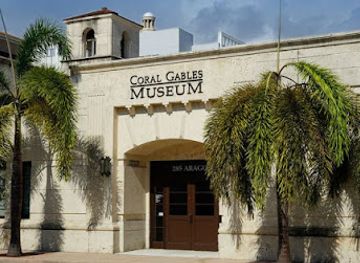
Coral Gables Museum
Explore the Coral Gables Museum, a captivating destination showcasing art, history, and community in the heart of Coral Gables, Florida.
10 min drive · 3.3 km from neighbourhood centre
-
Museum
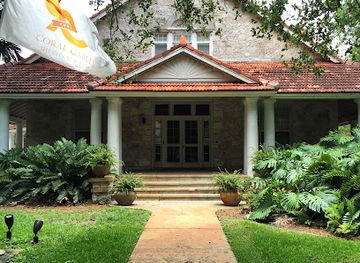
Coral Gables Merrick House
Discover the historical charm of Coral Gables Merrick House, where the legacy of the city's founder comes to life in a beautiful setting.
9 min drive · 3.1 km from neighbourhood centre
Explore Coral Gables on the map
A handpicked selection of must-see spots in Coral Gables, mapped for you.
Best hotels in Coral Gables
Best restaurants in Coral Gables
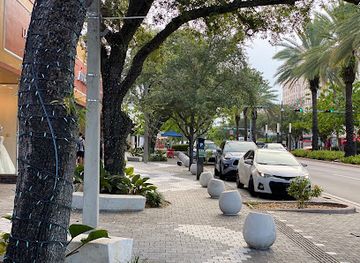
Coral Gables has one of Miami's more established dining districts, centred on Miracle Mile, Giralda Avenue and the surrounding blocks of downtown Coral Gables. The scene ranges from polished restaurants and hotel dining rooms to cafés, bakeries, wine-focused venues and independent places serving Latin American, Mediterranean, Italian, American and seafood-oriented food. The neighbourhood's international character is especially apparent in the number of Spanish and Latin American influences woven into contemporary menus, while the leafy streets and shaded terraces make outdoor dining a natural part of the experience. The area around the Shops at Merrick Park adds further restaurants in a large modern retail setting, and the Biltmore provides a more formal historic backdrop. Dining is generally concentrated in identifiable commercial corridors rather than scattered evenly through the residential streets, so visitors staying near canals and villas may need transport to reach the main choice of venues.
-
Spanish
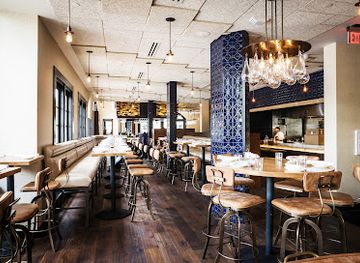
Bulla Gastrobar
Discover authentic Spanish cuisine at Bulla Gastrobar in Coral Gables—where every dish tells a story and every drink delights the senses.
9 min drive · 3.2 km from neighbourhood centre
-
New American
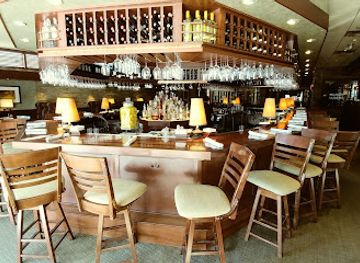
Seasons 52
Discover the essence of New American cuisine at Seasons 52 in Coral Gables—where seasonal flavors meet fine dining elegance.
10 min drive · 3.2 km from neighbourhood centre
-
Breakfast
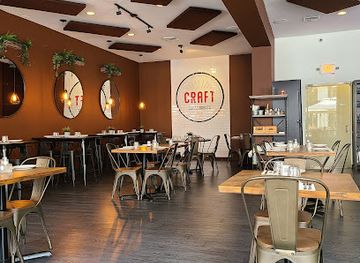
CRAFT Coral Gables
Discover exquisite breakfast and brunch at CRAFT Coral Gables - where New American cuisine meets local charm.
11 min drive · 3.5 km from neighbourhood centre
-
Argentinian
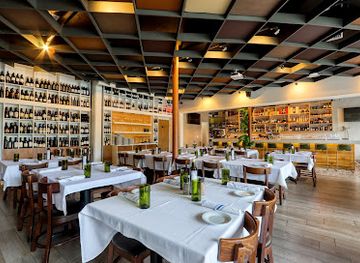
Graziano's Restaurant Coral Gables
Experience authentic Argentinian cuisine at Graziano's Restaurant in Coral Gables - where every dish tells a story.
10 min drive · 3.3 km from neighbourhood centre
Best bars in Coral Gables
Nightlife in Coral Gables is more restaurant-led and cultural than club-centred. Miracle Mile and Giralda Avenue stay active into the evening with cocktail bars, wine bars, hotel lounges and restaurants, while the Biltmore offers a more formal setting in a landmark building. The Actors' Playhouse at the Miracle Theatre provides theatre nights rather than conventional nightlife, and occasional performances or cultural programming around the university add another evening option. Coral Gables has no single late-night entertainment strip comparable with South Beach or Brickell, and much of the city becomes quieter beyond the commercial core. Visitors moving between venues should account for the neighbourhood's extensive layout and use a taxi, rideshare, the trolley where operating, or a pre-planned walk along well-lit commercial streets rather than assuming every attraction is close together.
-
Spanish
Bulla Gastrobar
Experience the vibrant flavors of Spain at Bulla Gastrobar in Coral Gables, where tapas and cocktails come together in an inviting atmosphere.
9 min drive · 3.2 km from neighbourhood centre
-
New American
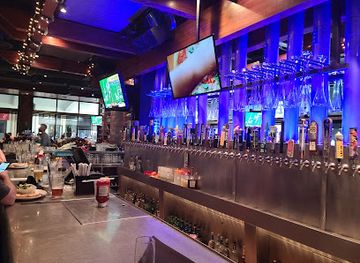
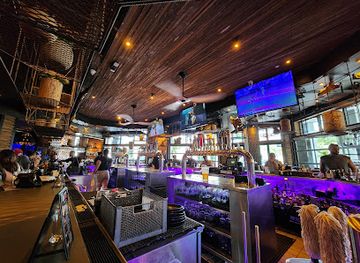
Yard House
Experience the best of New American cuisine and craft beer at Yard House in Coral Gables, a perfect spot for food lovers and sports fans alike.
18 min walk · 1.5 km from neighbourhood centre
-
Gastropub
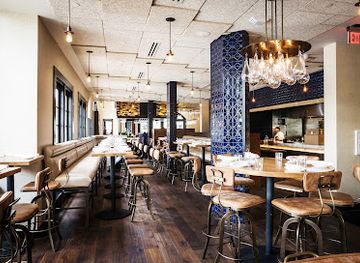
Tap 42 Craft Kitchen & Bar - Coral Gables
Discover Tap 42 Craft Kitchen & Bar in Coral Gables – where innovative cuisine meets a vibrant atmosphere, perfect for any dining occasion.
10 min drive · 3.4 km from neighbourhood centre
-
Bar
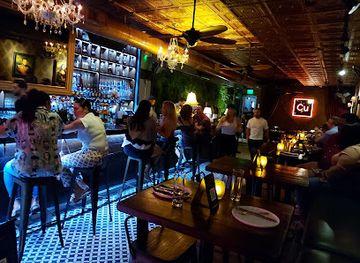
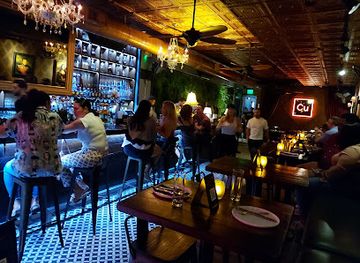
Copper 29 Bar
Discover the lively Copper 29 Bar, where delicious American cuisine meets vibrant nightlife in Coral Gables, Florida.
10 min drive · 3.2 km from neighbourhood centre
Best nightclubs in Coral Gables
Nightlife in Coral Gables is more restaurant-led and cultural than club-centred. Miracle Mile and Giralda Avenue stay active into the evening with cocktail bars, wine bars, hotel lounges and restaurants, while the Biltmore offers a more formal setting in a landmark building. The Actors' Playhouse at the Miracle Theatre provides theatre nights rather than conventional nightlife, and occasional performances or cultural programming around the university add another evening option. Coral Gables has no single late-night entertainment strip comparable with South Beach or Brickell, and much of the city becomes quieter beyond the commercial core. Visitors moving between venues should account for the neighbourhood's extensive layout and use a taxi, rideshare, the trolley where operating, or a pre-planned walk along well-lit commercial streets rather than assuming every attraction is close together.
-
Bar
Copper 29 Bar
Explore the lively Copper 29 Bar in Coral Gables, where American cuisine meets vibrant nightlife and live music for an unforgettable experience.
10 min drive · 3.2 km from neighbourhood centre
-
Bar
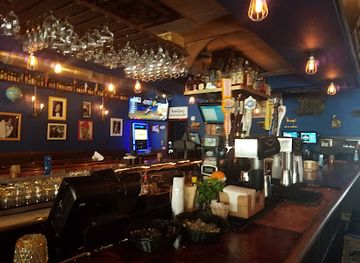
The Bar
Experience the lively nightlife at The Bar in Coral Gables, offering a perfect blend of cocktails, entertainment, and a vibrant atmosphere.
10 min drive · 3.5 km from neighbourhood centre
-
Bar
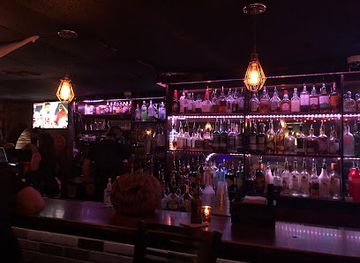
Jada Coles
Experience the pulse of Miami nightlife at Jada Coles - where cocktails, karaoke, and live music come together in a vibrant setting.
13 min drive · 4.3 km from neighbourhood centre
-
Grill
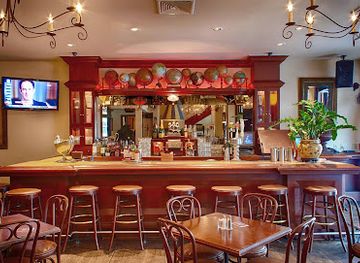
The Globe
Experience the fusion of exquisite grill cuisine and live jazz in the heart of Coral Gables at The Globe, a must-visit culinary destination.
10 min drive · 3.5 km from neighbourhood centre
Best shops in Coral Gables
Shopping is concentrated around Miracle Mile, Giralda Avenue, Ponce de Leon Boulevard and the Shops at Merrick Park. Miracle Mile combines clothing, jewellery, beauty, homeware and independent businesses with cafés, restaurants and cultural venues, giving the district a more local commercial rhythm than a single enclosed mall. Books & Books, founded in Coral Gables, is an important literary landmark with a strong connection to the city's cultural life. Merrick Park offers a large contemporary retail environment with international and designer-oriented brands, restaurants and landscaped public areas. The neighbourhood is not primarily known for flea markets or craft bazaars; its retail identity is instead shaped by established shopping streets, specialist businesses, book culture, galleries and polished open-air commercial development. Visitors should distinguish these central retail areas from the quieter residential avenues, where shopping options are limited.
-
Shopping mall
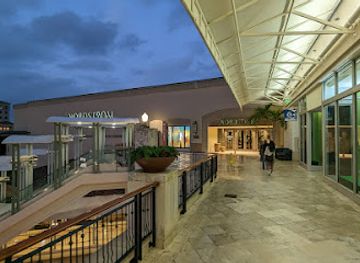
Shops at Merrick Park
Discover luxury shopping and delightful dining at the Shops at Merrick Park in Coral Gables, a premier destination for discerning visitors.
17 min walk · 1.4 km from neighbourhood centre
-
Shopping mall
Miracle Mile & Downtown Coral Gables
Discover the lively shopping, dining, and cultural experiences at Miracle Mile & Downtown Coral Gables, a must-visit destination in Florida.
10 min drive · 3.2 km from neighbourhood centre
-
Shopping mall
University Shopping Center
Explore the dynamic University Shopping Center in Coral Gables, where shopping, dining, and local culture come together for an unforgettable experience.
15 min walk · 1.2 km from neighbourhood centre
-
Boutique
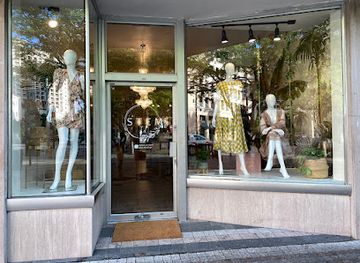
Stem Boutique Coral Gables
Discover exclusive fashion pieces at Stem Boutique in Coral Gables, where style meets local artistry in a chic shopping environment.
10 min drive · 3.5 km from neighbourhood centre
Coral Gables essentials
Getting There
Getting Around
Safety
Emergency Situations
Do's and Don'ts
Local Tips

From Eve
Local phrases worth knowing
You don't need to get them perfect. A few words go a long way, and locals appreciate the effort.
Basics
| English | Local | Say it |
|---|---|---|
| Hello | Hey | [Hey] |
| Goodbye | Bye | [Bye] |
| Yes | Yeah | [Yeah] |
| No | Nope | [Nope] |
| Please/You're welcome | Please/No worries | [Please/No worries] |
| Thank you | Thanks | [Thanks] |
| Excuse me/Sorry | Excuse me/My bad | [Excuse me/My bad] |
| How are you? | How are you? | [How are you?] |
| Fine. And you? | Good. You? | [Good. You?] |
| Do you speak English? | Do you speak English? | [Do you speak English?] |
| I don't understand | I don't get it | [I don't get it] |
Eating & Drinking
| English | Local | Say it |
|---|---|---|
| I'd like to see the menu, please | Let me see the menu, please | [Let me see the menu, please] |
| I don't eat meat | I don't eat meat | [I don't eat meat] |
| Cheers! | Cheers! | [Cheers!] |
| I would like to pay, please | I want to pay, please | [I want to pay, please] |
Emergencies
| English | Local | Say it |
|---|---|---|
| Help! | Help! | [Help!] |
| Go away! | Get lost! | [Get lost!] |
| Call the Police! | Call the cops! | [Call the cops!] |
| Call a doctor! | Get a doctor! | [Get a doctor!] |
| I'm lost | I'm lost | [I'm lost] |
| I'm ill | I'm sick | [I'm sick] |
Shopping
| English | Local | Say it |
|---|---|---|
| I'd like to buy... | I wanna buy... | [I wanna buy...] |
| I'm just looking | I'm just browsing | [I'm just browsing] |
| How much is it? | How much does it cost? | [How much does it cost?] |
| That's too expensive | That's too pricey | [That's too pricey] |
| Can you lower the price? | Can you drop the price? | [Can you drop the price?] |
Time & Numbers
| English | Local | Say it |
|---|---|---|
| What time is it? | What time is it? | [What time is it?] |
| It's one o'clock | It's one | [It's one] |
| Half past (10) | Ten thirty | [Ten thirty] |
| Morning | Morning | [Morning] |
| Afternoon | Afternoon | [Afternoon] |
| Evening | Evening | [Evening] |
| Yesterday | Yesterday | [Yesterday] |
| Today | Today | [Today] |
| Tomorrow | Tomorrow | [Tomorrow] |
| 1 | One | [One] |
| 2 | Two | [Two] |
| 3 | Three | [Three] |
| 4 | Four | [Four] |
| 5 | Five | [Five] |
| 6 | Six | [Six] |
| 7 | Seven | [Seven] |
| 8 | Eight | [Eight] |
| 9 | Nine | [Nine] |
| 10 | Ten | [Ten] |
Transport & Directions
| English | Local | Say it |
|---|---|---|
| Where's a/the...? | Where's the...? | [Where's the...?] |
| What's the address? | What's the address? | [What's the address?] |
| Can you show me (on the map)? | Can you show me (on the map)? | [Can you show me (on the map)?] |
| When's the next (bus)? | When's the next (bus)? | [When's the next (bus)?] |
| A ticket (to ....) | A ticket (to ....) | [A ticket (to ....)] |
History of Coral Gables
Merrick's Suburban Vision
Coral Gables grew from the land-development vision of George Merrick, who began planning the community in the early 1920s on former agricultural land and family property southwest of central Miami. Merrick organised the new suburb around landscaped boulevards, parks, canals and themed architectural details inspired by Spain and the Mediterranean. Coral Gables was incorporated as a municipality in 1925, giving the planned development its own civic identity. Its name combined the coral-rock character of South Florida with the Merrick family's home, Gables. The design was marketed as an idealised garden city, but its creation also reflected the intense real-estate speculation that transformed Miami-Dade County during the Florida land boom.
Architecture and the Land Boom
The mid-1920s brought rapid construction to Coral Gables, including villas, commercial buildings, gateways and public amenities in the Mediterranean Revival style. The Venetian Pool opened in 1924 after a former coral quarry was converted into a swimming complex, while the Biltmore Hotel opened in 1926 as a major resort and landmark. The boom collapsed after the 1926 Miami hurricane, transport and credit problems, and a wider property-market downturn. Coral Gables did not develop exactly as Merrick had imagined, but the early layout and architectural vocabulary survived strongly enough to shape the city's later identity.
University and Civic Growth
The arrival of the University of Miami added an important educational and cultural presence to Coral Gables. Founded in 1925, the university opened its campus in the city in 1926 and gradually became one of the district's major institutions. Its growth brought students, researchers, performing arts, sporting facilities and museums to an area previously known chiefly for planned residential development. During the mid-century decades, Coral Gables also became more connected to the expanding Miami metropolitan region through improved roads and commercial corridors. Ponce de Leon Boulevard and Miracle Mile developed into significant business and retail centres while the older residential plan remained visible in the surrounding streets.
Preservation and Contemporary Change
From the later twentieth century onwards, Coral Gables balanced preservation of its planned architectural character with office development, new housing, international business and evolving retail districts. Miracle Mile was reshaped by changing shopping habits and urban-revitalisation efforts, while newer projects such as the Shops at Merrick Park introduced a large contemporary commercial complex near the city's northeastern edge. The Venetian Pool, the Biltmore area, historic streetscapes and former entrances continue to express the 1920s identity, even as the city functions as a modern employment and cultural centre within metropolitan Miami. University life, gardening institutions and a diverse dining scene now sit alongside Merrick's original civic ambitions.
Coral Gables in Photos
Browse through our photo collection highlighting the charm and character of the destination.
Neighbourhoods near Coral Gables
The closest neighbourhoods to Coral Gables, if you have time for more than one stop.
-

-

-

-


Swipe for more neighbourhoods
Explore more

Explore more of Miami
Miami blends Art Deco architecture, Caribbean culture, beaches, museums and Everglades access into a dynamic Florida city shaped by water and migration.
Explore Miami