

Statue Théodore Aubanel, Avignon Travel Guide
Free Guide: Discover the Statue of Théodore Aubanel in Avignon, a tribute to a celebrated Provençal poet and a key figure in the Félibrige movement, championing Occitan language and culture.


A brief summary of Statue Théodore Aubanel
Discover the Statue of Théodore Aubanel in Avignon, a tribute to a celebrated Provençal poet and a key figure in the Félibrige movement, championing Occitan language and culture.
The Statue of Théodore Aubanel in Avignon stands as a tribute to the renowned Provençal poet and one of the founders of the Félibrige movement, which championed the revival of the Occitan language and culture. Théodore Aubanel, born in Avignon in 1829, is celebrated for his lyrical poetry and plays, often exploring themes of love, loss, and the beauty of Provence. The statue serves as a reminder of Avignon's rich literary heritage and Aubanel's significant contribution to Provençal literature. Located in a charming area of Avignon, the statue invites visitors to reflect on the poet's legacy and explore the city's cultural treasures. It's a poignant reminder of Avignon's artistic soul and a testament to the enduring power of poetry.
Opening hours
- Every day7:30 am–6 pm
Opening hours as listed on the venue’s Google Business Profile. Hours can change for services and special events, so check with the venue before you go.
- Address
- 1 Imp. de la Gazelle, 84000 Avignon
Getting there
Walking
Public Transport
Taxi/Ride-Share
Driving
Discover more about Statue Théodore Aubanel
Overview
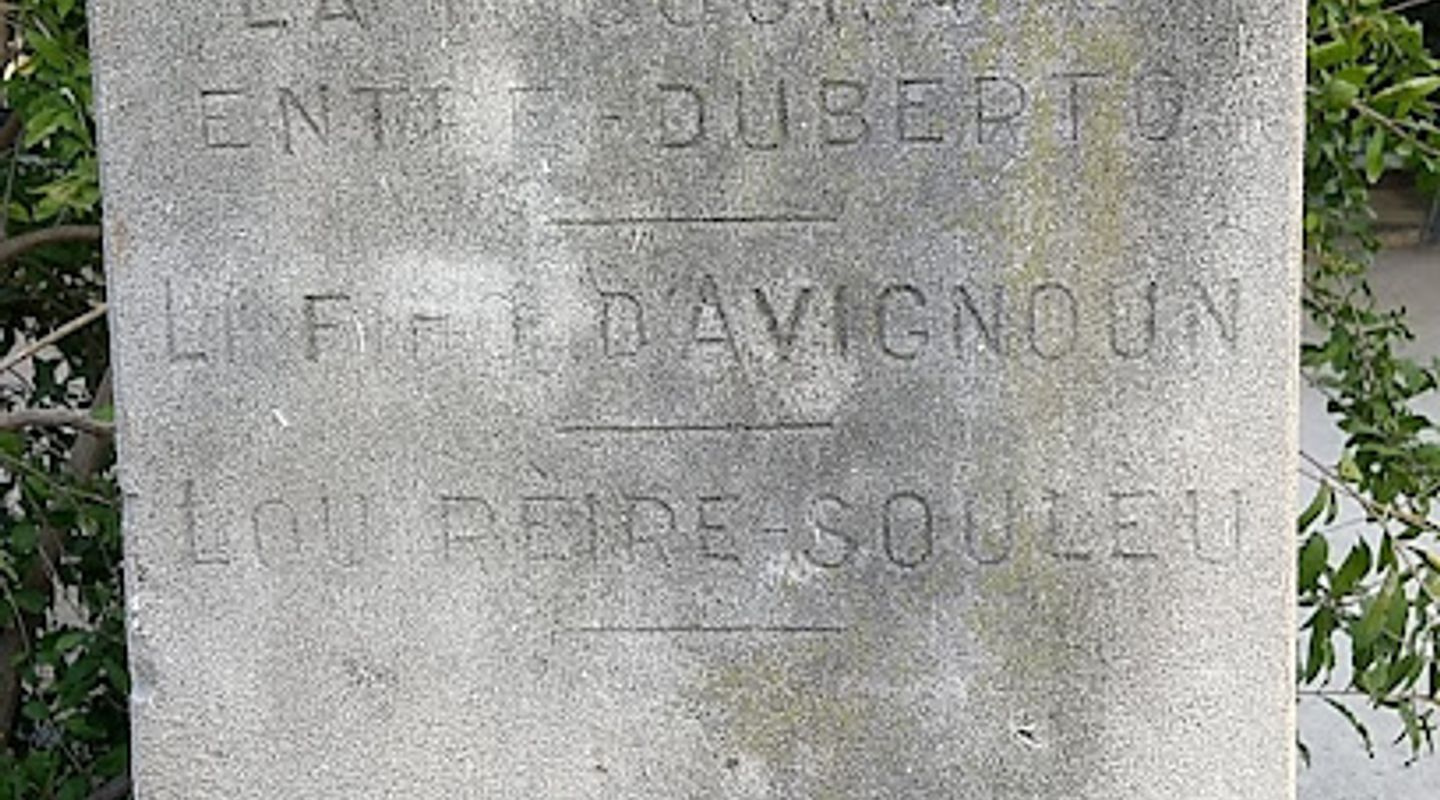
The Statue of Théodore Aubanel, nestled in the heart of Avignon, France, stands as a lasting tribute to one of the region's most celebrated poets and a key figure in the revival of Provençal language and culture. Théodore Aubanel, born in Avignon in 1829, was not only a gifted writer but also a passionate advocate for the preservation of the Occitan language, the historical language of southern France. His statue serves as a focal point for those seeking to connect with Avignon's rich literary history and the enduring spirit of Provence. Aubanel's life was deeply intertwined with the city of Avignon. Born into a family of printers who served the Papal Palace, Aubanel initially followed in the family business. However, his heart belonged to poetry, and he soon dedicated himself to writing in the Provençal language. He became a leading member of the Félibrige, a literary movement founded in 1854 with the goal of revitalizing Occitan language and literature. Alongside Frédéric Mistral and Joseph Roumanille, Aubanel played a pivotal role in shaping the movement's direction and promoting the beauty and expressiveness of Provençal. Aubanel's poetry is characterized by its lyrical beauty, emotional depth, and vivid portrayal of Provençal life. His most famous works include "La Mióugrano Entr'ouvèto" (The Half-Open Pomegranate), a collection of love poems inspired by his unrequited love for Jenny Manivet, and "Li Fiho d'Avignoun" (The Girls of Avignon), a collection of sensual poems that celebrate the beauty and spirit of Avignon's women. His plays, such as "Lou Paou dou Pecat" (The Bread of Sin), explore themes of sin, redemption, and the complexities of human relationships. The statue itself is a bronze sculpture that captures Aubanel's likeness with remarkable detail. It depicts the poet in a contemplative pose, his gaze fixed on the distance, as if searching for inspiration. The statue is set on a stone pedestal, which bears an inscription commemorating Aubanel's life and work. The statue was originally placed next to his birth house, but was melted down during the Vichy regime. In 1952 a new statue was erected in the Jardin Agricol Perdiguier. Visiting the Statue of Théodore Aubanel offers a unique opportunity to delve into Avignon's cultural heritage and gain a deeper appreciation for the Provençal language and literature. The statue is located in a charming square, surrounded by historic buildings and quaint cafes. It's a perfect spot to take a break from sightseeing and reflect on the poet's legacy. Beyond the statue itself, visitors can explore other sites in Avignon that are connected to Aubanel's life and work. The Maison Aubanel, the family's former printing house, is a beautiful example of 18th-century architecture. While it is now private apartments, a stèle at the entrance commemorates Théodore Aubanel and his family's legacy. The Musée Aubanel de l'Imprimerie, which once showcased the family's printing collections, no longer exists, but its memory lives on in the city's cultural history. To fully appreciate Aubanel's contribution to Provençal literature, consider attending a performance of one of his plays or reading his poetry in the original Occitan language. Several cultural organizations in Avignon offer courses and workshops on Provençal language and culture. Immersing yourself in the language will allow you to experience the full beauty and expressiveness of Aubanel's work. The Statue of Théodore Aubanel is more than just a monument; it's a symbol of Avignon's enduring cultural identity and the power of language to preserve and celebrate a region's unique heritage. A visit to this statue is a must for anyone interested in Provençal literature, history, and culture. It's a chance to connect with the spirit of a poet who dedicated his life to celebrating the beauty and soul of Provence. Avignon itself is a city steeped in history and culture, offering a wealth of attractions for visitors to explore. The Palais des Papes, a UNESCO World Heritage Site, is a magnificent example of medieval architecture and a testament to Avignon's role as the seat of the papacy in the 14th century. The Pont d'Avignon, another UNESCO World Heritage Site, is a picturesque bridge that spans the Rhône River, offering stunning views of the city. The city's ramparts, which encircle the historic center, provide a glimpse into Avignon's past as a fortified city. In addition to its historical landmarks, Avignon boasts a vibrant arts and culture scene. The city is home to numerous museums, art galleries, and theaters. The Festival d'Avignon, held every summer, is one of the world's most renowned theater festivals, attracting performers and audiences from around the globe. The city's lively markets offer a taste of Provençal gastronomy, with fresh produce, local cheeses, and regional wines. Whether you're a literature enthusiast, a history buff, or simply seeking to experience the charm of Provence, Avignon has something to offer everyone. The Statue of Théodore Aubanel serves as a starting point for exploring the city's rich cultural heritage and discovering the beauty and spirit of this captivating region.
Evendo Review Centre
 Google
Guest reviews
Explore Statue Théodore Aubanel on the map
A handpicked selection of must-see spots near Statue Théodore Aubanel, mapped for you.
Get your free copy of our complete guide to Statue Théodore Aubanel, delivered straight to you.
Everything on this page, from opening hours and how to get there to Eve’s tips and the best time to go, in one PDF you can read offline, print or share.
Already have an account? Sign in
Your Statue Théodore Aubanel guide is ready.
We'll send it to · Not you? Sign out

Getting your guide ready…
We are putting together a fresh copy of the Statue Théodore Aubanel guide. This can take up to a minute.
This can take a few moments. If your browser asks, choose Allow so the download can start. You'll find the guide in your Downloads folder.
Nothing happened? Download it again
Sorry, the guide is taking longer than usual. Please try again in a minute, or get it by email instead.
Other nearby places you may find interesting
The closest places of the same kind, if this one is not quite what you had in mind.
-
-
-
-
-


Swipe for more places
More to explore near Statue Théodore Aubanel
-
 Best experiences near Statue Théodore Aubanel
-
 Best hotels near Statue Théodore Aubanel
-
 Best landmarks near Statue Théodore Aubanel
-
 Best attractions near Statue Théodore Aubanel
-
 Best shops near Statue Théodore Aubanel
-
 Best restaurants near Statue Théodore Aubanel
-
 Best bars near Statue Théodore Aubanel


Do you manage this location?
Take control to get all the benefits, like improved information, better appearance, and stronger visibility across AI-powered discovery.
Explore more
Explore more of Avignon
Discover the historic charm, cultural vibrancy, and culinary delights of Avignon, the heart of Provence and a UNESCO World Heritage site.
Explore Avignon
Explore more of France
Explore France: A land of romance, history, and unparalleled beauty, from the iconic streets of Paris to the serene landscapes of Provence and the luxury of the French Riviera.
Explore France
