

Black Rock Mountain State Park, Georgia Travel Guide
Experience Georgia's highest state park with stunning vistas, diverse trails, and serene lakes at Black Rock Mountain State Park.
Black Rock Mountain State Park in Georgia is a haven for nature lovers and adventure seekers alike. Nestled in the Blue Ridge Mountains, it is the highest state park in Georgia, offering breathtaking views from an elevation of 3,640 feet. The park spans over 1,700 acres, providing a diverse landscape of forests, streams, and rugged terrain that appeals to hikers, campers, and photographers. For those who love hiking, the park boasts over 11 miles of trails. The Black Rock Lake Trail is a favorite, winding around a serene 17-acre lake. The Tennessee Rock Trail offers panoramic views of four states: Georgia, North Carolina, South Carolina, and Tennessee. Each trail provides unique flora and fauna, making every hike an adventure. In addition to hiking, the park has several scenic overlooks, perfect for picnicking or simply enjoying the view. The Ada-Hi Falls Trail leads to the park's highest waterfall, a must-see for visitors. The park also has a visitor center with informative exhibits and a gift shop. Campsites and cottages are available for those who wish to extend their stay and immerse themselves fully in the natural beauty of Black Rock Mountain State Park.

Know before you go
Hi, I'm Eve. Here are a few practical things to know before exploring Black Rock Mountain State Park.
- Visit in the early morning or late afternoon for the best lighting and fewer crowds at the scenic overlooks.
- Bring layers of clothing; weather can change rapidly due to the high elevation.
- Check trail conditions at the visitor center before heading out, especially after rain.
- Make reservations for campsites and cottages well in advance, especially during peak seasons.
- Carry plenty of water and snacks; some trails can be strenuous and remote.

Explore Black Rock Mountain State Park on the Map
A handpicked selection of must-see spots in Black Rock Mountain State Park, mapped for you.
Black Rock Mountain State Park Essentials
-
Black Rock Mountain State Park is located in Rabun County, Georgia. The nearest major airport is Hartsfield-Jackson Atlanta International Airport, approximately 120 miles away. From Atlanta, you can rent a car and drive to the park, which typically takes around 2.5 hours. Alternatively, you can take a Greyhound bus to nearby Clayton, Georgia, and then use local transportation or a taxi to reach the park.
-
The primary mode of transportation within Black Rock Mountain State Park is by car. The park's roads are well-maintained, but be prepared for steep and winding routes. Parking is available at various trailheads and scenic overlooks. While there is no public transportation within the park, local taxis and ride-sharing services like Uber or Lyft are available in nearby towns. It is advisable to rent a car for the most flexibility.
-
The official currency in the United States is the US Dollar (USD). Credit and debit cards are widely accepted in hotels, restaurants, and shops in the area. ATMs are available in nearby Clayton, but it is wise to carry some cash for smaller establishments and park fees. Contactless payments are also becoming increasingly common.
-
Black Rock Mountain State Park is generally a safe destination for tourists. However, as with any travel destination, it is important to take standard precautions. Avoid leaving valuables in your car and be mindful of your surroundings. The park itself does not have high-crime areas, but it is always best to stay vigilant, especially in more isolated areas. Exercise caution when hiking and always stay on marked trails.
-
In case of an emergency, dial 911 for immediate assistance. The park has trained rangers who can provide help and first aid. For medical emergencies, the nearest hospital is Mountain Lakes Medical Center in Clayton, Georgia, approximately 15 minutes away. It is recommended to have travel insurance that covers medical emergencies. Always carry a basic first aid kit when hiking.
-
Fashion: Do wear comfortable, weather-appropriate clothing and sturdy hiking boots. Avoid wearing flip-flops or sandals on trails. Religion: Do respect local customs and traditions if you visit any religious sites outside the park. Public Transport: Do use ride-sharing services or taxis for local travel. The park does not have public transport. Greetings: Do greet people with a friendly 'hello' or 'hi'. Southern hospitality is prevalent here. Eating & Drinking: Do try local Southern cuisine in nearby towns. Don't leave trash behind; always use designated bins.
-
To experience Black Rock Mountain State Park like a local, visit during the fall when the foliage is at its peak. The park offers some of the best views in Georgia, particularly from the Blue Ridge Overlook and the Tennessee Rock Trail. Engage with the park rangers, who are knowledgeable and can provide insider tips. Don't miss the Foxfire Museum and Heritage Center in nearby Mountain City for a dose of local history and culture.
When is the best time to visit Black Rock Mountain State Park?
Useful Local Phrases for Black Rock Mountain State Park
You don't need to speak the language perfectly. Even learning a few simple words can make conversations warmer—and locals usually appreciate the effort.
— Eve

Here are the phrases I use most often in Black Rock Mountain State Park. Try a few—you'll be surprised how far they go! 😊
❤️
-
- HelloHowdy
[hahw-dee] - GoodbyeSee ya
[see yuh] - YesYessir
[yes-sir] - NoNah
[nah] - Please/You're welcomePlease/No problem
[pleez/no prob-lem] - Thank youThanks a lot
[thanks uh lot] - Excuse me/SorryPardon me/My bad
[par-dun me/my bad] - How are you?How y'all doin'?
[how y'all doin'] - Fine. And you?I'm good. And y'all?
[I'm good. And y'all?] - Do you speak English?Y'all speak English?
[y'all speak English?] - I don't understandI ain't catchin' on
[I ain't catchin' on]
- HelloHowdy
-
- I'd like to see the menu, pleaseLet me see the grub list, please
[let me see the grub list, please] - I don't eat meatI don't do meats
[I don't do meats] - Cheers!Bottoms up!
[bottoms up!] - I would like to pay, pleaseI'm ready to settle up, please
[I'm ready to settle up, please]
- I'd like to see the menu, pleaseLet me see the grub list, please
-
- Help!I need some help!
[I need some help!] - Go away!Git on outta here!
[Git on outta here!] - Call the Police!Ring up the Law!
[Ring up the Law!] - Call a doctor!Get a healer over here!
[Get a healer over here!] - I'm lostI done lost my way
[I done lost my way] - I'm illI ain't feelin' right
[I ain't feelin' right]
- Help!I need some help!
-
- I'd like to buy...I'm fixin' to purchase...
[I'm fixin' to purchase...] - I'm just lookingI'm just browsin'
[I'm just browsin'] - How much is it?How much y'all askin'?
[How much y'all askin'?] - That's too expensiveThat's highfalutin'
[That's high-falutin'] - Can you lower the price?Can y'all come down on the price?
[Can y'all come down on the price?]
- I'd like to buy...I'm fixin' to purchase...
-
- What time is it?What's the time of day?
[What's the time of day?] - It's one o'clockIt's one on the dot
[It's one on the dot] - Half past (10)Half past ten
[Half past ten] - MorningMornin'
[Mornin'] - AfternoonAfternoon
[Afternoon] - EveningEvenin'
[Evenin'] - YesterdayYest'day
[Yest'day] - TodayToday
[Today] - TomorrowTomorra'
[Tomorra'] - 1One
[One] - 2Two
[Two] - 3Three
[Three] - 4Four
[Four] - 5Five
[Five] - 6Six
[Six] - 7Seven
[Seven] - 8Eight
[Eight] - 9Nine
[Nine] - 10Ten
[Ten]
- What time is it?What's the time of day?
-
- Where's a/the...?Where's the...
[Where's the...] - What's the address?What's the addy?
[What's the addy?] - Can you show me (on the map)?Can y'all point me out (on the map)?
[Can y'all point me out (on the map)?] - When's the next (bus)?When's the next bus rollin' through?
[When's the next bus rollin' through?] - A ticket (to ....)A pass (to ....)
[A pass (to ....)]
- Where's a/the...?Where's the...
History of Black Rock Mountain State Park
-
The Blue Ridge Mountains, which encompass Black Rock Mountain State Park, are among the oldest mountains in the world, dating back over a billion years. These mountains were formed during the Grenville orogeny, a period of intense geological activity that shaped much of the eastern United States. The dramatic peaks and valleys of the Blue Ridge Mountains are a testament to the power of natural forces over millions of years.
-
Before European settlers arrived, the region was inhabited by Native American tribes, primarily the Cherokee. The Cherokee people thrived in the fertile valleys and rugged mountains, relying on the land for sustenance and spiritual significance. Black Rock Mountain was considered a sacred area, and many trails within the park today follow the ancient paths created by these indigenous peoples.
-
In the early 19th century, European settlers began to move into the area, bringing with them new ways of life and industry. The lush forests of Black Rock Mountain were soon exploited for timber, with logging becoming a major economic activity. The impact of logging was profound, leading to significant deforestation and changes in the ecosystem.
-
Black Rock Mountain State Park was officially established in 1952, making it Georgia’s highest state park. The park was created to preserve the natural beauty of the area and provide recreational opportunities for the public. It was named after the dark-colored rock formations that are a prominent feature of the mountain. The establishment of the park marked a significant shift from exploitation to conservation.
-
During the Great Depression, the Civilian Conservation Corps (CCC) played a crucial role in developing the infrastructure of Black Rock Mountain State Park. The CCC was a New Deal program aimed at providing jobs and improving public lands. Workers built many of the park’s trails, roads, and facilities, leaving a lasting legacy that visitors still enjoy today.
-
In recent years, Black Rock Mountain State Park has become a focal point for conservation efforts aimed at protecting its unique ecosystems. Initiatives have been launched to restore native plant species, control invasive species, and protect wildlife habitats. These efforts ensure that the park remains a pristine natural area for future generations to enjoy.
Neighbouring destination travel guides
Browse our curated selection of top destinations, scenic points, and must-visit spots in the area.


Your all‑in‑one travel companion app
Explore expert travel guides, compare and book tours, experiences, hotels, and more—all from the palm of your hand. Download now for seamless trip planning wherever your wanderlust takes you.


Explore More of Imereti

Looking beyond Black Rock Mountain State Park? Discover Imereti for broader travel guides, local hot-spots, and regional highlights.
Explore ImeretiExplore More of Georgia

Looking beyond Black Rock Mountain State Park? Discover Georgia for broader travel guides, local hot-spots, and regional highlights.
Explore GeorgiaBlack Rock Mountain State Park in Photos
Browse through our photo collection highlighting the charm and character of the destination.


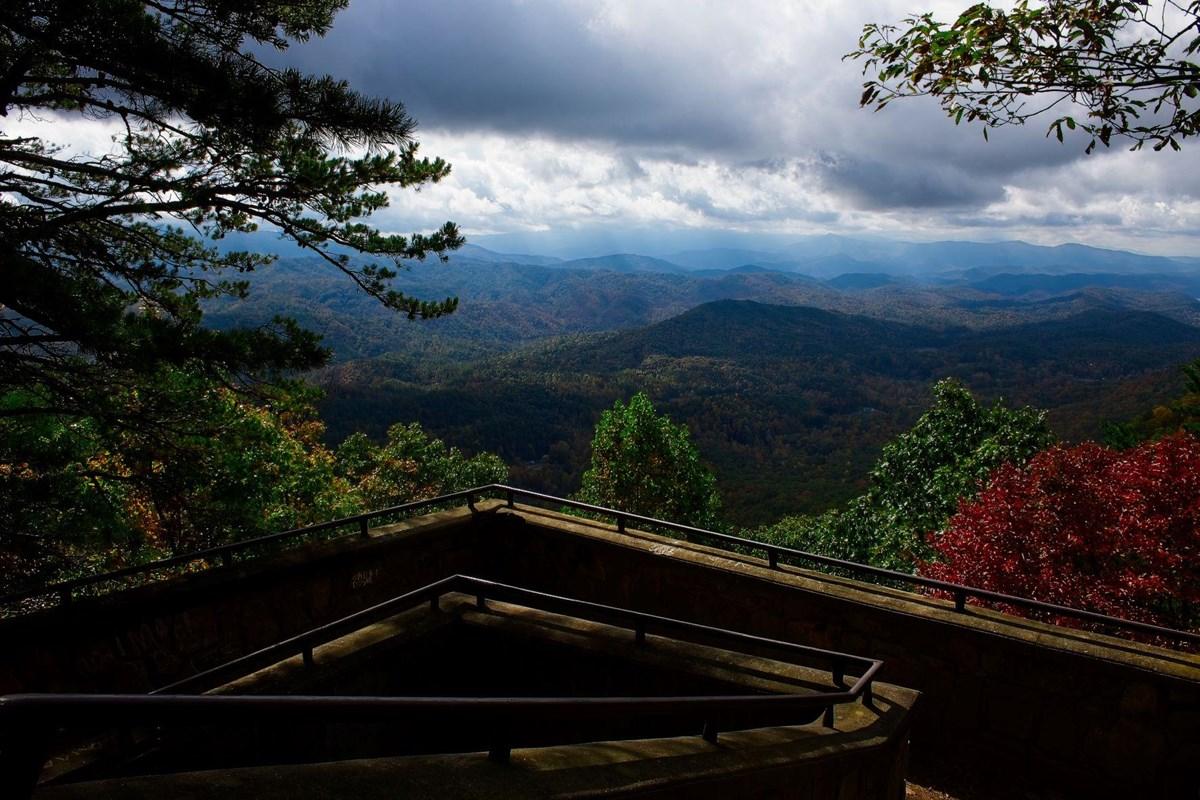


The Majestic Black Rock Mountain State Park
Black Rock Mountain State Park in Georgia is a haven for nature lovers and adventure seekers alike. Nestled in the Blue Ridge Mountains, it is the highest state park in Georgia, offering breathtaking views from an elevation of 3,640 feet. The park spans over 1,700 acres, providing a diverse landscape of forests, streams, and rugged terrain that appeals to hikers, campers, and photographers. For those who love hiking, the park boasts over 11 miles of trails. The Black Rock Lake Trail is a favorite, winding around a serene 17-acre lake. The Tennessee Rock Trail offers panoramic views of four states: Georgia, North Carolina, South Carolina, and Tennessee. Each trail provides unique flora and fauna, making every hike an adventure. In addition to hiking, the park has several scenic overlooks, perfect for picnicking or simply enjoying the view. The Ada-Hi Falls Trail leads to the park's highest waterfall, a must-see for visitors. The park also has a visitor center with informative exhibits and a gift shop. Campsites and cottages are available for those who wish to extend their stay and immerse themselves fully in the natural beauty of Black Rock Mountain State Park.