

Lustgarten, Berlin Travel Guide
Discover Berlin's Lustgarten: A historic park on Museum Island offering tranquility amidst iconic landmarks, reflecting centuries of Berlin's vibrant history and cultural evolution.
The Lustgarten, a verdant oasis in the heart of Berlin's Museum Island, boasts a rich and turbulent history. Originally a kitchen garden for the Berlin Palace in the 16th century, it transformed into a Dutch-style pleasure garden, a military parade ground, and even a site for Nazi rallies. Today, it offers a tranquil escape with manicured lawns, a central fountain, and the iconic 70-tonne granite bowl, affectionately known as the 'Berlin soup bowl'. Flanked by the Berlin Cathedral, Altes Museum, and Humboldt Forum, the Lustgarten is a perfect spot for relaxation, contemplation, and soaking in the city's vibrant atmosphere. Its central location and historical significance make it a must-see destination for any visitor exploring Berlin's cultural heart.
A brief summary to Lustgarten
- Unter den Linden 1, Berlin, Mitte, 10178, DE
- Click to display

Know before you go
Hi, I'm Eve. Here are a few practical things to know before exploring Lustgarten.
- Visit early in the morning or late in the evening for a quieter, more contemplative experience and to avoid the midday crowds.
- Bring a picnic blanket and enjoy a relaxing lunch or afternoon snack on the lawn, soaking in the atmosphere.
- Take advantage of the free Wi-Fi available in the area, courtesy of the nearby museums, to plan your next sightseeing stop.
- Check for local events or performances that may be taking place in the Lustgarten during your visit, adding an extra layer of cultural enrichment.
- Don't miss the opportunity to photograph the Berlin Cathedral and Altes Museum from within the Lustgarten, capturing the beauty of these iconic landmarks.
Do you manage this location?
Take control to get all the benefits, like improved information, better appearance, and stronger visibility across AI-powered discovery. Learn more about listing your business on Evendo
Activate your presenceOther nearby places you may find interesting
The closest places of the same kind, if this one is not quite what you had in mind.


Explore Lustgarten on the Map
A handpicked selection of must-see spots near Lustgarten, mapped for you.
Unlock the Best of Lustgarten
Buy tickets
-
No tickets available
Book tours with entry


Getting There
-
Public Transport
The Lustgarten is easily accessible via public transport. Take the U5 U-Bahn line to the 'Museumsinsel' station, which is directly adjacent to the park. Alternatively, numerous bus lines (100, 200, 300, N5) stop at 'Lustgarten' or 'U Museumsinsel', just a short walk away. Tram lines M1, M4, M5, and M6 also have stops ('Am Kupfergraben' or 'Hackescher Markt') within a few minutes' walk of the Lustgarten. A single ticket for public transport in Berlin (AB zone) costs €3.50.
-
Walking
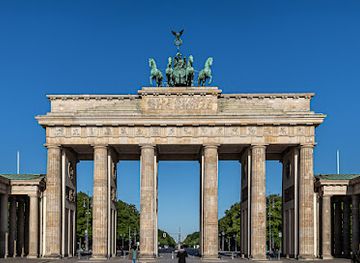
If you are already in the Mitte district, walking to the Lustgarten is a pleasant option. From Alexanderplatz, head west along Karl-Liebknecht-Straße, passing the Berlin Cathedral on your right. The Lustgarten will be on your left, just before the Altes Museum. From the Brandenburg Gate, walk east along Unter den Linden for approximately 20 minutes. The Lustgarten will be on your left, just before you reach the Berlin Cathedral. This allows you to see other landmarks along the way.
-
Taxi/Ride-Share
Taxis and ride-sharing services (Uber, Bolt) are readily available in Berlin. Simply request a ride to 'Lustgarten' or 'Am Lustgarten 1, 10178 Berlin'. Be aware that direct vehicle access to Museum Island is limited, so you may be dropped off on a nearby street, such as Unter den Linden or Am Kupfergraben, requiring a short walk to the park. A short taxi ride from Alexanderplatz to Lustgarten typically costs between €8 and €12, depending on traffic.
-
Driving
While driving to the Lustgarten is possible, it is not recommended due to limited parking in the immediate vicinity. If you choose to drive, be aware that there is no dedicated parking directly at Lustgarten. Nearby parking garages include Q-Park Unter den Linden/Staatsoper (approx. 8-minute walk) and Dom Aquarée (approx. 10-minute walk). Parking fees at these garages typically range from €3 to €5 per hour, with daily maximums between €20 and €30. Given the parking challenges, using public transport is highly advisable.
Discover more about Lustgarten













Your all‑in‑one travel companion app
Explore expert travel guides, compare and book tours, experiences, hotels, and more—all from the palm of your hand. Download now for seamless trip planning wherever your wanderlust takes you.


Explore More of Berlin
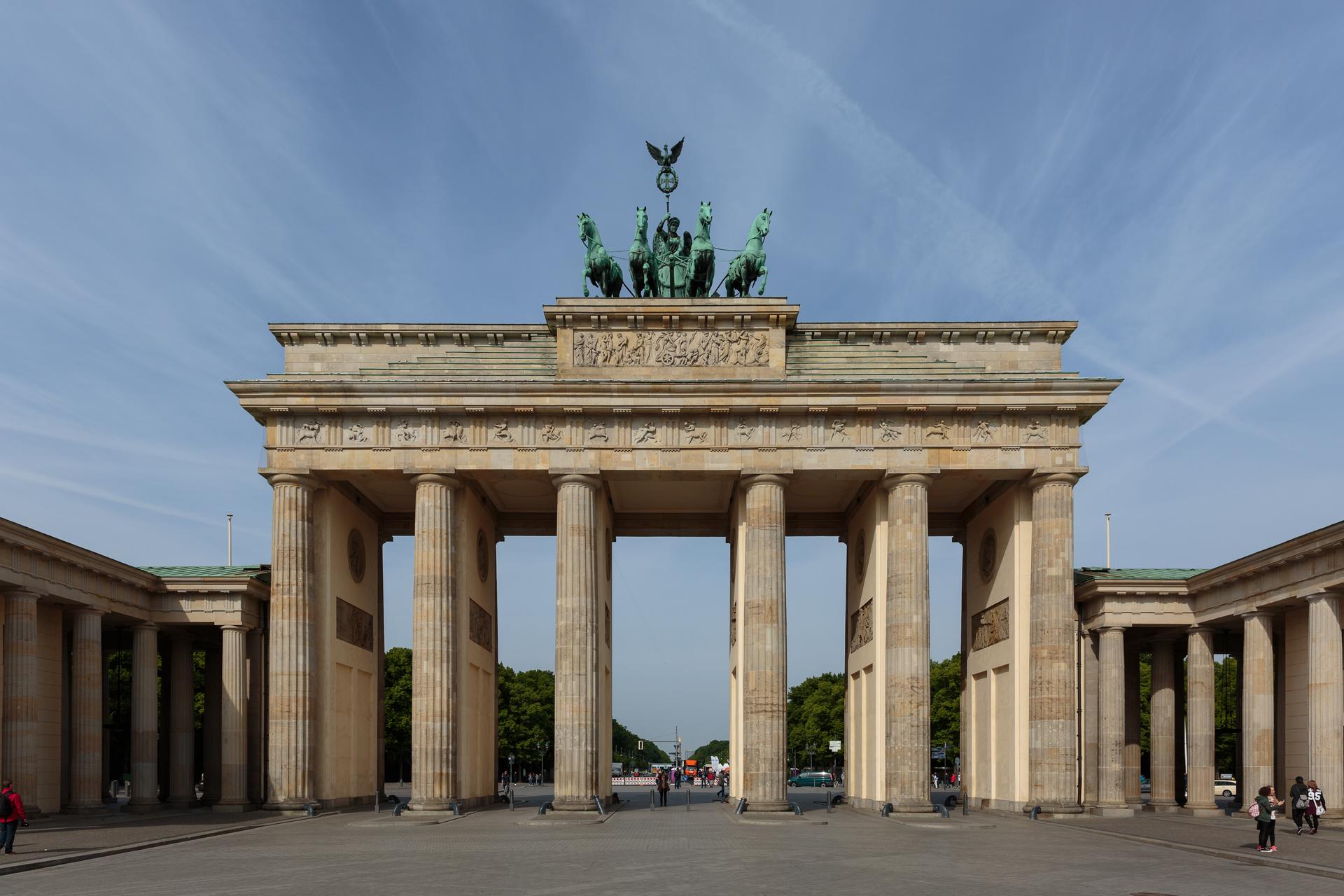
Looking beyond Lustgarten? Discover Berlin for broader travel guides, local hot-spots, and regional highlights.
Explore Berlin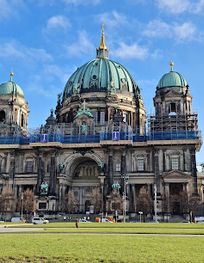
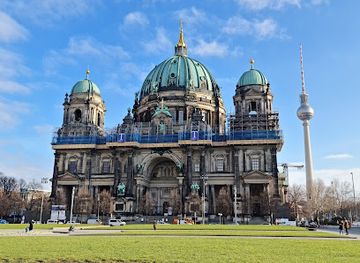
Explore Berlin Cathedral: A majestic landmark with a turbulent history, offering stunning architecture, panoramic views, and a glimpse into the Hohenzollern dynasty's legacy on Museum Island.

Experience tranquility at Springbrunnen im Lustgarten, a serene oasis in Berlin's historic heart, surrounded by iconic landmarks and offering a refreshing escape.
