Saint Hedwig's Cathedral, Berlin Travel Guide
Discover Berlin's St. Hedwig's Cathedral: A historic landmark of religious tolerance, architectural beauty, and cultural significance on the iconic Bebelplatz.
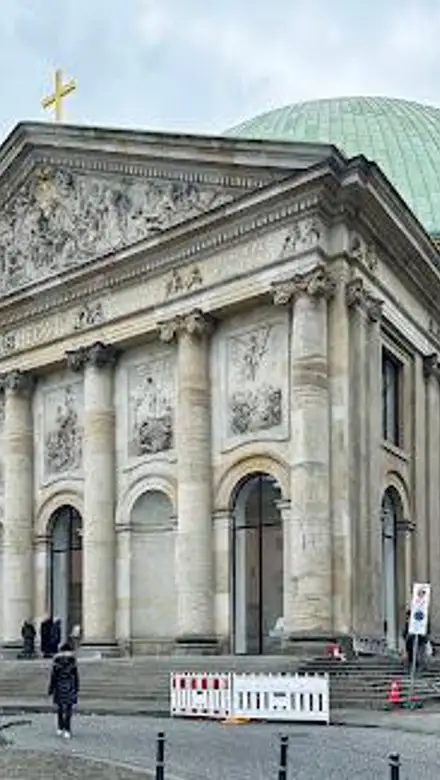
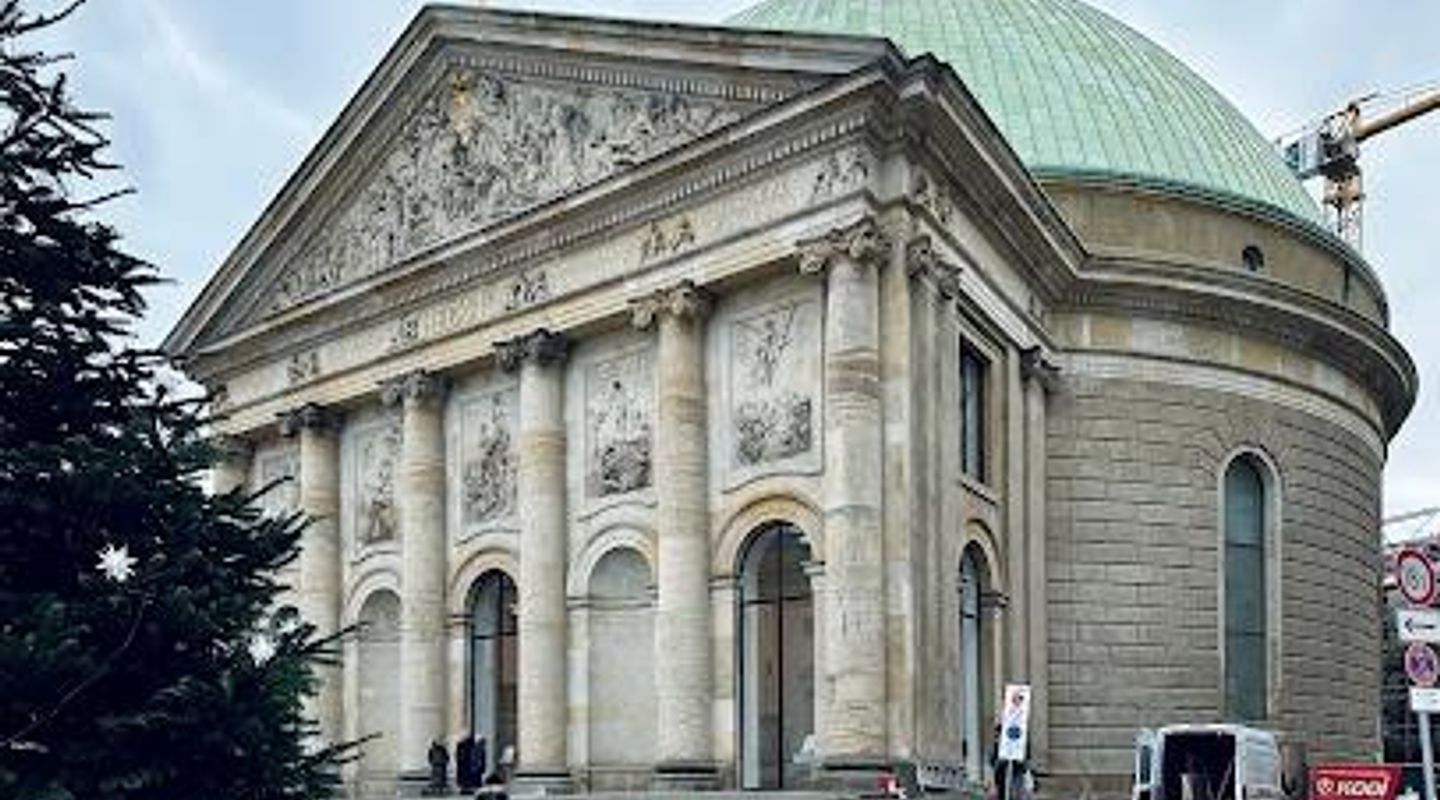
St. Hedwig's Cathedral, located on Bebelplatz in Berlin-Mitte, stands as a testament to religious tolerance and architectural resilience. Commissioned by Frederick the Great in the 18th century to honor the Catholic population of Silesia, this cathedral was the first Catholic church built in Protestant Berlin after the Reformation. Modelled after the Pantheon in Rome, its striking dome dominates the cityscape. Severely damaged during World War II, it was meticulously restored, reopening in 1963 with a redesigned interior. Today, St. Hedwig's Cathedral continues to serve as the episcopal seat of the Archdiocese of Berlin and a symbol of interfaith dialogue, drawing visitors with its rich history, architectural grandeur, and spiritual significance. Recent renovations completed in late 2024 have sparked both admiration and debate, ensuring its continued relevance in Berlin's cultural landscape. The cathedral's location on Bebelplatz, surrounded by other historical landmarks, makes it an essential stop for any visitor exploring Berlin's historical center.
A brief summary to Saint Hedwig's Cathedral
- Hinter d. Katholischen Kirche 3, Berlin, Mitte, 10117, DE

Know before you go
Hi, I'm Eve. Here are a few practical things to know before exploring Saint Hedwig's Cathedral.
- Attend a classical concert at the cathedral to experience its exceptional acoustics and admire the architecture in a harmonious blend of sight and sound.
- Visit the Bernhard Lichtenberg House next to the cathedral to learn about the courageous provost who resisted the Nazi regime.
- Take a guided tour to delve deeper into the cathedral's history, architecture, and the controversies surrounding its recent renovations.
- Check the cathedral's schedule for mass times to experience a service in this historic and spiritually significant setting.
- Explore Bebelplatz and its surrounding landmarks, including the Staatsoper Unter den Linden and the Memorial to the Book Burning, for a comprehensive understanding of Berlin's history.
Do you manage this location?
Take control to get all the benefits, like improved information, better appearance, and stronger visibility across AI-powered discovery. Learn more about listing your business on Evendo
Activate your presenceOther nearby places you may find interesting
The closest places of the same kind, if this one is not quite what you had in mind.

Explore Saint Hedwig's Cathedral on the Map
A handpicked selection of must-see spots near Saint Hedwig's Cathedral, mapped for you.
Unlock the Best of Saint Hedwig's Cathedral
Buy tickets
-
No tickets available
Book tours with entry


Getting There
-
Public Transport
St. Hedwig's Cathedral is easily accessible via Berlin's efficient public transport system. Several U-Bahn (subway) and bus lines stop within a short walking distance. The closest U-Bahn stations are U Unter den Linden (U5, U6 lines) and Hausvogteiplatz (U2 line), each about a 5-10 minute walk away. Numerous bus lines, including the 100, 147, and 300, stop at Staatsoper or Werderscher Markt, both just a few minutes from the cathedral. A short trip ticket (Kurzstrecke) is sufficient for reaching the cathedral from these nearby stations, costing around €2.00 - €2.30.
-
Walking
From Unter den Linden boulevard, head east towards Bebelplatz. The cathedral is located on the north side of the square, behind the Staatsoper Unter den Linden. From Gendarmenmarkt, walk north on Französische Straße, then turn left onto Bebelplatz. The cathedral will be on your right. The walk is approximately 5-10 minutes and offers views of other historical landmarks.
-
Taxi/Ride-Share
Taxis and ride-sharing services are readily available throughout Berlin. A short ride from a central location like Alexanderplatz or Potsdamer Platz will cost approximately €12-€18, depending on traffic. Be sure to specify 'St. Hedwigs-Kathedrale, Bebelplatz' as your destination.
-
Driving
Driving to St. Hedwig's Cathedral is possible, but parking in the immediate vicinity can be challenging. Underground parking is available at Bebelplatz (access via Behrenstrasse), but spaces are limited and can be expensive. Expect to pay around €3 per hour or €12 for a full day. Alternative parking options can be found further away, with varying rates. Be aware of Berlin's environmental zone regulations.
Discover more about Saint Hedwig's Cathedral
More to explore near Saint Hedwig's Cathedral













Your all‑in‑one travel companion app
Explore expert travel guides, compare and book tours, experiences, hotels, and more—all from the palm of your hand. Download now for seamless trip planning wherever your wanderlust takes you.


Explore More of Berlin
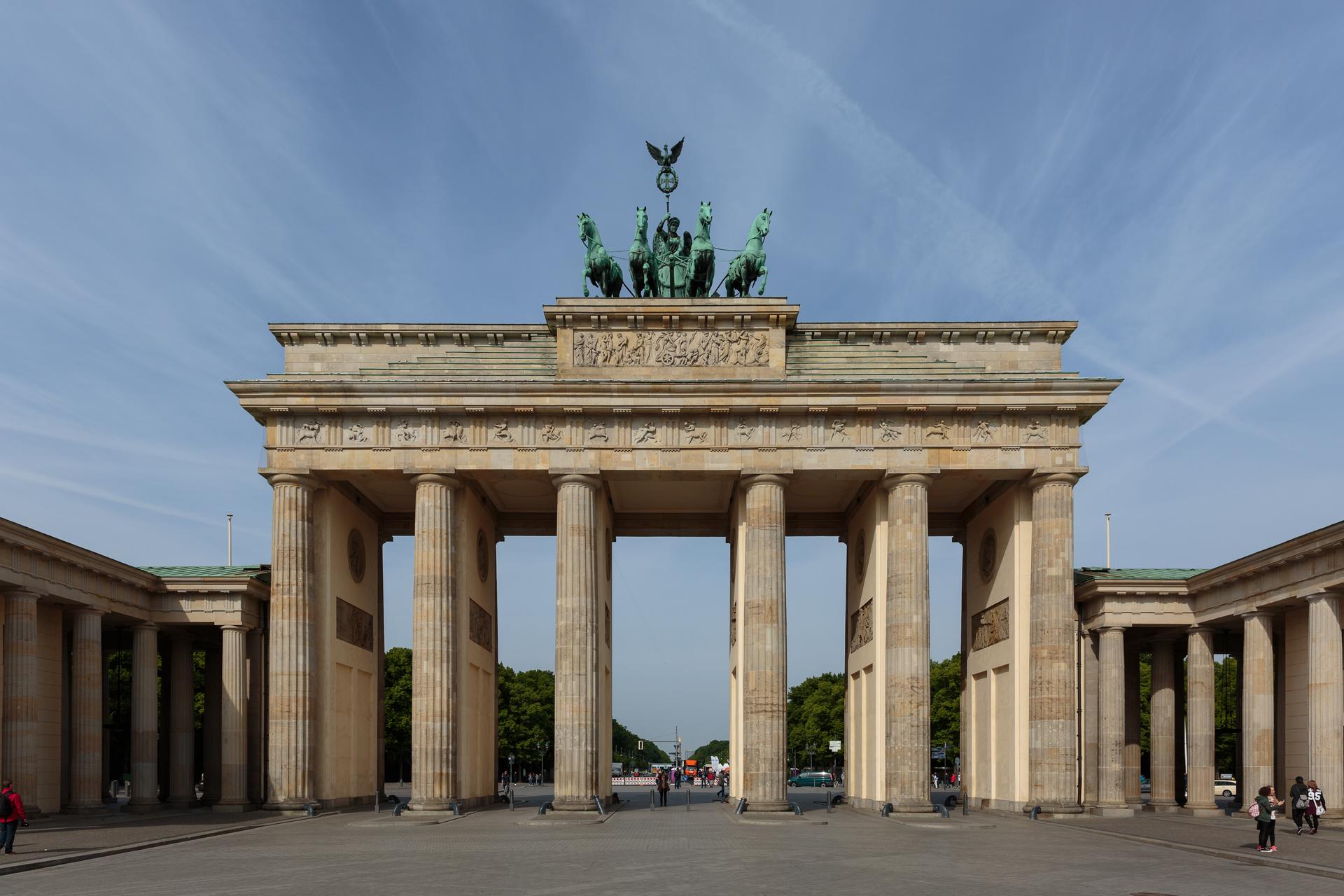
Looking beyond Saint Hedwig's Cathedral? Discover Berlin for broader travel guides, local hot-spots, and regional highlights.
Explore Berlin
Explore the iconic Museumsinsel: A UNESCO World Heritage Site featuring world-class museums and a rich tapestry of history in the heart of Berlin.
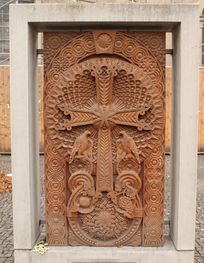
Explore the Armenian Genocide Memorial in Berlin – a poignant tribute to history, remembrance, and the enduring spirit of resilience.