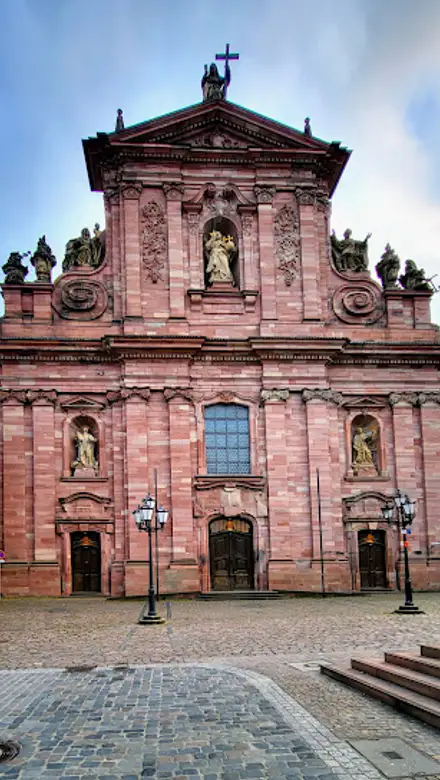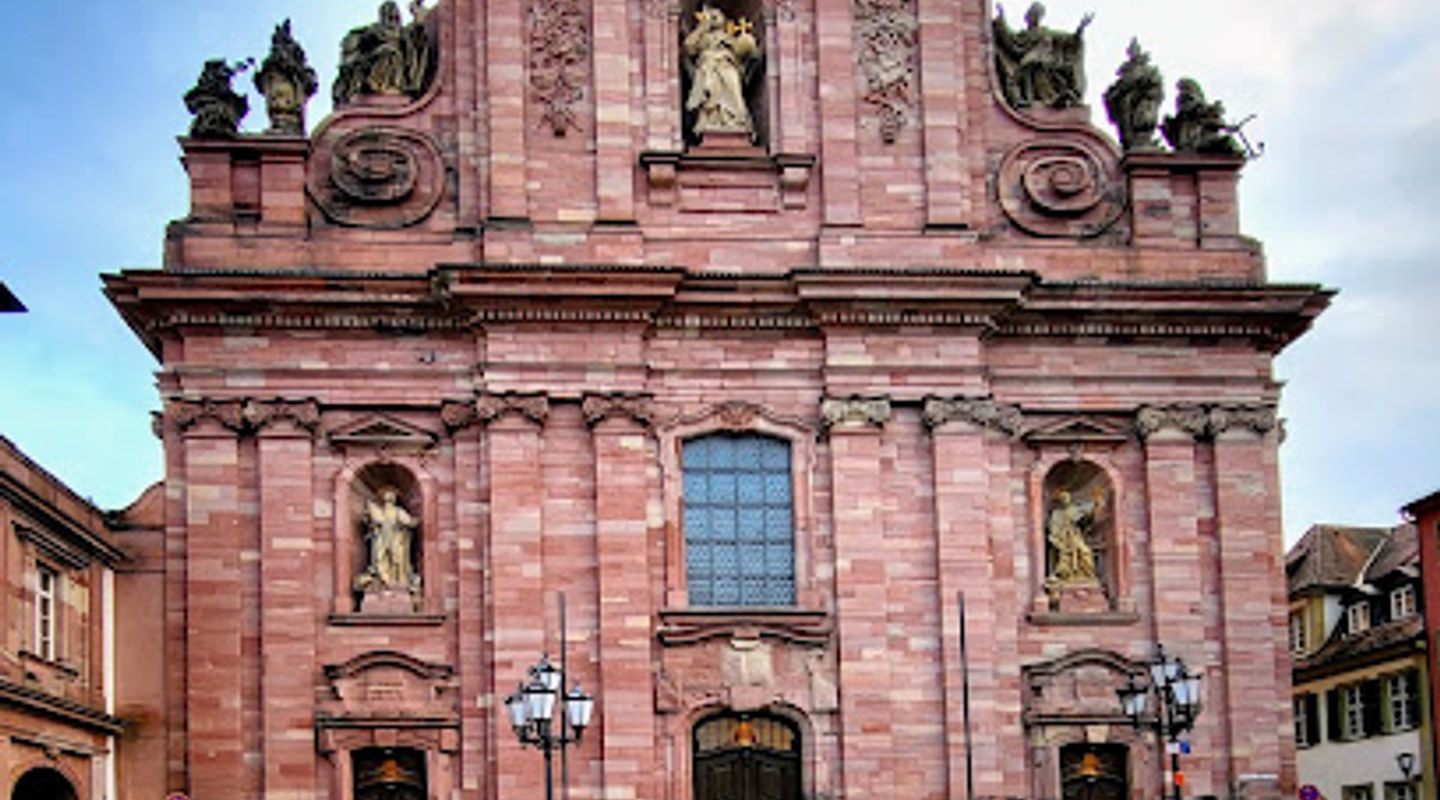
Jesuitenkirche, Heidelberg Travel Guide
Discover Heidelberg's Jesuitenkirche: A stunning Baroque church in the heart of the Old Town, showcasing exquisite architecture, rich history, and a serene atmosphere.
The Jesuitenkirche, or Jesuit Church, is a prominent architectural landmark in Heidelberg's Altstadt (Old Town). Built in the early 18th century, this Baroque church stands as a testament to the city's rich history and the Jesuit order's influence. Its striking white facade, adorned with statues of Jesuit saints, contrasts beautifully with the surrounding red sandstone buildings. Inside, visitors are greeted by a bright and airy interior, featuring ornate stuccowork, impressive frescoes, and a grand organ. The church serves as a place of worship and a venue for classical music concerts, offering a serene and culturally enriching experience for all who visit. Entrance is free, making it an accessible and must-see attraction in Heidelberg.
A brief summary to Jesuitenkirche
- Merianstraße 2, Heidelberg, Heidelberger Altstadt, 69117, DE
- Click to display
- Click to display
- Tuesday 9 am-6 pm
- Wednesday 9 am-6 pm
- Thursday 9 am-6 pm
- Friday 9 am-6 pm
- Saturday 9 am-6 pm
- Sunday 9 am-6 pm

Know before you go
Hi, I'm Eve. Here are a few practical things to know before exploring Jesuitenkirche.
- Attend a classical music concert or organ recital to experience the church's exceptional acoustics and vibrant cultural scene.
- Explore the crypt beneath the church to view historical tombs related to the Electoral Palatinate period.
- Visit the adjacent Museum for Sacred Art and Liturgy to see a collection of religious artifacts and learn about the church's history.
- Take a moment to appreciate the intricate stuccowork and frescoes that adorn the church's interior, depicting biblical scenes and Jesuit history.
- Check the church's schedule for mass times and other religious services to experience the spiritual atmosphere of this historic landmark.
Do you manage this location?
Take control to get all the benefits, like improved information, better appearance, and stronger visibility across AI-powered discovery. Learn more about listing your business on Evendo
Activate your presenceOther nearby places you may find interesting
The closest places of the same kind, if this one is not quite what you had in mind.
Explore Jesuitenkirche on the Map
A handpicked selection of must-see spots near Jesuitenkirche, mapped for you.
Unlock the Best of Jesuitenkirche
Buy tickets
-
No tickets available
Book tours with entry


Getting There
-
Walking
From Universitätsplatz, walk east along Merianstraße. The Jesuitenkirche will be on your left, a short distance from the main square. The entrance is easily visible from the street.
-
Public Transport
If arriving by public transport, the closest bus stops are 'Universitätsplatz' (served by bus routes 29, 32, and 33) and 'Peterskirche' (served by bus routes 20, 30, 31, and 36). From either stop, it's a short walk to the Jesuitenkirche. A single bus ticket within Heidelberg costs approximately €3.40.
-
Taxi/Ride-Share
A taxi or ride-share from Heidelberg Hauptbahnhof (main train station) to the Jesuitenkirche will take approximately 10-15 minutes, depending on traffic, and cost around €12-€18.
-
Parking
Parking in the immediate vicinity of the Jesuitenkirche is limited. The closest parking garages are P9 Am Theater, P10 Friedrich-Ebert-Platz, and P11 University Library. Hourly parking rates in these garages typically range from €2.50 to €3.50, with daily maximums around €20-€25.
Discover more about Jesuitenkirche













Your all‑in‑one travel companion app
Explore expert travel guides, compare and book tours, experiences, hotels, and more—all from the palm of your hand. Download now for seamless trip planning wherever your wanderlust takes you.


Explore More of Heidelberg
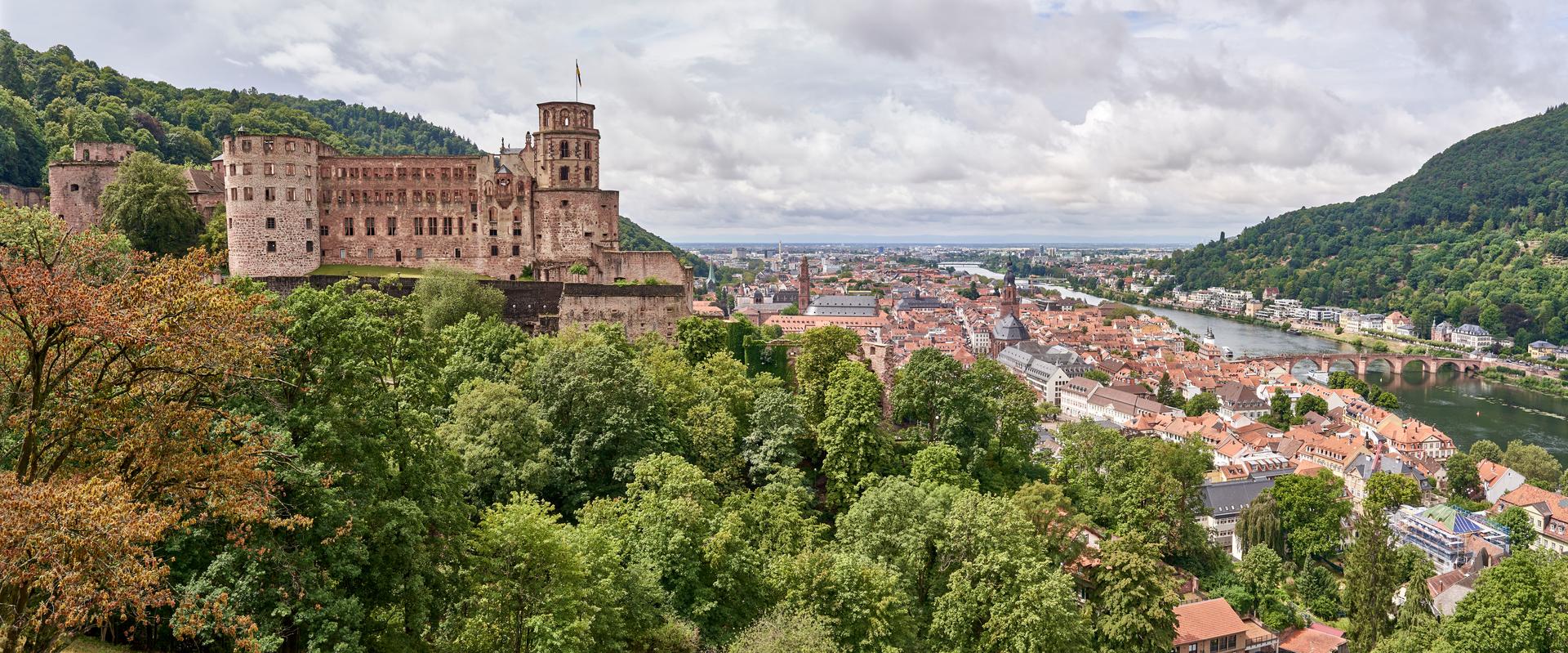
Looking beyond Jesuitenkirche? Discover Heidelberg for broader travel guides, local hot-spots, and regional highlights.
Explore Heidelberg
Discover the Löwenbrunnen, Heidelberg's iconic Lion Fountain, a historic landmark in the heart of the Altstadt, symbolizing the city's strength and offering a picturesque glimpse into its past.
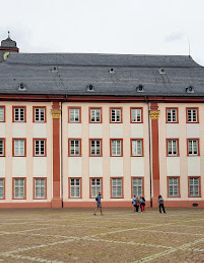
Explore Germany's oldest university, a Baroque masterpiece in Heidelberg's Old Town, and discover centuries of academic excellence and historical significance.