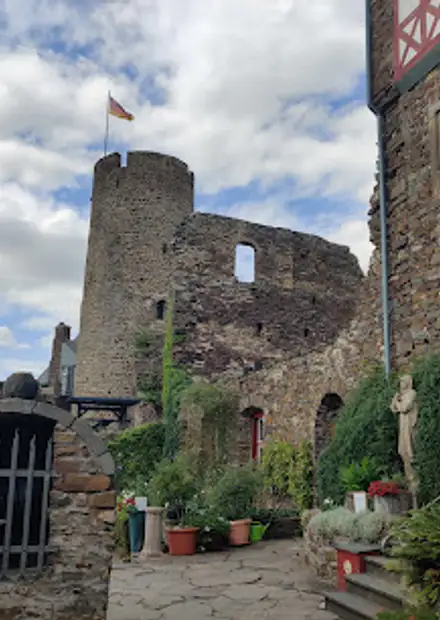
Best Landmarks Near Thurant Castle (Moselle)
Planning a trip to Thurant Castle? Discover the best landmarks nearby with history, expert tips, and routes. Free on web or the Evendo app.


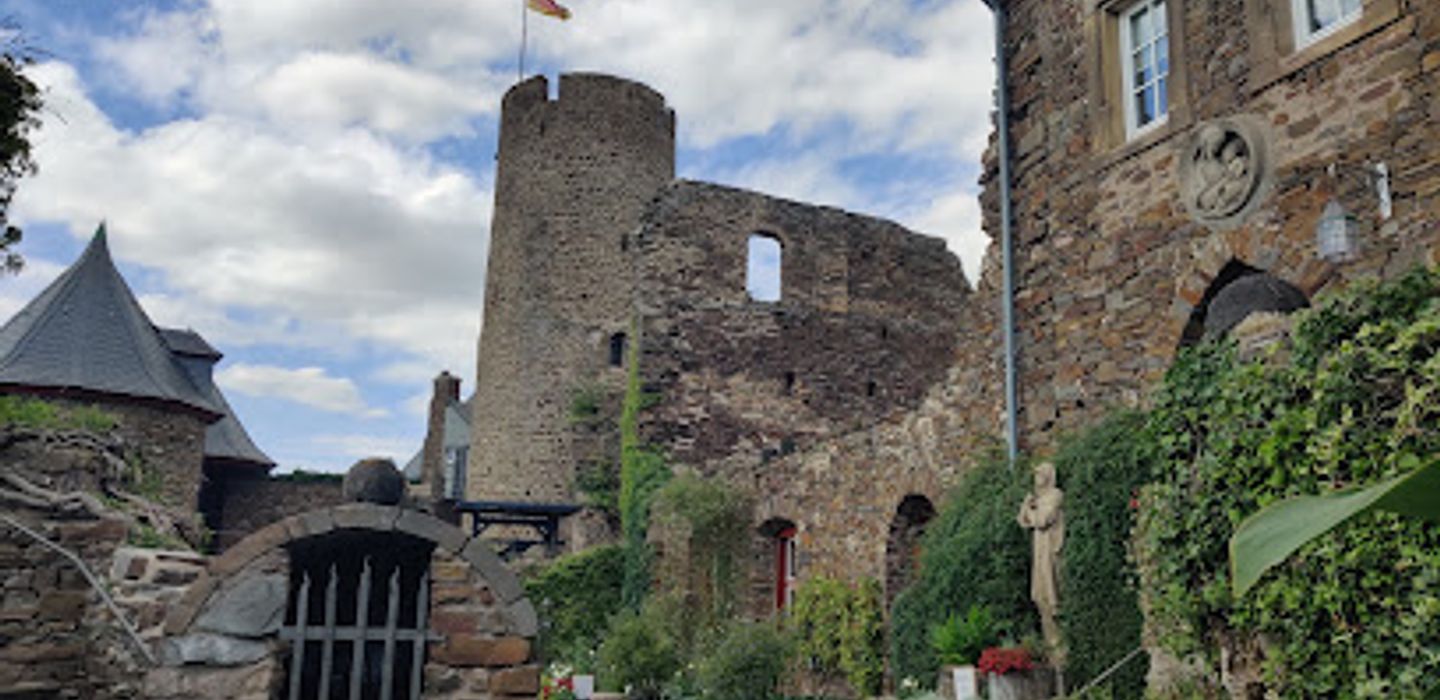
The best landmarks near Thurant Castle
- Top rated
- Closest to Thurant Castle
- A–Z
62 landmarks
-
Castle4.6★25,989 reviews
Eltz Castle
Nestled in the picturesque Moselle Valley, Eltz Castle stands as a stunning testament to medieval architecture, surrounded by lush forests and serene landscapes. A true gem for history enthusiasts and nature lovers alike, this fairy-tale castle invites tourists to explore its rich history, architectural beauty, and breathtaking surroundings.
Daily 9:30–17:30
-
Castle4.6★6,127 reviews
Marksburg
Perched majestically above the Rhine River, Marksburg Castle is a stunning medieval fortress that offers breathtaking views, captivating history, and delightful exhibits for every visitor. Explore its enchanting towers, ramparts, and museum, immersing yourself in the rich cultural tapestry of Germany's past.
Daily 10:00–17:00
-
Castle4.5★3,522 reviews
Stolzenfels Castle
Perched majestically on a hillside overlooking the Rhine River, Stolzenfels Castle is a stunning example of 19th-century Romantic architecture. This historic castle, once a royal residence, invites tourists to explore its enchanting grounds, ornate interiors, and breathtaking views of the surrounding landscape, making it a must-visit destination in Koblenz.
Thu–Sun 10:00–17:00
-
Castle4.6★3,340 reviews
Thurant Castle
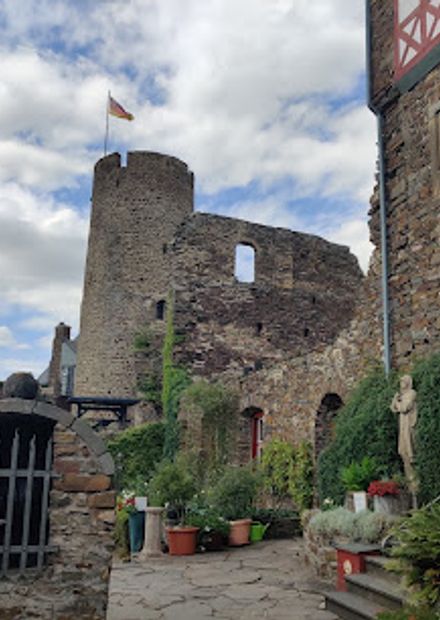
Perched high above the charming village of Alken, Thurant Castle is a captivating landmark steeped in history and offering breathtaking views of the Moselle River valley. This double castle, with its origins tracing back to Roman foundations, boasts a unique architectural design resulting from centuries of conflict and division. Visitors can explore the well-preserved ruins, climb the towers for panoramic vistas, and delve into the castle's intriguing past through informative displays. With its picturesque setting amidst vineyards and its rich historical significance, Thurant Castle provides an unforgettable experience for history buffs, nature enthusiasts, and anyone seeking a glimpse into Germany's medieval heritage. Free parking is available, making access easy for those arriving by car. The castle's kiosk offers refreshments, and its vacation home provides a unique overnight stay.
Daily 10:00–18:00
-
Castle4.4★3,209 reviews
Schloss Koblenz
The Kurfürstliches Schloss, or Electoral Palace, in Koblenz, stands as a magnificent testament to neoclassical architecture and the city's rich history. Situated along the banks of the Rhine, near the Deutsches Eck where the Rhine and Moselle rivers meet, this palace offers visitors a glimpse into the lives of the electors and royalty who once resided within its walls. Its strategic location and stunning design make it a prominent landmark and a must-see attraction for anyone visiting Koblenz. The palace's meticulously restored interiors, coupled with its expansive gardens and historical significance, provide a captivating experience that blends culture, history, and scenic beauty. Whether you're an architecture enthusiast, a history buff, or simply seeking a picturesque setting, the Electoral Palace promises an enriching and memorable visit. Explore its opulent halls, wander through its verdant grounds, and immerse yourself in the grandeur of a bygone era.
Daily 7:00–19:00
-
Scenic spot4.7★1,181 reviews
Ruppertsklamm
Ruppertsklamm is a stunning scenic spot located in Lahnstein, Germany, offering breathtaking views of nature and captivating landscapes. Perfect for hiking enthusiasts and nature lovers, this picturesque gorge is a must-visit destination that showcases the beauty of the region.
Open 24 hours
-
Convention center4.2★1,300 reviews
Rhein-Mosel-Halle
The Rhein-Mosel-Halle is a versatile convention and event center in Koblenz, Germany, situated near the Electoral Palace and the Weindorf (wine village) on the Rhine River. Following extensive renovations completed in 2012, the Rhein-Mosel-Halle boasts modern architecture, state-of-the-art technology, and a wide range of facilities suitable for conferences, concerts, trade fairs, and galas. Its central location, accessibility, and proximity to hotels and attractions make it a popular choice for event organizers and attendees alike. The hall plays a significant role in the cultural and economic life of Koblenz, hosting a diverse program of events throughout the year. With disabled parking, elevators, and accessible WCs, the Rhein-Mosel-Halle ensures a comfortable experience for all visitors. The venue's commitment to sustainability is reflected in its energy-efficient design, utilizing regenerative energy sources for heating, air conditioning, and ventilation.
-
Fountain4.5★1,143 reviews
Schängel Fountain
Nestled in the heart of Koblenz, the Schängel Fountain is a captivating landmark that beautifully blends artistry and history, making it an essential stop for tourists exploring this vibrant city.
Open 24 hours
-
Tourist attraction4.5★925 reviews
Görresplatz
Görresplatz, located in the heart of Koblenz's Altstadt (Old Town), is a vibrant square steeped in history and local culture. Named after the influential publicist and historian Joseph Görres, the square has been a central gathering place since Roman times, evolving through various names and uses. Today, it's a bustling hub surrounded by charming cafes, shops, and historical architecture, making it a perfect spot to soak in the city's atmosphere. The square's centerpiece is the Historiensäule (History Column), a detailed fountain depicting Koblenz's 2000-year history in vivid scenes. Görresplatz hosts various events and festivities throughout the year, reflecting the city's lively spirit and offering visitors a delightful glimpse into Koblenz's past and present. Whether you're looking to relax, explore, or immerse yourself in local life, Görresplatz is a must-visit destination.
Open 24 hours
-
Castle4.3★955 reviews
Burg Lahneck
Perched high above the confluence of the Lahn and Rhine rivers, Burg Lahneck is a captivating medieval castle offering stunning views and a rich tapestry of history and legend. Built in the 13th century by Archbishop Siegfried III of Eppstein, it served to protect the archbishopric's territory and nearby silver mines. Over the centuries, the castle has witnessed battles, sieges, and the rise and fall of empires. Legends abound, including tales of the last Knights Templar seeking refuge within its walls and the tragic story of Idilia Dubb, a Scottish girl who met her untimely demise within the castle's keep. Today, Burg Lahneck stands as a testament to the region's storied past, drawing visitors with its well-preserved architecture, intriguing history, and panoramic vistas. Explore its chapel, knights' hall, and climb the pentagonal keep for an unforgettable experience of Rhine Romanticism. Guided tours reveal the castle's secrets, while the adjacent restaurant offers regional specialties with breathtaking views.
Daily 11:00–14:00


ibis Koblenz City
ibis Koblenz City offers a perfect blend of comfort and accessibility for tourists exploring the beautiful city of Koblenz. With its modern amenities and central location, it's a great base for your adventures, whether you’re visiting historical sites or enjoying the vibrant local culture.

Liebfrauenkirche (Church of Our Lady)
The Liebfrauenkirche, or Church of Our Lady, is a prominent Catholic church in the heart of Koblenz's Altstadt (Old Town). Its history stretches back to the 5th century, with significant construction phases spanning Romanesque, Gothic, and Baroque styles. The church's most distinctive features are its Baroque onion-domed towers, affectionately known as "Zwewwelstärm" (onion towers) by locals. Inside, visitors can admire the harmonious blend of architectural styles, stained glass windows, and painted vaulting. Serving as the main parish church for centuries, Liebfrauenkirche stands as a testament to Koblenz's rich religious and architectural heritage, offering a serene and awe-inspiring experience for all who visit.

Wehrtechnische Studiensammlung Koblenz
The Wehrtechnische Studiensammlung Koblenz (WTS), or Military Technology Collection Koblenz, is a captivating museum showcasing the evolution of military technology from the 19th century to the present day. Located in Koblenz, Germany, the museum boasts an extensive collection of armored vehicles, artillery, firearms, and communication devices. Visitors can explore the advancements in weaponry, observe the changes in military equipment design, and gain insights into the impact of technology on warfare. The museum provides a comprehensive overview of German military engineering achievements, offering a unique perspective on the country's military history. With interactive exhibits and detailed displays, the WTS appeals to both military enthusiasts and those interested in the history of technology, making it a worthwhile destination for anyone visiting the Koblenz region.
Daily 9:30–16:30

Baldwin Bridge, Koblenz
The Baldwin Bridge, or Balduinbrücke, is a historic stone arch bridge gracefully spanning the Moselle River in Koblenz, Germany. As the city's oldest surviving bridge, dating back to the 14th century, it offers visitors a tangible connection to Koblenz's rich past. Named after Archbishop Baldwin of Luxembourg, who initiated its construction, the bridge has witnessed centuries of Koblenz's evolution. A stroll across the bridge provides stunning panoramic views of the river, the cityscape, and the surrounding landscapes. Its central location makes it easily accessible and a perfect starting point for exploring Koblenz's Altstadt (Old Town) with its charming cafes and historical landmarks. Whether you're a history enthusiast, a photography lover, or simply seeking a picturesque walk, the Baldwin Bridge encapsulates the spirit of Koblenz, blending historical significance with scenic beauty. The bridge is especially enchanting in the evening when it is illuminated, creating a romantic atmosphere for a leisurely stroll.
Open 24 hours

History Column
The History Column, gracing Josef-Görres-Platz in Koblenz's Old Town, is more than just a fountain; it's a captivating visual chronicle of the city's past. Gifted to Koblenz in 1992 by Rhineland-Palatinate, the column, created by sculptor Jürgen Weber, wasn't fully realized until 2000. Rising over 10 meters, this 3.6-tonne monument intricately depicts 2000 years of Koblenz's history in ten three-dimensional scenes, from Roman settlements to modern-day reconstruction. The square itself, with a history dating back to Roman times, has borne witness to countless transformations, serving as a marketplace, parade ground, and memorial site. Surrounded by cafes and shops, the History Column offers a reflective pause amidst the lively atmosphere of the city center, inviting visitors to delve into the rich tapestry of Koblenz's heritage.
Open 24 hours

Kaiserin-Augusta-Denkmal
The Kaiserin-Augusta-Denkmal, an imposing monument in Koblenz, honors Augusta of Saxe-Weimar-Eisenach, the wife of Kaiser Wilhelm I. Erected in 1896, six years after her death, the monument stands proudly within the Rheinanlagen, a landscape park she initiated. Designed by Bruno Schmitz, also the architect of the Deutsches Eck, the memorial features a statue of Augusta sculpted by Karl Friedrich Moest. More than just a statue, it's a symbol of the city's gratitude for Augusta's contributions, including her support for charitable institutions and the creation of the Rhine Gardens. A visit offers a glimpse into Prussian history and a chance to appreciate the serene beauty of the surrounding park, making it a worthwhile stop for those exploring Koblenz. The monument provides a picturesque view and a tranquil escape, inviting visitors to reflect on the legacy of a remarkable queen and empress. The surrounding Rhine Promenade adds to the experience, offering a delightful stroll along the river.
Open 24 hours

Traumschleife Baybachklamm
The Traumschleife Baybachklamm is a captivating hiking trail nestled in the heart of the Hunsrück region, celebrated for its dramatic gorge carved by the Baybach stream. This 'dream loop' offers a diverse landscape, from narrow paths winding along moss-covered slopes and bizarre rock formations to panoramic viewpoints atop rocky ridges. Awarded for its exceptional experience, the trail presents a moderate challenge with some steep sections and rocky passages secured by ropes. It's a haven for nature lovers and adventure seekers, promising an immersive journey through unspoiled wilderness. The trail is approximately 10 kilometers long and takes around 4 hours to complete, making it a perfect day trip for those seeking an escape into nature.
Open 24 hours

Denkmalzone „Vier Türme“
Denkmalzone „Vier Türme“ is a captivating memorial park in Koblenz that invites tourists to reflect on history while enjoying beautiful views. With its four iconic towers, this park is a perfect blend of nature and culture, making it a must-visit for every traveler.
Open 24 hours

Traumschleife „Ehrbachklamm“
The Traumschleife Ehrbachklamm, nestled in the Hunsrück region between the Rhine and Mosel rivers, offers a captivating hiking experience through a landscape of fairytale forests, cascading waterfalls, and historical mills. This 'dream loop' trail immerses visitors in a world of natural beauty and cultural heritage. The relatively easy 8.5km loop, or a longer 14.8km option, winds through the Ehrbach valley, showcasing the region's unique charm. Highlights include the Ehrbachklamm gorge itself, Daubisberger Mill, and the ruins of Schöneck Castle. Whether you're seeking a peaceful escape into nature or a glimpse into the area's rich past, the Traumschleife Ehrbachklamm promises an unforgettable adventure. Be sure to wear sturdy footwear to navigate the sometimes-uneven terrain and prepare to be enchanted by the Hünsruck forest.
Open 24 hours

Top Hotel Krämer
Top Hotel Krämer, a family-run, 3-star superior hotel, offers a comfortable and convenient base for exploring Koblenz. Located a short walk from the main train station and close to the city center, it provides easy access to Koblenz's historical sites, the Deutsches Eck, and the scenic Rhine and Mosel valleys. Guests appreciate the friendly staff, clean rooms, and excellent breakfast. With modern amenities and a welcoming atmosphere, Top Hotel Krämer is ideal for both business and leisure travelers seeking a relaxing stay in this historic German city. The hotel's central location makes it easy to explore nearby attractions such as the Ehrenbreitstein Fortress and Stolzenfels Castle, ensuring a memorable visit to Koblenz.

Denkmal Rittersturz
The Rittersturz in Koblenz is more than just a scenic viewpoint; it's a place steeped in history and natural beauty. Perched high above the Rhine, this plateau offers panoramic views of the city and the surrounding landscape. It's named after a legend of a knight who plunged to his death from the cliffs, adding a touch of romance and tragedy to its story. The Rittersturz gained historical significance in 1948 when it hosted the Rittersturz Conference, a pivotal meeting of German state leaders that paved the way for the creation of the Federal Republic of Germany. Today, it's a popular destination for hikers, history buffs, and anyone seeking a tranquil escape with breathtaking vistas. The site is easily accessible and provides a serene environment to reflect on the past while enjoying the stunning views of the Rhine Valley, making it a must-visit location in Koblenz.
Open 24 hours

Florinskirche
The Florinskirche, a Protestant parish church in Koblenz's old town, stands as a captivating blend of Romanesque, Gothic, and Baroque architectural styles. Originally built around 1100 as a Romanesque basilica, it has witnessed centuries of Koblenz's history, serving as a church, a military magazine under French occupation, and even facing potential conversion into a slaughterhouse by Napoleon. Today, the Florinskirche is a symbol of resilience and faith, with its twin towers dominating the Florinsmarkt square. Inside, visitors can admire the harmonious nave, the Baroque putti, and a cannonball embedded in the vault, a poignant reminder of the city's turbulent past. The church also hosts various events and services, making it an active part of the local community.

Sterrenberg Castle
Perched high above the Rhine River near Kamp-Bornhofen, Sterrenberg Castle is a captivating medieval fortress steeped in history and legend. Dating back to the 12th century, it stands as one of the oldest preserved castles in the Middle Rhine Valley, offering visitors a unique glimpse into the region's rich past. Explore its imposing keep, formidable shield walls, and the charming Gothic Ladies' House. The castle's strategic location provides breathtaking panoramic views of the Rhine Gorge, a UNESCO World Heritage site, making it a must-see destination for history buffs, nature enthusiasts, and anyone seeking a memorable experience. Enjoy local cuisine at the on-site restaurant while soaking in the serene atmosphere and imagining life in medieval times. Don't miss the chance to witness the enduring rivalry with neighboring Liebenstein Castle, adding a touch of intrigue to your visit.

Herz-Jesu-Kirche
The Herz-Jesu-Kirche (Sacred Heart Church) in Koblenz is a stunning example of neo-Romanesque architecture, built between 1900 and 1903. Designed by Ludwig Becker, who later became the master builder of Mainz Cathedral, the church stands as a testament to the city's expansion at the turn of the 20th century. Severely damaged during World War II, it was lovingly rebuilt, reopening in 1953. Its imposing double-tower facade faces the city center, while the choir faces the Friedrich-Ebert-Ring. Inside, visitors are greeted by a spacious interior, ribbed vaults, and intricate details. The church's location makes it a convenient stop while exploring Koblenz's old town and nearby attractions like the Deutsches Eck. Open daily, Herz-Jesu-Kirche offers a peaceful retreat and a chance to admire its architectural beauty.

Joseph-Görres-Denkmal
The Joseph Görres Monument, standing proudly within the Kaiserin-Augusta-Anlagen in Koblenz, commemorates the influential writer and journalist Joseph Görres, a staunch advocate for freedom of speech and a pivotal figure in German intellectual history. Erected in the late 19th century, the monument serves as a lasting tribute to his contributions to political discourse and his unwavering commitment to justice. The monument's location within the scenic Kaiserin-Augusta-Anlagen provides a tranquil setting for reflection on Görres's legacy. Visitors can admire the intricate details of the sculpture, which captures the essence of his intellectual prowess and his dedication to the principles of a free and open society. The monument is a reminder of the importance of critical thinking and the power of the written word in shaping public opinion and promoting social change. A visit to the Joseph Görres Monument offers a unique opportunity to connect with the past and to appreciate the enduring relevance of Görres's ideas in the present day.
Open 24 hours

Mittelrheinmuseum Koblenz
The Mittelrheinmuseum Koblenz, nestled in the heart of Koblenz, is a cultural treasure trove showcasing the rich artistic and historical heritage of the Middle Rhine region. Housed within the modern Forum Confluentes, the museum boasts a diverse collection spanning over 2000 years, from medieval sculptures to contemporary art. Visitors can explore paintings, graphic arts, sculptures, and artifacts that tell the story of Koblenz and the surrounding area. The museum's focus on the Rhine Romanticism period, with its captivating landscapes, provides a unique glimpse into the region's cultural identity. With its engaging exhibitions and educational programs, the Mittelrheinmuseum offers an enriching experience for art enthusiasts and history buffs alike, making it a must-see destination in Koblenz.
Tue–Sun 10:00–18:00

Kompuskopf - Buchsbaum-Wanderpfad
Nestled in Treis-Karden, the Kompuskopf Observation Deck offers stunning panoramic views following a rewarding hike. Ideal for nature lovers, this spot captivates with its scenic beauty and tranquility.
Open 24 hours

Erfinderbrunnen, Koblenz - Prof. Gernot Rumpf (1983)
The Erfinderbrunnen (Inventors' Fountain), created by Professor Gernot Rumpf in 1983, is a captivating monument to innovation nestled in Koblenz's heart. Located in the Fischelpassage, this fountain isn't just a place to cool off; it's a tribute to the inventors who've shaped our world. Its intricate sculptures depict various inventions, offering a visual feast for art and history enthusiasts. The fountain also known as Arche Noah (Noah's Ark) by locals, features figures representing Carl Clemens Bücker, August Horch and Nicolaus Otto, all important inventors from the region. Surrounded by the city's hustle, the Erfinderbrunnen provides a tranquil escape, inviting visitors to appreciate the artistry and craftsmanship while enjoying the sounds of cascading water. Cafés and shops nearby offer opportunities to relax and soak in the local atmosphere, making it a must-visit destination for those seeking beauty and a celebration of human ingenuity.
Open 24 hours

Fort Großfürst Konstantin
Fort Großfürst Konstantin, constructed in the 1820s as part of Koblenz's Prussian fortifications, offers a compelling glimpse into 19th-century military architecture. Named after Grand Duke Konstantin Pavlovich of Russia, this well-preserved fort sits atop the Karthäuserberg, providing panoramic views of Koblenz and the Rhine Valley. Explore the casemates, ramparts, and the intriguing Rhenish Carnival Museum housed within. The fort has seen various uses throughout its history, including serving as an air-raid control center during World War II. Today, it's a vibrant cultural venue hosting concerts, theater performances, and festivals. Discover the history of the fort through guided tours and explore the grounds, where remnants of a medieval monastery once stood, adding another layer to this historical site's rich past. A visit promises a blend of historical exploration, cultural experiences, and stunning vistas.

Hubertusviadukt
The Hubertusviadukt, an imposing stone arch railway bridge near Boppard, Germany, offers a captivating glimpse into early 20th-century engineering. Completed in 1907, this 150-meter-long structure stands 50 meters high, featuring six grand arches constructed from distinctive red sandstone. It's a prime location for train enthusiasts to witness the Hunsrückbahn, known as one of Germany's steepest regularly operating railway lines, as it traverses the viaduct. Beyond its architectural appeal, the Hubertusviadukt provides stunning views of the surrounding Hubertusschlucht valley, making it a favorite destination for hikers and photographers. Easily accessible and offering a blend of natural beauty and man-made splendor, the Hubertusviadukt is a testament to the region's rich history and scenic landscapes. Whether you're arriving by car or public transport, the viaduct promises a memorable experience, showcasing both the engineering prowess of the past and the picturesque charm of the Rhine Valley.
Open 24 hours

Stadtarchiv Koblenz
The Koblenz City Archive, nestled within the historic Alte Burg (Old Castle), serves as the collective memory of Koblenz. Housing a vast collection of documents, maps, photographs, and other materials, the archive safeguards the city's rich history for researchers, genealogists, and anyone interested in delving into Koblenz's past. From official administrative records to personal papers of notable citizens, the archive offers a unique glimpse into the evolution of Koblenz over the centuries. While the building itself boasts architectural charm, the true treasure lies within its walls, offering invaluable insights into the social, economic, and cultural forces that have shaped the city. A visit here is a journey through time, revealing the stories of the people and events that have made Koblenz what it is today. The archive is currently preparing for a relocation in late 2025, which may impact accessibility.

Citykirche am Jesuitenplatz
The Citykirche am Jesuitenplatz, formerly the Jesuit Church of St. John the Baptist, stands as a testament to Koblenz's resilience and architectural evolution. Located on the charming Jesuitenplatz in the heart of the Altstadt (Old Town), this Catholic church boasts a fascinating history intertwined with the city's religious and political shifts. Originally a 13th-century Cistercian convent, the site was later taken over by the Jesuits in 1580 during the Counter-Reformation. The original church was largely destroyed during WWII and rebuilt in a modern style in the late 1950s, incorporating salvaged elements like the baroque sacristy and west portal. Today, the Citykirche serves as a place of worship and a striking example of postwar architecture, coexisting harmoniously with the square's baroque buildings and the adjacent Old Town Hall.
Daily 9:30–19:00

Johannes-Müller-Denkmal in Koblenz
The Johannes Müller Monument, a bronze statue erected in 1899, honors the renowned physiologist and anatomist Johannes Müller, a native of Koblenz. Situated in the heart of the Altstadt (Old Town) on Jesuitenplatz, the monument stands in front of the historic Town Hall, surrounded by beautifully restored townhouses. Müller's contributions to science, including his groundbreaking work on the nervous system and vision, are celebrated by this imposing figure atop a granite pedestal. The monument serves as a focal point of Jesuitenplatz, a square steeped in history dating back to the Jesuit order. Visitors can appreciate the artistry of the statue, the historical significance of the location, and the vibrant atmosphere of the Altstadt, making it a worthwhile stop for those exploring Koblenz.
Open 24 hours

Koblenzer Sektmuseum
Delve into the effervescent world of German sparkling wine at the Koblenzer Sektmuseum, nestled in the historic Deinhard cellars. This unique museum, established in 1969, offers a fascinating journey through over 200 years of Sekt production in Koblenz. Explore the original equipment and learn about the traditional bottle fermentation process that put Koblenz on the map as a sparkling wine center. Guided tours in multiple languages reveal the secrets of viticulture and the evolution of the industry, from its humble beginnings as a wine shop to a modern sparkling wine manufacturer. A visit promises an engaging blend of history, culture, and a taste of local tradition, making it a must-see for wine enthusiasts and history buffs alike.

Turmuhr und Augenroller
The Turmuhr und Augenroller, located on Koblenz's Florinsmarkt, is more than just a clock; it's a whimsical landmark steeped in local legend. Housed on the Altes Kaufhaus (Old Trading House), the clock features the 'Augenroller' (eye-roller), a mechanical figure that commemorates Johann Lutter von Kobern, a 16th-century robber baron. Every half hour, the Augenroller rolls its eyes and sticks out its tongue, a mocking gesture said to mirror Lutter's defiant attitude before his execution in 1536. The original clock was destroyed during World War II and rebuilt in 1965, but the legend lives on, making it a must-see for visitors seeking a quirky and historical experience. The Florinsmarkt itself is a charming square surrounded by historic buildings, cafes, and shops, offering a delightful atmosphere to soak in the local ambiance. The Middle Rhine Museum was located in the Altes Kaufhaus until 2012, adding to the historical significance of the site. Today, the Turmuhr und Augenroller remains a beloved symbol of Koblenz, capturing the city's blend of history, humor, and resilience.

Hauptfriedhof Koblenz
The Hauptfriedhof Koblenz, or Main Cemetery of Koblenz, is more than just a final resting place; it's a serene landscape that reflects the city's history and offers a tranquil escape. Established in the early 19th century, the cemetery is characterized by its mature trees, well-maintained paths, and impressive monuments. Visitors can explore the graves of notable Koblenz citizens, admire the diverse architectural styles of the tombstones, and appreciate the peaceful atmosphere. The Hauptfriedhof provides a space for contemplation and remembrance, inviting visitors to reflect on life and history amidst its beautiful setting. It serves as a green oasis within the urban environment, offering a respite from the hustle and bustle of city life. The cemetery's blend of natural beauty and historical significance makes it a unique and worthwhile destination for those seeking a moment of peace or interested in local history.
Daily 7:00–18:00

Altes Kaufhaus
The Altes Kaufhaus, or Old Department Store, is a captivating landmark in Koblenz, Germany, steeped in history and architectural significance. Originally built between 1419 and 1425 in the late Gothic style, it served as the city's mercantile center and dance house. Over the centuries, it has undergone several transformations, including a Baroque redesign in 1724. The building's most distinctive feature is the 'Augenroller' (eye-roller), a whimsical clock figure that moves its eyes and sticks out its tongue every half hour, commemorating a local robber knight. Today, the Altes Kaufhaus stands as a beautifully restored testament to Koblenz's rich heritage, offering visitors a glimpse into its vibrant past. Its location on Florinsmarkt, surrounded by other historic buildings, enhances its charm and makes it a must-see attraction for anyone exploring the city. The Altes Kaufhaus is more than just a building; it's a symbol of Koblenz's resilience and enduring spirit.

Clemensbrunnen, Koblenz - Clemens Wenzeslaus von Sachsen (1791)
The Clemensbrunnen, an elegant obelisk fountain, graces Koblenz's Deinhardplatz, standing as a proud reminder of the city's history under Clemens Wenzeslaus, the last Elector of Trier. Erected in 1791, it originally stood in Clemensplatz, fed by the city's first electoral water pipe. Relocated in 1970 to its present location in front of the Theater Koblenz, the fountain continues to charm visitors with its intricate details, including Latin inscriptions and the Elector's coat of arms. Surrounded by historical buildings and a vibrant atmosphere, the Clemensbrunnen offers a glimpse into Koblenz's rich cultural heritage and architectural beauty, making it a worthwhile stop for history enthusiasts and casual tourists alike. Its central location makes it easily accessible and a perfect spot to pause and appreciate the city's blend of past and present.
Open 24 hours

Moseluferweg Moselweiß
The Moseluferweg Moselweiß is a picturesque hiking area along the banks of the Mosel River in Koblenz, Germany. This scenic path offers stunning views of the river, surrounding vineyards, and the charming town of Moselweiß. Perfect for a leisurely walk, a refreshing bike ride, or simply soaking in the tranquil atmosphere, the Moseluferweg provides an escape into nature. The well-maintained path is popular among locals and tourists alike, offering a blend of natural beauty and accessibility. Whether you're seeking a peaceful retreat or an active outdoor experience, the Moseluferweg Moselweiß promises a delightful riverside adventure.
Open 24 hours

Brunnen zur Stadtentwicklung, Koblenz - Willi Heinzen (1992)
The Brunnen zur Stadtentwicklung (Fountain for Urban Development), created by Willi Heinzen in 1992, graces the Münzplatz in Koblenz. This fountain, gifted by Sparkasse Koblenz for the city's 2000-year anniversary, isn't just a decorative piece; it's a symbolic representation of Koblenz's rich history and ongoing development. Located on Münzplatz, a historically significant site where coins were minted for centuries, the fountain serves as a reminder of the city's past as a key economic and political center. Its modern design incorporates elements that reflect Koblenz's journey from Roman settlement to a modern, forward-looking city, making it a compelling landmark for both locals and tourists.
Open 24 hours

Barmherzige Brüder von Maria-Hilf - Peter Friedhofen Haus
The Peter Friedhofen Haus, nestled in Koblenz's Altstadt, offers a serene escape with historical and spiritual significance. Originally built in 1725, it became the first motherhouse of the Barmherzige Brüder von Maria-Hilf (Brothers Hospitallers of Mary Help of Christians), founded by Peter Friedhofen in 1850. The house provides a space for reflection, spiritual experiences, and encounters, inviting visitors to leave everyday life behind. The Peter Friedhofen Haus is more than just a building; it embodies a living testament to the order's history, a place of spirituality, a site for meetings, and a space for life. Today, the Peter Friedhofen Haus serves as a guesthouse and conference center, welcoming those seeking tranquility and contemplation. The Klostercafé invites you to linger. The adjacent chapel provides a space for prayer and reflection. The house is a tangible expression of the order's mission and spirituality.

Altstadt Koblenz
The Altstadt (Old Town) of Koblenz is a captivating blend of history and modern vibrancy, nestled at the confluence of the Rhine and Moselle rivers. Cobblestone streets wind past meticulously restored buildings, revealing a rich tapestry of Roman, medieval, and baroque influences. Explore the iconic Deutsches Eck, where the two rivers meet, and wander through charming squares like Görresplatz, adorned with the Historiensäule, a history column depicting the city's evolution. Discover hidden courtyards, traditional Weinstuben (wine taverns), and a lively atmosphere that makes the Altstadt a must-see destination. With its blend of historical landmarks, cultural attractions, and culinary delights, Koblenz Altstadt offers an unforgettable experience for every traveler.
Open 24 hours

Mahnmal für die Opfer des Nationalsozialismus in Koblenz
The Mahnmal für die Opfer des Nationalsozialismus in Koblenz (Memorial to the Victims of National Socialism in Koblenz) is a poignant reminder of the atrocities committed during the Nazi regime. Located on Reichenspergerplatz, it stands as a testament to the suffering endured by those persecuted in Koblenz and the surrounding region. The memorial features two sandstone blocks, split and surrounded by rusted steel, symbolizing the fractured state of society and the imprisonment of basic human rights. One stone bears the inscription "Gedenkt der Verfolgten, Geschundenen, Ermordeten 1933 – 1945" (Remember the persecuted, tormented, murdered 1933-1945), while the other displays excerpts from the first five articles of the German Basic Law, a powerful juxtaposition of past horrors and the promise of a just future. A visit here offers a moment for reflection and remembrance, urging visitors to confront the past and uphold the values of freedom and tolerance.
Open 24 hours

Tourist-Info Hunsrück-Mittelrhein
The Tourist-Info Hunsrück-Mittelrhein in Emmelshausen serves as a vital resource for exploring the captivating Hunsrück region, nestled between the Rhine and Moselle rivers. This information center provides invaluable assistance for planning your adventure, whether you're interested in hiking through the scenic Ehrbachklamm gorge, discovering historic castles, or experiencing local culture. Knowledgeable staff offer guidance on accommodations, transportation, and attractions, ensuring a seamless and enriching visit. The office provides maps, brochures, and insider tips to help you uncover the hidden gems of the area. It's an excellent starting point for immersing yourself in the natural beauty and cultural heritage of the Hunsrück-Mittelrhein region, making it an essential stop for any traveler seeking an authentic German experience.
Mon–Fri 9:00–12:00, 14:00–17:00

Electoral Castle
The Electoral Castle, or Kurfürstliche Burg, stands proudly on the banks of the Rhine in Boppard, Germany, a testament to the region's rich history. Dating back to the 13th century, this medieval castle has witnessed centuries of change and conflict. Its well-preserved architecture showcases a blend of Gothic and Renaissance styles, offering visitors a glimpse into the lives of the nobility who once resided within its walls. Today, the castle houses the Boppard City Museum, featuring exhibits on local history, including an impressive collection of Thonet furniture. Visitors can explore the castle's towers for panoramic views of the Rhine Valley, dotted with vineyards and charming villages. The castle also hosts cultural events and exhibitions, making it a vibrant part of Boppard's community and a must-see attraction for history buffs and nature lovers alike. Don't miss the chance to stroll through its gardens, offering a tranquil escape and a perfect spot for a leisurely picnic.

Deinhardplatz
Deinhardplatz, nestled in the heart of Koblenz's Altstadt (Old Town), is more than just a square; it's a journey through time. Named after the Deinhard family, renowned for their sparkling wine production, the square exudes a charming atmosphere with its blend of historical architecture and modern vibrancy. The square is home to the Theater Koblenz, a beautiful classical theatre building, and the Clemensbrunnen, adding to its cultural significance. Surrounded by shops, cafes, and restaurants, Deinhardplatz serves as a central meeting point for locals and tourists alike. Its location makes it an ideal starting point for exploring the many attractions of Koblenz, including the Deutsches Eck and the Ehrenbreitstein Fortress. Whether you're seeking a taste of local history, a cultural experience, or simply a place to relax and soak in the ambiance, Deinhardplatz offers a delightful experience in Koblenz.
Open 24 hours

4 Towers (Oriel Windows)
The Four Towers, or 'Vier Türme' in German, are a captivating ensemble of four historic buildings located in the heart of Koblenz's Old Town. Situated at the crossroads of Am Plan, Löhrstraße, Marktstraße, and Altengraben, these buildings are famed for their ornate oriel windows, showcasing a blend of Gothic and Renaissance architectural styles. Originally constructed in 1608, they were destroyed in 1688 during the Palatinate War of Succession and later reconstructed between 1689 and 1692. Each tower boasts unique details and a rich history, with one having housed a pharmacy from 1730 until the early 2000s, and another serving as the main guardhouse until 1848. The Four Towers stand as a testament to Koblenz's resilience and architectural evolution, making them a must-see for any visitor exploring the city's heritage. Today, the Four Towers are a protected cultural asset and have been part of the UNESCO World Heritage Upper Middle Rhine Valley since 2002.
Open 24 hours

Familienbrunnen (Brunnen der Generationen), Koblenz - Rudi Scheuermann (1980)
The Familienbrunnen, or Family Fountain, also known as the Brunnen der Generationen (Fountain of Generations), is a captivating public artwork in Koblenz, Germany, created by sculptor Rudi Scheuermann and installed in 1980. Situated near the Liebfrauenkirche, this fountain vividly depicts the city's history through a series of interconnected scenes and figures. More than just a water feature, it serves as a tangible record of Koblenz's evolution, from its Roman origins to its modern-day identity. Its intricate design and accessible location make it a popular spot for both locals and tourists to reflect on the passage of time and the enduring spirit of Koblenz. The fountain provides a compelling glimpse into the region's cultural heritage, offering a unique and engaging way to connect with the city's past.
Open 24 hours

Lilientor
Nestled in the scenic town of Boppard, Lilientor is a captivating historical landmark that beckons travelers with its rich history and stunning architecture. This charming site offers visitors a glimpse into the region's past, surrounded by the breathtaking beauty of the Rhine River and its verdant landscapes.
Open 24 hours

Petah-Tikva-Platz
Petah-Tikva-Platz, nestled in the heart of Koblenz, offers a serene escape from the city's hustle and bustle. This urban park, named in honor of Koblenz's sister city in Israel, provides a peaceful retreat with its well-maintained green spaces, inviting walking paths, and meticulously landscaped gardens. It's a place where locals and tourists alike can unwind, whether enjoying a leisurely picnic, taking a quiet stroll, or simply relaxing on a bench amidst the calming atmosphere. The park also features a children's play area, making it a family-friendly destination. Throughout the year, Petah-Tikva-Platz hosts community events, fostering a sense of togetherness. Its central location makes it easily accessible, offering a refreshing break for those exploring Koblenz's historical and cultural attractions. The park serves as a reminder of the bond between Koblenz and Petah Tikva, promoting intercultural understanding and appreciation. It's a small but significant space where visitors can find a moment of peace and connection in the midst of a vibrant city.
Open 24 hours

Denkmal- Engel der Kulturen
The Denkmal- Engel der Kulturen (Angel of Cultures Monument) in Koblenz is a powerful symbol of peace, tolerance, and intercultural dialogue. Designed by artists Carmen Dietrich and Gregor Merten, this monument features a wheel-shaped sculpture incorporating the symbols of Christianity, Judaism, and Islam, forming the silhouette of an angel. It represents the interconnectedness of faiths and cultures, promoting a message of coexistence and mutual respect. Located in the heart of Koblenz's Altstadt (Old Town), the Engel der Kulturen invites visitors to reflect on cultural harmony amidst the city's historic charm. The monument serves as a starting point to explore Koblenz, inspiring thoughts of unity as you discover the city's rich heritage, including the Deutsches Eck and Ehrenbreitstein Fortress. It's a reminder that damage to one group severely harms all, advocating for a world where diverse communities thrive together.
Open 24 hours

Portal des ehemaligen Dominikanerklosters
The Portal of the Former Dominican Monastery in Koblenz stands as a silent witness to centuries of history, offering visitors a glimpse into the city's rich religious and cultural heritage. Though the monastery itself is no longer standing, the portal serves as a tangible link to the past, inviting exploration and reflection. Located in the heart of Koblenz, this historical site provides a serene escape from the bustling city streets. Its architectural details and the stories it holds make it a compelling stop for history enthusiasts and anyone seeking a deeper understanding of Koblenz's evolution. While the opening hours are limited, a visit to the portal offers a unique opportunity to connect with the city's past and appreciate the enduring legacy of the Dominican order. The surrounding area, with its charming streets and historic buildings, further enhances the experience, making it a worthwhile addition to any Koblenz itinerary.
Open 24 hours

Alte Ziegelei FVM Generationen Park
The Alte Ziegelei FVM Generationen Park in Koblenz is a revitalized community space built on the grounds of a former brick factory ('Alte Ziegelei' translates to 'Old Brickyard'). This park offers a blend of natural beauty and recreational facilities, making it a popular destination for families, nature enthusiasts, and anyone seeking a peaceful escape. Developed through the dedicated efforts of the Förderverein Moselweiß e.V. (FVM), the park features gardens, play areas, and spaces for community events. It embodies a commitment to intergenerational connection and environmental sustainability, providing a valuable green space for residents and visitors alike. The park hosts various events throughout the year, including concerts and holiday activities, fostering a strong sense of community.
Open 24 hours

Der Hunsrück
The Hunsrück, a captivating upland region in Rhineland-Palatinate, Germany, beckons with its rolling hills, dense forests, and charming villages. Nestled between the Moselle, Nahe, Saar, and Rhine rivers, this hidden gem offers a diverse landscape perfect for nature lovers and history enthusiasts. Explore the Hunsrück-Hochwald National Park, hike along the Saar-Hunsrück-Steig, or discover medieval castles and ancient Roman settlements. Immerse yourself in the local culture, savor hearty German cuisine, and experience the tranquility of this picturesque region. Whether you seek outdoor adventures, historical explorations, or simply a peaceful escape, the Hunsrück promises an unforgettable journey through the heart of Germany.

Brunnen an der Christuskirche
The Brunnen an der Christuskirche, or Fountain at Christ Church, is a charming landmark in Koblenz, Germany. Located adjacent to the Christuskirche, this fountain features a sculpture of a child with an open book on their head, crafted by the sculptor Kurt Lehmann. It provides a tranquil spot for reflection amidst the city's bustle. The fountain is easily accessible and offers a delightful pause for those exploring the area's architectural and historical sites. Its proximity to the church and other local attractions makes it a convenient and worthwhile stop for any visitor to Koblenz.

Ort der Kinderrechte / Säule mit Spiegeln / Artikel 19
In the heart of Koblenz, the Ort der Kinderrechte stands as a poignant tribute to children's rights, offering visitors a unique blend of art and advocacy. This striking monument, adorned with mirrors, invites reflection on the importance of safeguarding the rights of the younger generation. As tourists explore this inspirational site, they can enjoy its serene surroundings and engage with the vital message it conveys.
Open 24 hours

The Koblenz house of eternity Beth ha Kwaroth das Haus der Ewigkeit
The Koblenz House of Eternity, or Beth ha Kwaroth, serves as a poignant reminder of the city's Jewish history and heritage. Established as a Jewish burial site in the mid-19th century, it provides a place of remembrance and reflection. The cemetery's grounds contain a range of gravestones, some adorned with traditional Jewish symbols, reflecting the community's cultural identity. Visiting offers a glimpse into the lives and traditions of Koblenz's Jewish population, particularly their experiences through the Holocaust. The site provides a tranquil setting for contemplation and remembrance, inviting visitors to connect with the past and honor those who came before. While simple in its presentation, the House of Eternity holds significant historical and cultural value, making it a meaningful destination for those interested in exploring Koblenz's diverse heritage.

Zentralpl.
Zentralplatz, the central square of Koblenz, is a modern hub born from the city's post-World War II reconstruction. Unlike the historic squares in the Altstadt, Zentralplatz emerged in the mid-20th century and was revitalized in 2013. Today, it's a vibrant center featuring the Forum Mittelrhein shopping center and the Forum Confluentes cultural center, home to the Tourist Information office and the Mittelrhein Museum. The square hosts various events throughout the year, including the popular Christmas market with its iconic 70-year-old wooden Ferris wheel. With excellent public transport links and parking facilities, Zentralplatz serves as a convenient gateway to explore Koblenz's attractions, blending modern amenities with historical charm. Whether you're shopping, seeking cultural experiences, or simply soaking in the city's atmosphere, Zentralplatz offers a dynamic focal point for visitors.

Münzpl.
Münzplatz, nestled in Koblenz's old town, derives its name from the former electoral mint that once stood here. For centuries, coins were minted for the Electors of Trier, with Koblenz even becoming the primary mint in the 15th century. Though the original mint buildings were demolished in the early 19th century, the square retains its historical charm. Today, Münzplatz is a vibrant hub, hosting concerts, carnivals, and various events. The Baroque mint master's house remains, a testament to the square's rich past. Nearby, discover the Kunstgässchen, a charming alleyway connecting Münzplatz to the Liebfrauenkirche, filled with unique, handcrafted goods. The square's fountain, gifted by Sparkasse Koblenz, commemorates the city's 2000th anniversary, adding to the square's allure as a blend of history and modern-day activity.

Leben und Zeit Mural
The 'Leben und Zeit' (Life and Time) Mural in Koblenz is a stunning example of early 20th-century artistry, adorning a building on Münzplatz. Created in 1911 by William Straube, this vibrant mural captures the spirit of the Art Nouveau movement with its intricate details and allegorical figures. It's a testament to the city's rich cultural heritage and a must-see for art enthusiasts exploring Koblenz's historic Altstadt (Old Town). The mural's prominent location makes it easily accessible and a perfect starting point for discovering the charm of the surrounding area, filled with cafes, shops, and other architectural gems. Its artistic significance and central location make it a memorable highlight for any visitor to Koblenz, offering a glimpse into the city's past and present.
Open 24 hours

Jesuitenpl.
Jesuitenplatz, nestled in the heart of Koblenz's old town, is a captivating square steeped in history and surrounded by architectural gems. Named after the Jesuit order that shaped its character from 1580 to 1773, the square boasts a rich tapestry of stories woven through centuries. The square is home to the impressive Old Town Hall, formerly a Jesuit grammar school, and the City Church, once a Jesuit church. The Johannes Müller monument stands proudly in the center, honoring the renowned Koblenz physiologist and anatomist. With its beautifully restored townhouses and vibrant atmosphere, Jesuitenplatz offers a delightful blend of historical significance and modern charm, making it a must-see destination for any visitor exploring Koblenz. Whether you're admiring the architecture, enjoying a coffee at a cafe, or simply soaking in the ambiance, Jesuitenplatz provides a memorable experience.

Josef-Görres-Platz
Josef-Görres-Platz, nestled in Koblenz's Altstadt (Old Town), is a vibrant square that serves as a central hub for locals and tourists alike. Named in 1946 after the Koblenz-born publicist and historian Joseph Görres, the square boasts stunning architecture, including traditional buildings that whisper tales of the city's rich past. Quaint cafes and shops line the square, creating an inviting atmosphere to unwind and soak in the local culture. The square is also home to the Historiensäule, a remarkable history column that depicts Koblenz's 2000-year history in ten scenes. Throughout the year, Görresplatz hosts various local events and festivities, showcasing the vibrant community spirit of Koblenz. Its central location makes it an ideal starting point for exploring the city's historical sites, including the Liebfrauenkirche and the Basilica of St. Castor. Whether you're looking to capture stunning photos, delve into history, or simply relax and enjoy the ambiance, Josef-Görres-Platz offers an unforgettable experience.
Explore Thurant Castle on the map
A handpicked selection of must-see spots near Thurant Castle, mapped for you.
More about Thurant Castle
Thurant Castle travel guide
Discover Thurant Castle: A historic double castle perched above the Moselle River, offering stunning views, medieval history, and a glimpse into Germany's past.
Tell me more about Thurant CastleMore to explore near Thurant Castle

 Best experiences near Thurant Castle

 Best hotels near Thurant Castle

 Best attractions near Thurant Castle

 Best shops near Thurant Castle

 Best bars near Thurant Castle

 Best restaurants near Thurant Castle
Explore more

Explore more of Moselle
Discover the Moselle Valley in Germany: a scenic paradise of vineyards, historic castles, and charming villages nestled along the serene Moselle River.
Explore Moselle
Getting your guide ready…
We are putting together a fresh copy of the Thurant Castle guide. This can take up to a minute.
This can take a few moments. If your browser asks, choose Allow so the download can start. You'll find the guide in your Downloads folder.
Nothing happened? Download it again
Sorry, the guide is taking longer than usual. Please try again in a minute, or get it by email instead.