

Hlíðar (Reykjavik) Travel Guide - Free
Explore Hlíðar in Reykjavik with Evendo's free guide. Find the best shops, historic streets, restaurants, and gems on web or mobile.


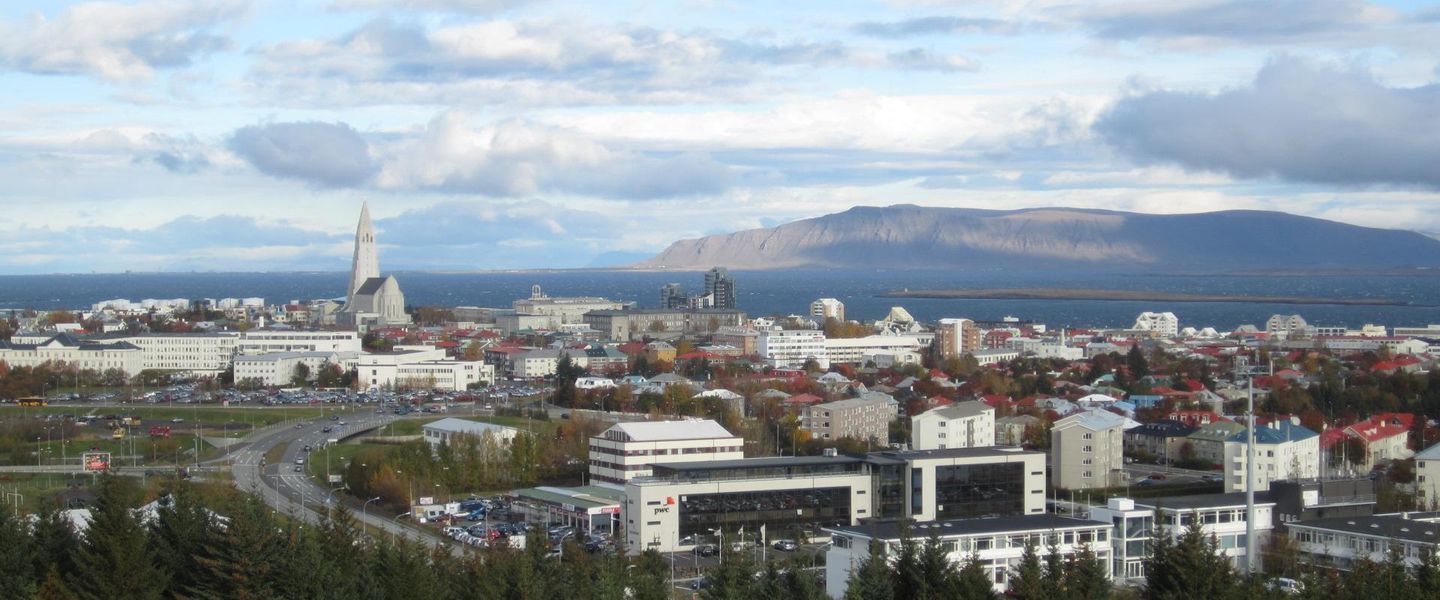


Hlíðar in Reykjavik blends Kjarvalsstaðir, Klambratún park, modern architecture, local cafés and calm residential streets near the city centre.
A Neighbourhood Between Centre and Open Space
Hlíðar occupies the rising ground east of central Reykjavik, a largely residential district whose streets extend between the city centre and the open landscapes around Öskjuhlíð. Its character is quieter than nearby Miðborg, but it is not detached from the city’s cultural life: Laugavegur, the main shopping street, lies close to the west, while Miklabraut provides a busy urban edge to the south. Apartment blocks, detached houses, schools and small local services create a practical, lived-in atmosphere rather than a concentrated sightseeing district.Read more about Hlíðar
Art, Parks and Everyday Reykjavik
Streets with a Local Rhythm
Best attractions in Hlíðar
Kjarvalsstaðir is Hlíðar’s leading visitor attraction, presenting exhibitions within the Reykjavik Art Museum and standing beside the open lawns of Klambratún. The museum’s name honours Jóhannes S. Kjarval, whose landscapes and imaginative interpretations of Iceland have a central place in the country’s art history. Klambratún itself is an important part of the experience, with broad paths, outdoor space and sculpture that make it suitable for a relaxed neighbourhood walk. Beyond the museum and park, the interest lies in the district’s streets: Flókagata and Rauðarárstígur reveal a mixture of early houses, post-war apartment buildings and later urban repairs. Háteigskirkja provides another focal point, while the changing views across streets and rooftops explain why Hlíðar’s elevated setting matters. Visitors can also use the neighbourhood as a quieter route between central Reykjavik and the open ground of nearby Öskjuhlíð.
-
Tourist attraction
Mermaid mural
Explore the Mermaid Mural in Reykjavik, a vibrant tribute to Icelandic folklore and a stunning backdrop for your travel memories.
12 min walk · 1.0 km from neighbourhood centre

Best landmarks in Hlíðar
Kjarvalsstaðir is Hlíðar’s defining cultural landmark, a purpose-built art museum opened in 1973 and named for the painter Jóhannes S. Kjarval. Its low, modern presence beside Klambratún reflects the neighbourhood’s post-war development and gives the surrounding park a clear civic focus. Háteigskirkja, on Háteigsvegur, is another significant local landmark, recognised for its modern church design and role in the life of the district. The streets themselves form an architectural record: detached houses and older low-rise buildings stand alongside apartment blocks from Reykjavik’s rapid mid-century expansion. Klambratún is important as a public landscape rather than a single monument, providing a broad setting for recreation, sculpture and community use. Miklabraut, meanwhile, marks the area’s relationship with the wider city, functioning as a major transport corridor and a physical contrast to the quieter residential streets behind it.
-
Church
Hallgrimskirkja
Explore Hallgrimskirkja, Reykjavik's stunning architectural gem and a symbol of Icelandic heritage with breathtaking views and serene interiors.
10 min walk · 0.8 km from neighbourhood centre
-
 Natural history museum
Perlan
Discover Perlan, Reykjavik's natural history museum, planetarium, and café, offering breathtaking views and fascinating exhibitions about Iceland's unique landscapes.
9 min walk · 0.8 km from neighbourhood centre
-
Sculpture
Sun Voyager
Discover the Sun Voyager in Reykjavik, an iconic sculpture symbolizing adventure and connection to the Viking heritage amidst breathtaking landscapes.
16 min walk · 1.3 km from neighbourhood centre
-
Historical landmark
Höfði House
Discover the historical significance of Höfði House in Reykjavik, where history and architecture blend beautifully in a serene setting.
17 min walk · 1.3 km from neighbourhood centre


Explore Hlíðar on the map
A handpicked selection of must-see spots in Hlíðar, mapped for you.
Best hotels in Hlíðar
Best restaurants in Hlíðar
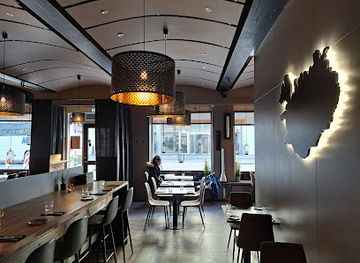
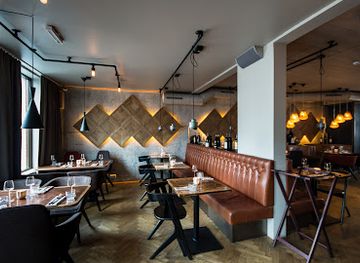
Hlíðar’s dining scene is modest and dispersed, reflecting its residential character rather than a single restaurant strip. The most useful choices are found along the edges facing central Reykjavik and around the routes leading towards Rauðarárstígur, where cafés, casual restaurants and takeaway-oriented businesses serve local residents as well as visitors. Eating here can be combined easily with a visit to Kjarvalsstaðir or a walk through Klambratún, but the area should not be confused with the denser dining concentration of central Miðborg. Expect the wider Reykjavik mix of coffee, bakery food, seafood, lamb, burgers and international cooking, with menus and businesses changing over time. Independent cafés are particularly suited to a daytime stop, while visitors seeking a lengthy evening meal may find a broader choice by continuing west towards Laugavegur and the central streets, just beyond Hlíðar’s commonly recognised residential core.
-
Icelandic
Reykjavik Kitchen
Discover authentic Icelandic flavors at Reykjavik Kitchen - where fresh ingredients meet creative culinary artistry.
10 min walk · 0.8 km from neighbourhood centre
-
Icelandic
Kol Restaurant
Experience the essence of Icelandic fine dining at Kol Restaurant in Reykjavik—where tradition meets innovation in every dish.
11 min walk · 0.9 km from neighbourhood centre
-
Restaurant
KRÖST
Discover the essence of Icelandic cuisine at KRÖST - where fresh seafood meets expertly grilled meats in a stylish setting.
10 min walk · 0.8 km from neighbourhood centre
-
Restaurant
Skál!
Discover Skál!, where Icelandic culinary traditions meet modern creativity in a vibrant dining experience.
10 min walk · 0.8 km from neighbourhood centre
Best bars in Hlíðar
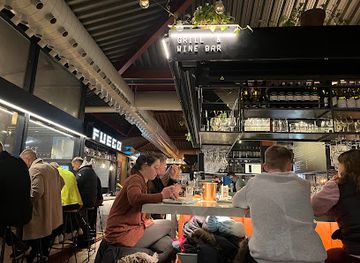
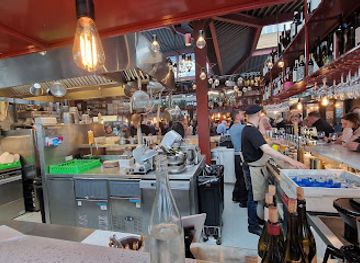
Hlíðar is not one of Reykjavik’s principal late-night entertainment districts, and evenings are generally quieter than in the central streets around Laugavegur and Austurstræti. The neighbourhood’s social life is more likely to centre on cafés, restaurants and informal local gatherings than on a dense sequence of pubs or clubs. Visitors staying in Hlíðar can reach central nightlife on foot or by local bus, while the edges near Rauðarárstígur offer occasional places to eat and drink without the intensity of the main bar quarter. After dark, the contrast between active central streets and Hlíðar’s apartment-lined roads is pronounced, so return routes should be planned with winter darkness, wind and icy pavements in mind. Kjarvalsstaðir and nearby cultural spaces may host occasional evening programmes, but schedules are changeable and should be checked through official listings rather than assumed.
-
Bar
Lebowski Bar
Discover the quirky charm of Lebowski Bar in Reykjavík, where themed decor meets delicious drinks and a vibrant atmosphere.
15 min walk · 1.2 km from neighbourhood centre
-
Bar
Dillon Whiskey Bar
Experience the vibrant nightlife at Dillon Whiskey Bar, known for its extensive whiskey selection, karaoke, and live music in the heart of Reykjavik.
14 min walk · 1.1 km from neighbourhood centre
-
Bar
Microbar Reykjavík
Experience the essence of Icelandic craft beers at Microbar Reykjavík, a cozy bar in the heart of the city with a diverse selection and vibrant atmosphere.
10 min walk · 0.8 km from neighbourhood centre
-
Grill
Bjórgarðurinn
Experience the best of Icelandic grilling at Bjórgarðurinn, where local flavors meet a vibrant atmosphere in the heart of Reykjavik.
13 min walk · 1.0 km from neighbourhood centre



Best nightclubs in Hlíðar
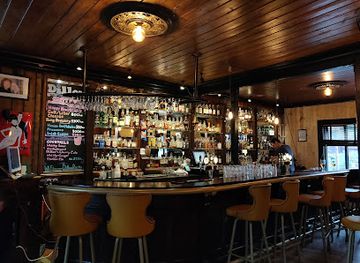
Hlíðar is not one of Reykjavik’s principal late-night entertainment districts, and evenings are generally quieter than in the central streets around Laugavegur and Austurstræti. The neighbourhood’s social life is more likely to centre on cafés, restaurants and informal local gatherings than on a dense sequence of pubs or clubs. Visitors staying in Hlíðar can reach central nightlife on foot or by local bus, while the edges near Rauðarárstígur offer occasional places to eat and drink without the intensity of the main bar quarter. After dark, the contrast between active central streets and Hlíðar’s apartment-lined roads is pronounced, so return routes should be planned with winter darkness, wind and icy pavements in mind. Kjarvalsstaðir and nearby cultural spaces may host occasional evening programmes, but schedules are changeable and should be checked through official listings rather than assumed.
-
Night club
Pablo Discobar
Discover the electrifying atmosphere of Pablo Discobar, the ultimate nightlife destination in Reykjavík, offering exquisite cocktails and vibrant music.
5 min drive · 1.7 km from neighbourhood centre
-
Lounge
Vinnustofa Kjarval
Experience the charm of Vinnustofa Kjarval, a sophisticated lounge in Reykjavík, perfect for relaxation and socializing amidst local culture.
5 min drive · 1.6 km from neighbourhood centre
-
Club
Paloma Club
Dive into Reykjavík's nightlife at Paloma Club, where music and energy collide for an unforgettable clubbing experience.
5 min drive · 1.7 km from neighbourhood centre
-
Night club
RADAR Reykjavík
Experience the electrifying nightlife at RADAR Reykjavík, a premier night club offering diverse music and an unforgettable atmosphere in the heart of Iceland.
5 min drive · 1.7 km from neighbourhood centre


Best shops in Hlíðar
Shopping in Hlíðar is practical and local rather than destination retail. Small food shops, everyday services, cafés and independent businesses are scattered along the neighbourhood’s main streets, particularly around the routes connecting it with central Reykjavik. Flókagata and Rauðarárstígur are useful for observing this mixed urban pattern, where ground-floor premises serve nearby apartment blocks and houses rather than forming a continuous shopping promenade. Visitors interested in design, books, clothing or specialist retail will generally find a wider selection by walking west into Miðborg, while larger-scale shopping is located outside Hlíðar in other parts of the city. The district’s retail interest lies in its ordinary rhythm: picking up provisions, pausing for coffee and seeing how Reykjavik’s residential neighbourhoods function. Markets and temporary events may add activity at particular times, but they should be checked locally rather than treated as permanent fixtures.
-
Gift basket store
Lundinn
Discover authentic Icelandic souvenirs at Lundinn, a charming gift basket store in Reykjavík, perfect for finding unique treasures to take home.
13 min walk · 1.0 km from neighbourhood centre
-
Boutique
Thorvaldsens Bazar
Discover unique Icelandic craftsmanship and design at Thorvaldsens Bazar, a charming boutique in Reykjavík’s heart.
5 min drive · 1.7 km from neighbourhood centre
-
Clothing store
Kjólar & Konfekt
Discover Icelandic fashion at Kjólar & Konfekt, a boutique offering unique clothing that showcases local craftsmanship in the heart of Reykjavik.
10 min walk · 0.8 km from neighbourhood centre
-
Gift shop
Dogma
Explore Dogma in Reykjavík for unique gifts and souvenirs that showcase Icelandic culture and creativity, perfect for every traveler.
16 min walk · 1.3 km from neighbourhood centre


Hlíðar essentials
Getting There
Getting Around
Safety
Emergency Situations
Do's and Don'ts
Local Tips

From Eve
Local phrases worth knowing
You don't need to get them perfect. A few words go a long way, and locals appreciate the effort.
Basics
| English | Local | Say it |
|---|---|---|
| Hello | Halló | [HAH-loh] |
| Goodbye | Bless | [bless] |
| Yes | Já | [yow] |
| No | Nei | [nay] |
| Please/You're welcome | Takk fyrir | [tahk FEER-ir] |
| Thank you | Takk | [tahk] |
| Excuse me/Sorry | Fyrirgefðu | [FEER-ir-gef-thu] |
| How are you? | Hvernig hefur þú það? | [KVER-nihg heh-vur THOO thahth] |
| Fine. And you? | Í lagi. En þú? | [EE lah-ghi. en thoo] |
| Do you speak English? | Talar þú ensku? | [tah-lahr thoo EHN-skoo] |
| I don't understand | Ég skil ekki | [yeg skil EH-kki] |
Eating & Drinking
| English | Local | Say it |
|---|---|---|
| I'd like to see the menu, please | Ég ætla að sjá matsedilinn, takk | [yeg EHT-la ath shyah maht-seh-dih-lin, tahk] |
| I don't eat meat | Ég borða ekki kjöt | [yeg BOHR-tha EH-kki chyot] |
| Cheers! | Skál! | [skowl] |
| I would like to pay, please | Ég vildi greiða, takk | [yeg VIL-dee gray-tha, tahk] |
Emergencies
| English | Local | Say it |
|---|---|---|
| Help! | Hjálp! | [HYOWL-p] |
| Go away! | Farðu í burtu! | [far-thu ee BUR-too] |
| Call the Police! | Hringdu í lögregluna! | [hring-thu ee LOH-gre-gluna] |
| Call a doctor! | Hringdu í lækninn! | [hring-thu ee laik-nin] |
| I'm lost | Ég er týndur | [yeg ehr TEEN-thur] |
| I'm ill | Ég er veikur | [yeg ehr VAI-kur] |
Shopping
| English | Local | Say it |
|---|---|---|
| I'd like to buy... | Ég ætla að kaupa... | [yeg EHT-la ath kow-pa] |
| I'm just looking | Ég er bara að skoða | [yeg ehr BAH-ra ath skoh-tha] |
| How much is it? | Hvað kostar það? | [kva-th KOH-star thahth] |
| That's too expensive | Það er of dýrt | [thahth ehr ohf DEERT] |
| Can you lower the price? | Getur þú lækkað verðið? | [geth-ur thoo LEI-kath ver-thith] |
Time & Numbers
| English | Local | Say it |
|---|---|---|
| What time is it? | Hvað er klukkan? | [kva-th ehr KLUTK-an] |
| It's one o'clock | Klukkan er eitt | [KLUTK-an ehr ayt] |
| Half past (10) | Hálftíu (10) | [HOWLFT-ew (tiu)] |
| Morning | Morgunn | [MOR-gun] |
| Afternoon | Síðdegis | [SEETH-deh-ye] |
| Evening | Kvöld | [kvulth] |
| Yesterday | Í gær | [ee gai-r] |
| Today | Í dag | [ee dahg] |
| Tomorrow | Á morgun | [ow MOR-gun] |
| 1 | Einn | [aythn] |
| 2 | Tveir | [tveyr] |
| 3 | Þrír | [threer] |
| 4 | Fjórir | [fyow-reer] |
| 5 | Fimm | [fimm] |
| 6 | Sex | [sehx] |
| 7 | Sjö | [syow] |
| 8 | Átta | [ow-ta] |
| 9 | Níu | [nee-uh] |
| 10 | Tíu | [tee-ew] |
Transport & Directions
| English | Local | Say it |
|---|---|---|
| Where's a/the...? | Hvar er... | [kvar ehr] |
| What's the address? | Hvað er heimilisfangið? | [kva-th ehr HAY-mil-is-fan-gith] |
| Can you show me (on the map)? | Getur þú sýnt mér (á kortinu)? | [geth-ur thoo seent mayr (ow kohrt-inu)] |
| When's the next (bus)? | Hvenær fer næsti (strætisvagn)? | [KVER-nihr fehr NAY-sti (straht-is-vahn)] |
| A ticket (to ....) | Einn miði (til ...) | [aythn mi-thi (til)] |
History of Hlíðar
From Outlying Ground to Urban District
Before twentieth-century expansion, the area now understood as Hlíðar lay beyond Reykjavik’s compact historic core, on open ground and scattered plots east of the older town. The district’s name refers to hills or slopes, reflecting its elevated position above the centre. As Reykjavik’s population grew, land east of the established streets was gradually incorporated into the expanding urban fabric. Early development consisted of detached houses and small clusters of residential construction, linked to the centre by roads that later became important city routes.
Planned Housing Between the Wars
The neighbourhood took clearer shape during the interwar decades, when Reykjavik began planning substantial new residential areas beyond its traditional centre. Streets, schools and modest houses were laid out on the slopes, while apartment construction gradually introduced greater density. This was part of a broader effort to provide healthier, more spacious housing for a growing urban population, with improved access to daylight, fresh air and public services. The surviving mixture of low-rise houses and later apartment buildings records that gradual transition from urban fringe to established suburb.
Post-War Growth and New Institutions
After the Second World War, Hlíðar experienced the wider building boom that transformed Reykjavik. Apartment blocks, schools and larger traffic corridors appeared as car ownership and municipal services expanded. Háteigskirkja, consecrated in 1965, became a significant local institution and an expression of the period’s modern ecclesiastical architecture. The creation of Miklatún as a substantial public park also gave the district an important open space, distinguishing it from denser central streets and providing room for recreation, gatherings and outdoor sculpture.
Kjarvalsstaðir and Contemporary Cultural Identity
Kjarvalsstaðir opened in 1973 as a purpose-built art museum and was named for Jóhannes S. Kjarval, one of Iceland’s most influential painters. Its location beside Miklatún helped establish Hlíðar as more than a residential district, linking everyday neighbourhood life with Reykjavik’s visual-arts institutions. Since then, the area has retained its mixed character: established homes and apartment buildings sit alongside cultural venues, parks and busy arterial roads. Incremental renovation and changing housing demand have refreshed parts of the district without erasing its post-war urban form.
Hlíðar in Photos
Browse through our photo collection highlighting the charm and character of the destination.
Neighbourhoods near Hlíðar
The closest neighbourhoods to Hlíðar, if you have time for more than one stop.
-
-

-

-
-


Swipe for more neighbourhoods
Explore more

Explore more of Reykjavik
Reykjavík combines Icelandic history, Hallgrímskirkja, coastal walks, museums, geothermal culture and access to dramatic landscapes beyond the capital.
Explore Reykjavik