

Þingvellir National Park Travel Guide - Free Web & App
Your ultimate guide to Þingvellir National Park. Discover top landmarks, proposed trips, and local tips. Free on the web or via the Evendo companion app.


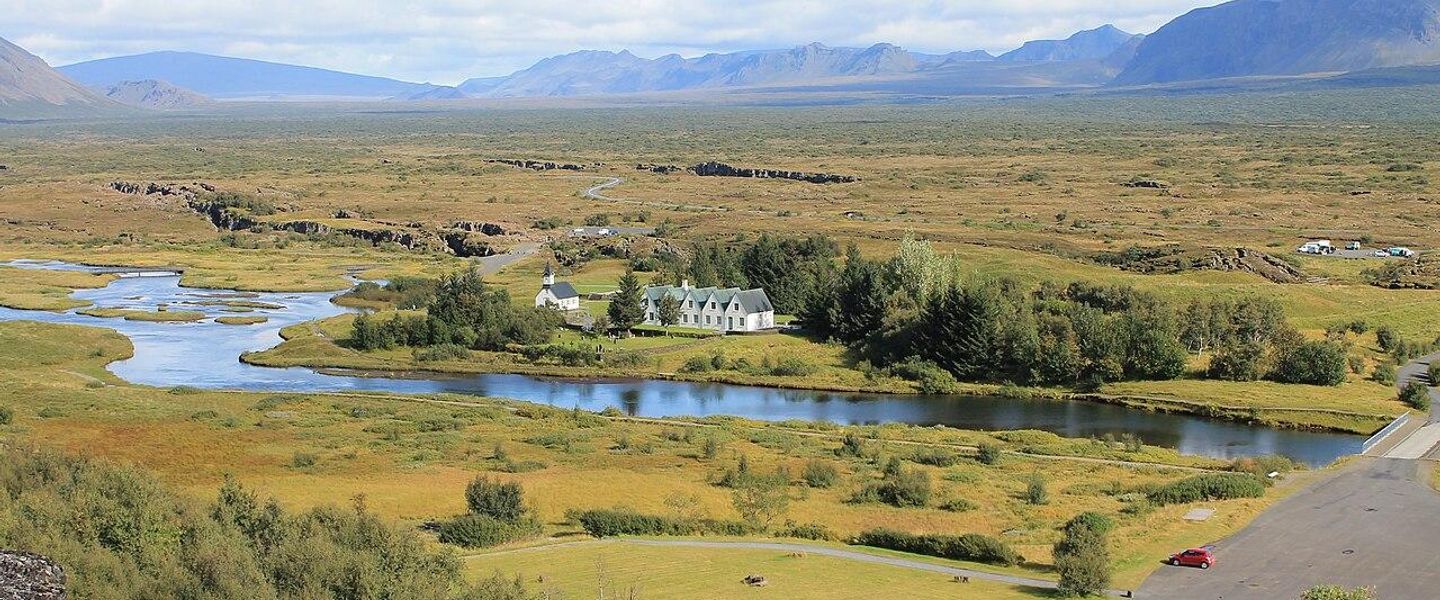


Þingvellir National Park, Iceland, combines Viking parliament history, dramatic tectonic fissures, Lake Þingvallavatn and scenic Golden Circle walks across the seasons.
A Landscape Shaped by Ice and Fire
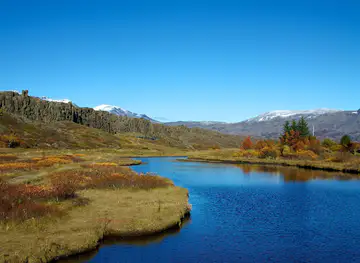
Þingvellir National Park lies in south-west Iceland, about 40 kilometres north-east of Reykjavík and within the country’s celebrated Golden Circle. Its defining landscape is a broad volcanic plain bordered by fissures and cliffs, where the North American and Eurasian tectonic plates are gradually pulling apart. The park slopes towards Þingvallavatn, Iceland’s largest natural lake, whose clear waters, lava shores and surrounding hills create one of the country’s most legible geological landscapes. The Öxará river crosses the historic assembly area before falling over Öxarárfoss, while walking paths connect the main viewpoints, church and visitor facilities.Read more about Þingvellir National Park
The Birthplace of Iceland’s Parliament
Exploring the National Park
When is the best time to visit Þingvellir National Park?
Best: June–August · 14–16°C| Month | High (°C) | Rainfall (mm) |
|---|---|---|
| January | 3 | 60 |
| February | 3 | 50 |
| March | 4 | 50 |
| April | 6 | 40 |
| May | 10 | 30 |
| June (best) | 14 | 30 |
| July (best) | 16 | 30 |
| August (best) | 15 | 30 |
| September | 12 | 40 |
| October | 7 | 50 |
| November | 4 | 60 |
| December | 3 | 60 |
Getting to and around Þingvellir National Park
How to get there
Transportation
Best attractions in Þingvellir National Park
The central attraction at Þingvellir is the historic assembly landscape, reached from the Hakið viewpoint by a path descending through Almannagjá, the park’s most recognisable tectonic gorge. Along the route, visitors encounter the former meeting area, the Lögberg site, Þingvellir church and the Öxará river, which continues over Öxarárfoss. Lake Þingvallavatn forms the park’s southern and eastern setting, with lava shores and open views towards volcanic hills. Silfra, a clear water-filled fissure connected with the lake, is explored through organised snorkelling and diving rather than ordinary sightseeing in the water. Other paths lead across mossy lava fields, low woodland and open ground, while the park’s edges provide a wider sense of the basin’s geology. Þingvellir’s appeal lies in the close relationship between physical features and history: a visitor can move from a dramatic rift landscape to the place where Iceland’s national assembly met for centuries within a single walk.
-
Tourist attraction
Reykjadalur Hot Spring Thermal River
Relax and rejuvenate in Iceland's stunning Reykjadalur Hot Spring Thermal River, where natural beauty meets soothing thermal waters.
-
Observation deck
Hrafnagjá Observation Deck
Discover unparalleled views and breathtaking landscapes at Hrafnagjá Observation Deck in Þingvellir National Park, a UNESCO World Heritage site.
-
Museum
Thingvallavatn Panorama
Explore Thingvallavatn Panorama: Iceland's Stunning Natural Lake and UNESCO World Heritage Site with breathtaking views and rich history.
-
Tourist attraction
Dead Man Walk
Explore the breathtaking beauty and rich history of Dead Man Walk in Thingvellir National Park, Iceland's stunning natural wonder.
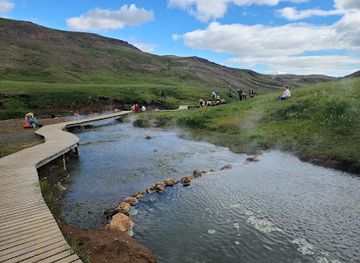


Best landmarks in Þingvellir National Park
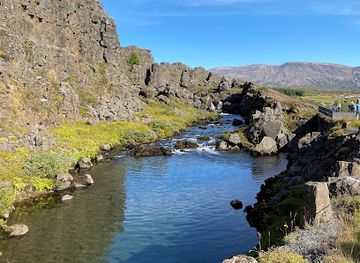
Almannagjá is Þingvellir’s defining natural landmark, a visible expression of the rifting landscape and the approach to the historic assembly plain. Nearby Lögberg marks the traditional location where laws were proclaimed, while the remains of the assembly area reveal how political gatherings were set within the wider terrain. Þingvellir church and the adjacent historical farm provide a small architectural focus in an otherwise open landscape, and the Öxará river leads to Öxarárfoss, a modest but important waterfall within the park. Lake Þingvallavatn is the largest natural lake in Iceland and gives the national park its broad southern setting. Silfra’s submerged fissure is another internationally recognised feature, valued for its exceptionally clear water and geological setting. Together, these landmarks express Þingvellir’s unusual identity as both a geological rift zone and a place of enduring parliamentary memory.
-
National park
Thingvellir National Park
Explore the breathtaking landscapes and rich history of Thingvellir National Park, a UNESCO World Heritage site in Iceland, where nature and culture intertwine.
-
National park
Thingvellir National Park Visitor Center
Discover the breathtaking landscapes and rich history of Thingvellir National Park, where nature meets heritage in an unforgettable experience.
-
Lutheran church
Þingvallakirkja (Þingvellir church)
Explore the serene beauty and historical significance of Þingvallakirkja in Þingvellir National Park, a unique Icelandic gem amidst nature's wonders.
-
Tourist attraction
Drekkingarhylur
Discover the mesmerizing Drekkingarhylur waterfall in Thingvellir National Park, a UNESCO World Heritage site known for its natural beauty and rich history.


Explore Þingvellir National Park on the map
Plan your trip on one map. See where the top attractions, landmarks, restaurants and hotels are, and book hotels and experiences in a few clicks.
Best hotels in Þingvellir National Park
Best restaurants in Þingvellir National Park
Dining within Þingvellir National Park is limited, with refreshments concentrated around the main visitor facilities rather than a broad restaurant scene. Visitors often bring provisions for walks or eat before and after their visit in nearby settlements. Laugarvatn, a practical Golden Circle base, has cafés and places serving Icelandic meals, while Reykjavík and Selfoss offer a much wider choice of restaurants and food shops. Regional menus commonly draw on Icelandic ingredients such as lamb, dairy products, rye bread, fish and locally grown vegetables, although specific dishes and availability vary by establishment and season. Farm shops and cafés elsewhere along the Golden Circle may provide baked goods, coffee and small meals, but they should not be assumed to operate throughout the year. Checking current opening arrangements is particularly important outside the main summer travel period.
-
Restaurant
Lindin
Experience the best of Icelandic cuisine at Lindin in Laugarvatn - where tradition meets modern flavor in an inviting atmosphere.
-
Restaurant
Thingvellir Tourist Information Centre Café
Discover local flavors at Thingvellir Tourist Information Centre Café while exploring Iceland's stunning national park landscapes.
-
Restaurant
SILFRA RESTAURANT & BAR
Discover authentic Icelandic cuisine amidst breathtaking landscapes at Silfra Restaurant & Bar near Thingvallavatn.


Best bars in Þingvellir National Park
Þingvellir is a protected rural landscape rather than a nightlife destination, so there are no established club districts or busy evening entertainment areas inside the national park. Evenings are generally quiet, with visitors returning to accommodation in Reykjavík, Laugarvatn, Selfoss or other Golden Circle settlements. Traditional pubs, hotel bars and restaurant lounges in those places provide a more realistic setting for an Icelandic drink or meal, while Reykjavík has the country’s broadest choice of live music and late-night venues. The park itself is better suited to subdued evening scenery, provided visitors remain within permitted areas and take account of darkness, cold, icy paths and changing weather. Seasonal cultural events may occur in the wider region, but schedules and venues should be checked locally rather than assumed.
-
Restaurant
Thingvellir Tourist Information Centre Café
Experience the tranquility of Thingvellir National Park at the Café, where local flavors meet breathtaking landscapes in Iceland's UNESCO World Heritage site.
-
Bar
Grímsborgir - Restaurant and Bar
Experience the best of Icelandic cuisine and lively entertainment at Grímsborgir Restaurant and Bar in Selfoss.


Best nightclubs in Þingvellir National Park
Þingvellir is a protected rural landscape rather than a nightlife destination, so there are no established club districts or busy evening entertainment areas inside the national park. Evenings are generally quiet, with visitors returning to accommodation in Reykjavík, Laugarvatn, Selfoss or other Golden Circle settlements. Traditional pubs, hotel bars and restaurant lounges in those places provide a more realistic setting for an Icelandic drink or meal, while Reykjavík has the country’s broadest choice of live music and late-night venues. The park itself is better suited to subdued evening scenery, provided visitors remain within permitted areas and take account of darkness, cold, icy paths and changing weather. Seasonal cultural events may occur in the wider region, but schedules and venues should be checked locally rather than assumed.
-
Parking lot
Þingvellir Parking P2
Discover the breathtaking beauty and rich history at Þingvellir Parking P2, your gateway to Iceland's stunning landscapes and geological wonders.

Best shops in Þingvellir National Park
Shopping at Þingvellir itself is limited to visitor-oriented essentials and souvenirs around the main facilities rather than a permanent retail district. Visitors seeking Icelandic products will find more choice in Reykjavík, Selfoss, Laugarvatn and other Golden Circle settlements, where shops may stock woollen goods, outdoor clothing, books, local food and small-scale crafts. Icelandic wool remains a characteristic purchase, while regional food producers and farm shops may offer bread, preserves, dairy products or other locally made goods. Availability differs between businesses and seasons, particularly in rural areas, so the park should not be approached as a shopping destination. Practical supplies, including food for walks and weather-resistant outdoor equipment, are easier to obtain in larger towns before setting out for the national park.
-
National park
Thingvellir National Park
Explore the breathtaking landscapes and rich history of Thingvellir National Park, a UNESCO World Heritage site in Iceland.
-
National park
Thingvellir National Park Visitor Center
Discover the breathtaking landscapes and rich history at Þingvellir National Park, a UNESCO World Heritage site in the heart of Iceland.
-
Tourist information center
Thingvellir National park service centre
Discover the stunning landscapes and historical significance of Thingvellir National Park, a UNESCO World Heritage site in Iceland, where nature and culture meet.
-
Grocery store
Samkaup strax
Explore the best of local and international grocery selections at Samkaup strax in Laugarvatn, Iceland. Perfect for all your shopping needs.


Get your free copy of our complete guide to Þingvellir National Park, delivered straight to you.
Everything on this page, from attractions and restaurants to essentials and local phrases, in one PDF you can read offline, print or share.
Already have an account? Sign in
Your Þingvellir National Park guide is ready.
We'll send it to · Not you? Sign out

Getting your guide ready…
We are putting together a fresh copy of the Þingvellir National Park guide. This can take up to a minute.
This can take a few moments. If your browser asks, choose Allow so the download can start. You'll find the guide in your Downloads folder.
Nothing happened? Download it again
Sorry, the guide is taking longer than usual. Please try again in a minute, or get it by email instead.
Þingvellir National Park essentials
Currency and Payment
Safety
Emergency Situations
Do's and Don'ts
Local Tips
From Eve
Local phrases worth knowing
You don't need to get them perfect. A few words go a long way, and locals appreciate the effort.
Basics
| English | Local | Say it |
|---|---|---|
| Hello | Halló | [ha-tlo] |
| Goodbye | Bless | [bles] |
| Yes | Já | [ya] |
| No | Nei | [nay] |
| Please/You're welcome | Gjörðu svo vel | [gyor-thu svo vel] |
| Thank you | Takk fyrir | [tak fir-ir] |
| Excuse me/Sorry | Afsakið | [af-sa-kith] |
| How are you? | Hvernig hefur þú það? | [kver-nik he-vur thoo thad] |
| Fine. And you? | Í lagi. En þú? | [ee la-ghi. en thoo] |
| Do you speak English? | Talar þú ensku? | [ta-lar thoo en-sku] |
| I don't understand | Ég skil ekki | [yeh shkil ek-ki] |
Eating & Drinking
| English | Local | Say it |
|---|---|---|
| I'd like to see the menu, please | Ég myndi vilja sjá matseðilinn, takk | [yeh min-di vil-ya syow mat-se-thil-inn tak] |
| I don't eat meat | Ég borða ekki kjöt | [yeh bor-tha ek-ki chot] |
| Cheers! | Skál! | [skowl] |
| I would like to pay, please | Ég myndi vilja borga, takk | [yeh min-di vil-ya bor-ga tak] |
Emergencies
| English | Local | Say it |
|---|---|---|
| Help! | Hjálp! | [hyawlp] |
| Go away! | Farðu í burtu! | [far-thu ee bur-thu] |
| Call the Police! | Hringdu í lögregluna! | [hring-thu ee ler-eg-luna] |
| Call a doctor! | Hringdu í lækninn! | [hring-thu ee laik-nin] |
| I'm lost | Ég er týndur | [yeh er teen-thur] |
| I'm ill | Ég er veikur | [yeh er vay-kur] |
Shopping
| English | Local | Say it |
|---|---|---|
| I'd like to buy... | Ég myndi vilja kaupa... | [yeh min-di vil-ya koy-pa] |
| I'm just looking | Ég er bara að skoða | [yeh er ba-ra ath skotha] |
| How much is it? | Hvað kostar það? | [kva-th kost-ar thad] |
| That's too expensive | Það er of dýrt | [thath er ov deert] |
| Can you lower the price? | Getur þú lækkad verðið? | [gethur thoo lai-kath ver-thith] |
Time & Numbers
| English | Local | Say it |
|---|---|---|
| What time is it? | Hvað er klukkan? | [kva-th er klo-kkan] |
| It's one o'clock | Klukkan er eitt | [klo-kkan er ayt] |
| Half past (10) | Hálf tíu | [howlf tee-oo] |
| Morning | Morgunn | [mor-gunn] |
| Afternoon | Síðdegis | [seed-de-ghis] |
| Evening | Kvöld | [kvold] |
| Yesterday | Í gær | [ee gair] |
| Today | Í dag | [ee thag] |
| Tomorrow | Á morgun | [ow mor-goon] |
| 1 | Einn | [aythn] |
| 2 | Tveir | [thvay-r] |
| 3 | Þrír | [threer] |
| 4 | Fjórir | [fyow-rir] |
| 5 | Fimm | [fim] |
| 6 | Sex | [sehx] |
| 7 | Sjö | [syow] |
| 8 | Átta | [ow-tha] |
| 9 | Níu | [nee-oo] |
| 10 | Tíu | [tee-oo] |
Transport & Directions
| English | Local | Say it |
|---|---|---|
| Where's a/the...? | Hvar er... | [kvar er] |
| What's the address? | Hvað er heimilisfangið? | [kva-th er hay-mil-is-fang-ith] |
| Can you show me (on the map)? | Getur þú sýnt mér (á kortinu)? | [gethur thoo seent meer ow kort-inu] |
| When's the next (bus)? | Hvenær kemur næsti (straetóbíll)? | [kver-ni-air ke-mur nysti strai-tow-bil] |
| A ticket (to ....) | Miði (til ...) | [mee-thi til] |
History of Þingvellir National Park
A Rift Valley of Volcanic Origin
Þingvellir’s physical setting was created by Iceland’s volcanic geology and the continuing separation of the North American and Eurasian tectonic plates. Lava flows, fissures and subsidence formed the open basin and steep Almannagjá gorge that define the modern national park. Lake Þingvallavatn occupies part of this volcanic landscape, while the Öxará river and numerous springs have shaped the terrain further. This geological context was not merely a scenic backdrop: the broad, relatively accessible plain helped make Þingvellir a practical meeting place for communities travelling from different parts of Iceland.
The Alþingi at Þingvellir
Around AD 930, Iceland’s chieftains established Alþingi at Þingvellir, generally regarded as one of the world’s oldest surviving parliamentary institutions. The annual assembly combined law-making with judicial proceedings, political negotiation, trade and social contact. Participants gathered around the Lögberg, or Law Rock, where laws were proclaimed and important announcements made. The assembly did not represent a modern democracy, since political authority was concentrated among chieftains, but it created a formal framework for governing Icelandic society. Þingvellir consequently became a foundational place in the country’s historical and national identity.
From Commonwealth to Icelandic Kingdom
Alþingi continued to meet at Þingvellir through Iceland’s medieval period and after the country entered into political unions with Norway and Denmark. The assembly’s functions changed over time as royal authority and administrative systems developed, but the site remained a significant meeting place. The historic Commonwealth period is closely associated with Iceland’s medieval saga tradition, although the surviving literary accounts were written later and should not be treated as simple contemporary records. Regular parliamentary meetings at Þingvellir eventually ended in the eighteenth century, and Alþingi was re-established in Reykjavík in 1845.
National Memory and Modern Heritage
Þingvellir gained renewed symbolic importance during Iceland’s movement towards constitutional government and greater political independence. The site was used for major national commemorations, including the celebration of the thousandth anniversary of Alþingi in 1930. The Þingvellir National Park was established in 1930 to protect the landscape and its historical associations, making it one of Iceland’s earliest national parks. Its church, farm and assembly remains form part of a cultural landscape in which geological features and political history cannot be separated.
UNESCO Recognition and Conservation
Þingvellir was designated a UNESCO World Heritage Site in 2004 in recognition of its outstanding cultural importance and the way its historic assembly setting remains legible within a dramatic geological environment. Conservation work must balance large visitor numbers with the protection of fragile lava, vegetation, historic traces and lake environments. The park’s contemporary management therefore directs visitors along established routes and concentrates facilities at defined access points. The result is a landscape where tourism, national ceremony, outdoor recreation and conservation continue to overlap.
Þingvellir National Park in Photos
Browse through our photo collection highlighting the charm and character of the destination.
Neighbouring destination travel guides
The closest destinations to Þingvellir National Park, if you have time for more than one.
-
-

-

-

-


Swipe for more destinations
Explore more
Explore more of Southern Region
Explore the Southern Region of Iceland: From majestic waterfalls to black sand beaches, glaciers, and geothermal wonders, this is a land of dramatic contrasts and natural beauty.
Explore Southern Region
Explore more of Iceland
Discover Iceland, where glaciers meet volcanoes, Northern Lights dance in the skies, and natural wonders await at every turn.
Explore Iceland