

Free Aley Travel Guide & Mobile App
Plan your Aley trip with Evendo. Get free guides to top attractions, restaurants, hotels, and bars. Web access or download the mobile app.


Aley, Lebanon’s mountain retreat above Beirut, combines railway heritage, cool highland air, local cafés, scenic views and easy access to Mount Lebanon.
Mountain Air and Summer Culture
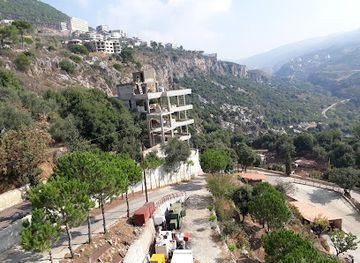
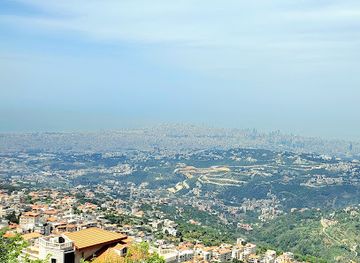
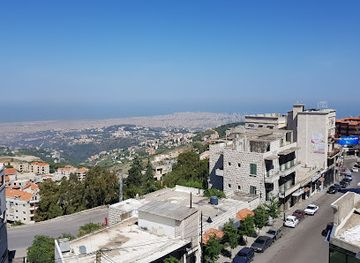
Aley rises along the slopes of Mount Lebanon, roughly 17 kilometres east of Beirut, where cooler air, pine-covered hills and broad views towards the capital have shaped its identity for generations. The town is the administrative centre of Aley District and one of Lebanon’s best-known mountain resorts, although its appeal extends beyond the traditional summer season. Its streets combine apartment buildings, traditional houses, cafés, restaurants and remnants of the grander resort architecture that developed when Beirut’s residents began escaping the coastal heat.Read more about Aley
A Railway Town in the Hills
Between Beirut and the Mountain Villages
When is the best time to visit Aley?
Best: May–June, October · 29–34°C| Month | High (°C) | Rainfall (mm) |
|---|---|---|
| January | 15 | 170 |
| February | 16 | 164 |
| March | 19 | 147 |
| April | 23 | 81 |
| May (best) | 29 | 17 |
| June (best) | 34 | 1 |
| July | 37 | 0 |
| August | 36 | 0 |
| September | 34 | 1 |
| October (best) | 30 | 37 |
| November | 24 | 105 |
| December | 18 | 164 |
Getting to and around Aley
How to get there
Transportation
Best attractions in Aley
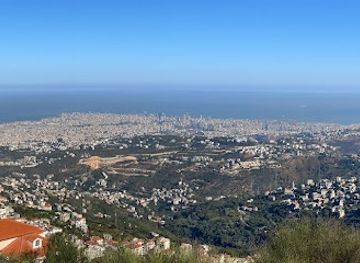
Aley’s principal attractions are found in its streets, views and railway-era character rather than in a large concentration of formal museums. The older commercial centre is suited to a leisurely walk among cafés, local shops and surviving mountain architecture, while the former Aley railway station recalls the Beirut–Damascus line that helped turn the town into a summer resort. Elevated viewpoints open towards Beirut and the coastal plain, particularly when the air is clear, and the surrounding slopes provide a cooler setting for relaxed walks. Religious buildings and community spaces reflect Mount Lebanon’s plural social history, though visitors should check access and observe local etiquette. Aley also makes a practical base for short outings to nearby Bhamdoun, Beit Mery and Broummana, each a separate town with its own character. These excursions broaden the experience beyond Aley’s compact centre without confusing the surrounding resort villages with attractions inside the city itself.
-
Amusement park
Mountain Park Aley
Experience the thrill of rides and the beauty of nature at Mountain Park Aley, a perfect family retreat in Lebanon's stunning landscape.
10 min walk · 0.8 km from city centre
-
Tourist attraction
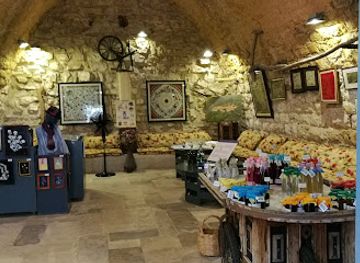
The Silk Museum - Bsous
Explore the rich history of silk production at The Silk Museum in Aley, Lebanon, and discover the artistry behind this exquisite fabric.
9 min drive · 2.9 km from city centre
-
Sculpture museum
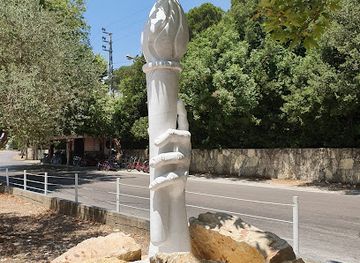
Symposium Aley
Discover the enchanting world of sculpture at Symposium Aley, a cultural gem in Lebanon, showcasing diverse artistic expressions in an inspiring setting.
10 min walk · 0.8 km from city centre
-
Garden
Aley Public Garden
Experience tranquility and beauty at Aley Public Garden, a serene oasis in the heart of Aley, where nature flourishes in every season.
15 min walk · 1.2 km from city centre
Best landmarks in Aley
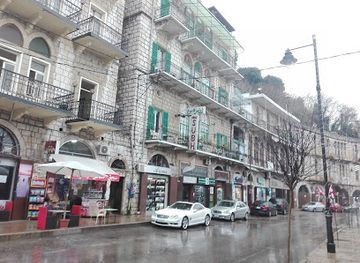
Aley’s most significant landmark is the former railway station associated with the Beirut–Damascus railway, a reminder of the infrastructure that connected Mount Lebanon with Beirut and the Syrian interior and helped establish the town as a resort. The older centre contains further traces of Aley’s development through traditional stone buildings, arcaded commercial façades and hillside streets shaped by seasonal hospitality. Local churches and other religious buildings reflect the area’s diverse communities and should be appreciated with appropriate respect, particularly during services. The town’s setting is itself an important visual landmark: roads and terraces look across the coastal plain towards Beirut, making geography central to Aley’s identity. Unlike Lebanon’s monumental ancient sites, Aley’s heritage is read through its railway history, resort architecture, community institutions and relationship with the mountain landscape.
-
 Hotel
Golden Lili Resort & Spa
Experience luxury and relaxation at Golden Lili Resort & Spa in Aley, Lebanon, with elegant accommodations, diverse dining, and recreational activities.
6 min drive · 2.0 km from city centre
-
Adventure sports
Aley EquiClub
Experience adventure and natural beauty at Aley EquiClub, offering horseback riding, outdoor sports, and stunning mountain views in Aley, Lebanon.
5 min drive · 1.8 km from city centre
-
Amusement park
Mountain Park Aley
A family-friendly amusement park in Aley, Lebanon, offering a safe and enjoyable environment with various play structures and activities for kids.
10 min walk · 0.8 km from city centre
-
Shopping mall
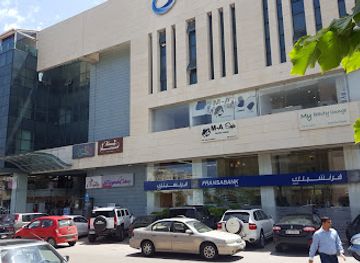
Aley Center
Experience modern shopping with a local touch at Aley Center, the premier retail destination in the heart of Mount Lebanon.
15 min walk · 1.2 km from city centre
Explore Aley on the map
Plan your Aley trip on one map. See where the top attractions, landmarks, restaurants, bars and hotels are, find what's near where you're staying, and book hotels and experiences in a few clicks.
Best hotels in Aley
Best restaurants in Aley
Aley’s dining scene is closely tied to Lebanese home cooking and the town’s long-standing role as a summer retreat. Restaurants and cafés commonly draw on the country’s familiar mezze tradition, with dishes such as hummus, tabbouleh, fattoush, grilled meats, kibbeh and stuffed vegetables joined by seasonal mountain produce. Breakfast cafés may serve manakish and other simple baked foods, while sweets, coffee and cold drinks suit the town’s evening promenade culture. The centre and its main commercial streets offer the greatest concentration of casual places to eat, whereas the surrounding mountain roads lead to village restaurants and outdoor terraces in neighbouring towns. Menus, opening patterns and payment arrangements can change with the season and wider economic conditions, so local recommendations are useful. Dining in Aley is generally as much about sitting, conversation and the cooler air as about formal restaurant presentation.
-
Restaurant
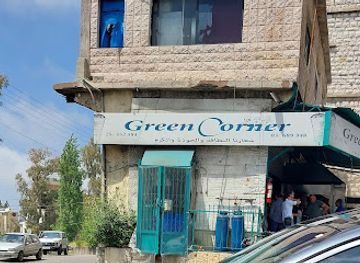
الزاوية الخضراء - Green Corner
Discover Aley's culinary gem at Green Corner, where every sandwich is crafted with love and fresh ingredients.
5 min drive · 1.7 km from city centre
-
Restaurant
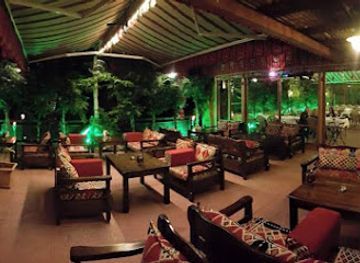
Al-Koukh الكوخ
Discover authentic Lebanese cuisine at Al-Koukh in Aley - where every meal is a celebration of flavor and tradition.
9 min walk · 0.7 km from city centre
-
Restaurant
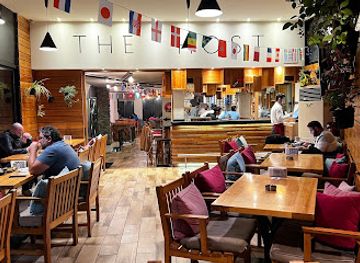
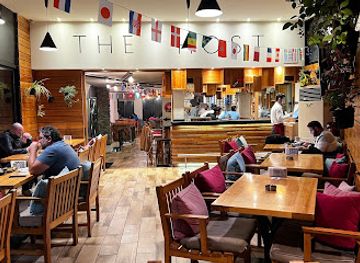
The Host
Experience delightful dining at The Host in Aley - where local flavors meet international cuisine amidst breathtaking views.
13 min walk · 1.0 km from city centre
-
Restaurant
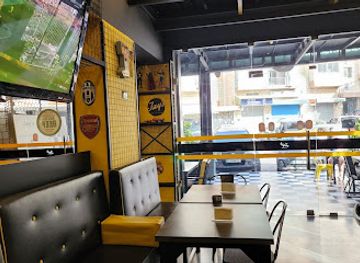
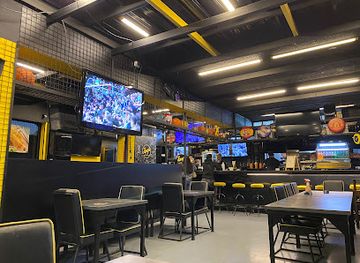
Jay’s Diner Burgers
Experience the best burgers in Aley at Jay’s Diner – where flavor meets fun in every bite!
6 min walk · 0.5 km from city centre
Best bars in Aley
Aley’s evenings are generally sociable and café-oriented rather than defined by a large nightclub district. In the warmer months, residents and visitors gather at cafés and restaurants in the centre, where conversation, Lebanese coffee, sweets and late meals create a relaxed after-dark rhythm. Some venues serve alcoholic drinks, including Lebanese wine and arak, but nightlife varies considerably by season, neighbourhood and the current economic situation. The town’s former resort reputation is more visible in its evening promenade and hospitality culture than in a concentration of purpose-built clubs. Nearby mountain resorts may offer additional restaurants and lounges, but they are separate destinations and should not be presented as part of Aley’s own nightlife. Visitors should dress and behave respectfully in mixed residential areas, confirm transport for the return journey and avoid assuming that venues maintain fixed late-night schedules.
-
Restaurant
Al-Koukh الكوخ
Experience the authentic flavors of Lebanon at Al-Koukh الكوخ, a cozy restaurant in Aley offering delightful dishes and stunning views.
9 min walk · 0.7 km from city centre
-
Restaurant
The Host
Experience the best of Lebanese cuisine at The Host in Aley, where vibrant flavors and a welcoming atmosphere await every visitor.
13 min walk · 1.0 km from city centre
-
Restaurant
Jay’s Diner Burgers
Discover the authentic taste of Aley at Jay’s Diner Burgers, where mouthwatering meals and a lively atmosphere await every visitor.
6 min walk · 0.5 km from city centre
-
Restaurant
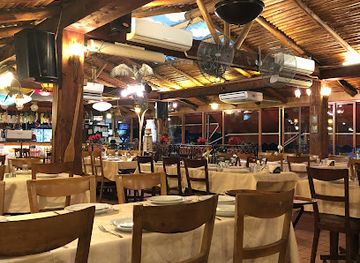
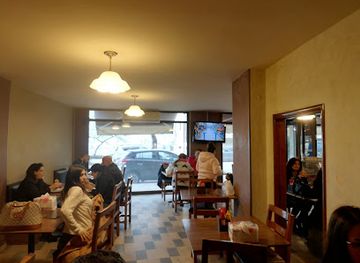
Eddie's Grill House
Experience the best of Lebanese grilling at Eddie's Grill House, where every bite is a celebration of flavor and tradition.
12 min walk · 1.0 km from city centre
Best nightclubs in Aley
Aley’s evenings are generally sociable and café-oriented rather than defined by a large nightclub district. In the warmer months, residents and visitors gather at cafés and restaurants in the centre, where conversation, Lebanese coffee, sweets and late meals create a relaxed after-dark rhythm. Some venues serve alcoholic drinks, including Lebanese wine and arak, but nightlife varies considerably by season, neighbourhood and the current economic situation. The town’s former resort reputation is more visible in its evening promenade and hospitality culture than in a concentration of purpose-built clubs. Nearby mountain resorts may offer additional restaurants and lounges, but they are separate destinations and should not be presented as part of Aley’s own nightlife. Visitors should dress and behave respectfully in mixed residential areas, confirm transport for the return journey and avoid assuming that venues maintain fixed late-night schedules.
-
Computer club
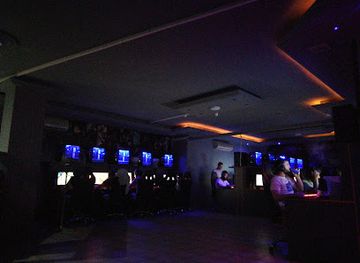
THE cLAN
Experience the ultimate gaming adventure at The cLAN in Aley, Lebanon - where gamers unite for fun and competition.
4 min walk · 0.3 km from city centre
-
Cocktail bar
Amsterdam Bar - Lebanon
Discover the lively ambiance and exquisite cocktails at Amsterdam Bar in Aley, Lebanon, a premier destination for nightlife enthusiasts.
17 min walk · 1.4 km from city centre
-
Lounge
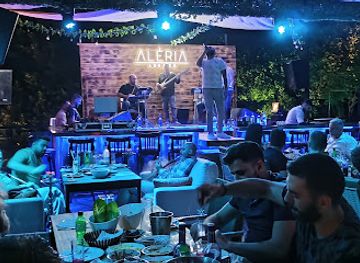
Aleria Lounge
Discover the ultimate lounge experience at Aleria Lounge in Aley, where exquisite drinks and a vibrant atmosphere await you.
12 min walk · 1.0 km from city centre
-
Lounge
Al Achkar Rooftop
Experience the breathtaking views and exquisite cuisine at Al Achkar Rooftop Lounge, the perfect getaway in Aaraiya for unforgettable evenings under the stars.
10 min drive · 3.2 km from city centre
Best shops in Aley
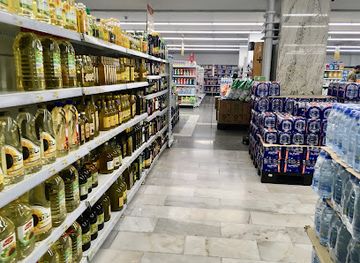
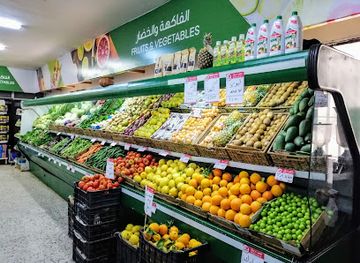
Shopping in Aley is concentrated around its local commercial streets, where small shops, cafés and everyday businesses serve residents as well as summer visitors. The town is better suited to buying Lebanese food products, sweets, coffee, olive oil, wine or arak from the wider region than to browsing a large modern retail complex. Traditional Lebanese pastries and packaged specialities can make practical gifts, while local markets and grocers provide a glimpse of ordinary mountain-town life. Nearby resorts and villages may have additional boutiques, craft shops and seasonal stalls, but these are outside Aley and vary in activity. Visitors should favour clearly labelled local products and ask about provenance, particularly when buying agricultural goods or handmade items. Carrying cash is sensible because smaller retailers may not accept cards, and prices may be quoted in either Lebanese pounds or US dollars.
-
Shopping mall
Aley Center
Explore Aley Center in Lebanon: A vibrant shopping mall offering diverse retail options and delicious Lebanese cuisine in a contemporary setting.
15 min walk · 1.2 km from city centre
-
Supermarket
Carrefour Market
Discover Aley's Carrefour Market: Your one-stop destination for local flavors and international products in a vibrant shopping atmosphere.
4 min walk · 0.3 km from city centre
-
Shopping mall
Eldorado Shopping Center
Explore the vibrant Eldorado Shopping Center in Aley, where shopping meets local culture and diverse dining options await travelers.
5 min walk · 0.4 km from city centre
-
Grocery store
COOP Aley
Experience authentic Lebanese flavors at COOP Aley, a vibrant grocery store in Aley offering fresh produce and local delicacies.
2 min walk · 0.1 km from city centre
Get your free copy of our complete guide to Aley, delivered straight to you.
Everything on this page, from attractions and restaurants to essentials and local phrases, in one PDF you can read offline, print or share.
Already have an account? Sign in
Your Aley guide is ready.
We'll send it to · Not you? Sign out

Getting your guide ready…
We are putting together a fresh copy of the Aley guide. This can take up to a minute.
This can take a few moments. If your browser asks, choose Allow so the download can start. You'll find the guide in your Downloads folder.
Nothing happened? Download it again
Sorry, the guide is taking longer than usual. Please try again in a minute, or get it by email instead.
Aley essentials
Currency and Payment
Safety
Emergency Situations
Do's and Don'ts
Local Tips
From Eve
Local phrases worth knowing
You don't need to get them perfect. A few words go a long way, and locals appreciate the effort.
Basics
| English | Local | Say it |
|---|---|---|
| Hello | Marhaba | [mar-ha-ba] |
| Goodbye | Ma'a as-salama | [ma-a as-sa-la-ma] |
| Yes | Na'am | [na-am] |
| No | La | [la] |
| Please/You're welcome | Min fadlik | [min fad-lik] |
| Thank you | Shukran | [shuk-ran] |
| Excuse me/Sorry | Aasef | [aa-sef] |
| How are you? | Kif halak? | [kif ha-lak] |
| Fine. And you? | Mni7. W inta? | [mni-ha. w in-ta] |
| Do you speak English? | Bet7ek englizi? | [bet-hek eng-li-zi] |
| I don't understand | Mish fahim | [mish fa-him] |
Eating & Drinking
| English | Local | Say it |
|---|---|---|
| I'd like to see the menu, please | Baddi ara2 il menu, min fadlik | [bad-di a-ra il me-nu, min fad-lik] |
| I don't eat meat | Ana ma bakkol la7me | [a-na ma bak-kol la-hme] |
| Cheers! | Sahtein! | [sa-h-te-in] |
| I would like to pay, please | Baddi as2al, min fadlik | [bad-di as-hal, min fad-lik] |
Emergencies
| English | Local | Say it |
|---|---|---|
| Help! | 3awwouni! | ['aw-wu-ni] |
| Go away! | Rou7! | [rouh] |
| Call the Police! | D3o el harb! | [d'-o el har-b] |
| Call a doctor! | D3o tabib! | [d'-o ta-bib] |
| I'm lost | Ghaltit | [ghal-tit] |
| I'm ill | Ana mareed | [a-na ma-ree-d] |
Shopping
| English | Local | Say it |
|---|---|---|
| I'd like to buy... | Baddi ashteri... | [bad-di ash-te-ri] |
| I'm just looking | Ana bissirf bshuuf | [a-na bi-sirf bshuuf] |
| How much is it? | Bi kam? | [bi kam] |
| That's too expensive | Haida ghali ktir | [hai-da gha-li kteer] |
| Can you lower the price? | Bit2addil el se3r? | [bit-a-dil el se-er] |
Time & Numbers
| English | Local | Say it |
|---|---|---|
| What time is it? | Shou sa3a? | [shu sa-a] |
| It's one o'clock | Saa wahde | [sa-a wa-hde] |
| Half past (10) | Nisf el 3achra | [nisf el 'a-shra] |
| Morning | Saba7 | [sa-ba-h] |
| Afternoon | Duhur | [du-hur] |
| Evening | 3ashiya | ['a-shi-ya] |
| Yesterday | Mbare7 | [mbar-eh] |
| Today | Lyom | [lyom] |
| Tomorrow | Bukra | [buk-ra] |
| 1 | Wahad | [wa-had] |
| 2 | Itnen | [it-nen] |
| 3 | Tlete | [tle-te] |
| 4 | Arba3 | [ar-ba] |
| 5 | Khamsa | [kham-sa] |
| 6 | Sitta | [sit-ta] |
| 7 | Seb3a | [seb-a] |
| 8 | Tmanye | [tma-nye] |
| 9 | Tesa3 | [te-sa] |
| 10 | 3ashra | ['a-shra] |
Transport & Directions
| English | Local | Say it |
|---|---|---|
| Where's a/the...? | Wain fi...? | [wain fi] |
| What's the address? | Shou el 3enwan? | [shu el 'en-wan] |
| Can you show me (on the map)? | Bitraani (3ala el khareeta)? | [bi-traa-ni (3a-la el kha-ree-ta)] |
| When's the next (bus)? | Iddesh el 2adeem? | [id-desh el 'a-deem] |
| A ticket (to ....) | Talab (ila ....) | [ta-lab (i-la)] |
History of Aley
A Mountain Settlement Above Beirut
Aley developed on the western slopes of Mount Lebanon in a region shaped by mountain agriculture, village networks and the movement of people between the coast and the interior. Its elevation made the area cooler than Beirut and encouraged settlement on terraces and ridges overlooking the coastal plain. The town’s social history reflects the religious diversity of Mount Lebanon, particularly the long-established presence of Druze and Christian communities across the surrounding district. Rather than emerging as an ancient imperial capital, Aley grew through its relationship with nearby villages, regional routes and the expanding importance of Beirut.
The Beirut–Damascus Railway Arrives
Aley’s transformation accelerated with the construction of the Beirut–Damascus railway, completed in the late nineteenth century as part of the transport network linking the Lebanese coast with Syria. The line climbed from Beirut through the mountains, an engineering challenge that made Aley an important stop on the ascent. Railway access brought passengers, goods and new commercial possibilities, while the town’s cooler climate attracted Beirut residents seeking a seasonal retreat. The former railway station and associated memories remain among the clearest reminders of the period when rail travel helped connect Mount Lebanon with wider Ottoman economic and administrative networks.
A Resort in the Late Ottoman Era
By the late Ottoman period, Aley had begun to acquire the character of a summer resort. Hotels, boarding houses, cafés and villas served visitors from Beirut and other parts of the region, while the town’s elevated setting provided relief from coastal heat. This resort culture continued under the French Mandate and into the early decades of independent Lebanon. Aley’s identity was consequently shaped not only by agriculture and local village life but also by seasonal migration, hospitality and public leisure. Older streets, stone buildings and commercial spaces still hint at the social world created by this mountain tourism.
Modern Lebanon and Regional Change
After Lebanon gained independence in 1943, Aley remained associated with summer residence, mountain hospitality and the social life of the capital’s wider metropolitan area. The town’s fortunes were affected by Lebanon’s political instability and the Lebanese Civil War, which disrupted tourism, displaced communities and damaged many parts of the country’s economic and social fabric. The railway had already ceased to function, removing a key element of Aley’s earlier importance. In the post-war period, rebuilding and road-based mobility restored parts of the town’s commercial life, although the mountain resort economy became more seasonal and dependent on changing national conditions.
Aley in Contemporary Lebanon
Modern Aley is both a district capital and a residential mountain town whose cafés, shops and restaurants serve permanent inhabitants as well as seasonal visitors. Its built environment combines newer construction with surviving traces of the railway era and the resort architecture of the late nineteenth and early twentieth centuries. The town’s position above Beirut continues to influence its character: it is close enough to participate in the capital’s economic life, yet sufficiently elevated to retain a distinct climate and landscape. Contemporary Aley also reflects the plural social history of Mount Lebanon, with local institutions and religious communities forming part of its everyday identity.
Aley in Photos
Browse through our photo collection highlighting the charm and character of the destination.
Cities near Aley
The closest cities to Aley, if you have time for more than one stop.
-

-

-

-
-


Swipe for more cities
Explore more

Explore more of Lebanon
Discover Lebanon: A land of ancient history, vibrant culture, stunning landscapes, and delicious cuisine, nestled on the Mediterranean coast.
Explore Lebanon