

Free Plymouth County Travel Guide & Mobile App
Explore Plymouth County with free travel guides. Discover regional history, expert tips, proposed trips, and audio guides on web or mobile app.


Explore Plymouth County, Massachusetts, for colonial history, Wampanoag heritage, Atlantic beaches, cranberry country, maritime towns and woodland trails.
Read more about Plymouth County
Getting to and around Plymouth County
How to get there
Transportation
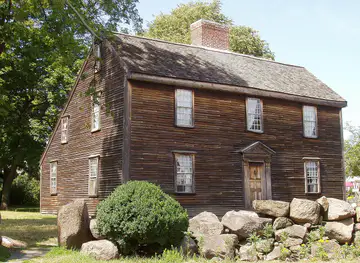
Top city travel guides in Plymouth County
The cities of Plymouth County, and the easiest places to base yourself.
-

-
-

-


Swipe for more cities
Destinations in Plymouth County
Resorts, valleys and scenic spots worth a trip of their own.
-

-

-


Swipe for more destinations
Best attractions in Plymouth County
Plymouth County's attractions combine colonial interpretation, maritime heritage, beaches, woodland and working countryside. In Plymouth, Plimoth Patuxet Museums presents aspects of seventeenth-century Indigenous and English life, while the waterfront brings together the Mayflower II, Plymouth Rock and museums interpreting the settlement of Plymouth Colony. Historic houses, burial grounds and harbour landscapes in Duxbury, Scituate and Marshfield add a more local view of South Shore history. The county's outdoor appeal extends from Atlantic beaches and salt marshes to the ponds and pine woods of Myles Standish State Forest. Around Carver, Wareham and Middleborough, cranberry bogs provide a distinctive agricultural landscape, especially during the autumn harvest season. Families may find seasonal farm activities, aquariums and beach recreation, while walkers and birdwatchers can explore conservation areas and estuaries. Brockton offers urban history, cultural institutions and reminders of the shoe-manufacturing era, giving the county an important industrial dimension alongside its better-known colonial associations.
-
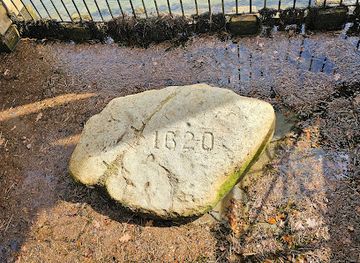
Plymouth Rock
Explore the iconic Plymouth Rock, a symbol of American history, surrounded by stunning waterfront views and captivating historical attractions in Plymouth, MA.
-
Pilgrim Memorial State Park
Explore Pilgrim Memorial State Park, a historical landmark in Plymouth, MA, featuring the iconic Mayflower II and captivating waterfront views.
-
Plimoth Patuxet Museums
Explore early American history at Plimoth Patuxet Museums, where the stories of the Pilgrims and Wampanoag come to life through immersive experiences.
-
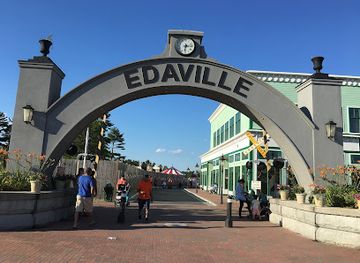
Edaville Family Theme Park
Discover joy and adventure at Edaville Family Theme Park in Carver, MA, where fun awaits for visitors of all ages in a magical setting.


Best landmarks in Plymouth County
Plymouth Rock and the waterfront associated with the Mayflower have become internationally recognised symbols of English colonisation in New England, although the surviving stone and the surrounding memorial landscape are later interpretations rather than untouched evidence of 1620. Nearby Burial Hill contains historic graves and views over the harbour, while the National Monument to the Forefathers is a monumental nineteenth-century expression of the values later attributed to the Pilgrims. In Duxbury, the Myles Standish Monument stands on a wooded hill overlooking the town and commemorates the military leader of Plymouth Colony. Historic houses and church buildings in Duxbury, Marshfield, Scituate and Plymouth reveal the prosperity and social structures of coastal communities. Brockton's civic and industrial architecture represents the county's manufacturing era, especially its association with shoes. Away from built heritage, the broad ponds and pine woods of Myles Standish State Forest and the flooded cranberry bogs of the interior are important landscape landmarks, expressing the county's environmental and agricultural character.
-
Historical landmark
Plymouth Rock
Explore Plymouth Rock, a historic landmark celebrating America's Pilgrim heritage, set against the serene backdrop of Plymouth Harbor.
-
Monument
National Monument to the Forefathers
Explore the National Monument to the Forefathers, a stunning tribute to Pilgrim heritage in Plymouth, Massachusetts, rich in history and cultural significance.
-
Historical landmark
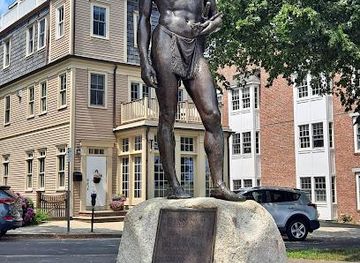
Massasoit Statue
Discover the Massasoit Statue in Plymouth, a historical landmark celebrating the Wampanoag leader's legacy and a peaceful spot for reflection amidst beautiful parkland.
-
Unitarian Universalist Church
First Parish in Plymouth
Discover the historical First Parish in Plymouth, Massachusetts, a Unitarian Universalist church rich in history and community spirit.



Explore Plymouth County on the map
Plan your trip on one map. See where the top cities, national parks and sights are, and book hotels and experiences in a few clicks.
Best hotels in Plymouth County
Best restaurants in Plymouth County
Dining in Plymouth County reflects both its Atlantic coast and its inland communities. Plymouth, Duxbury, Scituate and other waterfront towns offer seafood restaurants, clam shacks, casual fish counters and harbour-side cafés, with menus often centred on clams, oysters, lobster, fried fish and locally available catches. Cranberries are an important agricultural product around Carver, Wareham and Middleborough and appear seasonally in baked goods, sauces and drinks, although they are only one part of the local food culture. Brockton and the county's larger communities have a broad, multicultural restaurant scene ranging from Caribbean and Latin American cooking to South Asian, Mediterranean and East Asian food. Farm stands, bakeries, diners, pizzerias, breweries and American pubs fill out the everyday landscape, while historic inns and contemporary restaurants provide more formal meals. Menus and sourcing vary by season, so coastal dining and rural produce are best understood as complementary rather than as a single fixed cuisine.
-
Seafood
East Bay Grille
Discover East Bay Grille in Plymouth for fresh seafood and vibrant bar vibes with stunning waterfront views.
-
Seafood
Wood's Seafood
Experience the best of New England's seafood at Wood's Seafood on Town Wharf in Plymouth – where freshness meets flavor.
-
Seafood
The CabbyShack
Discover the vibrant flavors of New England seafood at The CabbyShack in Plymouth—where great food meets stunning waterfront views.
-
American
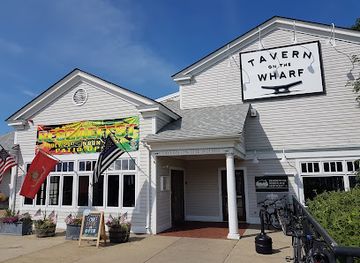
Tavern On The Wharf
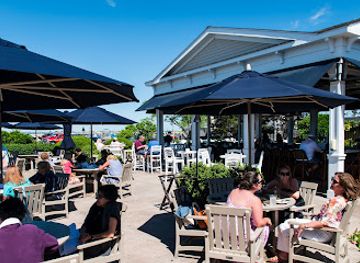
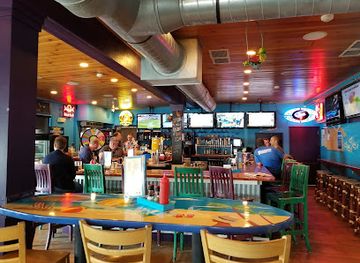
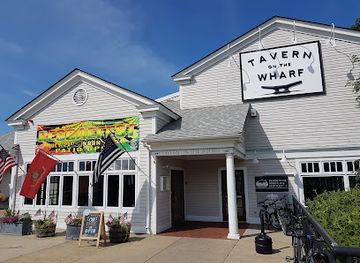
Discover Tavern On The Wharf in Plymouth: A family-friendly American restaurant with live music, craft brews, seafood delights & stunning waterfront views.

Best bars in Plymouth County
Evening life in Plymouth County is generally centred on restaurants, traditional pubs, breweries, live music and waterfront establishments rather than a large, concentrated nightclub scene. Plymouth has the broadest visitor-oriented choice, particularly around its historic centre and harbour, while Brockton provides a more urban selection of bars, music venues and late-evening restaurants. Duxbury, Scituate, Marshfield and other coastal towns tend towards neighbourhood pubs, taverns and seasonal seaside dining, with activity often increasing during summer. Inland communities commonly offer locally produced beer, casual bars and community-oriented venues rather than an extensive late-night circuit. Visitors should check current arrangements independently, as opening patterns, entertainment programmes and seasonal businesses can change. Responsible drinking and pre-arranged transport are particularly important where accommodation or venues are outside a walkable town centre.
-
Seafood
East Bay Grille
Savor the finest seafood at East Bay Grille, where fresh catches meet stunning views in the heart of Plymouth's cultural district.
-
The CabbyShack
Experience the best of seafood dining at The CabbyShack, where fresh flavors meet stunning harbor views in Plymouth, Massachusetts.
-
Tavern On The Wharf
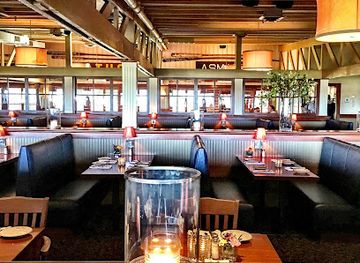
Experience the best of American cuisine at Tavern On The Wharf, where fresh seafood meets live music in a stunning waterfront setting.
-
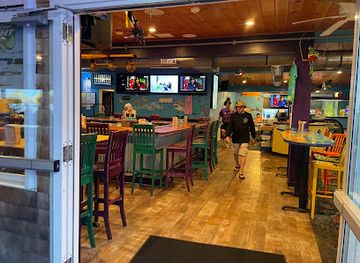
Dillon's Local
Experience the flavors of America at Dillon's Local, a top dining destination in Plymouth, MA, serving fresh, locally-sourced comfort food.
Best nightclubs in Plymouth County
Evening life in Plymouth County is generally centred on restaurants, traditional pubs, breweries, live music and waterfront establishments rather than a large, concentrated nightclub scene. Plymouth has the broadest visitor-oriented choice, particularly around its historic centre and harbour, while Brockton provides a more urban selection of bars, music venues and late-evening restaurants. Duxbury, Scituate, Marshfield and other coastal towns tend towards neighbourhood pubs, taverns and seasonal seaside dining, with activity often increasing during summer. Inland communities commonly offer locally produced beer, casual bars and community-oriented venues rather than an extensive late-night circuit. Visitors should check current arrangements independently, as opening patterns, entertainment programmes and seasonal businesses can change. Responsible drinking and pre-arranged transport are particularly important where accommodation or venues are outside a walkable town centre.
-
Night club
Vincent's Nightclub
Discover the vibrant nightlife at Vincent's Nightclub in Randolph, MA, where music, dance, and unforgettable moments await.
-
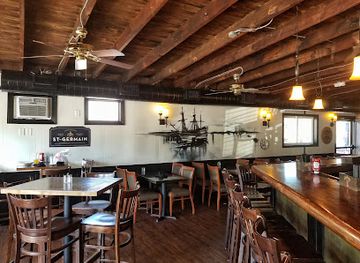
Bar
Pillory Pub
Experience the vibrant atmosphere of Pillory Pub, a charming bar in Plymouth's Cultural District, offering craft drinks and delicious food.
-
Night club
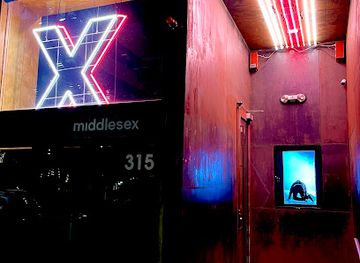
Middlesex
Discover the vibrant nightlife of Middlesex in Cambridge, MA, where electrifying music and an unforgettable atmosphere await.
-
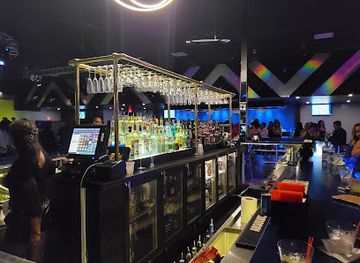
Night club
Bijou Nightclub
Bijou Nightclub: Boston's premier nightlife destination, offering an electric atmosphere, stylish decor, and unforgettable entertainment in the heart of the city.


Best shops in Plymouth County
Shopping in Plymouth County ranges from practical urban retail to independent coastal businesses and agricultural outlets. Plymouth's historic centre and waterfront offer galleries, bookshops, clothing stores, nautical goods and souvenirs connected with local history, while Brockton provides a larger urban and regional retail environment. Duxbury, Scituate and Marshfield have smaller concentrations of independent shops, antiques, homeware, art and locally made gifts, though stock and opening patterns can be seasonal. Farm stands and direct-sale outlets in the western towns are good places to look for cranberries, preserves, baked goods and other Massachusetts produce, particularly during the autumn harvest. Markets and craft fairs may be held at different times of year, so visitors should confirm dates locally rather than assume a permanent weekly market. Responsible souvenirs include regional food products, books on Wampanoag and colonial history, locally produced art and practical New England goods rather than items taken from beaches, dunes or historic sites.
-
Shopping mall
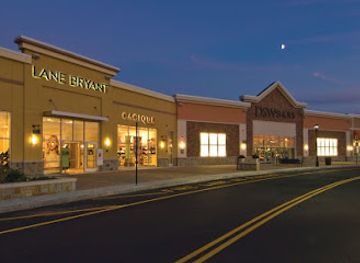
Colony Place
Experience the vibrant shopping and dining options at Colony Place in Plymouth, Massachusetts - a must-visit destination for every traveler.
-
Shopping mall
The Grove at Plymouth
Discover a vibrant shopping experience at The Grove at Plymouth, featuring diverse stores, delightful dining, and exciting events for every visitor.
-
Shopping mall
The Shoppes at Village Landing
Discover unique shops and local flavors at The Shoppes at Village Landing, a vibrant shopping mall in Plymouth, MA, with scenic waterfront views.
-
Gift shop
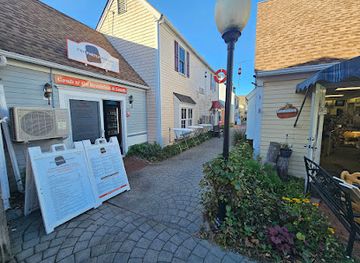
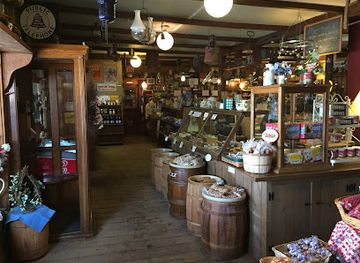
Old Country Store & Emporium
Explore the Old Country Store & Emporium for unique gifts, antiques, and nostalgic candies in Buzzards Bay, Massachusetts.
Get your free copy of our complete guide to Plymouth County, delivered straight to you.
Everything on this page, from attractions and restaurants to essentials and local phrases, in one PDF you can read offline, print or share.
Already have an account? Sign in
Your Plymouth County guide is ready.
We'll send it to · Not you? Sign out

Getting your guide ready…
We are putting together a fresh copy of the Plymouth County guide. This can take up to a minute.
This can take a few moments. If your browser asks, choose Allow so the download can start. You'll find the guide in your Downloads folder.
Nothing happened? Download it again
Sorry, the guide is taking longer than usual. Please try again in a minute, or get it by email instead.
Plymouth County essentials
Currency and Payment
Safety
Emergency Situations
Do's and Don'ts
Local Tips
From Eve
Local phrases worth knowing
You don't need to get them perfect. A few words go a long way, and locals appreciate the effort.
Basics
| English | Local | Say it |
|---|---|---|
| Hello | Hiya | [Hiyah] |
| Goodbye | See ya | [See yah] |
| Yes | Yup | [Yup] |
| No | Nah | [Nah] |
| Please/You're welcome | No problem | [No prob-lem] |
| Thank you | Thanks | [Thanks] |
| Excuse me/Sorry | Sorry 'bout that | [Sorry 'bout that] |
| How are you? | How ya doin'? | [How yah doon?] |
| Fine. And you? | Good. You? | [Good. You?] |
| Do you speak English? | Ya speakin' English? | [Ya speakin' English?] |
| I don't understand | I don’t get it | [I don’t get it] |
Eating & Drinking
| English | Local | Say it |
|---|---|---|
| I'd like to see the menu, please | Can I see the menu? | [Can I see the menu?] |
| I don't eat meat | I’m vegetarian | [I’m vegetarian] |
| Cheers! | Cheers! | [Cheers!] |
| I would like to pay, please | Can I get the check? | [Can I get the check?] |
Emergencies
| English | Local | Say it |
|---|---|---|
| Help! | Help! | [Help!] |
| Go away! | Scram! | [Scram!] |
| Call the Police! | Call the cops! | [Call the cops!] |
| Call a doctor! | Get a doc! | [Get a doc!] |
| I'm lost | I’m lost | [I’m lost] |
| I'm ill | I’m not feelin' well | [I’m not feelin' well] |
Shopping
| English | Local | Say it |
|---|---|---|
| I'd like to buy... | I wanna buy... | [I wanna buy...] |
| I'm just looking | Just lookin' | [Just lookin'] |
| How much is it? | What’s the price? | [What’s the price?] |
| That's too expensive | That’s too pricey | [That’s too pricey] |
| Can you lower the price? | Can ya knock down the price? | [Can ya knock down the price?] |
Time & Numbers
| English | Local | Say it |
|---|---|---|
| What time is it? | What time is it? | [What time is it?] |
| It's one o'clock | It's one o'clock | [It's one o'clock] |
| Half past (10) | Half past ten | [Half past ten] |
| Morning | Mornin' | [Mornin'] |
| Afternoon | Afternoon | [Afternoon] |
| Evening | Evenin' | [Evenin'] |
| Yesterday | Yesterday | [Yesterday] |
| Today | Today | [Today] |
| Tomorrow | Tomorrow | [Tomorrow] |
| 1 | One | [One] |
| 2 | Two | [Two] |
| 3 | Three | [Three] |
| 4 | Four | [Four] |
| 5 | Five | [Five] |
| 6 | Six | [Six] |
| 7 | Seven | [Seven] |
| 8 | Eight | [Eight] |
| 9 | Nine | [Nine] |
| 10 | Ten | [Ten] |
Transport & Directions
| English | Local | Say it |
|---|---|---|
| Where's a/the...? | Where's the...? | [Where's the...?] |
| What's the address? | What’s the address? | [What’s the address?] |
| Can you show me (on the map)? | Can ya show me on the map? | [Can ya show me on the map?] |
| When's the next (bus)? | When's the next bus? | [When's the next bus?] |
| A ticket (to ....) | A ticket to... | [A ticket to...] |
History of Plymouth County
Wampanoag Homelands before European Colonisation
Plymouth County lies within the traditional homeland of the Wampanoag peoples, whose communities used the coast, rivers, forests and wetlands for settlement, farming, fishing and gathering long before English colonisation. The Patuxet, a Wampanoag community associated with the Plymouth area, suffered catastrophic population loss from epidemic disease in the early seventeenth century. Wampanoag society did not disappear, however, and Wampanoag people remain connected to the region today. Understanding this continuing presence provides essential context for interpreting colonial sites and the often-simplified public story of Plymouth's beginnings.
Plymouth Colony and the 1620 Settlement
In 1620, the Mayflower's English passengers established a settlement at Plymouth after arriving on the coast of what is now Massachusetts. The colony occupied land formerly associated with the Patuxet and developed through relationships, negotiations and conflict involving Wampanoag communities, including the leadership of Ousamequin, known in English sources as Massasoit. Plymouth Colony was one of several English projects in New England, but its later symbolic importance became unusually large. Plymouth town, Burial Hill and the waterfront preserve physical reminders of this colonial foundation, while modern interpretation increasingly addresses Indigenous history and the consequences of settlement.
King Philip's War, 1675–1676
King Philip's War, known in Wampanoag contexts through the leadership of Metacom, was a devastating conflict between many Indigenous communities and English colonists in New England. Plymouth Colony was directly involved, and fighting affected settlements, diplomacy, trade and security across southeastern Massachusetts. The war resulted in extensive deaths, displacement and the erosion of Indigenous political power, although Wampanoag communities survived. Its consequences shaped land ownership and colonial authority throughout the area and remain an important part of the county's historical landscape, not merely an episode in the story of early Plymouth.
Maritime Trade, Shipbuilding and Coastal Towns
From the colonial period through the nineteenth century, the county's harbours supported fishing, coastal trade, shipbuilding and international commerce. Duxbury became especially associated with shipbuilding, while Plymouth, Scituate, Marshfield and other coastal communities developed economies connected to the sea and to nearby farming districts. Historic houses, harbour areas, burial grounds and maritime museums reflect the wealth and risks generated by Atlantic commerce. Storms, shifting channels and changing markets repeatedly altered coastal fortunes, but maritime activity continued to influence settlement patterns and local identity long after wooden shipbuilding declined.
The Rise of Brockton's Shoe Industry
Brockton grew from a rural settlement into a major manufacturing city during the nineteenth century, with shoe production becoming its defining industry. Mechanised factories, immigrant labour and expanding transport links transformed the community and helped make it one of the most important footwear centres in the United States. The industry supported dense neighbourhoods, retail streets and civic institutions, while workers arrived from several parts of Europe and later from around the world. Although large-scale shoe manufacturing diminished during the twentieth century, Brockton's architecture, museums and urban form still reveal the scale of its industrial past.
Cranberry Cultivation and Agricultural Change
The sandy, acidic wetlands of the county's interior proved well suited to cranberry cultivation, particularly around Carver, Wareham, Middleborough and neighbouring communities. Commercial production expanded during the nineteenth and twentieth centuries, creating a distinctive agricultural economy that adapted to seasonal labour, drainage systems and specialised harvesting. Autumn flooding of the bogs has become one of the region's best-known rural scenes, but cranberry farming remains working agriculture rather than a decorative landscape. The industry also illustrates the continuing importance of managing wetlands and water resources in a rapidly developing part of Massachusetts.
Twentieth-Century Suburban and Coastal Transformation
Improved roads, commuter rail and the expansion of the Boston metropolitan area changed Plymouth County substantially during the twentieth century. Former farming districts acquired suburban housing, while coastal towns attracted seasonal residents and visitors from Boston and Providence. Older industrial and maritime economies were joined by healthcare, education, services, tourism and retail. The result is a county of contrasting landscapes: densely settled northern and western corridors, historic coastal communities, working farms and bogs, and protected woodland. Contemporary debates over development, shoreline resilience and conservation continue to shape its future.
Neighbouring regions of Plymouth County
The closest regions to Plymouth County, if you have time for more than one.
-

-

-

-
 Norfolk County
Explore Norfolk County, Massachusetts, for presidential history, coastal towns, Blue Hills trails, diverse dining and easy access to Boston.
-


Swipe for more regions
Explore more

Explore more of Massachusetts
Discover Massachusetts: A blend of rich history, stunning landscapes, and vibrant culture. From Boston's historic sites to Cape Cod's beaches, it's the heart of New England.
Explore Massachusetts