

Free Gloucester Travel Guide & Mobile App
Plan your Gloucester trip with Evendo. Get free guides to top attractions, restaurants, hotels, and bars. Web access or download the mobile app.


Gloucester, Massachusetts pairs a historic fishing harbour with Cape Ann beaches, maritime museums, art colonies and rugged Atlantic scenery for coastal sightseeing.
A Working Seaport on Cape Ann
Gloucester occupies the eastern side of Cape Ann, a rocky headland on Massachusetts’s North Shore where fishing, shipbuilding and Atlantic trade have shaped daily life for four centuries. The city grew around a harbour crowded with working vessels, wharves and fish-processing businesses, while its outer shoreline opens towards islands, lighthouses and broad stretches of ocean. Although Gloucester is a popular summer destination, its identity remains closely tied to the fishing community that continues to use the port.Read more about Gloucester
Maritime History and Art
Beaches, Headlands and Coastal Light
When is the best time to visit Gloucester?
Best: June–August · 24–27°C| Month | High (°C) | Rainfall (mm) |
|---|---|---|
| January | 4 | 85 |
| February | 5 | 75 |
| March | 8 | 85 |
| April | 13 | 85 |
| May | 19 | 85 |
| June (best) | 24 | 85 |
| July (best) | 27 | 95 |
| August (best) | 26 | 95 |
| September | 22 | 95 |
| October | 17 | 95 |
| November | 11 | 95 |
| December | 4 | 95 |
Getting to and around Gloucester
How to get there
Transportation
Best attractions in Gloucester
Gloucester’s attractions reflect both its working waterfront and Cape Ann’s coastal landscape. Maritime Gloucester introduces visitors to the port’s fishing, shipbuilding and marine traditions, while the Cape Ann Museum places local art and history in a wider context. At Stage Fort Park, the site of the early English settlement offers harbour views and open shoreline, and the nearby Fishermen’s Memorial commemorates generations lost at sea. Rocky Neck’s narrow waterfront streets lead past galleries, studios and small exhibition spaces in one of America’s oldest continuously operating art colonies. Beyond the centre, Good Harbor Beach is known for its broad sand and views towards Salt Island, while Wingaersheek Beach combines sheltered water with distinctive rock formations. Eastern Point provides a more exposed maritime setting at the entrance to Gloucester Harbour, and Annisquam’s village roads and lighthouse area reveal a quieter side of the city. Seasonal whale-watching and harbour cruises add an active perspective on the waters surrounding Cape Ann.
-
Whale watching tour agency
Cape Ann Whale Watch
Explore the wonders of the ocean with Cape Ann Whale Watch, where adventure meets education and breathtaking marine life awaits.
9 min walk · 0.7 km from city centre
-
Tourist attraction
Stage Fort Park
Explore Stage Fort Park in Gloucester, where scenic beauty meets historical significance and outdoor fun awaits every visitor.
5 min drive · 1.6 km from city centre
-
Tourist attraction
Good Harbor Beach
Discover Good Harbor Beach in Gloucester, MA: A picturesque public beach perfect for swimming, sunbathing, and exploring coastal nature.
8 min drive · 2.5 km from city centre
-
Tourist attraction
Stage Fort Park
Explore the scenic beauty and recreational charm of Stage Fort Park, a coastal gem in Gloucester, MA, perfect for families and nature enthusiasts alike.
5 min drive · 1.6 km from city centre


Best landmarks in Gloucester
Gloucester’s most recognisable landmarks embody its relationship with the Atlantic. The Fishermen’s Memorial, a bronze figure at the wheel set above the harbour, honours the thousands of Gloucester fishermen who died at sea and is one of the city’s central symbols. The nearby Gloucester City Hall is an important civic building, while the historic waterfront preserves the scale and working character of the port. At Stage Fort Park, markers and surviving landscape recall the early seventeenth-century settlement at Cape Ann. Eastern Point Light and Annisquam Lighthouse represent the navigation infrastructure that made the harbour approaches safer, although access around lighthouse properties can be restricted. Hammond Castle, built in the 1920s for inventor John Hays Hammond Jr., adds an eccentric medieval-inspired architectural presence on Gloucester’s western side. Together these places connect colonial settlement, civic life, maritime danger, navigation and the city’s twentieth-century cultural history.
-
Park
Stage Fort Park
Explore Stage Fort Park in Gloucester, Massachusetts: a scenic park with beautiful trails, playgrounds, and rich historical sites along the stunning coastline.
5 min drive · 1.6 km from city centre
-
Whale watching tour agency
Cape Ann Whale Watch
Discover the awe-inspiring experience of seeing magnificent whales in their natural habitat with Cape Ann Whale Watch, a premier whale watching tour agency in Gloucester, MA.
9 min walk · 0.7 km from city centre
-
Museum
Hammond Castle Museum
Explore the magical Hammond Castle Museum, a historical gem in Gloucester, MA, showcasing stunning architecture and breathtaking ocean views.
12 min drive · 4.2 km from city centre
-
Hotel
Beauport Hotel Gloucester
Discover the coastal elegance of Beauport Hotel Gloucester, where New England charm meets modern luxury on the shores of Cape Ann.
9 min walk · 0.7 km from city centre


Explore Gloucester on the map
Plan your Gloucester trip on one map. See where the top attractions, landmarks, restaurants, bars and hotels are, find what's near where you're staying, and book hotels and experiences in a few clicks.
Best hotels in Gloucester
Best restaurants in Gloucester
Gloucester’s dining scene is anchored by the sea, with fried clams, haddock, lobster, oysters and other New England seafood appearing in casual waterfront restaurants, fish markets and more polished dining rooms. Traditional clam shacks and family-run seafood establishments sit alongside cafés, bakeries and restaurants influenced by the city’s Portuguese heritage. The harbour and downtown contain many of the most accessible choices, while Rocky Neck combines galleries with seasonal places to eat. Menus vary according to supply and season, and the distinction between locally landed catch, regional seafood and imported products is worth asking about. New England staples such as chowder, lobster rolls and baked fish are common, but Gloucester’s food culture is not limited to visitor favourites: Portuguese-influenced cooking, contemporary small plates and locally sourced produce broaden the offer. Summer brings the greatest range of open terraces and seasonal businesses, while year-round restaurants serve the resident community.
-
Italian
Causeway Restaurant
Experience authentic Italian flavors at Causeway Restaurant in Gloucester – where every dish tells a story.
5 min drive · 1.7 km from city centre
-
Seafood
Seaport Grille
Discover fresh seafood delights at Seaport Grille in Gloucester, where coastal charm meets culinary excellence in every dish.
8 min walk · 0.6 km from city centre
-
Seafood
Lobsta Land Restaurant
Experience the best seafood in Gloucester at Lobsta Land Restaurant, where fresh flavors meet coastal charm.
10 min drive · 3.2 km from city centre
-
Portuguese
Azorean Restaurant & Bar
Experience authentic Portuguese cuisine at Azorean Restaurant & Bar in Gloucester – where Mediterranean flavors meet coastal charm.
7 min walk · 0.6 km from city centre


Best bars in Gloucester
Gloucester’s evening scene is modest rather than club-oriented, with activity concentrated around downtown, the harbour and seasonal Rocky Neck. Traditional pubs, neighbourhood bars and restaurants provide places for local beer, cocktails and conversation, while some venues host live music, open-mic nights or small performances. In summer, galleries and waterfront districts can remain active into the evening, and the city’s arts community contributes exhibitions, concerts and cultural events alongside ordinary nightlife. There are fewer large nightclubs than in Boston, and many evenings are shaped by dining, harbour views and informal socialising rather than late dancing. Visitors should expect a stronger seasonal rhythm, with more outdoor seating and entertainment during the warmer months. After dark, take care on unlit coastal roads, jetties and uneven waterfront surfaces, particularly when returning from a harbour-side venue.
-
Bar
Azorean Restaurant & Bar
Savor authentic Portuguese dishes at Azorean Restaurant & Bar, a top destination for Mediterranean flavors in Gloucester, Massachusetts.
7 min walk · 0.6 km from city centre
-
Seafood
Gloucester House Pub
Experience the best of New England seafood at Gloucester House Pub, where fresh flavors meet charming coastal ambiance.
5 min walk · 0.4 km from city centre
-
Breakfast
George's Restaurant & Bar
Discover the charm of George's Restaurant & Bar in Gloucester, where hearty American breakfasts and a welcoming atmosphere await every visitor.
11 min walk · 0.9 km from city centre
-
Bar
Mile Marker One Restaurant
Discover the charm of coastal dining at Mile Marker One, where American and seafood dishes meet stunning waterfront views in Gloucester, MA.
18 min walk · 1.5 km from city centre


Best nightclubs in Gloucester
Gloucester’s evening scene is modest rather than club-oriented, with activity concentrated around downtown, the harbour and seasonal Rocky Neck. Traditional pubs, neighbourhood bars and restaurants provide places for local beer, cocktails and conversation, while some venues host live music, open-mic nights or small performances. In summer, galleries and waterfront districts can remain active into the evening, and the city’s arts community contributes exhibitions, concerts and cultural events alongside ordinary nightlife. There are fewer large nightclubs than in Boston, and many evenings are shaped by dining, harbour views and informal socialising rather than late dancing. Visitors should expect a stronger seasonal rhythm, with more outdoor seating and entertainment during the warmer months. After dark, take care on unlit coastal roads, jetties and uneven waterfront surfaces, particularly when returning from a harbour-side venue.
-
 Bar
Crow's Nest
Discover the vibrant atmosphere of Crow's Nest, a premier bar and lodging destination in Gloucester, perfect for relaxation and enjoyment.
8 min walk · 0.6 km from city centre
-
Bar
Stones Pub & Eatery
Experience the essence of Gloucester at Stones Pub & Eatery, where local flavors meet a vibrant atmosphere in a cozy coastal setting.
3 min walk · 0.2 km from city centre
-
Live music bar
DRIFT
Discover the lively atmosphere of DRIFT, Gloucester's premier live music bar, where cocktails and local talent come together for an unforgettable night.
6 min walk · 0.5 km from city centre
-
Night club
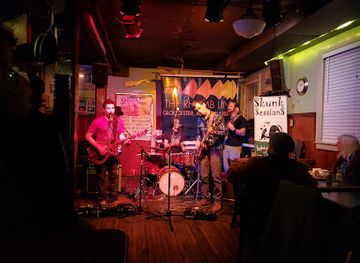
The Rhumb Line Bar & Restaurant
Experience the vibrant nightlife and fresh coastal cuisine at The Rhumb Line Bar & Restaurant in Gloucester, Massachusetts.
7 min walk · 0.5 km from city centre


Best shops in Gloucester
Shopping in Gloucester is shaped by independent businesses, marine traditions and the creative life of Cape Ann rather than by large-scale retail. Main Street and the downtown area contain locally oriented shops, galleries, cafés and services, while Rocky Neck is the city’s most concentrated destination for paintings, prints, ceramics, jewellery and other work by Cape Ann artists. Visitors may also find maritime-themed goods, locally produced foods, regional seafood and practical items associated with life on the coast. The area around Gloucester Harbour includes fish markets and businesses serving the working port, though opening patterns can be seasonal. Nearby communities on Cape Ann add further galleries and small retailers, but they are separate destinations rather than districts of Gloucester itself. Shopping is often closely connected to the city’s history: art reflects its light and shoreline, while seafood and nautical goods record the continuing importance of the harbour.
-
Department store
Marshalls
Explore Marshalls in Gloucester for fashionable clothing, stylish accessories, and unique home goods at unbeatable prices.
13 min walk · 1.0 km from city centre
-
Grocery store
Stop & Shop
Explore the rich flavors of Gloucester at Stop & Shop, your local grocery haven filled with fresh produce, local specialties, and everyday essentials.
5 min drive · 1.7 km from city centre
-
Music store
Mystery Train
Explore the heart of Gloucester's music scene at Mystery Train, a vinyl paradise for music enthusiasts and collectors.
6 min walk · 0.5 km from city centre
-
Chocolate shop
Turtle Alley Chocolates
Turtle Alley Chocolates: Artisanal chocolates and desserts in Gloucester, MA, perfect for every sweet tooth.
4 min walk · 0.3 km from city centre


Get your free copy of our complete guide to Gloucester, delivered straight to you.
Everything on this page, from attractions and restaurants to essentials and local phrases, in one PDF you can read offline, print or share.
Already have an account? Sign in
Your Gloucester guide is ready.
We'll send it to · Not you? Sign out

Getting your guide ready…
We are putting together a fresh copy of the Gloucester guide. This can take up to a minute.
This can take a few moments. If your browser asks, choose Allow so the download can start. You'll find the guide in your Downloads folder.
Nothing happened? Download it again
Sorry, the guide is taking longer than usual. Please try again in a minute, or get it by email instead.
Gloucester essentials
Currency and Payment
Safety
Emergency Situations
Do's and Don'ts
Local Tips
From Eve
Local phrases worth knowing
You don't need to get them perfect. A few words go a long way, and locals appreciate the effort.
Basics
| English | Local | Say it |
|---|---|---|
| Hello | Wicked | [wi-ked] |
| Goodbye | Catch you later | [kach yu lay-tah] |
| Yes | Yeah | [ya] |
| No | Nah | [na] |
| Please/You're welcome | Please/No problem | [pleez/no prob-lem] |
| Thank you | Thanks a million | [thanks uh mil-yun] |
| Excuse me/Sorry | Pardon me/Sorry | [par-dun me/sor-ry] |
| How are you? | How's it goin'? | [hows it go-in] |
| Fine. And you? | Good. And you? | [gud. and yu] |
| Do you speak English? | Can you talk English? | [kan yu talk ing-glish] |
| I don't understand | I don't get it | [I don't get it] |
Eating & Drinking
| English | Local | Say it |
|---|---|---|
| I'd like to see the menu, please | I wanna check out the menu, please | [I wan-na chek out the menu, please] |
| I don't eat meat | I don't do meat | [I don't do meat] |
| Cheers! | Cheers! | [Cheers!] |
| I would like to pay, please | I wanna settle up, please | [I wan-na set-tle up, please] |
Emergencies
| English | Local | Say it |
|---|---|---|
| Help! | Help! | [Help!] |
| Go away! | Beat it! | [Beat it!] |
| Call the Police! | Call the cops! | [Call the cops!] |
| Call a doctor! | Get a doc! | [Get a doc!] |
| I'm lost | I'm all turned around | [I'm all turned around] |
| I'm ill | I'm feelin' under the weather | [I'm feelin' under the weather] |
Shopping
| English | Local | Say it |
|---|---|---|
| I'd like to buy... | I wanna snag... | [I wa-nna snag...] |
| I'm just looking | I'm just scopin' out | [I'm just scope-in out] |
| How much is it? | How much is that? | [How much is that?] |
| That's too expensive | That's wicked pricey | [That's wi-ked pricey] |
| Can you lower the price? | Can you drop the price? | [Can you drop the price?] |
Time & Numbers
| English | Local | Say it |
|---|---|---|
| What time is it? | What's the time? | [What's the time?] |
| It's one o'clock | It's one | [It's one] |
| Half past (10) | Half past ten | [Half past ten] |
| Morning | Mornin' | [Mornin'] |
| Afternoon | Afternoon | [Afternoon] |
| Evening | Evenin' | [Evenin'] |
| Yesterday | Yestuhday | [Yes-tuh-day] |
| Today | Today | [Today] |
| Tomorrow | Tomorrow | [Tomorrow] |
| 1 | One | [One] |
| 2 | Two | [Two] |
| 3 | Three | [Three] |
| 4 | Four | [Four] |
| 5 | Five | [Five] |
| 6 | Six | [Six] |
| 7 | Seven | [Seven] |
| 8 | Eight | [Eight] |
| 9 | Nine | [Nine] |
| 10 | Ten | [Ten] |
Transport & Directions
| English | Local | Say it |
|---|---|---|
| Where's a/the...? | Where's the...? | [Where's the...?] |
| What's the address? | What's the addy? | [What's the addy?] |
| Can you show me (on the map)? | Can you show me (on the map)? | [Can you show me (on the map)?] |
| When's the next (bus)? | When's the next (bus)? | [When's the next (bus)?] |
| A ticket (to ....) | A ticket (to ....) | [A ticket (to ....)] |
History of Gloucester
Indigenous Cape Ann
Before English settlement, the Cape Ann region was inhabited and used by Indigenous peoples, including communities associated with the Pawtucket and wider Naumkeag world. The coastline’s sheltered waters, tidal flats, forests and shellfish beds supported fishing, hunting, gathering and seasonal movement. European descriptions and later colonial records reflect only part of these earlier histories, while place names and archaeological evidence demonstrate the depth of Indigenous connections to the land and sea. Gloucester’s later development as a fishing port took place on a landscape already shaped by Indigenous knowledge, travel routes and resource management.
The 1623 Fishing Settlement
English colonists established a fishing settlement at Cape Ann in 1623 under the Dorchester Company, making the area one of the earliest English outposts in New England. The settlement was centred near today’s Stage Fort Park, though the original enterprise struggled to become financially successful. Some colonists later moved to the more agriculturally productive settlement that became Salem, but fishing activity continued around Cape Ann. The early venture established the maritime purpose that would remain central to Gloucester for centuries.
Incorporation and Colonial Growth
Gloucester was incorporated as a town in 1642 and gradually developed beyond its first fishing station. Its harbour supported cod fishing, coastal commerce and trade with other New England ports, while small farms and timber resources supplemented the maritime economy. The town’s geography encouraged settlement around coves and waterways rather than in one compact centre. During the colonial period, a mixture of fishing, shipbuilding and trade laid the foundations for the port’s later prominence and helped establish Gloucester as a permanent community on Cape Ann.
Schooners and the Expanding Port
In the nineteenth century Gloucester became one of North America’s best-known fishing ports. The expansion of the cod and mackerel fisheries encouraged the construction of fast schooners, specialised wharves and businesses serving crews and vessels. Gloucester’s maritime economy also connected it to wider Atlantic markets, while changing fishing methods and improved transport increased the volume of seafood reaching shore. The port’s prosperity was accompanied by danger: storms, difficult offshore conditions and long voyages caused repeated loss of life, a history represented by the city’s Fishermen’s Memorial.
Industry, Immigration and Artistic Life
Industrial fish processing expanded in the late nineteenth and early twentieth centuries, bringing new employment and attracting immigrant communities, including substantial Portuguese migration. Their presence influenced the social and cultural life of the port and remains part of Gloucester’s identity. At the same time, the quality of Cape Ann’s light and coastline drew painters and illustrators. Fitz Henry Lane had worked in Gloucester earlier in the nineteenth century, and by the late nineteenth century artists were gathering in places such as Rocky Neck. Maritime industry and artistic culture consequently developed side by side.
Modern Gloucester
The twentieth century brought mechanisation, changing fisheries and difficult adjustments for a port whose economy depended heavily on marine resources. Gloucester’s working harbour remains active, although fishing operates within modern environmental, economic and regulatory pressures. The city has also become a centre for heritage tourism, beaches, galleries and marine education. Its public memory was reinforced in popular culture by accounts of North Atlantic storms and fishing disasters, but the contemporary city is more than a dramatic seafaring symbol: it is a year-round community balancing industry, conservation, tourism and the continuing presence of the sea.
Gloucester in Photos
Browse through our photo collection highlighting the charm and character of the destination.
Cities near Gloucester
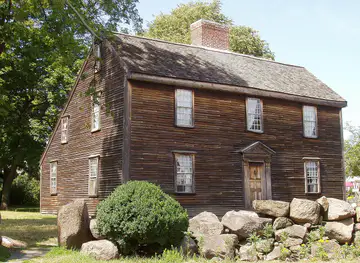
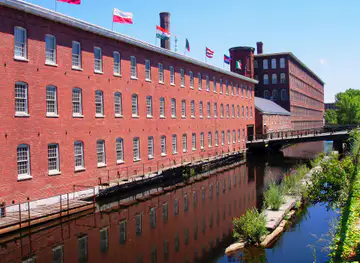
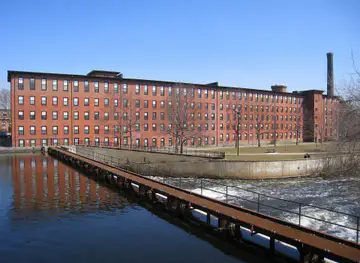
The closest cities to Gloucester, if you have time for more than one stop.
-

-
-
-
-


Swipe for more cities
Explore more

Explore more of Massachusetts
Discover Massachusetts: A blend of rich history, stunning landscapes, and vibrant culture. From Boston's historic sites to Cape Cod's beaches, it's the heart of New England.
Explore Massachusetts