

Corktown (Detroit) Travel Guide - Free
Explore Corktown in Detroit with Evendo's free guide. Find the best shops, historic streets, restaurants, and gems on web or mobile.


Corktown Detroit blends Victorian homes, Michigan Central, local restaurants, craft breweries, historic streets and creative culture west of downtown.
Detroit’s Oldest Neighbourhood
Corktown occupies the ground west of downtown Detroit, a compact district of nineteenth-century houses, broad avenues, industrial remnants and long-established institutions. Its name reflects the Irish immigrants who settled here in the nineteenth century, many arriving from County Cork. Today, the neighbourhood’s identity rests on the contrast between modest Victorian cottages and ambitious redevelopment around Michigan Central.Read more about Corktown
Architecture and Public Spaces
Food, Culture and Change
Explore Corktown on the map
A handpicked selection of must-see spots in Corktown, mapped for you.
Best hotels in Corktown
Best nightclubs in Corktown
Corktown’s evening life is sociable and food-led rather than dominated by large nightclubs. Michigan Avenue gathers bars, brewery taprooms and restaurants where people meet for drinks, while Batch Brewing Company contributes a distinctly local beer-making presence and Two James Spirits offers a spirits-focused setting in the wider Corktown scene. Some restaurants develop a lively bar atmosphere after dark, and occasional events at or around Michigan Central bring additional cultural activity. The residential streets become notably quieter away from the avenue, so nightlife is concentrated in a few walkable pockets rather than spread continuously across the neighbourhood. Visitors should check current event details and closing arrangements, use well-lit routes between venues, and remember that Corktown’s social character changes substantially from a busy evening on Michigan Avenue to a calm night on its side streets.
-
Night club
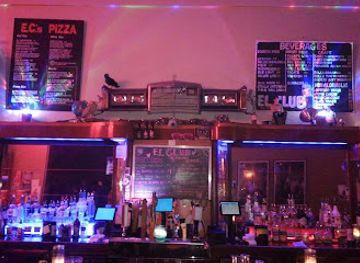
El Club
Experience the best of Detroit nightlife at El Club, a vibrant venue for live music, delicious pizza, and unforgettable nights out.
5 min walk · 0.4 km from neighbourhood centre
Corktown essentials
Getting There
Getting Around
Safety
Emergency Situations
Do's and Don'ts
Local Tips

From Eve
Local phrases worth knowing
You don't need to get them perfect. A few words go a long way, and locals appreciate the effort.
Basics
| English | Local | Say it |
|---|---|---|
| Hello | Howdy | [hou-dee] |
| Goodbye | Slán | [slawn] |
| Yes | Aye | [aye] |
| No | Nah | [nah] |
| Please/You're welcome | Please/No bother | [pleez/no bah-ther] |
| Thank you | Thanks a million | [thanks a mil-lyun] |
| Excuse me/Sorry | Pardon me | [par-dun me] |
| How are you? | How's she cuttin'? | [hows she cut-tin] |
| Fine. And you? | Grand. And yourself? | [grand. and yer-self] |
| Do you speak English? | Do you spake English? | [do you spake ing-glish] |
| I don't understand | I haven't a breeze | [i hav-ent a breeze] |
Eating & Drinking
| English | Local | Say it |
|---|---|---|
| I'd like to see the menu, please | I'll take a gawk at the menu, if you don't mind | [i'll take a gawk at the menu, if you dont mind] |
| I don't eat meat | I'm not a meat-eater | [i'm not a meat-eater] |
| Cheers! | Sláinte! | [slawn-cha] |
| I would like to pay, please | I'll settle up, if you don't mind | [i'll settle up, if you dont mind] |
Emergencies
| English | Local | Say it |
|---|---|---|
| Help! | M'anam! | [ma-nam] |
| Go away! | Feck off! | [feck off] |
| Call the Police! | Ring the Guards! | [ring the guards] |
| Call a doctor! | Ring a doc! | [ring a doc] |
| I'm lost | I'm after getting turned around | [i'm after getting turned around] |
| I'm ill | I'm not the ticket | [i'm not the ticket] |
Shopping
| English | Local | Say it |
|---|---|---|
| I'd like to buy... | I'll take... | [i'll take] |
| I'm just looking | I'm only browsing | [i'm only browsing] |
| How much is it? | What's the damage? | [whats the dam-age] |
| That's too expensive | That's fierce dear | [that's fierce dear] |
| Can you lower the price? | Can you do me a bit of a deal? | [can you do me a bit of a deal] |
Time & Numbers
| English | Local | Say it |
|---|---|---|
| What time is it? | What's the story with the hour? | [whats the story with the hour] |
| It's one o'clock | It's the one | [it's the one] |
| Half past (10) | Ten and a half | [ten and a half] |
| Morning | Good mornin' | [good mornin] |
| Afternoon | Good afternoon | [good afternoon] |
| Evening | Good evening | [good evening] |
| Yesterday | Yestermorn | [yes-ter-morn] |
| Today | The day | [the day] |
| Tomorrow | The morrow | [the morrow] |
| 1 | One | [one] |
| 2 | Two | [two] |
| 3 | Three | [three] |
| 4 | Four | [four] |
| 5 | Five | [five] |
| 6 | Six | [six] |
| 7 | Seven | [seven] |
| 8 | Eight | [eight] |
| 9 | Nine | [nine] |
| 10 | Ten | [ten] |
Transport & Directions
| English | Local | Say it |
|---|---|---|
| Where's a/the...? | Where's the... to? | [wheres the to] |
| What's the address? | What's the location? | [whats the location] |
| Can you show me (on the map)? | Can you point me out? | [can you point me out] |
| When's the next (bus)? | When's the next bus along? | [whens the next bus along] |
| A ticket (to ....) | A ticket (to ...) | [a ticket (to ...)] |
History of Corktown
Irish Settlement Takes Root
Corktown developed during Detroit’s nineteenth-century expansion, when Irish immigrants and their descendants settled west of the growing central city. The neighbourhood’s name is generally linked to County Cork, reflecting the origins of part of this community. Small houses, churches, shops and boarding arrangements grew around a street pattern shaped by the nearby riverfront industries and roads leading west. Although the area’s population and physical boundaries changed over time, its Irish association remains central to its historical identity and distinguishes Corktown from the later residential districts that spread farther west.
Railways Transform the District
Railway construction altered Corktown’s southern and western edges and made the neighbourhood part of Detroit’s expanding industrial and transport landscape. The most consequential change came with Michigan Central Station, completed in 1913 beside Roosevelt Park. Its enormous scale reflected Detroit’s importance as a manufacturing centre and rail destination, while nearby streets continued to hold modest houses and local businesses. Passenger rail brought travellers, workers and investment into the area, but railway land and infrastructure also created physical divisions that shaped Corktown’s development for much of the twentieth century.
Industry, Housing and Urban Decline
During Detroit’s industrial decades, Corktown remained close to factories, freight lines and the workplaces that sustained the city’s working population. Its compact housing stock accommodated successive generations and communities, while Michigan Avenue served as a route for commerce and public transport. Deindustrialisation, suburbanisation and population loss placed pressure on the neighbourhood after the mid-twentieth century. Michigan Central Station closed to passenger service in 1988, and the surrounding rail landscape became associated with abandonment even as Corktown retained a substantial collection of historic houses and churches.
Preservation and Redevelopment
Corktown’s historic character gained renewed attention as preservationists, residents and developers worked to retain its older buildings while introducing new uses. Restaurants, cafés, breweries and small creative businesses increased activity along Michigan Avenue, and renovated houses sat beside vacant lots and newer construction. Ford acquired Michigan Central Station and surrounding properties in 2018, beginning a large restoration and redevelopment project focused on mobility and technology. The station reopened for public programming in 2024, giving Corktown a new civic and economic focus while intensifying debates familiar to changing historic neighbourhoods: who benefits from investment, and how can long-term residential character be maintained?
Corktown in Photos
Browse through our photo collection highlighting the charm and character of the destination.
Neighbourhoods near Corktown
The closest neighbourhoods to Corktown, if you have time for more than one stop.
-

-

-

-

-


Swipe for more neighbourhoods
Explore more

Explore more of Detroit
Detroit pairs Motor City history with Motown music, Art Deco landmarks, riverfront parks, acclaimed museums and distinctive food across southeast Michigan.
Explore Detroit