

Free Ann Arbor Travel Guide & Mobile App
Plan your Ann Arbor trip with Evendo. Get free guides to top attractions, restaurants, hotels, and bars. Web access or download the mobile app.


Ann Arbor blends University of Michigan culture, Huron River scenery, museums, independent dining and lively historic districts near Detroit.
Campus, Culture and Community
Ann Arbor occupies the Huron River valley in south-east Michigan, about 45 miles west of Detroit, combining the intellectual energy of the University of Michigan with the scale and sociability of a compact Midwestern city. The university's central campus introduces grand early twentieth-century buildings, contemporary museums, performance venues and leafy academic quadrangles, while the surrounding streets are filled with independent bookshops, cafés, restaurants and galleries. Football is a major part of local identity, with autumn game days bringing an unmistakable sense of occasion to the university district.Read more about Ann Arbor
Neighbourhoods with Distinctive Character
Art, Science and the Outdoors
When is the best time to visit Ann Arbor?
Best: June, August–September · 23–27°C| Month | High (°C) | Rainfall (mm) |
|---|---|---|
| January | -1 | 42 |
| February | 1 | 40 |
| March | 8 | 47 |
| April | 14 | 79 |
| May | 21 | 85 |
| June (best) | 26 | 85 |
| July | 28 | 73 |
| August (best) | 27 | 75 |
| September (best) | 23 | 71 |
| October | 16 | 75 |
| November | 9 | 67 |
| December | 2 | 49 |
Getting to and around Ann Arbor
How to get there
Transportation
Best attractions in Ann Arbor
Ann Arbor's attractions spread naturally between the University of Michigan, the river corridor and the historic centre. The University of Michigan Museum of Art presents collections ranging from European and American works to modern and contemporary art, while the University of Michigan Museum of Natural History explores evolution, fossils and the natural sciences in an accessible campus setting. Nichols Arboretum, known locally as the Arb, combines wooded trails, slopes and river scenery beside the university. In Kerrytown, the Ann Arbor Farmers Market brings together regional growers and food producers on scheduled market days, and downtown Main Street offers historic shopfronts, galleries and people-watching. Matthaei Botanical Gardens adds conservatories, outdoor gardens and nature trails, while Gallup Park provides a more open Huron River landscape with paths, wetlands and recreational areas.
-
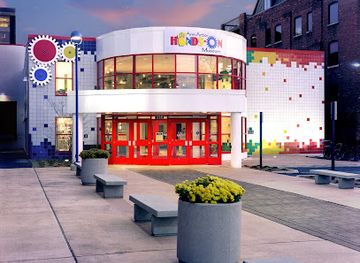
Children's museum
Ann Arbor Hands-On Museum and Leslie Science & Nature Center
Explore the Ann Arbor Hands-On Museum for a fun-filled journey through science and nature with interactive exhibits for all ages.
4 min walk · 0.3 km from city centre
-
Children's museum
Ann Arbor Hands-On Museum and Leslie Science & Nature Center
Explore the wonders of science and nature at the Ann Arbor Hands-On Museum and Leslie Science & Nature Center, where learning meets fun for all ages.
4 min walk · 0.3 km from city centre
-
Arboretum
University of Michigan Nichols Arboretum
Explore the stunning landscapes and diverse ecosystems of the University of Michigan Nichols Arboretum, a must-visit natural haven in Ann Arbor.
18 min walk · 1.4 km from city centre
-
Tourist attraction
Gallup Park
Explore the serene beauty of Gallup Park in Ann Arbor, a perfect blend of nature, recreation, and family-friendly activities.
11 min drive · 3.8 km from city centre



Best landmarks in Ann Arbor
The University of Michigan's campus contains many of Ann Arbor's most recognisable landmarks, including the Law Quadrangle, whose Gothic Revival architecture forms one of the city's distinctive academic ensembles, and the Burton Memorial Tower, a campus bell tower associated with the university's musical traditions. Hill Auditorium is an important performance building and a prominent example of early twentieth-century campus architecture, while the Michigan Theater on South State Street represents the city's historic cinema culture. In the civic centre, the Washtenaw County Courthouse and Ann Arbor City Hall reflect local government history, and the downtown streets retain nineteenth- and early twentieth-century commercial façades. The Huron River, though a natural feature rather than a monument, is equally important to Ann Arbor's identity: its bridges, parks and mill-related history explain the city's original location and continuing relationship with water and wooded landscapes.
-
Stadium
Michigan Stadium
Explore Michigan Stadium, home to the Wolverines, where sports history meets vibrant culture in Ann Arbor, a must-see for every visitor.
5 min drive · 1.7 km from city centre
-
Arboretum
University of Michigan Nichols Arboretum
Explore the University of Michigan Nichols Arboretum, a lush and tranquil escape in Ann Arbor, perfect for nature lovers and outdoor enthusiasts.
18 min walk · 1.4 km from city centre
-
Natural history museum
University of Michigan Museum of Natural History
Explore the University of Michigan Museum of Natural History, a treasure trove of natural wonders and interactive science exhibits in Ann Arbor.
10 min walk · 0.8 km from city centre
-
Arena
Crisler Center
Experience the excitement of college basketball at Crisler Center in Ann Arbor, Michigan, a hub of sports and culture.
5 min drive · 1.8 km from city centre


Explore Ann Arbor on the map
Plan your Ann Arbor trip on one map. See where the top attractions, landmarks, restaurants, bars and hotels are, find what's near where you're staying, and book hotels and experiences in a few clicks.
Best hotels in Ann Arbor
Best restaurants in Ann Arbor
Ann Arbor's dining scene reflects its university population, immigrant communities and south-east Michigan setting. Downtown Main Street and Kerrytown contain a dense mix of independent restaurants, cafés, bakeries and bars, while State Street, South University Avenue and the surrounding campus streets offer inexpensive, international and student-oriented choices. Menus commonly range from contemporary American cooking and vegetarian dishes to Middle Eastern, South Asian, East Asian, Mediterranean and other global cuisines. Michigan produce appears seasonally at the Ann Arbor Farmers Market, and local food culture also includes coffee, craft beer and bakery traditions rather than one single signature dish. The Kerrytown market area is particularly useful for browsing regional ingredients and prepared food, while the city's long-standing interest in independent businesses supports chef-led restaurants alongside casual eateries and familiar Midwestern fare.
-
Cuban
Frita Batidos Ann Arbor
Experience the vibrant tastes of Cuba at Frita Batidos - where burgers meet tropical flavors in Ann Arbor.
7 min walk · 0.5 km from city centre
-
American
Zingerman's Roadhouse
Discover the heart of American cuisine at Zingerman's Roadhouse in Ann Arbor – where barbecue meets creativity in every bite.
9 min drive · 3.1 km from city centre
-
Seafood
Gandy Dancer
Experience exquisite seafood dining at Gandy Dancer in Ann Arbor - where fresh ingredients meet historic charm.
9 min walk · 0.7 km from city centre
-
Restaurant
Sava's
Experience culinary excellence at Sava's in Ann Arbor - where fresh ingredients meet creative cuisine in an inviting atmosphere.
2 min walk · 0.2 km from city centre


Best bars in Ann Arbor
After dark, Ann Arbor's social life is concentrated around Main Street, the university campus, State Street and South University Avenue. Main Street has cocktail bars, breweries, live-music rooms and relaxed pubs in historic commercial buildings, while the campus districts are more student-oriented and often busier when the University of Michigan is in session. Evening entertainment extends beyond drinking through independent cinemas, theatre, comedy, concerts and performances at venues such as the Michigan Theater, Hill Auditorium and the University of Michigan's performance spaces. The city has a stronger concentration of bars, music and cultural events than of large nightclubs, and its nightlife varies sharply with the academic calendar. Visitors should expect US licensing rules, age checks and designated-driver or ride-service arrangements when drinking.
-
Bar
HopCat
Experience the vibrant atmosphere and delicious American cuisine at HopCat in Ann Arbor, a top choice for food lovers and craft beer enthusiasts.
3 min walk · 0.2 km from city centre
-
Grill
The Session Room
Experience the vibrant atmosphere and delicious grill offerings at The Session Room, a culinary gem in Ann Arbor, perfect for every food lover.
15 min drive · 5.0 km from city centre
-
Irish pub
Conor O'Neill's Irish Pub
Discover Conor O'Neill's Irish Pub in Ann Arbor - a vibrant blend of authentic Irish cuisine, lively sports, and an inviting atmosphere.
6 min walk · 0.5 km from city centre
-
Grill
Ashley's
Experience the vibrant culinary scene at Ashley's in Ann Arbor, where delicious grilled dishes and a wide beverage selection await.
4 min walk · 0.3 km from city centre


Best nightclubs in Ann Arbor
After dark, Ann Arbor's social life is concentrated around Main Street, the university campus, State Street and South University Avenue. Main Street has cocktail bars, breweries, live-music rooms and relaxed pubs in historic commercial buildings, while the campus districts are more student-oriented and often busier when the University of Michigan is in session. Evening entertainment extends beyond drinking through independent cinemas, theatre, comedy, concerts and performances at venues such as the Michigan Theater, Hill Auditorium and the University of Michigan's performance spaces. The city has a stronger concentration of bars, music and cultural events than of large nightclubs, and its nightlife varies sharply with the academic calendar. Visitors should expect US licensing rules, age checks and designated-driver or ride-service arrangements when drinking.
-
Restaurant
Blue LLama Jazz Club
Discover the perfect fusion of fine dining and live jazz at Blue LLama Jazz Club in Ann Arbor, where every night is a celebration of music and flavor.
7 min walk · 0.5 km from city centre
-
Lounge
Babs' Underground
Discover Babs' Underground, a vibrant Ann Arbor lounge offering eclectic drinks, live music, and a cozy atmosphere perfect for nightlife enthusiasts.
7 min walk · 0.5 km from city centre
-
Bar
The Circ Bar
Discover the vibrant nightlife at The Circ Bar in Ann Arbor, offering karaoke, themed events, and a welcoming atmosphere perfect for celebrations.
8 min walk · 0.7 km from city centre
-
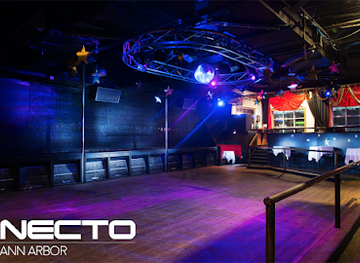
Night club
Necto
Experience the electrifying nightlife at Necto, Ann Arbor's premier night club offering dynamic music, dance, and inclusive events.
2 min walk · 0.2 km from city centre


Best shops in Ann Arbor
Shopping in Ann Arbor is divided between independent downtown streets, university-oriented retail and larger commercial areas beyond the centre. Main Street is known for specialist shops, bookshops, galleries, clothing retailers and locally owned businesses set among historic façades, while Nickels Arcade provides a distinctive enclosed passage linking State Street with Maynard Street. Kerrytown combines small retailers, food businesses and artisan-oriented shops near the Ann Arbor Farmers Market, where scheduled market days bring seasonal produce, prepared food and regional goods. State Street and South University Avenue have a more youthful, campus-related character, with books, clothing and practical student shopping. Visitors looking for Michigan-made food products, prints, crafts or locally designed gifts will find the strongest selection in independent shops and market stalls rather than in a single conventional souvenir district.
-
Comic book store
Vault of Midnight
Explore the vibrant world of comics and games at Vault of Midnight, Ann Arbor's premier destination for pop culture enthusiasts.
6 min walk · 0.5 km from city centre
-
Shopping mall
Kerrytown Market & Shops
Explore Kerrytown Market & Shops, a vibrant shopping destination in Ann Arbor, featuring unique boutiques, artisan products, and delicious local food vendors.
6 min walk · 0.5 km from city centre
-
Shopping mall
Lamp Post Plaza
Explore the vibrant shopping scene at Lamp Post Plaza in Ann Arbor, MI – a perfect blend of unique boutiques and delightful eateries.
11 min drive · 3.5 km from city centre
-
Clothing store
Bivouac
Explore Ann Arbor's Bivouac, your go-to store for premium outdoor gear, stylish clothing, and essential camping equipment for adventurers.
4 min walk · 0.3 km from city centre


Get your free copy of our complete guide to Ann Arbor, delivered straight to you.
Everything on this page, from attractions and restaurants to essentials and local phrases, in one PDF you can read offline, print or share.
Already have an account? Sign in
Your Ann Arbor guide is ready.
We'll send it to · Not you? Sign out

Getting your guide ready…
We are putting together a fresh copy of the Ann Arbor guide. This can take up to a minute.
This can take a few moments. If your browser asks, choose Allow so the download can start. You'll find the guide in your Downloads folder.
Nothing happened? Download it again
Sorry, the guide is taking longer than usual. Please try again in a minute, or get it by email instead.
Ann Arbor essentials
Currency and Payment
Safety
Emergency Situations
Do's and Don'ts
Local Tips
From Eve
Local phrases worth knowing
You don't need to get them perfect. A few words go a long way, and locals appreciate the effort.
Basics
| English | Local | Say it |
|---|---|---|
| Hello | Hi | [hahy] |
| Goodbye | Bye | [bahy] |
| Yes | Yeah | [yeh] |
| No | Nope | [nohp] |
| Please/You're welcome | Please/No problem | [pleez/noh proh-bluhm] |
| Thank you | Thanks | [thangks] |
| Excuse me/Sorry | Excuse me/My bad | [ik-skyoos mee/my bad] |
| How are you? | How are you? | [how ar yoo] |
| Fine. And you? | Good. And you? | [good. and yoo] |
| Do you speak English? | Do you speak English? | [doo yoo speek ing-glish] |
| I don't understand | I don't get it | [I dohnt get it] |
Eating & Drinking
| English | Local | Say it |
|---|---|---|
| I'd like to see the menu, please | Can I see the menu, please | [kan ai see the mennyoo, pleez] |
| I don't eat meat | I don't eat meat | [I dohnt eet meet] |
| Cheers! | Cheers! | [cheerz] |
| I would like to pay, please | Can I pay, please | [kan ai pay, pleez] |
Emergencies
| English | Local | Say it |
|---|---|---|
| Help! | Help! | [help] |
| Go away! | Go away! | [go away] |
| Call the Police! | Call the Cops! | [kahl the cops] |
| Call a doctor! | Get a doctor! | [get uh dok-tur] |
| I'm lost | I'm lost | [aim lost] |
| I'm ill | I'm sick | [aim sik] |
Shopping
| English | Local | Say it |
|---|---|---|
| I'd like to buy... | I wanna buy... | [ai wana buy] |
| I'm just looking | I'm just browsing | [aim just broh-zing] |
| How much is it? | How much does it cost? | [how much duhz it cost] |
| That's too expensive | That's too pricey | [thats too prahy-see] |
| Can you lower the price? | Can you cut the price? | [kan yoo kaht the prahys] |
Time & Numbers
| English | Local | Say it |
|---|---|---|
| What time is it? | What's the time? | [whats the tahym] |
| It's one o'clock | It's one | [its wuhn] |
| Half past (10) | Half past (10) | [hahf past (ten)] |
| Morning | Morning | [mawrn-ing] |
| Afternoon | Afternoon | [af-ter-noon] |
| Evening | Evening | [eev-ning] |
| Yesterday | Yesterday | [yestur-day] |
| Today | Today | [toh-day] |
| Tomorrow | Tomorrow | [toh-mawr-oh] |
| 1 | One | [wuhn] |
| 2 | Two | [too] |
| 3 | Three | [three] |
| 4 | Four | [for] |
| 5 | Five | [fahyv] |
| 6 | Six | [siks] |
| 7 | Seven | [sev-uhn] |
| 8 | Eight | [ayt] |
| 9 | Nine | [nyn] |
| 10 | Ten | [ten] |
Transport & Directions
| English | Local | Say it |
|---|---|---|
| Where's a/the...? | Where's the...? | [wheres the] |
| What's the address? | What's the address? | [whats the ad-dres] |
| Can you show me (on the map)? | Can you show me (on the map)? | [kan yoo sho mee (on the map)] |
| When's the next (bus)? | When's the next (bus)? | [whens the nekst (bus)] |
| A ticket (to ....) | A ticket (to ....) | [uh tik-it (to)] |
History of Ann Arbor
The Potawatomi Homeland
The Ann Arbor area lies within the historical homeland of Indigenous peoples, including the Anishinaabe communities associated with the Three Fires Confederacy. The Huron River and its surrounding woods supported travel, fishing and settlement long before the arrival of Euro-American town founders. In the early nineteenth century, the region was shaped by treaties and the forced removal of Indigenous peoples under United States expansion, a history that remains essential to understanding south-east Michigan. The river corridor and wooded landscapes that define parts of modern Ann Arbor therefore have a much older human context than the city's formal foundation suggests.
Founded beside the Huron River
Ann Arbor was founded in 1824 by land speculators John Allen and Elisha Rumsey, who selected a site beside the Huron River and named the settlement Ann Arbor. The name is commonly associated with the founders' wives, both called Ann, and the arbour of trees they imagined on the land. The river provided water power and transport, while the surrounding agricultural country encouraged steady growth. Ann Arbor was incorporated as a village in 1833 and became the seat of Washtenaw County, establishing the civic and commercial foundations that still shape its central districts.
The University Comes to Ann Arbor
The University of Michigan moved from Detroit to Ann Arbor in 1837, a decision that transformed the town's prospects and identity. The institution expanded through the nineteenth century, attracting students, scholars and investment while encouraging the construction of academic, residential and civic buildings around the original campus. Its growth also connected Ann Arbor to wider debates in American education, science and public life. The university remains the city's dominant cultural and economic influence, but its presence developed alongside independent businesses, neighbourhood institutions and a civic tradition that extends beyond campus boundaries.
Industry, Railways and Urban Growth
During the nineteenth and early twentieth centuries, Ann Arbor grew through agriculture, milling, manufacturing and railway connections. The Huron River powered mills, while rail service strengthened links with Detroit, Chicago and other Midwestern markets. Commercial buildings, churches and homes accumulated around the downtown core, creating the urban fabric visible in areas such as Main Street and Kerrytown. The city's economy later shifted towards education, healthcare, research and technology, with the university and University of Michigan health system becoming central employers. This transition helped preserve Ann Arbor's historic centre while supporting continued suburban and institutional expansion.
A Centre of Learning and Public Debate
Ann Arbor's university setting made it an important centre of intellectual and political activity during the twentieth century. Students and faculty participated in national debates over civil rights, war, free speech and social change, particularly during the 1960s and 1970s. The city also developed a strong cultural infrastructure around libraries, museums, theatres, music venues and independent publishing. These traditions contributed to Ann Arbor's present-day reputation for research, public discussion and the arts, while the campus itself continued to grow into a large institution whose buildings and landscapes reach deep into the surrounding city.
A Contemporary Research City
In recent decades, Ann Arbor has combined its historic university role with growth in healthcare, biomedical research, engineering and technology. Downtown redevelopment, neighbourhood conservation and investment in public parks have occurred alongside debates about housing, transport and the relationship between campus and city. Cultural events, the Ann Arbor Art Fair, the Ann Arbor Farmers Market and independent businesses reinforce a civic identity that is both locally rooted and internationally connected. The result is a city whose contemporary character rests on the interaction of academic research, Midwestern commercial heritage, river landscapes and an active community life.
Ann Arbor in Photos
Browse through our photo collection highlighting the charm and character of the destination.
Cities near Ann Arbor
The closest cities to Ann Arbor, if you have time for more than one stop.
-

-

-

-

-


Swipe for more cities
Explore more

Explore more of Michigan
Explore Michigan's stunning Great Lakes, vibrant cities, and untouched natural beauty. Discover the state's rich cultural heritage and endless outdoor adventures.
Explore Michigan