

Free The Thumb Travel Guide & Mobile App
Explore The Thumb with free travel guides. Discover regional history, expert tips, proposed trips, and audio guides on web or mobile app.


Explore Michigan’s Thumb for Lake Huron beaches, lighthouses, farm country, paddling, small harbour towns and distinctive Great Lakes heritage.
Read more about The Thumb
When is the best time to visit The Thumb?
Best: June, August–September · 22–26°C| Month | High (°C) | Rainfall (mm) |
|---|---|---|
| January | 0 | 41 |
| February | 2 | 36 |
| March | 6 | 47 |
| April | 14 | 61 |
| May | 20 | 72 |
| June (best) | 25 | 79 |
| July | 27 | 85 |
| August (best) | 26 | 80 |
| September (best) | 22 | 76 |
| October | 16 | 60 |
| November | 9 | 50 |
| December | 2 | 45 |
Getting to and around The Thumb
How to get there
Transportation
Top city travel guides in The Thumb
The cities of The Thumb, and the easiest places to base yourself.
-

-

-

-

-

-


Swipe for more cities
Destinations in The Thumb
Resorts, valleys and scenic spots worth a trip of their own.

Swipe for more destinations
Best attractions in The Thumb
The Thumb’s attractions are shaped by its long Great Lakes coastline, agricultural interior and comparatively small communities. State parks provide the most accessible outdoor experiences: Port Crescent State Park combines beach, dunes, woodland and access to the Port Crescent Heritage Water Trail, while Sleeper State Park offers a sandy Lake Huron shore near Caseville. Near Port Austin, Turnip Rock is a celebrated paddling destination, although access, weather and water conditions determine how easily it can be reached. Lighthouse grounds and maritime museums add historical context, especially at Pointe aux Barques and Harbor Beach. Inland, Sanilac Petroglyphs Historic State Park protects Indigenous rock art in a forested setting, while the Huron County Nature Center introduces visitors to wetlands, woodland and wildlife. Small-town museums, historic main streets, farm markets and local festivals provide a quieter cultural complement to the coast. Birdwatching, fishing, kayaking, swimming, camping and scenic driving are more characteristic here than large-scale entertainment, and the broad distances between sites make selecting one shoreline sector at a time the most rewarding approach.
-
Tourist attraction
Hart-Montague Bicycle Trail Park
Discover the serene beauty of Hart-Montague Bicycle Trail Park, a prime location for hiking and cycling in scenic New Era, Michigan.
-
Tourist attraction
For-Mar Nature Preserve & Arboretum
Explore the tranquil beauty of For-Mar Nature Preserve & Arboretum in Burton, Michigan, where nature and education intertwine for unforgettable experiences.
-
Tourist attraction
Lakeside Park
Explore the beauty of Lakeside Park in Port Huron, a perfect destination for relaxation, recreation, and stunning lakeside views.
-
Tourist attraction
Erebus Haunted Attraction
Explore the spine-tingling depths of Erebus Haunted Attraction, Pontiac's multi-level haunted house, where fear and fun intertwine for an unforgettable experience.


Best landmarks in The Thumb
The Thumb’s most recognisable landmarks are closely tied to water, navigation and geology. Pointe aux Barques Lighthouse, at the northern tip of the peninsula, stands among the region’s most important maritime structures and reflects the hazards faced by ships entering or crossing Saginaw Bay. Harbor Beach’s long breakwater and lighthouse form an imposing harbour landscape on Lake Huron, while Port Austin’s shoreline is associated with the distinctive offshore formation known as Turnip Rock. Grindstone City preserves the memory of a quarrying settlement whose sandstone was shaped into grindstones for industrial and agricultural use. Sanilac Petroglyphs is a landmark of a different kind: its carved sandstone bears Indigenous cultural significance and requires careful, respectful interpretation. The peninsula’s broad lake horizons, sandy beaches, low bluffs and exposed points are themselves defining geographical markers, particularly around Port Crescent, Sleeper State Park, Caseville and the northern coast. Historic village centres and surviving farm landscapes complete a visual identity rooted in small-scale settlement rather than monumental urban architecture.
-
Local history museum
Meridian Historical Village
Explore the rich history of Okemos at Meridian Historical Village, a delightful park showcasing preserved buildings and serene landscapes.

Explore The Thumb on the map
Plan your trip on one map. See where the top cities, national parks and sights are, and book hotels and experiences in a few clicks.
Best hotels in The Thumb
Best restaurants in The Thumb
Dining in the Thumb reflects its agricultural economy and freshwater setting rather than a single regional cuisine. Small-town diners, cafés, family restaurants and traditional pubs provide breakfasts, sandwiches, fried fish, burgers and baked goods, while seasonal waterfront establishments focus on casual meals and lake views. Farm stands and local markets are useful for fruit, vegetables, preserves, honey, cider and other products from the surrounding countryside. Freshwater fish, including locally available Great Lakes species, appears on some menus, but availability varies by season and catch. Around Caseville, Port Austin, Lexington and other summer communities, visitors will find more choice during the warm months, from takeaway food to contemporary cooking. Rural inns and independent restaurants generally offer an informal atmosphere, and advance planning is sensible outside peak periods because distances are considerable and evening options can be limited. Michigan craft beer and wines from elsewhere in the state are also commonly represented, alongside familiar American drinks.
-
American
Tony's I75 Restaurant
Discover delicious American comfort food at Tony's I75 Restaurant in Birch Run - where generous portions meet unbeatable prices.
-
German
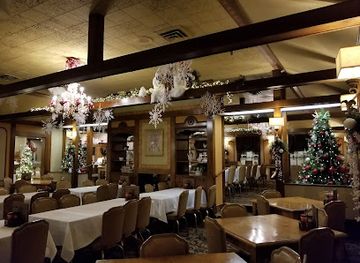
Bavarian Inn Restaurant
Experience authentic German cuisine at Bavarian Inn Restaurant in Frankenmuth - where hearty meals meet festive ambiance.
-
Restaurant
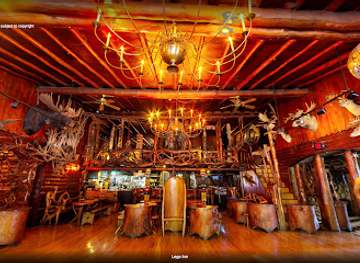
Legs Inn
Experience authentic Eastern European cuisine at Legs Inn while enjoying breathtaking views of Lake Michigan in Cross Village.
-
Restaurant
Raven Café
Experience the perfect blend of gourmet dining and relaxed ambiance at Raven Café in Port Huron—your go-to spot for coffee, cocktails, and more.


Best bars in The Thumb
Evening life in the Thumb is generally relaxed and community-oriented rather than centred on large nightclubs. Traditional pubs, taverns, brewery taprooms and casual restaurants provide the main social settings in towns such as Caseville, Port Austin, Lexington, Sandusky and nearby communities. Summer brings the greatest activity, with seasonal entertainment, live music and busier waterfront areas, while winter evenings are markedly quieter. Harbour towns may offer places for a drink after a day on the water, but opening arrangements and choice can change outside the holiday season. Occasional concerts, community events and festival programmes add to the summer calendar without turning the region into a major nightlife destination. Visitors staying in rural areas should arrange transport in advance and should not rely on rideshare availability late at night.
-
Brewpub
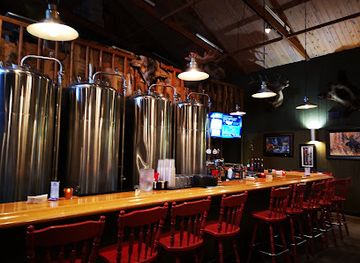
Tahquamenon Falls Brewery & Pub
Discover the taste of Michigan's Upper Peninsula at Tahquamenon Falls Brewery & Pub, where craft beer meets breathtaking views.
-
Grill
Palms Krystal Bar & Grill/Chicken in the Rough
Experience the delicious flavors and vibrant atmosphere at Palms Krystal Bar & Grill, Port Huron's favorite destination for chicken and seasonal drinks.
-
Brewery
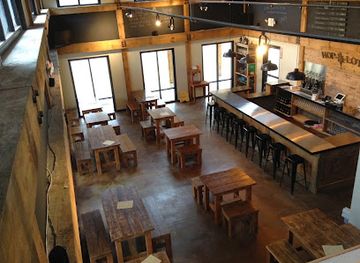
Hop Lot Brewing Co. & Beer Garden
Experience the best of craft brewing and delicious American cuisine at Hop Lot Brewing Co. & Beer Garden in Suttons Bay, Michigan.
-
Brewery
Stormcloud Brewing Company
Explore the heart of Michigan's craft beer scene at Stormcloud Brewing Company, where great brews and hearty meals await.

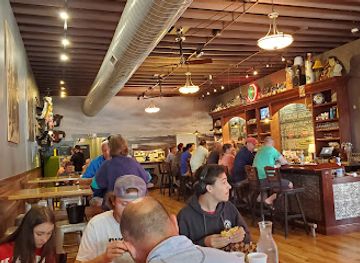
Best nightclubs in The Thumb
Evening life in the Thumb is generally relaxed and community-oriented rather than centred on large nightclubs. Traditional pubs, taverns, brewery taprooms and casual restaurants provide the main social settings in towns such as Caseville, Port Austin, Lexington, Sandusky and nearby communities. Summer brings the greatest activity, with seasonal entertainment, live music and busier waterfront areas, while winter evenings are markedly quieter. Harbour towns may offer places for a drink after a day on the water, but opening arrangements and choice can change outside the holiday season. Occasional concerts, community events and festival programmes add to the summer calendar without turning the region into a major nightlife destination. Visitors staying in rural areas should arrange transport in advance and should not rely on rideshare availability late at night.
-
Night club
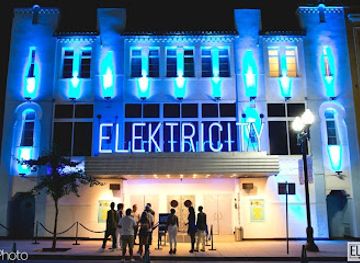
ELEKTRICITY
Discover the electrifying nightlife at ELEKTRICITY, Pontiac's prime destination for live music, dancing, and unforgettable experiences.
-
Night club
Exodos Rooftop
Experience the vibrant nightlife of Detroit at Exodos Rooftop, where stunning city views and an energetic atmosphere await.
-
Night club
Necto
Discover Necto, a vibrant nightclub in Ann Arbor that offers live music, dancing, and a welcoming atmosphere for everyone.
-
Bar
Gera Bar
Discover the vibrant atmosphere of Gera Bar in Frankenmuth, Michigan, where great drinks and friendly vibes await you.
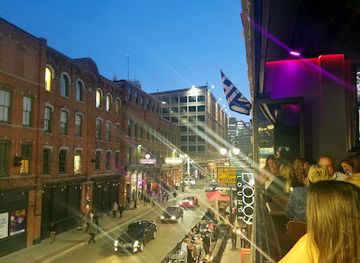


Best shops in The Thumb
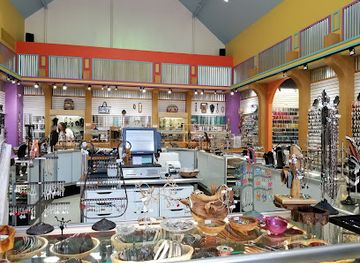
Shopping in the Thumb is concentrated in the main small towns and seasonal waterfront communities rather than in large retail districts. Independent shops, galleries, antique stores and bookshops can be found around places such as Port Austin, Lexington, Caseville and other established centres, with the greatest selection during summer. Farm stands and local markets are particularly useful for fruit, vegetables, honey, jams, baked goods, cider and other products of the agricultural interior. Coastal communities also sell practical boating goods, beach items, locally made crafts and souvenirs linked to lighthouses or Great Lakes life. Visitors seeking distinctive purchases should look for pottery, woodwork, paintings, photography and handmade goods from regional artists, as well as food products that travel well. Retail hours may be seasonal, and rural distances mean that it is wise to buy essentials before heading to a remote shoreline or state park.
-
Shopping mall
Frankenmuth River Place Shops
Experience the enchanting Bavarian charm at Frankenmuth River Place Shops, a unique shopping and tourist destination in Michigan.
-
Outlet mall
Birch Run Premium Outlets
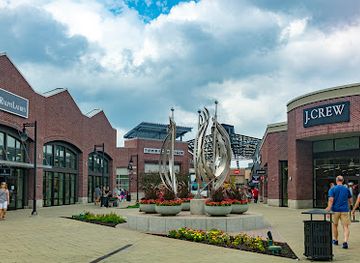
Discover unbeatable deals and a diverse shopping experience at Birch Run Premium Outlets in Michigan, your go-to destination for brand-name bargains.
-
Outlet mall
Tanger Outlets Grand Rapids
Discover unbeatable deals at Tanger Outlets Grand Rapids, where shopping meets style in a vibrant, outdoor setting.
-
Outlet mall
Tanger Outlets Howell
Shop the best brands at unbeatable prices at Tanger Outlets Howell - your ultimate shopping destination in Michigan.


Get your free copy of our complete guide to The Thumb, delivered straight to you.
Everything on this page, from attractions and restaurants to essentials and local phrases, in one PDF you can read offline, print or share.
Already have an account? Sign in
Your The Thumb guide is ready.
We'll send it to · Not you? Sign out

Getting your guide ready…
We are putting together a fresh copy of the The Thumb guide. This can take up to a minute.
This can take a few moments. If your browser asks, choose Allow so the download can start. You'll find the guide in your Downloads folder.
Nothing happened? Download it again
Sorry, the guide is taking longer than usual. Please try again in a minute, or get it by email instead.
The Thumb essentials
Currency and Payment
Safety
Emergency Situations
Do's and Don'ts
Local Tips
From Eve
Local phrases worth knowing
You don't need to get them perfect. A few words go a long way, and locals appreciate the effort.
Basics
| English | Local | Say it |
|---|---|---|
| Hello | Hi there | [Hah thee-er] |
| Goodbye | See ya | [See yah] |
| Yes | Yep | [Yep] |
| No | Nah | [Nah] |
| Please/You're welcome | Sure thing | [Shur thing] |
| Thank you | Thanks a lot | [Thangs a lot] |
| Excuse me/Sorry | Excuse me | [Ex-kewz me] |
| How are you? | How ya doin'? | [How yah doin'?] |
| Fine. And you? | Good. You? | [Goo-d. You?] |
| Do you speak English? | You speak English? | [Yah speak English?] |
| I don't understand | I ain't gettin' it | [I ain't gettin' it] |
Eating & Drinking
| English | Local | Say it |
|---|---|---|
| I'd like to see the menu, please | Can I see the menu? | [Can I see the men-yoo?] |
| I don't eat meat | I ain't eatin' meat | [I ain't eatin' meet] |
| Cheers! | Cheers! | [Cheers!] |
| I would like to pay, please | Can I get the bill? | [Can I get the bill?] |
Emergencies
| English | Local | Say it |
|---|---|---|
| Help! | Help! | [Help!] |
| Go away! | Get lost! | [Get lost!] |
| Call the Police! | Call the cops! | [Call the cops!] |
| Call a doctor! | Get a doctor! | [Get a doctor!] |
| I'm lost | I'm lost | [I'm lost] |
| I'm ill | I'm feeling sick | [I'm feelin' sick] |
Shopping
| English | Local | Say it |
|---|---|---|
| I'd like to buy... | I wanna buy... | [I wanna buy...] |
| I'm just looking | Just browsin' | [Just browsin'] |
| How much is it? | How much is this? | [How much is this?] |
| That's too expensive | That's way too high | [That's way too high] |
| Can you lower the price? | Can ya bring that down? | [Can yah bring that down?] |
Time & Numbers
| English | Local | Say it |
|---|---|---|
| What time is it? | What time is it? | [What time is it?] |
| It's one o'clock | It's one o'clock | [It's one o'clock] |
| Half past (10) | Half past ten | [Half past ten] |
| Morning | Morning | [Mornin'] |
| Afternoon | Afternoon | [Afternoon] |
| Evening | Evening | [Evenin'] |
| Yesterday | Yesterday | [Yesterday] |
| Today | Today | [Today] |
| Tomorrow | Tomorrow | [Tomorrow] |
| 1 | One | [Wun] |
| 2 | Two | [Too] |
| 3 | Three | [Three] |
| 4 | Four | [For] |
| 5 | Five | [Fiv] |
| 6 | Six | [Six] |
| 7 | Seven | [Sev-en] |
| 8 | Eight | [Ayt] |
| 9 | Nine | [Nin] |
| 10 | Ten | [Ten] |
Transport & Directions
| English | Local | Say it |
|---|---|---|
| Where's a/the...? | Where's the...? | [Where's the...?] |
| What's the address? | What's the address? | [What's the address?] |
| Can you show me (on the map)? | Can ya show me on the map? | [Can yah show me on the map?] |
| When's the next (bus)? | When's the next bus? | [When's the next bus?] |
| A ticket (to ....) | One ticket to... | [One ticket to...] |
History of The Thumb
Indigenous Homelands and Rock Art
The Thumb lies within the historic homelands of Anishinaabe peoples, including the Ojibwe, Odawa and Potawatomi, whose communities used the peninsula’s forests, wetlands, rivers and Great Lakes shorelines for travel, fishing and hunting. Sanilac Petroglyphs, known in Anishinaabemowin as Ezhibiigemag, or writings on stone, contains Indigenous images and marks on exposed sandstone. Their precise meanings are not reducible to a simple tourist label, and the protected site is best understood as a continuing cultural legacy rather than merely an archaeological curiosity.
French, British and American Great Lakes Frontiers
European influence reached the Thumb through the wider Great Lakes network of Indigenous trade, French exploration and later British administration. The region had no large colonial city, but its waters connected local communities with Detroit, Saginaw Bay and the lake routes between Michigan and Ontario. After the United States consolidated control of Michigan in the early nineteenth century, treaties and land surveys opened the peninsula to expanding American settlement, while Indigenous communities faced dispossession and the disruption of established economies.
Nineteenth-Century Settlement and Agriculture
Permanent non-Indigenous settlement expanded during the nineteenth century as roads, waterways and land surveys made the peninsula more accessible. Towns such as Port Austin, Caseville, Harbor Beach, Sandusky and Caro developed around farming, local trade and transport. The Thumb’s fertile soils supported grain, sugar beets, dairy farming and later a broad range of crops. Many present-day country roads, farmsteads and compact village centres reflect this period of agricultural organisation.
Lumber, Quarries and Maritime Commerce
Timber cutting and quarrying were important nineteenth-century industries. Grindstone City became known for extracting and shaping sandstone grindstones, while other communities processed timber and supplied vessels moving through the Great Lakes. The exposed coast could be dangerous, prompting the construction and improvement of lighthouses, lifesaving facilities and harbour works. Pointe aux Barques Lighthouse and Harbor Beach’s breakwater and harbour infrastructure remain visible reminders of the maritime economy that linked the rural peninsula to regional shipping.
Lighthouses and the Great Lakes Shipping Era
The Thumb occupies a strategic position beside routes crossing Saginaw Bay and following Lake Huron. Shoals, reefs, fog and storms made navigation difficult, especially before modern charts and electronic aids. Lighthouses at points such as Pointe aux Barques, Port Austin and Harbor Beach helped guide vessels and warn them away from hazards. Their significance extends beyond their appearance: they represent the federal and local investment required to make Great Lakes commerce safer during the nineteenth and early twentieth centuries.
Twentieth-Century Roads, Industry and Seasonal Tourism
Improved roads and private car ownership altered the Thumb during the twentieth century, making its beaches, cottages and fishing towns accessible to visitors from Michigan’s cities. Agriculture remained central, while nearby industrial centres and the wider Detroit automotive economy influenced employment and transport. Seasonal tourism grew around Caseville, Port Austin, Lexington and the state parks, producing a region where working farms and harbours coexist with cottages, campgrounds, paddling routes and summer festivals.
Conservation and Heritage Interpretation
Late twentieth- and early twenty-first-century efforts placed greater emphasis on protecting shoreline, wetlands, forests, archaeological sites and maritime heritage. State parks, nature centres, the Thumb Heritage Water Trail and historic lighthouse organisations now help interpret the region’s landscapes. This work also reflects a broader recognition that the Thumb’s history includes Indigenous cultural places, working waterfronts, agricultural communities and industrial remains, rather than only recreational beaches and holiday cottages.
The Thumb in Photos
Browse through our photo collection highlighting the charm and character of the destination.
Neighbouring regions of The Thumb
The closest regions to The Thumb, if you have time for more than one.
-

-

-

-

-


Swipe for more regions
Explore more

Explore more of Michigan
Explore Michigan's stunning Great Lakes, vibrant cities, and untouched natural beauty. Discover the state's rich cultural heritage and endless outdoor adventures.
Explore Michigan