

Mid-Michigan, Michigan Travel Guide
Explore Mid-Michigan: A blend of urban and rural charm with rich cultural heritage, scenic parks, and unique local experiences in the heart of the Great Lakes State.
Mid-Michigan is the central region of the state of Michigan, known for its natural beauty, vibrant communities, and rich cultural heritage. This area offers a perfect blend of urban and rural experiences, making it an ideal destination for tourists looking to explore the Great Lakes State. Lansing, the state capital, is located in Mid-Michigan and offers a variety of attractions including the Michigan State Capitol building, numerous museums, and Michigan State University. The university's sprawling campus is home to beautiful botanical gardens, art galleries, and sports events that draw visitors from all over. Nature enthusiasts will find plenty to love in Mid-Michigan. The region is dotted with beautiful parks, rivers, and lakes ideal for hiking, fishing, and boating. Sleepy Hollow State Park and Lake Lansing are popular spots for outdoor activities and picnics. Additionally, the area is known for its scenic drives, especially during the fall when the foliage transforms into a stunning array of colors. Mid-Michigan is also rich in cultural and historical sites. The town of Frankenmuth, often called 'Michigan's Little Bavaria,' offers a unique German-themed experience complete with traditional architecture, food, and festivals. For a step back in time, visit the historic town of Eaton Rapids or the fascinating R.E. Olds Transportation Museum in Lansing. No visit to Mid-Michigan would be complete without exploring its local cuisine. The region boasts a variety of dining options from farm-to-table restaurants to classic American diners. Be sure to try some of the local specialties, including Michigan cherry pie and fresh Great Lakes fish dishes.

Know before you go
Hi, I'm Eve. Here are a few practical things to know before exploring Mid-Michigan.
- Visit the Michigan State Capitol: Guided tours are available and offer a great insight into Michigan's history and government.
- Check out local festivals: Mid-Michigan hosts numerous events throughout the year, including the Frankenmuth Bavarian Festival and the Lansing JazzFest.
- Explore the outdoors: Take advantage of the many parks and natural areas like Sleepy Hollow State Park and Lake Lansing for hiking, fishing, and boating.
- Taste local cuisine: Don't miss out on trying Michigan cherry pie and dishes featuring fresh Great Lakes fish.
- Plan a fall visit: The scenic drives and natural landscapes are particularly beautiful during the autumn months when the foliage is vibrant.
Top City Travel Guides in Mid-Michigan
The cities of Mid-Michigan, and the easiest places to base yourself.


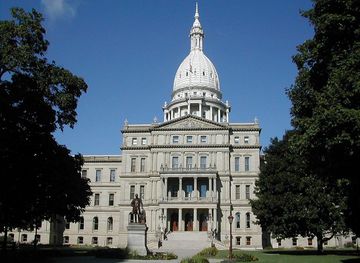
Destinations in Mid-Michigan
Resorts, valleys and scenic spots worth a trip of their own.


Explore Mid-Michigan: Things to Do, Places to Eat, Hotels & More
Handpicked recommendations for top attractions, local dining, accommodations, and more

Top Attractions & Sightseeing in Mid-Michigan
Top-rated picks
Best Attractions

Frederik Meijer Gardens & Sculpture Park
Explore the enchanting Frederik Meijer Gardens & Sculpture Park, where nature meets art in a breathtaking 158-acre landscape filled with beauty and inspiration.

Tahquamenon Falls State Park
Explore the natural wonders of Tahquamenon Falls State Park in Michigan, featuring breathtaking waterfalls, lush trails, and abundant wildlife.

Kitch-iti-kipi
Explore Kitch-iti-kipi, Michigan's largest natural spring, where crystal-clear waters and serene beauty await every nature lover.

Michigan's Adventure
Experience the ultimate family fun at Michigan's Adventure, Michigan's premier amusement and water park filled with thrilling rides and refreshing water attractions.

Best restaurants in Mid-Michigan
Top-rated picks
Best Restaurants

Green Dot Stables
Discover unique sliders and craft drinks at Green Dot Stables in Detroit - where New American cuisine meets vibrant nightlife.

The Whitney
Discover unparalleled fine dining at The Whitney in Detroit – where exquisite cuisine meets historic elegance.

Grey Ghost Detroit
Discover culinary excellence at Grey Ghost Detroit - where innovative New American dishes meet artisanal cocktails in a vibrant setting.

The Apparatus Room
Experience culinary excellence at The Apparatus Room in Detroit's Financial District with innovative New American dishes and crafted cocktails.

Best bars in Mid-Michigan
Top-rated picks
Best Bars

The Old Shillelagh
Dive into Detroit's nightlife at The Old Shillelagh, where delicious grill food meets vibrant entertainment in Greektown.

Bar Louie - Dearborn
Experience the vibrant atmosphere and diverse menu at Bar Louie in Dearborn, where American cuisine meets lively nightlife.

SpeakEZ Lounge
Explore the charming SpeakEZ Lounge in Grand Rapids, MI for delightful brunches, creative cocktails, and a cozy pub atmosphere.

The Sugar House
Discover the best of Detroit's cocktail scene at The Sugar House, where classic meets contemporary in a speakeasy atmosphere.

Best nightclubs in Mid-Michigan
Top-rated picks
Best Nightclubs

ELEKTRICITY
Dive into Pontiac's nightlife at ELEKTRICITY – where live music meets vibrant energy in a stylish setting.

Exodos Rooftop
Experience the vibrant nightlife of Detroit at Exodos Rooftop, where stunning views meet lively entertainment in a stylish setting.

Necto
Experience the vibrant nightlife of Ann Arbor at Necto, a premier dance club and bar known for its lively atmosphere and diverse events.

Rumors Nightclub
Dive into Grand Rapids' vibrant nightlife at Rumors Nightclub, where every night is a celebration of diversity and fun.

Best shops in Mid-Michigan
Top-rated picks
Best Shops

Great Lakes Crossing Outlets
Explore Great Lakes Crossing Outlets: Michigan's ultimate shopping destination featuring unbeatable deals, diverse dining, and family-friendly entertainment.

Frankenmuth River Place Shops
Explore unique boutiques and delightful eateries at Frankenmuth River Place Shops, a picturesque shopping destination rich in charm and local culture.

Birch Run Premium Outlets
Discover unbeatable deals and a wide range of brands at Birch Run Premium Outlets, your ultimate shopping destination in Michigan.

Tanger Outlets Howell
Discover incredible savings and a wide selection of brand-name stores at Tanger Outlets Howell, your ultimate shopping destination in Michigan.

Explore Mid-Michigan on the Map
A handpicked selection of must-see spots in Mid-Michigan, mapped for you.
Mid-Michigan Essentials
-
Mid-Michigan is centrally located within the Lower Peninsula of Michigan. The closest major airport is MBS International Airport in Freeland, which serves Midland, Bay City, and Saginaw. If you are flying into Detroit Metropolitan Wayne County Airport or Gerald R. Ford International Airport in Grand Rapids, you can rent a car or take a bus to reach Mid-Michigan. Amtrak also offers rail service to cities such as East Lansing and Flint, making travel by train another viable option.
-
Once in Mid-Michigan, you can get around by car, bus, or bicycle. Renting a car is recommended for the most flexibility, as public transportation options can be limited. The Capital Area Transportation Authority (CATA) provides bus services in the Lansing area, while the Mass Transportation Authority (MTA) serves Flint. For shorter distances, rideshare services like Uber and Lyft are available. Many towns and cities also have bike-sharing programs and bike-friendly routes.
-
The official currency is the US Dollar (USD). Credit and debit cards are widely accepted, but it's a good idea to carry some cash for small purchases or in rural areas where card payment may not be available. ATMs are plentiful in urban areas, and you can also find currency exchange services at major airports and some banks.
-
Mid-Michigan is generally safe for tourists, but it's advisable to take standard precautions. Areas in Flint have higher crime rates, and it is recommended to avoid walking alone at night in unfamiliar neighborhoods. In Lansing, stay cautious around the downtown area after dark. Always keep an eye on your belongings, especially in crowded places.
-
In case of emergency, dial 911 for police, fire, or medical assistance. Hospitals and urgent care facilities are available in major cities like Lansing, Flint, and Saginaw. It's recommended to have travel insurance that covers medical emergencies. Pharmacies are widely available for minor health issues.
-
Fashion: Do dress in layers, as weather can be unpredictable. Casual attire is generally acceptable. Religion: Do be respectful when visiting religious sites; some may require modest dress. Public Transport: Do be respectful and courteous to drivers and fellow passengers. Don't eat or drink on public buses. Greetings: Do greet people with a friendly 'hello' or handshake. Eating & Drinking: Do try local specialties like Michigan pasties and apple cider. Don't forget to leave a tip, typically 15-20%, at restaurants.
-
To experience Mid-Michigan like a local, visit the farmers' markets in Lansing or Flint for fresh, local produce. Attend a Michigan State University football game in East Lansing to feel the local spirit. Explore the many parks and outdoor spaces, such as the Chippewa Nature Center in Midland or the Shiawassee National Wildlife Refuge. Don't miss out on local festivals, such as the Common Ground Music Festival in Lansing or the Michigan Bean Festival in Fairgrove.
When is the best time to visit Mid-Michigan?
Useful Local Phrases for Mid-Michigan
You don't need to speak the language perfectly. Even learning a few simple words can make conversations warmer—and locals usually appreciate the effort.
— Eve

Here are the phrases I use most often in Mid-Michigan. Try a few—you'll be surprised how far they go! 😊
❤️
-
- HelloHi
[Hai] - GoodbyeSee ya
[See yah] - YesYep
[Yep] - NoNah
[Nah] - Please/You're welcomeSure thing
[Shoor thing] - Thank youThanks
[Thangs] - Excuse me/SorryPardon me
[Pardon me] - How are you?How's it going?
[How's it goin'?] - Fine. And you?Good. You?
[Good. You?] - Do you speak English?You speakin' English?
[You speakin' English?] - I don't understandI don't get it
[I don't get it]
- HelloHi
-
- I'd like to see the menu, pleaseCan I see the menu?
[Can I see the menu?] - I don't eat meatI'm vegetarian
[I'm vegetarian] - Cheers!Cheers!
[Cheers!] - I would like to pay, pleaseCan I get the check?
[Can I get the check?]
- I'd like to see the menu, pleaseCan I see the menu?
-
- Help!Help!
[Help!] - Go away!Leave me alone!
[Leave me alone!] - Call the Police!Call the cops!
[Call the cops!] - Call a doctor!Get a doctor!
[Get a doctor!] - I'm lostI'm turned around
[I'm turned around] - I'm illI'm not feeling well
[I'm not feelin' well]
- Help!Help!
-
- I'd like to buy...I wanna buy...
[I wanna buy...] - I'm just lookingJust browsing
[Just browsing] - How much is it?What's the price?
[What's the price?] - That's too expensiveThat's pricey
[That's pricey] - Can you lower the price?Can you make it cheaper?
[Can you make it cheaper?]
- I'd like to buy...I wanna buy...
-
- What time is it?What time is it?
[What time is it?] - It's one o'clockIt's one o'clock
[It's one o'clock] - Half past (10)Half past ten
[Half past ten] - MorningMorning
[Morning] - AfternoonAfternoon
[Afternoon] - EveningEvening
[Evening] - YesterdayYesterday
[Yesterday] - TodayToday
[Today] - TomorrowTomorrow
[Tomorrow] - 1One
[One] - 2Two
[Two] - 3Three
[Three] - 4Four
[Four] - 5Five
[Five] - 6Six
[Six] - 7Seven
[Seven] - 8Eight
[Eight] - 9Nine
[Nine] - 10Ten
[Ten]
- What time is it?What time is it?
-
- Where's a/the...?Where's the nearest...?
[Where's the nearest...?] - What's the address?What's the address?
[What's the address?] - Can you show me (on the map)?Can you point it out?
[Can you point it out?] - When's the next (bus)?When's the next bus?
[When's the next bus?] - A ticket (to ....)A ticket to...
[A ticket to...]
- Where's a/the...?Where's the nearest...?
History of Mid-Michigan
-
Lansing, the capital city of Michigan, was founded in 1835. Originally a dense forest, it was chosen as the state capital in 1847 due to its central location. This decision was made to help ensure fair access for Michigan’s expanding population. The city quickly transformed from wilderness into a bustling administrative hub, which played a crucial role in Michigan's development.
-
Mid-Michigan has a rich history tied to the auto industry. The Oldsmobile brand, founded by Ransom E. Olds in Lansing in 1897, was among the first major automotive manufacturers in the United States. This laid the groundwork for Michigan to become the automotive capital of the world, driving economic growth and technological innovation in the region.
-
Founded in 1855, Michigan State University in East Lansing is one of the oldest universities in the United States. Originally established as the Agricultural College of the State of Michigan, it was the first institution of higher education in the country to teach scientific agriculture. Today, MSU is a globally recognized research university, contributing significantly to the intellectual and cultural fabric of Mid-Michigan.
-
In the late 19th century, Mid-Michigan experienced a booming lumber industry. Towns like Saginaw became central hubs for logging and sawmills, providing timber for the rapidly growing United States. This era significantly influenced the economic landscape of the region, drawing workers and fostering the development of communities.
-
Mid-Michigan has a rich tapestry of cultural diversity, shaped by waves of migration. In the early 20th century, the Great Migration saw African Americans move to the region for better economic opportunities, particularly in the automotive industry. Additionally, European immigrants, including Germans, Dutch, and Poles, settled in the area, contributing to its multicultural character.
-
Mid-Michigan played a role in the broader Civil Rights Movement of the 1960s. Lansing, in particular, was a site of significant activism and advocacy. Local leaders and organizations worked tirelessly to address issues of racial discrimination, economic inequality, and social justice, which had lasting impacts on the community.
-
Mid-Michigan is known for its rich agricultural heritage. The fertile land and favorable climate have made it an important center for farming, particularly in crops like corn, soybeans, and sugar beets. The region's agricultural practices have evolved over time, integrating modern technology and sustainable methods to maintain its status as a key contributor to Michigan's economy.
Neighbouring Regions of Mid-Michigan
The closest regions to Mid-Michigan, if you have time for more than one.



Your all‑in‑one travel companion app
Explore expert travel guides, compare and book tours, experiences, hotels, and more—all from the palm of your hand. Download now for seamless trip planning wherever your wanderlust takes you.


Explore More of Michigan

Looking beyond Mid-Michigan? Discover Michigan for broader travel guides, local hot-spots, and regional highlights.
Explore MichiganMid-Michigan in Photos
Browse through our photo collection highlighting the charm and character of the destination.


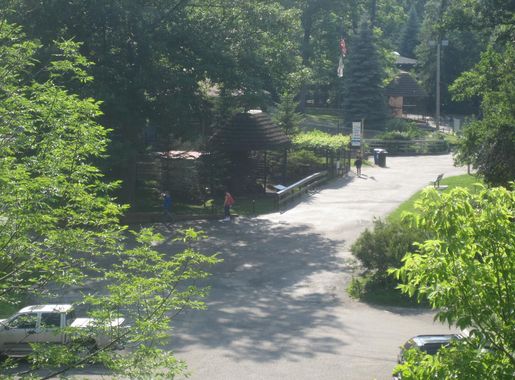

Mid-Michigan: The Heart of the Great Lakes State
Mid-Michigan is the central region of the state of Michigan, known for its natural beauty, vibrant communities, and rich cultural heritage. This area offers a perfect blend of urban and rural experiences, making it an ideal destination for tourists looking to explore the Great Lakes State. Lansing, the state capital, is located in Mid-Michigan and offers a variety of attractions including the Michigan State Capitol building, numerous museums, and Michigan State University. The university's sprawling campus is home to beautiful botanical gardens, art galleries, and sports events that draw visitors from all over. Nature enthusiasts will find plenty to love in Mid-Michigan. The region is dotted with beautiful parks, rivers, and lakes ideal for hiking, fishing, and boating. Sleepy Hollow State Park and Lake Lansing are popular spots for outdoor activities and picnics. Additionally, the area is known for its scenic drives, especially during the fall when the foliage transforms into a stunning array of colors. Mid-Michigan is also rich in cultural and historical sites. The town of Frankenmuth, often called 'Michigan's Little Bavaria,' offers a unique German-themed experience complete with traditional architecture, food, and festivals. For a step back in time, visit the historic town of Eaton Rapids or the fascinating R.E. Olds Transportation Museum in Lansing. No visit to Mid-Michigan would be complete without exploring its local cuisine. The region boasts a variety of dining options from farm-to-table restaurants to classic American diners. Be sure to try some of the local specialties, including Michigan cherry pie and fresh Great Lakes fish dishes.