

Tipova Monastery Complex Travel Guide - Free Web & App
Your ultimate guide to Tipova Monastery Complex. Discover top landmarks, proposed trips, and local tips. Free on the web or via the Evendo companion app.


Tipova Monastery Complex in Moldova reveals rock-cut Orthodox churches, forest paths, Dniester Valley views and waterfalls near rural Țipova.
A Monastery Carved into the Valley
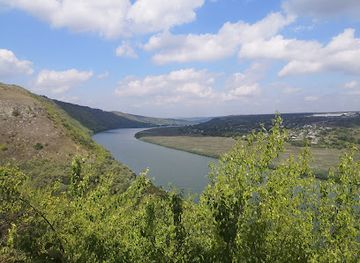
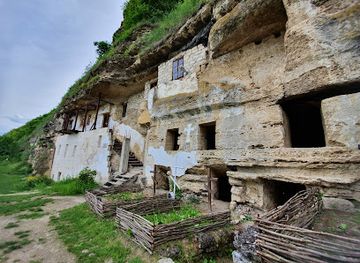
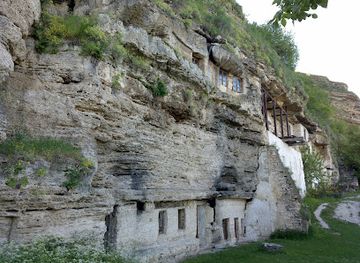
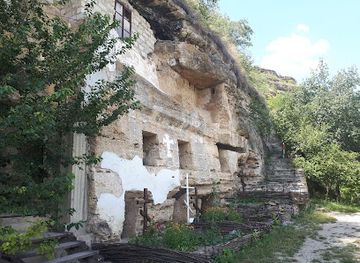
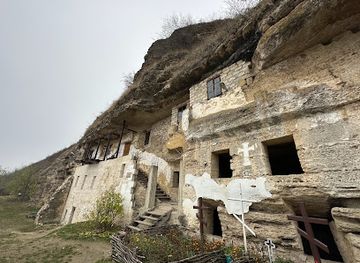
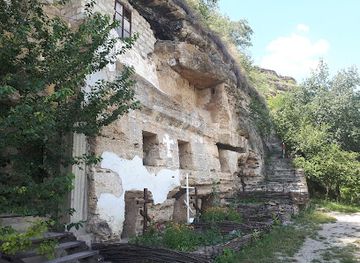
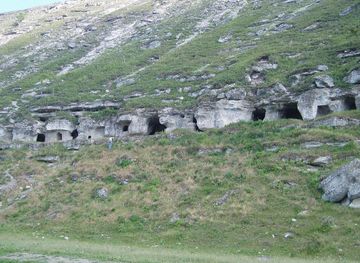
Tipova Monastery Complex occupies a dramatic limestone escarpment above the Dniester River in northern-central Moldova, near the village of Țipova in Rezina District. Rather than standing as a single monumental building, the monastery is a series of rock-cut churches, cells and passages set into the cliff face, reached by paths descending through woodland and open valley landscape. The setting is as important as the architecture: from the slopes, the Dniester appears far below, while the surrounding countryside is shaped by ravines, limestone outcrops and the winding Tipova River.Read more about Tipova Monastery Complex
Faith, Landscape and Local Memory
Exploring Țipova
When is the best time to visit Tipova Monastery Complex?
Best: June–August · 24–26°C| Month | High (°C) | Rainfall (mm) |
|---|---|---|
| January | 3 | 23 |
| February | 4 | 18 |
| March | 9 | 24 |
| April | 15 | 32 |
| May | 20 | 39 |
| June (best) | 24 | 49 |
| July (best) | 26 | 51 |
| August (best) | 26 | 45 |
| September | 22 | 37 |
| October | 16 | 31 |
| November | 8 | 27 |
| December | 3 | 24 |
Getting to and around Tipova Monastery Complex
How to get there
Transportation
Best attractions in Tipova Monastery Complex
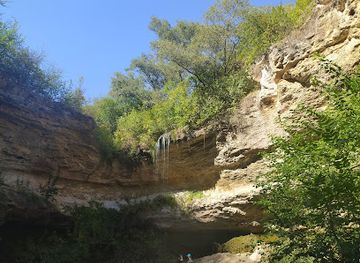
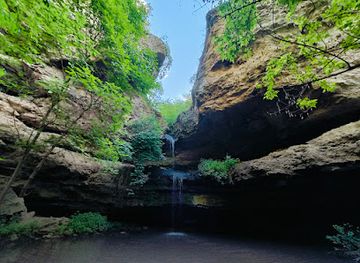
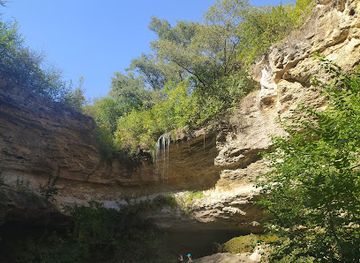
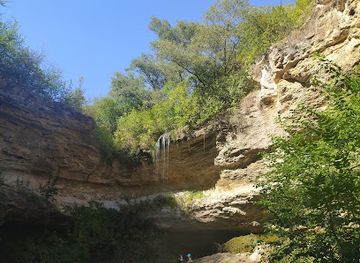
The principal attraction is the rock-cut monastery itself, where narrow paths lead to cave churches, monastic cells and carved chambers embedded in the limestone escarpment above the Dniester. The Church of the Assumption of the Virgin is the best-known worship space, while other cave sanctuaries and passages reveal how the complex grew in stages. Outside the religious precinct, the landscape supplies much of the visit’s character: the Dniester valley opens into broad rural views, and the Tipova River forms a series of small waterfalls and ravines below the settlement. Woodland paths connect the monastery with quieter sections of the valley, though their condition can vary. The surrounding village of Țipova is a rural community rather than a developed tourist centre, so visitors should expect a landscape-based excursion with limited services. Rezina, outside the immediate complex, is the nearest district hub for practical needs and for continuing journeys through the Dniester countryside.
-
Nature preserve
Tipova Waterfall
Experience the breathtaking beauty of Tipova Waterfall, a serene natural preserve in Moldova, perfect for nature lovers and adventure seekers.
-
Nature preserve
Cascada Țipova
Explore the enchanting Cascada Ţipova in Moldova, where breathtaking waterfalls and lush landscapes await nature lovers and adventure seekers alike.
-
Tourist attraction
Belvedere Țîpova
Explore the breathtaking vistas and rich history at Belvedere Țipova, a hidden gem in Moldova's stunning natural landscape.
-
Nature preserve
Țâpova
Explore the serene beauty of Țâpova, a nature preserve in Moldova, where lush landscapes and rich biodiversity await your discovery.

Best landmarks in Tipova Monastery Complex
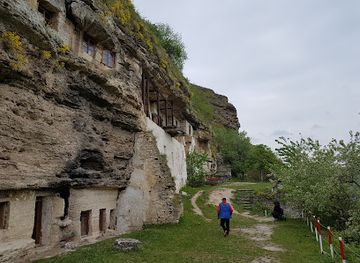
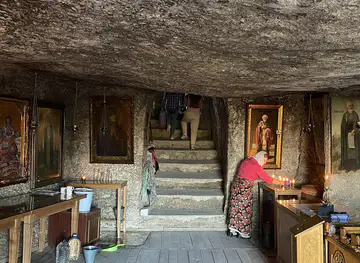
The defining landmark is the cliff face containing Tipova’s Orthodox cave monastery, a rare architectural landscape in which chapels, cells and passages follow the natural strata of the limestone rather than forming a conventional freestanding church complex. The Church of the Assumption of the Virgin is the site’s most recognised sanctuary, while the cave churches associated with the Exaltation of the Holy Cross and Saint Nicholas reflect the complex’s layered religious history. The escarpment itself is inseparable from the monument: it overlooks the Dniester and gives the monastery its secluded character. Below, the Tipova River’s ravines and waterfalls provide a natural counterpoint to the carved interiors. Together, the cliff, caves, river valley and wooded slopes form a cultural landscape whose significance lies in the relationship between Orthodox devotion and the surrounding terrain.
-
Monastery
Tipova Monastery
Explore Moldova's ancient Tipova Monastery: a stunning cave complex carved into cliffs overlooking the Dniester River, rich in history and legend.
-
Attraction
Rocky monastery of Tipova
Explore Tipova Monastery, an ancient cave complex in Moldova, offering history, stunning views, and a peaceful escape.
-
Nature preserve
Tipova Waterfall
Discover the serene beauty of Tipova Waterfall in Moldova, a hidden gem surrounded by lush landscapes and ancient history.
-
Nature preserve
Cascada Țipova
Discover Moldova's hidden gem: breathtaking waterfalls, lush landscapes, and serene nature at Cascada Țipova.
Explore Tipova Monastery Complex on the map
Plan your trip on one map. See where the top attractions, landmarks, restaurants and hotels are, and book hotels and experiences in a few clicks.
Best hotels in Tipova Monastery Complex
Best shops in Tipova Monastery Complex
Shopping at Tipova is limited and should not be confused with a commercial tourist centre. The village and monastery area may offer only modest local provisions or occasional religious souvenirs, while a broader selection of food, practical supplies and gifts is more likely in Rezina or larger towns along the route. Visitors interested in regional products can look for Moldovan wine, honey, fruit preserves, walnuts, embroidered textiles, ceramics and handmade household goods in established markets, wineries, farm shops or craft outlets elsewhere in the country, subject to seasonal availability. Chișinău and Orhei provide more dependable opportunities to browse local food products and crafts. Buying directly from small producers can support rural households, but visitors should distinguish genuinely local goods from generic souvenirs and should not expect permanent market stalls at the monastery.
-
Monastery
Tipova Monastery
Experience the majestic beauty and spiritual tranquility of Tipova Monastery, a hidden gem in Moldova's breathtaking landscape.
-
Attraction
Rocky monastery of Tipova
Discover the breathtaking Rocky Monastery of Tipova, a cultural gem nestled along the Nistru River, showcasing Moldova's rich history and stunning landscapes.
-
Nature preserve
Tipova Waterfall
Experience the breathtaking beauty of Tipova Waterfall, a natural wonder nestled in the heart of Moldova's stunning landscapes.
-
Nature preserve
Cascada Țipova
Explore the breathtaking Cascada Țipova, a nature preserve in Moldova with stunning waterfalls, lush greenery, and rich cultural history.
Get your free copy of our complete guide to Tipova Monastery Complex, delivered straight to you.
Everything on this page, from attractions and restaurants to essentials and local phrases, in one PDF you can read offline, print or share.
Already have an account? Sign in
Your Tipova Monastery Complex guide is ready.
We'll send it to · Not you? Sign out

Getting your guide ready…
We are putting together a fresh copy of the Tipova Monastery Complex guide. This can take up to a minute.
This can take a few moments. If your browser asks, choose Allow so the download can start. You'll find the guide in your Downloads folder.
Nothing happened? Download it again
Sorry, the guide is taking longer than usual. Please try again in a minute, or get it by email instead.
Tipova Monastery Complex essentials
Currency and Payment
Safety
Emergency Situations
Do's and Don'ts
Local Tips
From Eve
Local phrases worth knowing
You don't need to get them perfect. A few words go a long way, and locals appreciate the effort.
Basics
| English | Local | Say it |
|---|---|---|
| Hello | Bună ziua | [Boo-nuh zee-wah] |
| Goodbye | La revedere | [La reh-veh-deh-reh] |
| Yes | Da | [Dah] |
| No | Nu | [Noo] |
| Please/You're welcome | Te rog | [Teh rohg] |
| Thank you | Mulțumesc | [Mool-tsoo-mesk] |
| Excuse me/Sorry | Scuzați-mă | [Skoo-zahtz mah] |
| How are you? | Cum ești? | [Koom esht] |
| Fine. And you? | Bine. Și tu? | [Bee-neh. Shee too] |
| Do you speak English? | Vorbiți engleză? | [Vor-beetz een-gleh-zuh] |
| I don't understand | Nu înțeleg | [Noo in-tseh-leg] |
Eating & Drinking
| English | Local | Say it |
|---|---|---|
| I'd like to see the menu, please | Aș dori să văd meniul, vă rog | [Ush doh-ree suh vuhd meh-nyool, vuh rohg] |
| I don't eat meat | Nu mănânc carne | [Noo muh-nuhnk kahr-neh] |
| Cheers! | Noroc! | [No-rohk] |
| I would like to pay, please | Aș dori să plătesc, vă rog | [Ush doh-ree suh pluh-tesk, vuh rohg] |
Emergencies
| English | Local | Say it |
|---|---|---|
| Help! | Ajutor! | [Ah-zhoo-tohr] |
| Go away! | Du-te! | [Doo-teh] |
| Call the Police! | Sunați Poliția! | [Soo-nahts Poh-leet-zee-ah] |
| Call a doctor! | Sunați un doctor! | [Soo-nahts oon dohk-tohr] |
| I'm lost | M-am rătăcit | [Mahm ruh-tuh-cheet] |
| I'm ill | Sunt bolnav | [Sooont bohl-nahv] |
Shopping
| English | Local | Say it |
|---|---|---|
| I'd like to buy... | Aș dori să cumpăr... | [Ush doh-ree suh koom-puhr] |
| I'm just looking | Doar mă uit | [Doh-ahr muh oweet] |
| How much is it? | Cât costă? | [Kaht kohs-tuh] |
| That's too expensive | Este prea scump | [Ehs-teh preh-ah skoomp] |
| Can you lower the price? | Puteți să scădeți prețul? | [Poo-tehtsuh suh skuh-dehts preh-tsool] |
Time & Numbers
| English | Local | Say it |
|---|---|---|
| What time is it? | Cât este ora? | [Kaht ye-steh oh-rah] |
| It's one o'clock | Este ora unu | [Ehs-teh oh-rah oo-noo] |
| Half past (10) | Zece și jumătate | [Zeh-cheh shi joo-muh-tah-teh] |
| Morning | Dimineața | [Dee-mee-neh-tsa] |
| Afternoon | După-amiază | [Doo-puh ah-mee-ah-zuh] |
| Evening | Seara | [Seh-ah-rah] |
| Yesterday | Ieri | [Yehr] |
| Today | Astăzi | [Ah-stuhz] |
| Tomorrow | Mâine | [Muh-yneh] |
| 1 | Unu | [Oo-noo] |
| 2 | Doi | [Doy] |
| 3 | Trei | [Trey] |
| 4 | Patru | [Pah-troo] |
| 5 | Cinci | [Cheen-chee] |
| 6 | Șase | [Shah-seh] |
| 7 | Șapte | [Shahp-teh] |
| 8 | Opt | [Opt] |
| 9 | Nouă | [Noo-uh] |
| 10 | Zece | [Zeh-cheh] |
Transport & Directions
| English | Local | Say it |
|---|---|---|
| Where's a/the...? | Unde este unul/una/...? | [Oon-deh ye-steh oo-noo/ooh-nah] |
| What's the address? | Care este adresa? | [Cah-reh ye-steh ah-dreh-sah] |
| Can you show me (on the map)? | Puteți să-mi arătați (pe hartă)? | [Poo-tehtsuh suh-mee ah-rah-tahts (peh hahr-tuh)] |
| When's the next (bus)? | Când este următorul (autobuz)? | [Kuhnd ye-steh oor-muh-toh-rool (ow-toh-booze)] |
| A ticket (to ....) | Un bilet (spre ....) | [Oon bee-let (spreh)] |
History of Tipova Monastery Complex
A Cave Monastery’s Early Origins
The origins of monastic settlement at Țipova are not documented with complete certainty. Local tradition places religious activity in the cliffs as early as the medieval period, while the surviving cave spaces appear to have been enlarged and adapted over successive centuries. The limestone escarpment offered seclusion, shelter and a practical setting for Orthodox monks, whose cells and chapels could be created directly in the rock. As with several cave monasteries in the region, later legends connect the complex with important medieval rulers, but these associations should be treated as tradition rather than firmly established fact.
Expansion of the Rock-Cut Churches
The monastery developed as a group of interconnected religious spaces rather than a single construction project. Different cave churches and chambers are commonly associated with medieval and early modern phases, including the churches dedicated to the Exaltation of the Holy Cross, Saint Nicholas and the Assumption of the Virgin. Carving, rebuilding and adaptation responded to the needs of the monastic community and to changing patterns of religious life. The result is an architectural landscape in which narrow passages, cells and worship spaces remain closely tied to the natural form of the cliff.
Monastic Life and Regional Change
For centuries, Țipova belonged to the religious and rural world of the Dniester region, where monasteries served both spiritual communities and wider settlements. Its isolated position helped preserve a contemplative character, but the institution was also affected by the political changes that passed through historic Moldavia and later Bessarabia. Periods of state control and wider secularisation in the Soviet era disrupted traditional religious life at many Moldovan monasteries, including remote cave foundations. The site’s physical survival, however, kept its historical importance visible in the landscape.
Revival and Heritage Interest
Following the restoration of religious freedoms in independent Moldova, Orthodox activity and visitor interest at Țipova increased. The complex is now valued simultaneously as a place of worship, a monument of rock-cut architecture and a rural cultural attraction. Conservation remains challenging because the churches and cells are integrated into exposed limestone cliffs, while paths and surrounding habitats require careful management. Modern visitors encounter a living religious site rather than a detached archaeological ruin, and respectful access is part of preserving its character.
Tipova Monastery Complex in Photos
Browse through our photo collection highlighting the charm and character of the destination.
Neighbouring destination travel guides
The closest destinations to Tipova Monastery Complex, if you have time for more than one.
-

-

-

-

-


Swipe for more destinations
Explore more
Explore more of Orhei County
Explore Orhei County in Moldova for Orheiul Vechi, limestone valleys, monasteries, vineyards and quiet rural landscapes near Chişinău.
Explore Orhei County
Explore more of Moldova
Discover Moldova: A tranquil haven of rich history, stunning vineyards, and captivating natural landscapes, perfect for an off-the-beaten-path European adventure.
Explore Moldova