

Giethoorn Travel Guide - Free Web & App
Your ultimate guide to Giethoorn. Discover top landmarks, proposed trips, and local tips. Free on the web or via the Evendo companion app.


Giethoorn, Netherlands, pairs thatched farmhouses and wooden bridges with quiet canals, boat trips, village heritage and the wetlands of Weerribben-Wieden.
A Village Shaped by Water
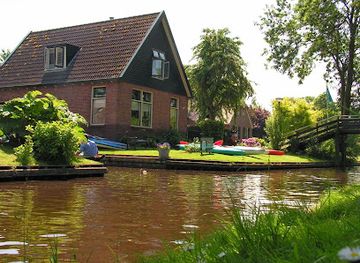
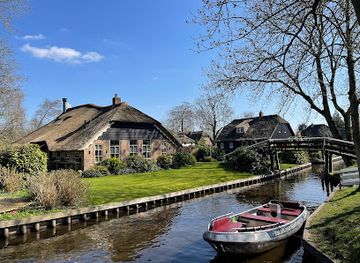
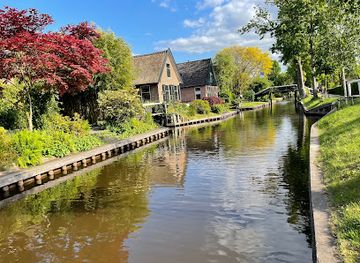
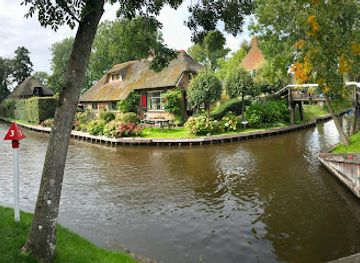
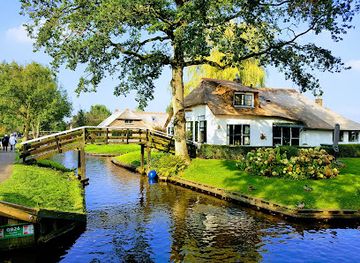
Giethoorn lies in the Dutch province of Overijssel, within the low-lying wetland landscape of the Kop van Overijssel. Its historic village centre is defined by narrow canals, arched wooden bridges, reed-fringed waterways and long farmhouses with thatched roofs. Cars are largely absent from the oldest central area, where footpaths and cycleways follow the water and small boats provide the most characteristic way to move between houses, gardens and open countryside. The village is often called the 'Venice of the Netherlands', but its character is distinctly rural: Giethoorn developed from peat-land settlement and farming rather than from a grand mercantile tradition.Read more about Giethoorn
Village Heritage and Wetland Landscape
Exploring Giethoorn
When is the best time to visit Giethoorn?
Best: June–August · 23–25°C| Month | High (°C) | Rainfall (mm) |
|---|---|---|
| January | 6 | 60 |
| February | 6 | 50 |
| March | 10 | 50 |
| April | 15 | 40 |
| May | 20 | 50 |
| June (best) | 23 | 70 |
| July (best) | 25 | 80 |
| August (best) | 25 | 70 |
| September | 20 | 50 |
| October | 16 | 60 |
| November | 10 | 70 |
| December | 7 | 70 |
Getting to and around Giethoorn
How to get there
Transportation
Best attractions in Giethoorn
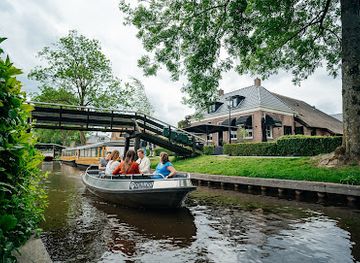
Giethoorn's principal attraction is its historic canal village, where the Binnenpad leads past thatched farmhouses, wooden footbridges, gardens and narrow waterways. A small boat, guided cruise or canoe offers a different perspective on the settlement, although visitors should distinguish the lived-in canals from open recreational waters. Museum Giethoorn 't Olde Maat Uus explains local farming, peat cutting, domestic life and the village's development as a visitor destination. Beyond the centre, cycleways and country lanes extend towards meadows, reedbeds and lakes in the De Wieden wetland landscape, part of the wider Weerribben-Wieden region. The nearby nature offers opportunities for quiet walking, cycling, birdwatching and water-based exploration rather than a dense collection of conventional attractions. Seasonal exhibitions, boat excursions and local cultural activities may add to the programme, but availability varies and should be checked locally.
-
Tourist attraction
Gloria Maris Giethoorn
Experience the serene beauty and local craftsmanship at Gloria Maris Giethoorn, a must-see destination for tourists exploring the Dutch countryside.
-
Tourist attraction
Kunstgalerie Afrika
Immerse yourself in vibrant African art amidst the serene landscapes of Giethoorn's Kunstgalerie Afrika, a perfect blend of culture and nature.
-
Tourist attraction
M.S. van den Heuvel Botenverhuur
Discover the scenic beauty of Giethoorn with M.S. van den Heuvel Botenverhuur - your gateway to unforgettable boating adventures.
-
Church
Grote of MariaKerk
Discover the architectural beauty and rich history of the Grote of MariaKerk in Meppel, a must-visit destination for travelers exploring the Netherlands.


Best landmarks in Giethoorn
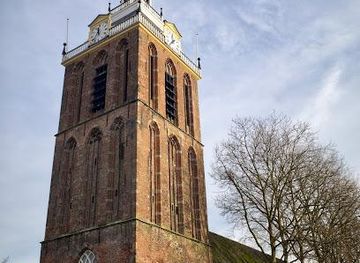
The canals and wooden bridges of Giethoorn form its defining human-made landmark, expressing the village's development in a peat-rich wetland where water transport was once fundamental. The thatched farmhouses along the Binnenpad and adjoining waterways are significant for their relationship to traditional rural settlement, narrow plots and local building practice. Museum Giethoorn 't Olde Maat Uus is an important cultural landmark because it records domestic life, farming and the industries that shaped the community. Beyond the inhabited centre, the reedbeds, open lakes and low meadows of De Wieden represent the wider landscape identity of Giethoorn: a water world created through both natural processes and long-term human management. Individual bridges, waterways and farmsteads are best understood as parts of this connected village landscape rather than isolated monuments.
-
Local history museum
Museum Giethoorn 't Olde Maat Uus
Explore the rich heritage of Giethoorn at Museum Giethoorn 't Olde Maat Uus, a charming local history museum that captures the essence of this picturesque village.
-
Tourist attraction
Giethoorn Center
Experience the serene beauty of Giethoorn Center, a car-free village in the Netherlands, known for its enchanting canals and charming thatched-roof houses.
-
Tourist attraction
Giethoorn Netherlands
Experience serene canals and charming thatched-roof cottages in Giethoorn, a picturesque village known as the 'Venice of the North' in the Netherlands.
-
Store
Gloria Maris Giethoorn
Explore the heart of Giethoorn at Gloria Maris, where local crafts and the charm of Dutch culture await every visitor.
Explore Giethoorn on the map
Plan your trip on one map. See where the top attractions, landmarks, restaurants and hotels are, and book hotels and experiences in a few clicks.
Best hotels in Giethoorn
Best restaurants in Giethoorn
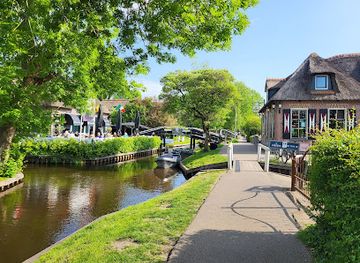
Giethoorn's dining options are concentrated along and near the main canals, village lanes and visitor approaches, with restaurants, cafés, terraces and traditional Dutch-style eateries serving people exploring by foot or boat. Menus commonly draw on familiar regional and national fare such as bread-based lunches, soups, pancakes, fish, dairy products and seasonal ingredients, while international choices are also available in this highly visited village. The surrounding wetland setting has historically been linked to fishing, reed harvesting and farming, although not every dish marketed locally should be assumed to be a traditional Giethoorn speciality. Visitors staying in quieter rural accommodation may find that food is available only at designated establishments or requires a short journey towards a larger settlement. Booking ahead can be sensible at busy times, particularly for canal-side dining, while cafés and village shops provide simpler provisions for walks and boat trips.
-
Italian
Ristorante Fratelli
Experience authentic Italian cuisine at Ristorante Fratelli in Giethoorn – where every meal is a celebration of flavors amidst scenic beauty.
-
Restaurant
Grachthof Giethoorn | Restaurant & Bootverhuur
Experience exquisite dining and scenic boat rentals at Grachthof Giethoorn, nestled in the heart of Holland's enchanting canal village.
-
Restaurant
Grand Café Fanfare
Savor local flavors at Grand Café Fanfare in Giethoorn - a culinary gem amidst scenic canals.
-
Restaurant
Smit's Paviljoen
Experience delightful Dutch cuisine at Smit's Paviljoen while enjoying scenic boat rentals in the picturesque village of Giethoorn.

Best bars in Giethoorn
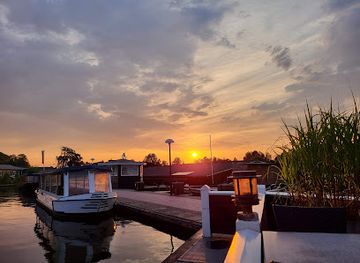
Giethoorn is not a nightlife destination, and its evening character is shaped by quiet canals, village restaurants, accommodation lounges and traditional cafés rather than nightclubs or a concentrated bar district. Some hospitality venues serve beer, wine and spirits alongside meals, while terraces can be pleasant during lighter summer evenings, but opening patterns and seasonal availability vary. The absence of heavy urban traffic gives the historic centre a subdued atmosphere after daytime visitors leave; visitors should still respect residents and keep noise low along the waterways. Those seeking a broader choice of late-evening entertainment are more likely to find it in larger towns elsewhere in Overijssel, while Giethoorn itself suits relaxed dinners, drinks and walks near the canals.
-
Restaurant
Grachthof Giethoorn | Restaurant & Bootverhuur
Experience delightful dining and scenic boat rentals at Grachthof Giethoorn, where culinary flavors meet the serenity of Giethoorn's waterways.
-
Restaurant
Grand Café Fanfare
Discover the flavors of Giethoorn at Grand Café Fanfare, where local cuisine meets serene canal views in a charming atmosphere.
-
 Restaurant
Smit's Paviljoen
Discover the charm of Giethoorn with exquisite dining at Smit's Paviljoen, your gateway to culinary delights and stunning canal views.
-
Italian
La Piccola Venezia
Experience authentic Italian cuisine at La Piccola Venezia, a culinary gem in the picturesque village of Giethoorn, known for its enchanting canals.
Best nightclubs in Giethoorn
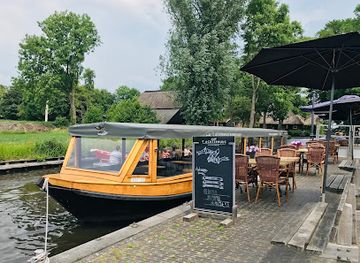
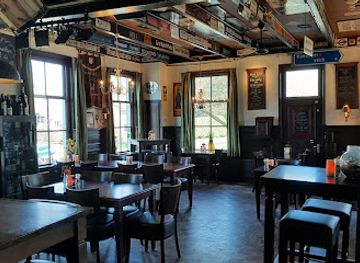
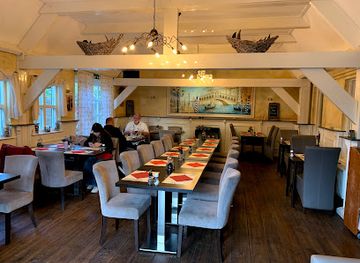
Giethoorn is not a nightlife destination, and its evening character is shaped by quiet canals, village restaurants, accommodation lounges and traditional cafés rather than nightclubs or a concentrated bar district. Some hospitality venues serve beer, wine and spirits alongside meals, while terraces can be pleasant during lighter summer evenings, but opening patterns and seasonal availability vary. The absence of heavy urban traffic gives the historic centre a subdued atmosphere after daytime visitors leave; visitors should still respect residents and keep noise low along the waterways. Those seeking a broader choice of late-evening entertainment are more likely to find it in larger towns elsewhere in Overijssel, while Giethoorn itself suits relaxed dinners, drinks and walks near the canals.
-
Restaurant
Grand Café Fanfare
Discover the delightful flavors of Giethoorn at Grand Café Fanfare, a culinary haven surrounded by picturesque canals and charming scenery.
-
Adult entertainment club
Sexclub Cilver
Discover the thrilling nightlife of Meppel at Sexclub Cilver, where vibrant entertainment meets a welcoming atmosphere for adult visitors.
-
Cafe
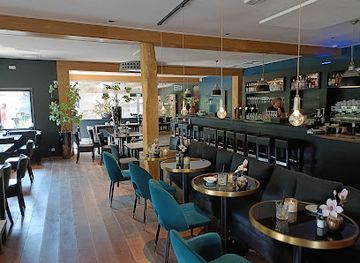
Delirium Bar & Dancing Steenwijk
Discover Steenwijk's vibrant nightlife at Delirium Bar & Dancing, where fun, music, and great drinks come together in an unforgettable experience.

Best shops in Giethoorn
Shopping in Giethoorn is modest and largely directed towards visitors rather than built around a conventional high street. Small shops and hospitality businesses near the historic centre may offer souvenirs, postcards, local food products, Dutch gifts, artwork and practical items for a day outdoors, while village and regional producers reflect the agricultural and wetland character of Overijssel. The most distinctive purchases are likely to be locally themed crafts, photographs, decorative goods and regional provisions rather than luxury retail. Visitors should not expect an extensive permanent market or a large concentration of independent boutiques. For broader everyday shopping, supermarkets, specialist retailers and other services are more readily found in nearby towns such as Steenwijk, outside Giethoorn's historic core.
-
Supermarket
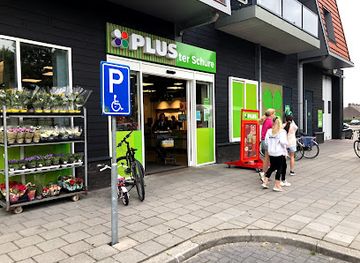
PLUS Giethoorn
Experience the essence of Giethoorn's local flavors at PLUS Giethoorn, your go-to supermarket for fresh produce and Dutch specialties.
-
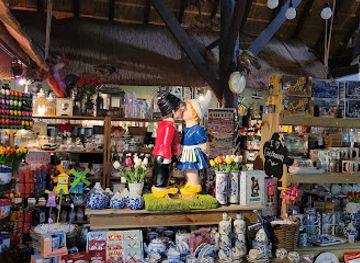
Gift shop
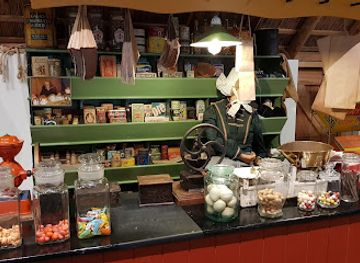
Museum Giethoorn 't Olde Maat Uus
Explore the rich cultural heritage of Giethoorn at Museum 't Olde Maat Uus, where history and craftsmanship come alive in a charming setting.
-
Store
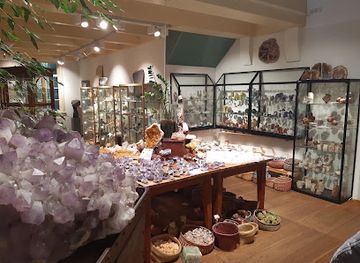
Museum De Oude Aarde
Discover the Earth's treasures at Museum De Oude Aarde in Giethoorn, featuring stunning minerals, fossils, and engaging exhibits for all ages.
-
Tourist attraction
Giethoorn Center
Experience the enchanting canals and serene beauty of Giethoorn Center, a hidden gem in the heart of the Netherlands.
Get your free copy of our complete guide to Giethoorn, delivered straight to you.
Everything on this page, from attractions and restaurants to essentials and local phrases, in one PDF you can read offline, print or share.
Already have an account? Sign in
Your Giethoorn guide is ready.
We'll send it to · Not you? Sign out

Getting your guide ready…
We are putting together a fresh copy of the Giethoorn guide. This can take up to a minute.
This can take a few moments. If your browser asks, choose Allow so the download can start. You'll find the guide in your Downloads folder.
Nothing happened? Download it again
Sorry, the guide is taking longer than usual. Please try again in a minute, or get it by email instead.
Giethoorn essentials
Currency and Payment
Safety
Emergency Situations
Do's and Don'ts
Local Tips
From Eve
Local phrases worth knowing
You don't need to get them perfect. A few words go a long way, and locals appreciate the effort.
Basics
| English | Local | Say it |
|---|---|---|
| Hello | Hallo | [hah-loh] |
| Goodbye | Doei | [doo-i] |
| Yes | Ja | [yah] |
| No | Nee | [nay] |
| Please/You're welcome | Alsjeblieft | [ahls-yuh-bleeft] |
| Thank you | Dank je | [dahnk yuh] |
| Excuse me/Sorry | Sorry | [soh-ree] |
| How are you? | Hoe gaat het? | [hoo gah-t het] |
| Fine. And you? | Goed. En met jou? | [khoot. en met yow] |
| Do you speak English? | Spreek je Engels? | [sprek yuh ang-uhls] |
| I don't understand | Ik begrijp het niet | [ik buh-gryp het neet] |
Eating & Drinking
| English | Local | Say it |
|---|---|---|
| I'd like to see the menu, please | Ik wil graag de menukaart zien, alsjeblieft | [ik vil khrahkh duh meh-noo-kahrt seen, ahls-yuh-bleeft] |
| I don't eat meat | Ik eet geen vlees | [ik ayt khayn flays] |
| Cheers! | Proost! | [prohst] |
| I would like to pay, please | Ik wil graag betalen, alsjeblieft | [ik vil khrahkh buh-tah-luhn, ahls-yuh-bleeft] |
Emergencies
| English | Local | Say it |
|---|---|---|
| Help! | Help! | [help] |
| Go away! | Ga weg! | [gah vekh] |
| Call the Police! | Bel de politie! | [bel duh poh-lee-see] |
| Call a doctor! | Bel een dokter! | [bel ayn dohk-tuhr] |
| I'm lost | Ik ben verdwaald | [ik ben vuhr-dwahlt] |
| I'm ill | Ik ben ziek | [ik ben zik] |
Shopping
| English | Local | Say it |
|---|---|---|
| I'd like to buy... | Ik wil graag kopen... | [ik vil khrahkh koh-pen] |
| I'm just looking | Ik kijk alleen maar | [ik kayk ayluhn mahr] |
| How much is it? | Hoeveel kost het? | [hoo-veyl kost het] |
| That's too expensive | Dat is te duur | [daht is tuh dyur] |
| Can you lower the price? | Kan je de prijs verlagen? | [kahn yuh duh preys vuh-rah-ghun] |
Time & Numbers
| English | Local | Say it |
|---|---|---|
| What time is it? | Hoe laat is het? | [hoo laht is het] |
| It's one o'clock | Het is een uur | [het is ayn oor] |
| Half past (10) | Half elf | [hahlf elf] |
| Morning | Ochtend | [ohk-tuhnt] |
| Afternoon | Middag | [mi-dahkh] |
| Evening | Avond | [ah-vohnt] |
| Yesterday | Gisteren | [khis-tuh-ruhn] |
| Today | Vandaag | [vahn-dahkh] |
| Tomorrow | Morgen | [mohr-khun] |
| 1 | Een | [ayn] |
| 2 | Twee | [tweh] |
| 3 | Drie | [dree] |
| 4 | Vier | [feer] |
| 5 | Vijf | [fayf] |
| 6 | Zes | [zehs] |
| 7 | Zeven | [zay-vuhn] |
| 8 | Acht | [ahkh-t] |
| 9 | Negen | [nay-ghun] |
| 10 | Tien | [teen] |
Transport & Directions
| English | Local | Say it |
|---|---|---|
| Where's a/the...? | Waar is een/de...? | [vahr is ayn/deh] |
| What's the address? | Wat is het adres? | [vaht is het ah-drehs] |
| Can you show me (on the map)? | Kan je me (op de kaart) laten zien? | [kahn yuh meh (op deh kahrt) lah-tuhn seen] |
| When's the next (bus)? | Wanneer is de volgende (bus)? | [vahn-ehr is deh fohl-huhn-duh bus] |
| A ticket (to ....) | Een kaartje (naar ....) | [ayn kahrt-yuh (nahr)] |
History of Giethoorn
Peat, Water and Early Settlement
Giethoorn developed in a landscape of peat, shallow lakes and waterlogged ground in the northern part of Overijssel. The exact origins of the settlement's name and earliest community are discussed in local tradition, but the village's physical form clearly reflects the demands of peat extraction and wetland farming. Channels were dug to drain and transport peat, while narrow strips of land between waterways became sites for houses, barns and small fields. Over time, these linear settlements produced the canals, footpaths and bridges that still define the historic centre.
A Farming and Peat-Cutting Community
For centuries, local livelihoods combined peat cutting with dairy farming, reed harvesting, fishing and small-scale agriculture. The removal of peat contributed to the formation and expansion of nearby water bodies, while settlement patterns remained closely linked to the canals. Traditional farmhouses were built along the waterways, often with thatched roofs and long, narrow plots behind them. The surrounding landscape was therefore not untouched wilderness but a working wetland shaped by generations of residents, drainage, cultivation and water transport.
Water Management and Changing Landscapes
As peat extraction altered the ground and created vulnerable water landscapes, drainage, embankments and other forms of water management became increasingly important. The wider area around Giethoorn contains a close relationship between settlements, agricultural land, reedbeds and open water. In the twentieth century, changing economic conditions reduced the importance of peat cutting and traditional wetland industries, while conservation gained greater prominence. The protection of the surrounding wetland habitats helped preserve landscapes that had long been modified and maintained by local communities.
Tourism and the Modern Village
Giethoorn's canals, bridges and thatched houses gradually attracted visitors looking for a distinctive Dutch village landscape. Tourism brought boat hire, restaurants, museums and guest accommodation, while the historic core retained its residential character. The village became internationally recognisable through photography and travel media, creating pressure during busy periods on narrow paths, waterways and local services. Today, tourism exists alongside everyday life, conservation and water management, making responsible behaviour particularly important in the inhabited centre and the surrounding wetland environment.
Giethoorn in Photos
Browse through our photo collection highlighting the charm and character of the destination.
Neighbouring destination travel guides
The closest destinations to Giethoorn, if you have time for more than one.
-

-

-

-

-


Swipe for more destinations
Explore more
Explore more of Noordoostpolder
Experience the serene landscapes, vibrant tulip fields, and rich history of Noordoostpolder - a reclaimed gem in the heart of the Netherlands.
Explore Noordoostpolder
Explore more of Netherlands
Discover the Netherlands: A blend of historic charm, artistic treasures, and scenic landscapes, perfect for an enriching travel experience.
Explore Netherlands