

Brooklyn (New York City) Travel Guide - Free
Explore Brooklyn in New York City with Evendo's free guide. Find the best shops, historic streets, restaurants, and gems on web or mobile.


Brooklyn, New York City, blends brownstone streets, waterfront parks, global food, street art, live music and landmark bridges across its diverse borough.
A Borough of Distinct Neighbourhoods
\n\nBrooklyn is a borough rather than a single compact neighbourhood, and its scale is central to its character. Across the East River from Manhattan, it stretches from the old harbour districts of Brooklyn Heights and DUMBO to the broad beaches of Coney Island, the leafy streets of Prospect Park South, the industrial waterfront of Red Hook and the apartment-lined avenues of Sunset Park and Bay Ridge. Each area has its own rhythm, architecture and cultural history, yet together they form one of New York City's most varied urban landscapes.\n\nStreets, Parks and Waterfronts
\n\nBrownstone terraces provide Brooklyn's most recognisable streetscape, particularly in Brooklyn Heights, Cobble Hill, Boerum Hill, Fort Greene, Park Slope and Bedford-Stuyvesant. Their stoops, mature trees and formal façades contrast with the converted warehouses of DUMBO, the row houses of Bay Ridge and the working maritime character still visible around Red Hook. Prospect Park, designed by Frederick Law Olmsted and Calvert Vaux, is the borough's principal green space, while Brooklyn Bridge Park, Coney Island Beach and the waterfront promenades offer different ways to experience the harbour and skyline.\n\nCulture and Everyday Life
\n\nBrooklyn's cultural identity is shaped by long-established African American, Caribbean, Latin American, Jewish, Italian, Arab, Chinese and South Asian communities, alongside newer creative and professional populations. That mix appears in restaurants, bakeries, religious institutions, music venues, street festivals and independent shops. The Brooklyn Museum, Brooklyn Academy of Music, Barclays Center and Brooklyn Botanic Garden provide major cultural anchors, while neighbourhood cafés, delis, music rooms and small galleries reveal the borough's everyday life. Exploring Brooklyn means moving between local worlds rather than ticking off a single central district.Best attractions in Brooklyn
Brooklyn's attractions range from landmark waterfronts to major cultural institutions and highly individual neighbourhood streets. Brooklyn Bridge Park and the Brooklyn Heights Promenade offer expansive views of Manhattan, while DUMBO's cobbled streets and converted industrial buildings frame the Brooklyn and Manhattan bridges. Prospect Park provides meadows, woodland, the Long Meadow, the lake and the restored boathouse, with Brooklyn Botanic Garden and the Brooklyn Museum immediately beside it. The Brooklyn Museum presents extensive art collections, and the Brooklyn Academy of Music anchors a longstanding performing-arts district in Fort Greene. Coney Island combines a sandy beach and boardwalk with Luna Park and the New York Aquarium, while Green-Wood Cemetery offers landscaped paths, historic monuments and views across the city. Smaller-scale attractions include Red Hook's waterfront streets, the Brooklyn Navy Yard's industrial heritage and the diverse commercial corridors of Sunset Park, Bay Ridge and Bedford-Stuyvesant.
-
Bridge
Brooklyn Bridge
Experience breathtaking views and rich history at the iconic Brooklyn Bridge, connecting Manhattan and Brooklyn in the heart of New York City.
22 min drive · 7.4 km from neighbourhood centre
-
Park
Brooklyn Bridge Park
Experience the breathtaking views and vibrant atmosphere of Brooklyn Bridge Park, a premier urban oasis in New York City.
21 min drive · 7.0 km from neighbourhood centre
-
Park
Prospect Park
Explore the natural beauty and vibrant culture of Prospect Park, Brooklyn's ultimate urban oasis for relaxation and outdoor adventures.
6 min drive · 2.0 km from neighbourhood centre
-
Botanical garden
Brooklyn Botanic Garden
Explore the serene beauty of Brooklyn Botanic Garden, a stunning oasis of diverse plant collections and tranquil landscapes in the heart of Brooklyn.
7 min drive · 2.4 km from neighbourhood centre


Best landmarks in Brooklyn
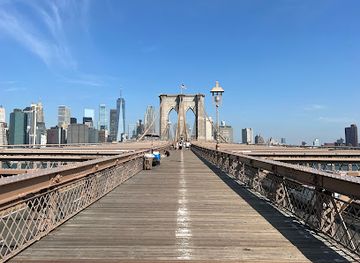
The Brooklyn Bridge is the borough's most recognisable structure, connecting Brooklyn and Manhattan with a stone-tower design and a raised pedestrian promenade opened in 1883. Brooklyn Heights contains one of New York's earliest historic districts, with rows of nineteenth-century houses and the Brooklyn Heights Promenade above the East River. Nearby, Brooklyn Bridge Park occupies former working waterfront land and preserves piers, warehouses and long views across the harbour. Green-Wood Cemetery is a major landscaped landmark whose monuments and elevated ground reflect nineteenth-century ideas about memorial parks. Prospect Park's Long Meadow, lake and boathouse form a landmark public landscape, while the Soldiers' and Sailors' Memorial Arch marks Grand Army Plaza. In central Brooklyn, the Brooklyn Museum and Brooklyn Botanic Garden represent the borough's longstanding investment in public culture, education and civic institutions.
-
Bridge
Brooklyn Bridge
Explore the historic Brooklyn Bridge, a stunning architectural masterpiece connecting Manhattan and Brooklyn, offering breathtaking views of NYC.
22 min drive · 7.4 km from neighbourhood centre
-
Park
Brooklyn Bridge Park
Experience the beauty of Brooklyn Bridge Park, an urban oasis with stunning skyline views, recreational activities, and family-friendly spaces in New York City.
21 min drive · 7.0 km from neighbourhood centre
-
Botanical garden
Brooklyn Botanic Garden
Explore the enchanting beauty of Brooklyn Botanic Garden, a lush urban paradise featuring diverse plant collections and serene landscapes perfect for relaxation.
7 min drive · 2.4 km from neighbourhood centre
-
Historical place museum
Old Stone House of Brooklyn
Explore the Old Stone House, a historical museum in Brooklyn that celebrates the spirit of the Revolutionary War and local heritage.
12 min drive · 3.9 km from neighbourhood centre


Explore Brooklyn on the map
A handpicked selection of must-see spots in Brooklyn, mapped for you.
Best hotels in Brooklyn
Best restaurants in Brooklyn
Brooklyn's dining scene reflects the borough's long history of migration, manufacturing and neighbourhood commerce. Italian American restaurants and bakeries remain prominent in areas such as Bensonhurst and Bay Ridge, while Brighton Beach has strong Russian and Eastern European associations, Sunset Park is known for Chinese and Mexican food corridors, and Atlantic Avenue has long supported Middle Eastern and Mediterranean businesses. Jewish delis, Caribbean cooking, South Asian restaurants, modern bakeries, coffee shops and plant-based kitchens appear across the borough, often alongside produce markets and specialist grocers. Red Hook, Williamsburg, Cobble Hill, Crown Heights and Prospect Heights contain varied independent dining scenes, although particular venues and opening arrangements change frequently. Visitors will find the most revealing meals by treating Brooklyn's avenues as cultural corridors, where long-established family businesses sit alongside newer restaurants shaped by the borough's changing population and creative economy.
-
Restaurant
The River Café
Experience fine dining at The River Café with breathtaking views of Manhattan's skyline and exquisite seasonal cuisine.
21 min drive · 7.1 km from neighbourhood centre
-
Italian
Aurora Brooklyn
Discover Aurora Brooklyn: An enchanting Italian restaurant offering authentic cuisine in a beautiful garden setting in Williamsburg.
22 min drive · 7.4 km from neighbourhood centre
-
American
Olmsted
Discover Olmsted: A premier American restaurant in Prospect Heights serving innovative seasonal dishes in a charming setting.
10 min drive · 3.4 km from neighbourhood centre
-
Mediterranean
Black Iris
Experience authentic Mediterranean cuisine at Black Iris in Brooklyn - where every dish tells a story of tradition and flavor.
14 min drive · 4.6 km from neighbourhood centre


Best bars in Brooklyn
Brooklyn's nightlife is distributed across many districts rather than concentrated in one entertainment quarter. Williamsburg and Bushwick are associated with live music, dance venues, cocktail bars and late-night spaces, while Fort Greene and Prospect Heights combine bars with theatres, concert halls and restaurants. Downtown Brooklyn and the Barclays Center area become busy around performances and sporting events, whereas neighbourhoods such as Brooklyn Heights, Carroll Gardens, Bay Ridge and Ditmas Park generally offer a quieter selection of pubs, wine bars and local gathering places. Brooklyn Academy of Music presents theatre, dance, film and music in Fort Greene, and smaller venues across the borough support independent performers and DJs. Red Hook's evening scene is more limited and residential-industrial in character, with nightlife best understood as part of a wider waterfront visit rather than a dense bar district.
-
 Cocktail bar
Clover Club
Experience the charm of classic cocktails and delectable dishes at Clover Club, a premier cocktail bar in Brooklyn's Cobble Hill neighborhood.
16 min drive · 5.2 km from neighbourhood centre
-
Cocktail bar
Barely Disfigured
Discover Barely Disfigured, a unique cocktail bar in Carroll Gardens, Brooklyn, offering creative drinks and a vibrant atmosphere for an unforgettable experience.
15 min drive · 5.2 km from neighbourhood centre
-
Bar
The Three Diamond Door
Discover the charm of Bushwick at The Three Diamond Door, where casual vibes meet exceptional drinks in a lively bar setting.
19 min drive · 6.3 km from neighbourhood centre
-
Bar
Bearded Lady
Discover The Bearded Lady in Prospect Heights, Brooklyn: A lively bar offering unique cocktails and a taste of local culture.
10 min drive · 3.3 km from neighbourhood centre


Best nightclubs in Brooklyn
Brooklyn's nightlife is distributed across many districts rather than concentrated in one entertainment quarter. Williamsburg and Bushwick are associated with live music, dance venues, cocktail bars and late-night spaces, while Fort Greene and Prospect Heights combine bars with theatres, concert halls and restaurants. Downtown Brooklyn and the Barclays Center area become busy around performances and sporting events, whereas neighbourhoods such as Brooklyn Heights, Carroll Gardens, Bay Ridge and Ditmas Park generally offer a quieter selection of pubs, wine bars and local gathering places. Brooklyn Academy of Music presents theatre, dance, film and music in Fort Greene, and smaller venues across the borough support independent performers and DJs. Red Hook's evening scene is more limited and residential-industrial in character, with nightlife best understood as part of a wider waterfront visit rather than a dense bar district.
-
Night club
House of Yes
Experience the magic of nightlife at House of Yes, where creativity and entertainment unite in an unforgettable Brooklyn setting.
20 min drive · 6.7 km from neighbourhood centre
-
Night club
Friends and Lovers
Experience the vibrant nightlife of Brooklyn at Friends and Lovers, a unique venue for comedy, live music, and unforgettable moments.
10 min drive · 3.3 km from neighbourhood centre
-
Night club
Good Room
Discover the electric ambiance of Good Room, Brooklyn's top night club, where music and creativity collide in a vibrant atmosphere.
26 min drive · 8.6 km from neighbourhood centre
-
Night club
Now And Then NYC
Discover Brooklyn's electrifying nightlife at Now And Then NYC, a premier night club offering an unforgettable blend of music, dance, and social vibes.
20 min drive · 6.6 km from neighbourhood centre


Best shops in Brooklyn
Shopping in Brooklyn is organised around local avenues as much as formal retail centres. Atlantic Avenue is associated with Middle Eastern food shops, bakeries, furniture and independent businesses; Court Street and Smith Street connect the brownstone districts with cafés, specialist stores and practical neighbourhood retail; and Fifth Avenue through Park Slope offers books, clothing, food and independent services. Bedford Avenue and nearby streets in Williamsburg have a mix of design shops, fashion, records and food businesses, while Fulton Street and Nostrand Avenue reveal the commercial life of Bedford-Stuyvesant. The Brooklyn Flea has operated in different locations over time, so visitors should check its current arrangements before planning around it. Sunset Park's Chinatown and surrounding markets are useful for Asian groceries and restaurants, and Coney Island's boardwalk retail is seasonal and closely tied to the amusement district.
-
Thrift store
Brooklyn Woke Vintage
Explore Brooklyn Woke Vintage, your ultimate thrift store destination for unique clothing and eclectic decor in Williamsburg, Brooklyn.
23 min drive · 7.7 km from neighbourhood centre
-
Vintage clothing store
Unearth Vintage
Discover unique vintage clothing and antique treasures at Unearth Vintage in Brooklyn, a haven for fashion lovers and collectors.
16 min drive · 5.3 km from neighbourhood centre
-
Gift shop
Friends NYC
Explore Friends NYC in Brooklyn for unique gifts, vintage finds, and local artistry that capture the spirit of Bushwick.
19 min drive · 6.4 km from neighbourhood centre
-
Gift shop
OM Gift Shop
Explore OM Gift Shop in Park Slope, Brooklyn for unique gifts and metaphysical supplies that inspire and delight every visitor.
12 min drive · 4.0 km from neighbourhood centre


Brooklyn essentials
Getting There
Getting Around
Safety
Emergency Situations
Do's and Don'ts
Local Tips

From Eve
Local phrases worth knowing
You don't need to get them perfect. A few words go a long way, and locals appreciate the effort.
Basics
| English | Local | Say it |
|---|---|---|
| Hello | Yo | [yo] |
| Goodbye | Later | [lay-tuh] |
| Yes | Yeah | [yeh] |
| No | Nah | [nah] |
| Please/You're welcome | Please/No problem | [pleez/no prob-lem] |
| Thank you | Thanks | [thanks] |
| Excuse me/Sorry | Pardon me/My bad | [pahr-dun me/my bad] |
| How are you? | How you doin'? | [how yuh doin'] |
| Fine. And you? | Good. You? | [good. yuh?] |
| Do you speak English? | You speak English? | [yoo speak ing-glish?] |
| I don't understand | I don't get it | [I don't get it] |
Eating & Drinking
| English | Local | Say it |
|---|---|---|
| I'd like to see the menu, please | Let me see the menu, please | [let me see the menu, please] |
| I don't eat meat | I don't do meat | [I don't do meat] |
| Cheers! | Cheers! | [Cheers!] |
| I would like to pay, please | Let me pay, please | [let me pay, please] |
Emergencies
| English | Local | Say it |
|---|---|---|
| Help! | Help! | [Help!] |
| Go away! | Get lost! | [Get lost!] |
| Call the Police! | Call the cops! | [Call the cops!] |
| Call a doctor! | Get a doc! | [Get a doc!] |
| I'm lost | I'm lost | [I'm lost] |
| I'm ill | I'm sick | [I'm sick] |
Shopping
| English | Local | Say it |
|---|---|---|
| I'd like to buy... | I wanna buy... | [I wanna buy...] |
| I'm just looking | I'm just browsing | [I'm just brows-ing] |
| How much is it? | How much? | [how much?] |
| That's too expensive | That's mad pricey | [That's mad pricey] |
| Can you lower the price? | Can you do better? | [Can you do bet-tuh?] |
Time & Numbers
| English | Local | Say it |
|---|---|---|
| What time is it? | What's the time? | [What's the time?] |
| It's one o'clock | It's one | [It's one] |
| Half past (10) | Half past ten | [Half past ten] |
| Morning | Morning | [Morning] |
| Afternoon | Afternoon | [Afternoon] |
| Evening | Evening | [Evening] |
| Yesterday | Yestuhday | [yest-uh-day] |
| Today | Today | [Today] |
| Tomorrow | Tomorruh | [tom-uh-ruh] |
| 1 | One | [One] |
| 2 | Two | [Two] |
| 3 | Tree | [Tree] |
| 4 | Fo' | [fo'] |
| 5 | Fahv | [fahv] |
| 6 | Six | [Six] |
| 7 | Seven | [Seven] |
| 8 | Eight | [Eight] |
| 9 | Nine | [Nine] |
| 10 | Ten | [Ten] |
Transport & Directions
| English | Local | Say it |
|---|---|---|
| Where's a/the...? | Where's the... | [Where's the...] |
| What's the address? | What's the addy? | [What's the addy?] |
| Can you show me (on the map)? | Show me on the map? | [Show me on the map?] |
| When's the next (bus)? | When's the next bus? | [When's the next bus?] |
| A ticket (to ....) | A ticket (to...) | [A ticket (to...)] |
History of Brooklyn
Lenape Land and Dutch Villages
The land now known as Brooklyn was inhabited by Lenape communities before Dutch settlement expanded across the western end of Long Island in the seventeenth century. The Dutch established villages including Breuckelen, named after Breukelen in the Netherlands, as well as Bushwick, Gravesend, Flatlands and New Utrecht. Farms, ferries and small waterfront settlements shaped the early landscape, which remained separate from Manhattan and governed through a patchwork of local communities. English control from 1664 altered administration but did not erase the area's agricultural economy or its connection to the East River, whose crossings and ferry routes would later determine Brooklyn's growth.
The Port and the Growing City
Brooklyn's position opposite Manhattan made its waterfront increasingly important during the eighteenth and nineteenth centuries. The village of Brooklyn expanded around the ferry landing, while shipbuilding, warehousing and trade encouraged dense settlement along the East River. The incorporation of the City of Brooklyn in 1834 brought stronger municipal organisation, and the borough grew through annexation of surrounding towns and villages. Residential areas such as Brooklyn Heights developed near ferry connections, while industrial and maritime activity spread through the waterfront districts. The resulting mixture of elegant row houses, worker housing, factories and commercial streets remains visible in the borough's built environment.
Bridges, Parks and Mass Transit
The opening of the Brooklyn Bridge in 1883 transformed movement between Brooklyn and Manhattan and gave the borough one of its defining structures. Other bridges, elevated railways, streetcars and later subway lines encouraged suburban-style development further from the waterfront. Prospect Park, opened in the nineteenth century after plans by Frederick Law Olmsted and Calvert Vaux, provided a major public landscape, while institutions such as the Brooklyn Museum reflected the ambitions of the growing city. Transport connections helped turn Brooklyn into a dense, economically varied urban territory rather than a collection of separate villages.
Consolidation with New York City
In 1898, Brooklyn joined Manhattan, the Bronx, Queens and Staten Island in the consolidation that created Greater New York City. The change ended Brooklyn's period as an independent city but linked its neighbourhoods more closely to a metropolitan transport, industrial and administrative system. The borough remained a major manufacturing and shipping centre, with busy waterfront activity in districts such as Red Hook, Sunset Park and Williamsburg. Immigration shaped commercial avenues, religious institutions and social life, while African American and Caribbean communities became especially important in central and northern Brooklyn during the twentieth century.
Deindustrialisation and Reinvention
After the Second World War, container shipping, suburbanisation and industrial decline altered Brooklyn's waterfront and employment patterns. The Brooklyn Navy Yard survived as a major industrial site but changed its role, while derelict factories and piers later attracted artists, small businesses and redevelopment. Neighbourhoods including DUMBO, Williamsburg, Greenpoint and parts of Bushwick experienced substantial investment and rising housing costs, alongside continuing community activism and longstanding local life. The borough's contemporary identity therefore combines restored historic districts, major cultural institutions, working industrial areas, immigrant commercial corridors and rapidly changing residential markets.
Brooklyn in Photos
Browse through our photo collection highlighting the charm and character of the destination.
Neighbourhoods near Brooklyn
The closest neighbourhoods to Brooklyn, if you have time for more than one stop.
-
 Manhattan
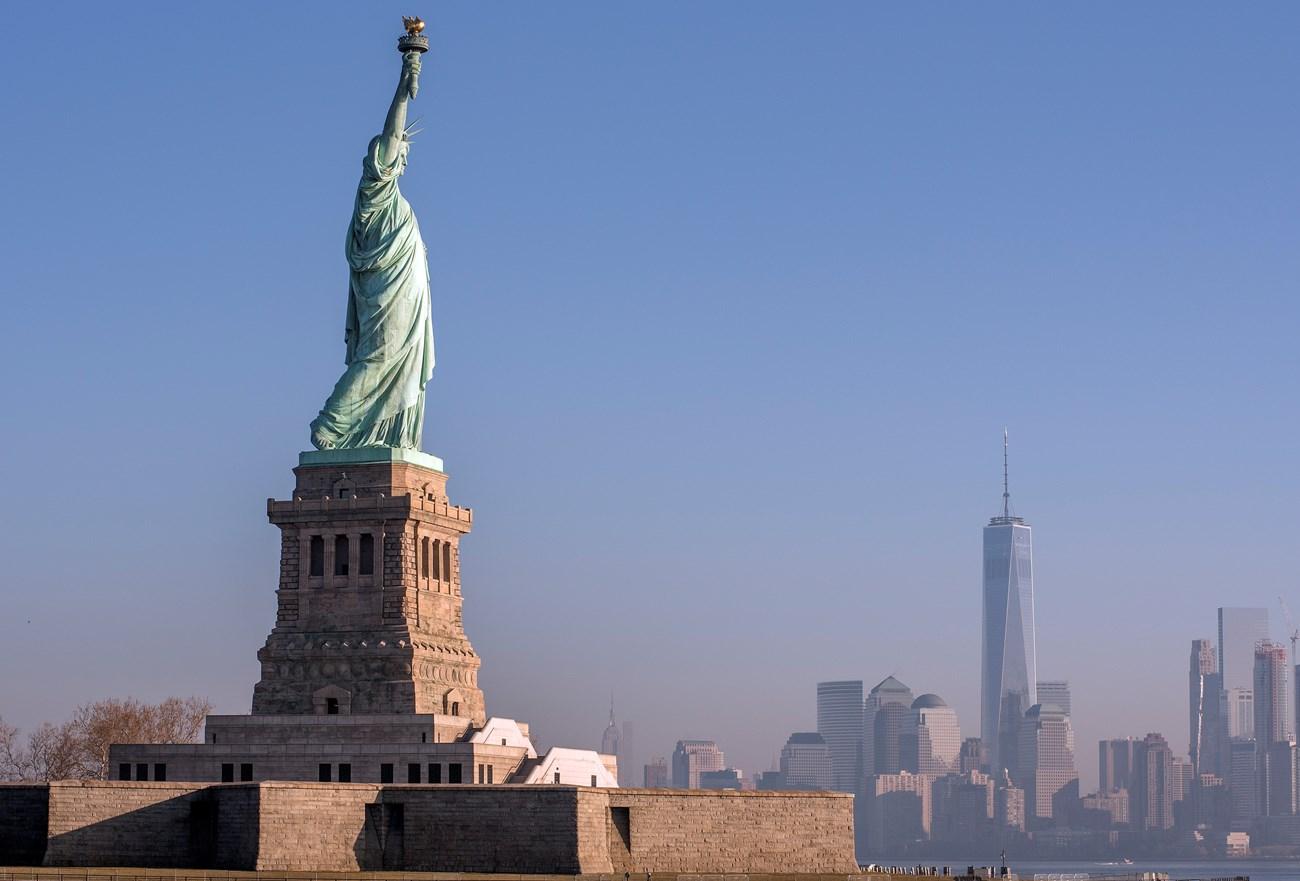
, New York City’s best-known borough, pairs skyscraper avenues with historic neighbourhoods, museums, parks, waterfront walks and global dining.
-

-

-


Swipe for more neighbourhoods
Explore more

Explore more of New York City
New York City pairs world-famous landmarks, immigrant neighbourhoods, museums, Broadway and dynamic food culture across five boroughs for memorable sightseeing.
Explore New York City