

Free Norwalk Travel Guide & Mobile App
Plan your Norwalk trip with Evendo. Get free guides to top attractions, restaurants, hotels, and bars. Web access or download the mobile app.


Norwalk, Connecticut blends maritime history, the Maritime Aquarium, historic mansions, island waters, lively SoNo dining and easy New England sightseeing.
A Coastal City with Two Distinct Centres
Norwalk stretches along the northern shore of Long Island Sound in southwestern Connecticut, combining a working waterfront with suburban neighbourhoods, historic districts and pockets of open landscape. The city is best understood through its two principal centres: South Norwalk, usually called SoNo, and the older civic area around Wall Street. SoNo’s former industrial buildings now accommodate galleries, restaurants, small businesses and The Maritime Aquarium, while the harbour opens towards a chain of islands and tidal waterways. North of the centre, the character becomes greener and more residential, with parks, estates and winding roads leading towards the wooded Connecticut interior.Read more about Norwalk
Maritime Character and Historic Architecture
Neighbourhoods, Parks and Local Life
When is the best time to visit Norwalk?
Best: June, August–September · 24–28°C| Month | High (°C) | Rainfall (mm) |
|---|---|---|
| January | 2 | 82 |
| February | 4 | 75 |
| March | 8 | 94 |
| April | 15 | 94 |
| May | 20 | 99 |
| June (best) | 25 | 104 |
| July | 28 | 105 |
| August (best) | 28 | 101 |
| September (best) | 24 | 95 |
| October | 18 | 97 |
| November | 11 | 94 |
| December | 5 | 89 |
Getting to and around Norwalk
How to get there
Transportation
Best attractions in Norwalk
The Maritime Aquarium is Norwalk’s principal visitor attraction, with exhibits devoted to Long Island Sound, marine habitats and conservation, as well as close views of the rivers and harbour that shape the city. In SoNo, the aquarium sits among restaurants, galleries and converted industrial buildings, making the district a natural base for exploring on foot. Lockwood-Mathews Mansion Museum offers an ornate nineteenth-century interior and insight into the wealth created by railways and industry. Mill Hill Historic Park presents an earlier layer of Norwalk’s civic story, while the Norwalk Historical Society adds further local context. During the appropriate season, a ferry trip to Sheffield Island brings visitors across the harbour to a lighthouse setting, bird-rich coastal landscape and open Sound views. Inland, Cranbury Park combines woodland, lawns and the Gallaher Mansion, while Calf Pasture Beach provides a more recreational expression of Norwalk’s shoreline.
-
Tourist attraction
Mathews Park
Explore history, art, and recreation at Norwalk's Mathews Park, home to museums, playgrounds, and community events.
5 min drive · 1.7 km from city centre
-
Tourist attraction
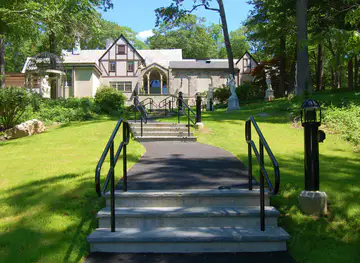
Gallaher Mansion and Cranbury Park
Explore a historic Tudor mansion and enjoy outdoor recreation at Norwalk's Cranbury Park, featuring trails, disc golf, and a dog-friendly orchard.
24 min drive · 7.9 km from city centre
-
Tourist attraction
Veteran's Memorial Park and Marina
Explore the lush landscapes, serene marina, and veteran memorials at Veteran's Memorial Park and Marina in Norwalk, Connecticut.
12 min walk · 0.9 km from city centre
-
Tourist attraction
Oyster Shell Park
Revitalized waterfront park in Norwalk, CT, offering trails, playgrounds, and scenic views of the Norwalk River and Long Island Sound.
17 min walk · 1.4 km from city centre


Best landmarks in Norwalk
Lockwood-Mathews Mansion is Norwalk’s most distinctive architectural landmark, an elaborate Second Empire residence built in the 1860s for railroad financier LeGrand Lockwood and preserved as a museum. Its scale and interior decoration reflect the wealth and industrial confidence of post-Civil War America. In the city centre, Mill Hill Historic Park occupies an important early civic site and includes historic buildings associated with Norwalk’s colonial and Revolutionary-era story. The Norwalk Green and surrounding civic area provide another link to the older town, while the First Congregational Church represents the continuing presence of established religious institutions in the community. Along the coast, the Sheffield Island Lighthouse is a more remote maritime landmark reached by seasonal boat service, and the Norwalk Islands themselves form a natural reference point for the harbour. Together, these places show a city shaped by settlement, railways, commerce and the Sound.
-
Aquarium
The Maritime Aquarium at Norwalk
Explore marine wonders, engage in interactive exhibits, and enjoy the beauty of the ocean at The Maritime Aquarium in Norwalk, CT.
11 min walk · 0.8 km from city centre
-
Hotel
Norwalk Inn
Discover the Norwalk Inn, where historic charm meets modern luxury in the heart of Connecticut, offering premier accommodations and exceptional dining options.
8 min drive · 2.8 km from city centre
-
Amusement center
Sky Zone Trampoline Park
Experience the thrill of jumping at Sky Zone Trampoline Park in Norwalk, where fun meets fitness for all ages in an exciting indoor environment.
5 min drive · 1.8 km from city centre
-
Pizza
Famous Pizza House
Discover the heart of Italian cuisine at Famous Pizza House, Norwalk's go-to destination for delicious pizza and family-friendly dining.
8 min walk · 0.7 km from city centre


Explore Norwalk on the map
Plan your Norwalk trip on one map. See where the top attractions, landmarks, restaurants, bars and hotels are, find what's near where you're staying, and book hotels and experiences in a few clicks.
Best hotels in Norwalk
Best restaurants in Norwalk
Norwalk’s dining scene reflects its position between the New York metropolitan area and coastal New England. South Norwalk, or SoNo, has the broadest concentration of restaurants, with choices ranging from seafood and contemporary American cooking to Italian, Latin American and Asian cuisines. The city’s maritime history gives oysters, clams, lobster and other seafood a natural place in local menus, while the wider region’s farming connections appear in seasonal produce and New England comfort food. Cafés, bakeries and casual eateries around SoNo make the district suitable for daytime wandering as well as evening meals. Dining is more dispersed outside the centre, with neighbourhood restaurants and shoreline establishments around East Norwalk and Rowayton. Visitors should distinguish enduring local food traditions from the city’s newer, internationally influenced restaurant culture, which is one of Norwalk’s clearest expressions of contemporary life.
-
Venezuelan
Valencia Luncheria
Experience authentic Venezuelan cuisine at Valencia Luncheria in Norwalk – a vibrant eatery offering traditional flavors in a cozy setting.
11 min drive · 3.6 km from city centre
-
American
Sedona Taphouse
Experience the best of American cuisine at Sedona Taphouse in Norwalk, CT - where craft beer meets delightful dining.
6 min drive · 2.0 km from city centre
-
Breakfast
Silver Star Diner
Discover hearty breakfasts at Silver Star Diner in Norwalk - where Mediterranean meets classic American dining.
5 min drive · 1.6 km from city centre
-
American
Oak and Almond
Experience the best of American cuisine at Oak and Almond in Norwalk; where delicious flavors meet a cozy atmosphere.
21 min drive · 6.9 km from city centre


Best bars in Norwalk
Norwalk’s evening scene is concentrated rather than sprawling, with South Norwalk providing the greatest choice of restaurants, bars and informal nightlife. Converted industrial buildings and compact streets create an easy district for moving between dinner, drinks and occasional live entertainment, while venues elsewhere in the city tend to be neighbourhood-focused rather than club-oriented. The emphasis is generally on conversation, cocktails, beer, wine and dining rather than a large-scale nightclub circuit. Cultural evenings may include performances or programmes at local arts venues, and the waterfront gives some restaurants and bars a more coastal setting. Activity can vary markedly by day and season, particularly around beaches and ferry-linked areas. Visitors should plan transport after dark because Norwalk’s districts are spread out and rail and bus services may not match late-evening plans.
-
Gay bar
Troupe429
Experience the vibrant nightlife at Troupe429, Norwalk's premier gay bar, cocktail haven, and live music venue celebrating diversity and fun.
8 min drive · 2.8 km from city centre
-
American
Sedona Taphouse
Discover Sedona Taphouse, a premier American restaurant in Norwalk, CT, offering a delightful mix of craft beers, innovative cocktails, and mouthwatering New American cuisine.
6 min drive · 2.0 km from city centre
-
Irish pub
O'Neill's Irish Pub & Restaurant
Discover the vibrant atmosphere of O'Neill's Irish Pub & Restaurant, offering authentic Irish cuisine and live music in Norwalk, Connecticut.
11 min walk · 0.9 km from city centre
-
Bar
Yard House
Experience the best of modern American cuisine and a vast selection of craft beers at Yard House in Norwalk.
15 min walk · 1.2 km from city centre


Best nightclubs in Norwalk
Norwalk’s evening scene is concentrated rather than sprawling, with South Norwalk providing the greatest choice of restaurants, bars and informal nightlife. Converted industrial buildings and compact streets create an easy district for moving between dinner, drinks and occasional live entertainment, while venues elsewhere in the city tend to be neighbourhood-focused rather than club-oriented. The emphasis is generally on conversation, cocktails, beer, wine and dining rather than a large-scale nightclub circuit. Cultural evenings may include performances or programmes at local arts venues, and the waterfront gives some restaurants and bars a more coastal setting. Activity can vary markedly by day and season, particularly around beaches and ferry-linked areas. Visitors should plan transport after dark because Norwalk’s districts are spread out and rail and bus services may not match late-evening plans.
-
Gay bar
Troupe429
Experience the vibrant nightlife at Troupe429, Norwalk's top gay bar with karaoke, live music, and a welcoming atmosphere for all.
8 min drive · 2.8 km from city centre
-
Sports bar
Joe's 507 Cafe
Experience the perfect blend of sports, comfort food, and camaraderie at Joe's 507 Cafe in Norwalk, Connecticut.
9 min drive · 3.0 km from city centre
-
Wine bar
SOHObar
Experience the vibrant atmosphere and exquisite wine selection at SOHObar in Norwalk, Connecticut, your go-to destination for a memorable night out.
8 min walk · 0.6 km from city centre
-
Club
Ferris Hill Club
Discover the lively nightlife and unforgettable experiences at Ferris Hill Club in Norwalk, Connecticut.
6 min drive · 1.9 km from city centre


Best shops in Norwalk
Shopping in Norwalk is divided between the independent businesses of South Norwalk and larger commercial areas serving the metropolitan suburbs. SoNo’s streets are the most rewarding for visitors on foot, with galleries, design-led shops, speciality retailers and small businesses occupying a district of former industrial and commercial buildings. The area is better suited to browsing than to a single traditional market experience. Local purchasing can include Connecticut-made goods, art, coastal-themed items, speciality foods and products from independent makers, though stock varies by shop and season. Larger retail centres and roadside commercial areas provide practical shopping but are less connected to Norwalk’s historic identity. Visitors interested in antiques, design or local art should allow time for individual shops rather than expecting a concentrated bazaar. The city’s maritime character is most visible in the galleries, food businesses and small retailers of SoNo rather than in a single signature craft tradition.
-
Shopping mall
The SoNo Collection
Discover an unparalleled shopping experience at The SoNo Collection in Norwalk, CT, featuring diverse shops, delightful dining, and engaging entertainment.
15 min walk · 1.2 km from city centre
-
Shopping mall
Darinor Plaza
Discover the vibrant shopping and dining scene at Darinor Plaza, Norwalk's ultimate destination for great shopping experiences.
6 min drive · 2.1 km from city centre
-
Department store
T.J. Maxx
Discover unbeatable prices on quality fashion and home items at T.J. Maxx in Norwalk, Connecticut, where every shopper finds something special.
6 min drive · 1.9 km from city centre
-
Shopping mall
Main Avenue Shopping Plaza
Discover the charm of shopping and dining at Main Avenue Shopping Plaza, Norwalk's premier retail destination for every taste.
16 min drive · 5.2 km from city centre


Get your free copy of our complete guide to Norwalk, delivered straight to you.
Everything on this page, from attractions and restaurants to essentials and local phrases, in one PDF you can read offline, print or share.
Already have an account? Sign in
Your Norwalk guide is ready.
We'll send it to · Not you? Sign out

Getting your guide ready…
We are putting together a fresh copy of the Norwalk guide. This can take up to a minute.
This can take a few moments. If your browser asks, choose Allow so the download can start. You'll find the guide in your Downloads folder.
Nothing happened? Download it again
Sorry, the guide is taking longer than usual. Please try again in a minute, or get it by email instead.
Norwalk essentials
Currency and Payment
Safety
Emergency Situations
Do's and Don'ts
Local Tips
From Eve
Local phrases worth knowing
You don't need to get them perfect. A few words go a long way, and locals appreciate the effort.
Basics
| English | Local | Say it |
|---|---|---|
| Hello | Hey | [hey] |
| Goodbye | Later | [lay-ter] |
| Yes | Yeah | [yeh] |
| No | Nah | [nah] |
| Please/You're welcome | Please/No worries | [please/no wah-ries] |
| Thank you | Thanks | [thanks] |
| Excuse me/Sorry | Pardon me/My bad | [par-dun me/my bad] |
| How are you? | How you doin'? | [how yah doin'] |
| Fine. And you? | Good. You? | [good. yah] |
| Do you speak English? | You speak English? | [yah speak english?] |
| I don't understand | I don't get it | [ah don't get it] |
Eating & Drinking
| English | Local | Say it |
|---|---|---|
| I'd like to see the menu, please | Menu, please | [men-yoo, please] |
| I don't eat meat | No meat for me | [no meat for me] |
| Cheers! | Cheers! | [cheers] |
| I would like to pay, please | Check, please | [check, please] |
Emergencies
| English | Local | Say it |
|---|---|---|
| Help! | Help! | [help!] |
| Go away! | Go away! | [go away!] |
| Call the Police! | Police! | [po-lice!] |
| Call a doctor! | Doctor! | [doc-tor!] |
| I'm lost | Lost | [lost] |
| I'm ill | Sick | [sick] |
Shopping
| English | Local | Say it |
|---|---|---|
| I'd like to buy... | I wanna buy... | [ah wanna buy...] |
| I'm just looking | Just browsing | [just brows-ing] |
| How much is it? | How much? | [how much?] |
| That's too expensive | Too pricy | [too pri-cee] |
| Can you lower the price? | Discount? | [dis-count?] |
Time & Numbers
| English | Local | Say it |
|---|---|---|
| What time is it? | What time? | [what time?] |
| It's one o'clock | It's one | [it's one] |
| Half past (10) | Half ten | [half ten] |
| Morning | Morning | [mor-ning] |
| Afternoon | Afternoon | [af-ter-noon] |
| Evening | Evening | [ee-ven-ing] |
| Yesterday | Yesterday | [yes-ter-day] |
| Today | Today | [to-day] |
| Tomorrow | Tomorrow | [to-mor-row] |
| 1 | One | [wun] |
| 2 | Two | [too] |
| 3 | Three | [three] |
| 4 | Four | [for] |
| 5 | Five | [fahyv] |
| 6 | Six | [siks] |
| 7 | Seven | [sev-uhn] |
| 8 | Eight | [ayt] |
| 9 | Nine | [nine] |
| 10 | Ten | [ten] |
Transport & Directions
| English | Local | Say it |
|---|---|---|
| Where's a/the...? | Where's the...? | [where's the...?] |
| What's the address? | Address? | [address?] |
| Can you show me (on the map)? | Show me (on the map)? | [show me (on the map)?] |
| When's the next (bus)? | Next (bus)? | [next (bus)?] |
| A ticket (to ....) | Ticket (to ....) | [ticket (to ....)] |
History of Norwalk
Indigenous Lands and Coastal Settlement
Before English settlement, the Norwalk area was part of the coastal homeland of Indigenous peoples commonly identified in colonial records as the Siwanoy, whose communities used the shoreline, islands, wetlands and inland forests for fishing, hunting and cultivation. English settlers began establishing a permanent presence in the mid-seventeenth century after acquiring land through agreements with local Indigenous leaders, although such transactions took place within a wider and unequal process of colonial expansion. The waterways that shaped Indigenous life also attracted the newcomers: Norwalk’s harbour, rivers and estuarine marshes offered transport, shellfish and access to Long Island Sound. The underlying geography still explains the city’s dispersed settlement pattern and continuing maritime character.
The English Town of Norwalk
English settlement developed from the 1640s, and Norwalk was formally recognised as a town by the Connecticut colonial authorities in 1651. Early homes, farms and meeting-house institutions were established around the Norwalk River and the inland roads connecting the coast with neighbouring settlements. The community’s economy combined agriculture with coastal trade, fishing and small-scale craft production. Norwalk’s position on Long Island Sound linked it to New York and other Connecticut ports, while the river provided a sheltered route into the settlement. Mill Hill Historic Park preserves part of the early civic landscape, although the present city is the product of many later rebuilding phases and substantial nineteenth- and twentieth-century growth.
War, Destruction and Reconstruction
During the American Revolutionary War, British forces under General William Tryon raided Norwalk in July 1779. Much of the settlement was burned, including homes, public buildings and stores, and the raid caused extensive disruption to local life. Reconstruction followed, but the destruction altered the appearance and fortunes of the community. Norwalk gradually rebuilt its commercial centre and resumed its coastal trade, while roads and maritime links connected it more closely with the expanding towns of southern New England. The event remains one of the defining episodes in local history, and the historic areas around Mill Hill help visitors understand the scale of the earlier town before its later industrial and suburban transformation.
Railways, Industry and the Sound
The arrival of the railway in the nineteenth century accelerated Norwalk’s commercial and industrial development by connecting the city with New York, New Haven and inland markets. Manufacturing expanded alongside established maritime trades, and Norwalk became associated with products including textiles, locks, hardware and other goods. Wealth generated by commerce and industry produced substantial residences, among them Lockwood-Mathews Mansion, built in the 1860s for railroad financier LeGrand Lockwood. The waterfront also remained economically important, particularly through oyster cultivation and harvesting in the Sound. Rail access, industrial employment and harbour activity reshaped the city from a largely rural town into a more densely settled regional centre.
Modern Norwalk and Civic Consolidation
Norwalk’s modern identity emerged through the growth of its separate villages and neighbourhoods, including South Norwalk, East Norwalk and Rowayton, each retaining traces of distinct local histories. Industrial decline in parts of the waterfront later gave way to redevelopment, cultural institutions and new residential and commercial uses. The Maritime Aquarium, opened in South Norwalk in 1988, placed the ecology of Long Island Sound at the centre of the city’s visitor identity. Today, Norwalk combines commuter links to the New York metropolitan area with beaches, parks, historic properties and a diverse population. Its contemporary character is therefore both coastal and metropolitan, shaped by preservation as well as continuing redevelopment.
Norwalk in Photos
Browse through our photo collection highlighting the charm and character of the destination.
Cities near Norwalk
The closest cities to Norwalk, if you have time for more than one stop.
-
-

-

-

-


Swipe for more cities
Explore more

Explore more of Connecticut
Discover Connecticut: A blend of charming coastal towns, rich history, and scenic landscapes, perfect for nature lovers, history buffs, and cultural enthusiasts.
Explore Connecticut