

Free Buskerud Travel Guide & Mobile App
Explore Buskerud with free travel guides. Discover regional history, expert tips, proposed trips, and audio guides on web or mobile app.


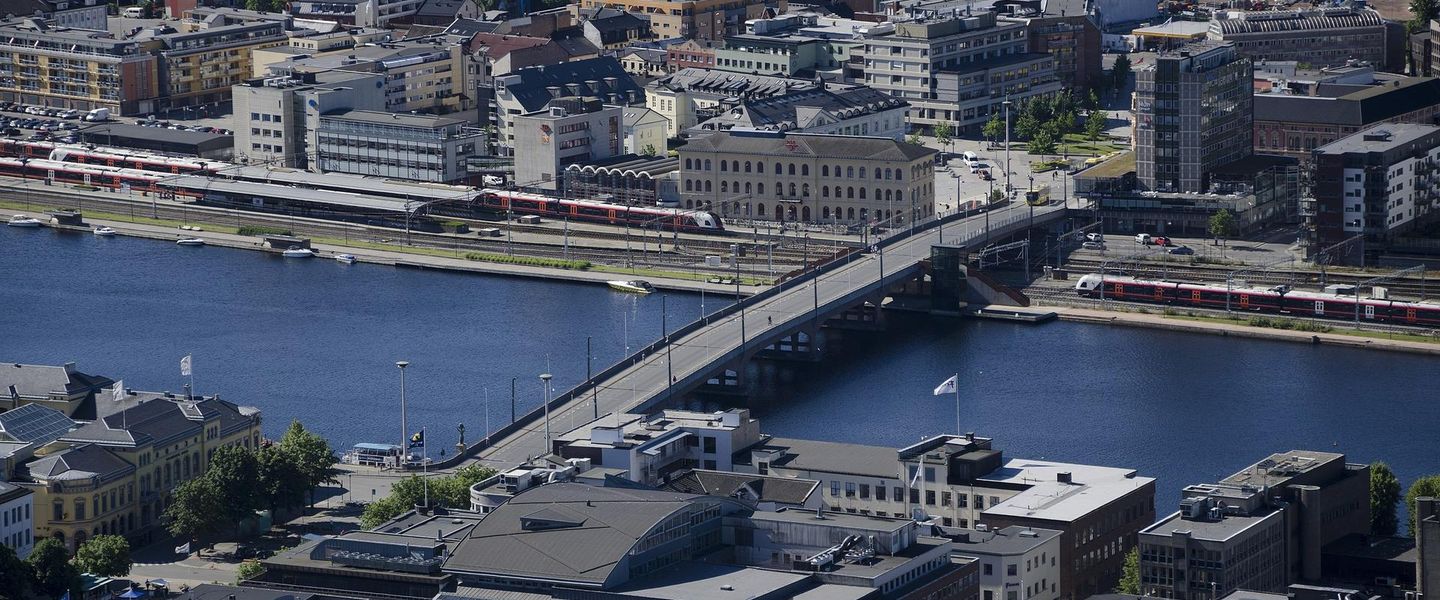


Explore Buskerud in Norway for silver-mining heritage, river towns, mountain resorts, medieval churches and outdoor adventures across varied valleys.
Read more about Buskerud
When is the best time to visit Buskerud?
Best: June–August · 19–21°C| Month | High (°C) | Rainfall (mm) |
|---|---|---|
| January | -2 | 50 |
| February | -1 | 40 |
| March | 4 | 40 |
| April | 9 | 40 |
| May | 15 | 50 |
| June (best) | 19 | 60 |
| July (best) | 21 | 80 |
| August (best) | 20 | 90 |
| September | 15 | 60 |
| October | 9 | 70 |
| November | 3 | 60 |
| December | -1 | 50 |
Getting to and around Buskerud
How to get there
Transportation
Top city travel guides in Buskerud
The cities of Buskerud, and the easiest places to base yourself.

Swipe for more cities
Destinations in Buskerud
Resorts, valleys and scenic spots worth a trip of their own.
-

-

-

-

-

-


Swipe for more destinations
Best attractions in Buskerud
Buskerud’s attractions range from urban cultural institutions to mountain landscapes and carefully preserved industrial sites. Drammen offers riverfront walks, museums and access to the forested hills around Spiralen, while Kongsberg combines the Norwegian Mining Museum with the historic silver mines and a town centre shaped by early industry. In Modum, Blaafarveværket presents cobalt production through galleries, former industrial buildings and seasonal exhibitions. The Krøderbanen heritage railway provides a different perspective on nineteenth-century transport. Northern Buskerud is the main setting for hiking, skiing, cycling and fishing, with Geilo, Hemsedal, Norefjell and the Hardangervidda approaches offering distinct mountain environments. Ringerike’s Veien cultural environment introduces Iron-Age heritage, and the Numedal valley is notable for medieval wooden churches, farm landscapes and local museums. Lakes such as Krøderen and Tyrifjorden add opportunities for boating, angling and shoreline recreation, while the county’s forests and valleys reward visitors who prefer quieter walks to major resort infrastructure.
-
Tourist attraction
Hadeland Glassverk
Discover the artistry of glass at Hadeland Glassverk, Norway's historic glassworks, blending tradition and modern craftsmanship in a stunning setting.
-
Tourist attraction
Kistefos Museum
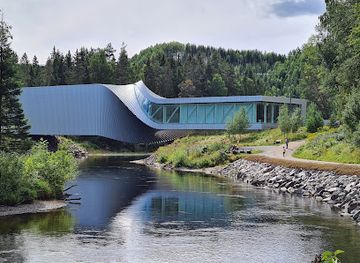
Explore Kistefos Museum, where modern art meets history in a stunning natural setting, offering an unforgettable cultural experience in Norway.
-
Tourist attraction
Norwegian Industrial Workers Museum
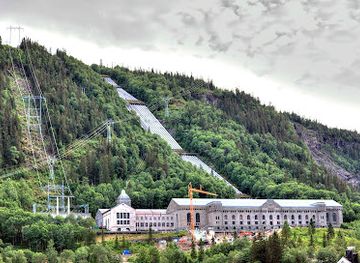
Explore Norway's industrial heritage at the Norwegian Industrial Workers Museum in Rjukan, where history meets stunning landscapes.
-
Tourist attraction
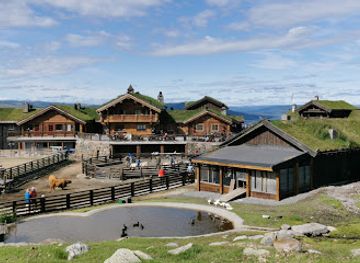
Langedrag Nature Park
Explore the enchanting Langedrag Nature Park, where wildlife encounters and breathtaking landscapes await in the heart of Norway.
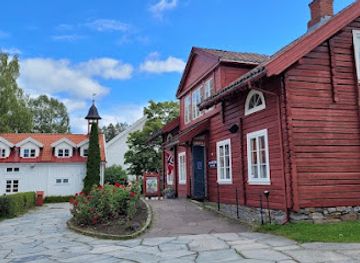
Best landmarks in Buskerud
Kongsberg’s historic silver-mining landscape is Buskerud’s most distinctive industrial landmark, with the town’s planned streets, church and mine entrances recalling the seventeenth-century economic importance of silver. In Drammen, the Spiralen tunnel is both an engineering feature and a route to elevated views over the city and river valley; the Drammenselva itself remains a defining urban presence. Numedal’s medieval wooden churches at Flesberg, Rollag, Nore and Uvdal represent different phases of Norwegian stave and post-medieval church building and are closely tied to the valley’s traditional timber culture. Blaafarveværket’s cobalt works in Modum mark another chapter in the county’s resource history. The broad mountain plateau around Hardangervidda, particularly where it meets the high districts of Hol and Nore og Uvdal, is a natural landmark rather than a single monument. Norefjell’s ridges and lakeside valleys provide a contrasting landscape of forest and mountain terrain, while the Tyrifjorden basin gives Ringerike its characteristic open-water setting.
-
 Fortress
Akershus Fortress
Explore the historic Akershus Fortress in Oslo, a captivating blend of medieval architecture and stunning views of the Oslo fjord.
-
Tourist attraction
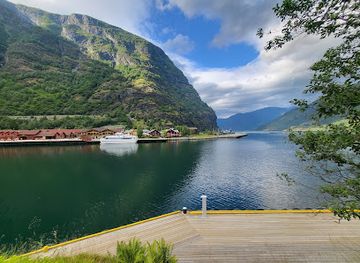
Flåmsbana
Discover the breathtaking views and natural beauty of Norway aboard the Flåmsbana, a scenic railway journey through stunning fjords and mountains.
-
Castle
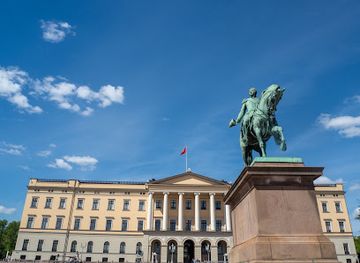
The Royal Palace
Explore the grandeur of Norway's monarchy at The Royal Palace in Oslo, a stunning neoclassical castle with rich history and beautiful gardens.
-
Scenic spot
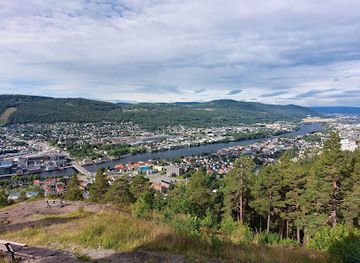
Drammen Spiral
Discover the Drammen Spiral, a corkscrew tunnel leading to stunning views of Drammen's picturesque landscape – a must-see for every traveler.
Explore Buskerud on the map
Plan your trip on one map. See where the top cities, national parks and sights are, and book hotels and experiences in a few clicks.
Best hotels in Buskerud
Best restaurants in Buskerud
Dining in Buskerud reflects the produce and landscapes of inland eastern Norway. Mountain and valley restaurants commonly feature trout, lamb, game, potatoes, root vegetables, mushrooms, berries and dairy products, while bakeries and cafés provide breads, cakes and coffee for walkers and skiers. Hallingdal and the mountain resorts have a mixture of traditional Norwegian cooking, contemporary seasonal menus and informal places suited to outdoor travellers. Drammen and Kongsberg offer the broadest choice of international food and modern restaurants, as well as pubs and cafés in historic or redeveloped areas. Farm shops and local food outlets are useful for tasting cheeses, cured products, jams and other regional produce. Menus vary considerably with season and location, so visitors travelling through rural valleys should not assume that restaurants stay open late or operate every day outside the main summer and winter periods.
-
Restaurant
Norefjell Ski & Spa
Discover Norefjell Ski & Spa: where thrilling winter sports meet soothing wellness retreats in Norway's majestic mountains.
-
Restaurant
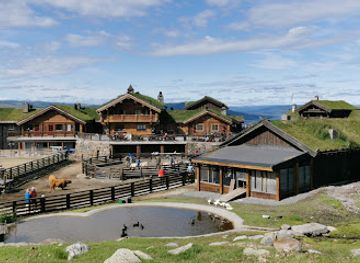
Langedrag Nature Park
Explore Norway's Langedrag Nature Park - A family-friendly destination rich in wildlife encounters and outdoor adventures amidst stunning landscapes.
-
Restaurant
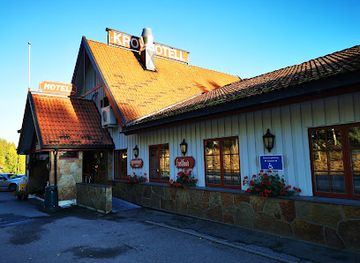
Krøderen Kro & Motell
Discover comfort and authentic Norwegian cuisine at Krøderen Kro & Motell – your perfect pit stop in scenic Krøderen.
-
Restaurant
Topcamp Hallingdal - Ål
Experience family-friendly adventures at Topcamp Hallingdal - Ål: cozy accommodations amidst Norway's stunning landscapes.
Best bars in Buskerud
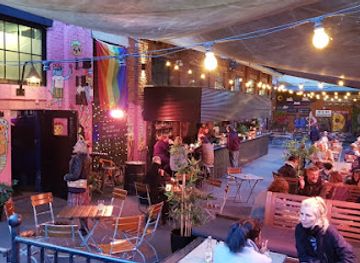
Buskerud’s evening culture is varied but rarely centred on a large club scene. Drammen has the county’s broadest selection of bars, pubs, restaurants, cultural venues and live-music settings, while Kongsberg adds an audience connected with its student, technology and festival life. In the mountain resorts, après-ski venues, hotel bars and restaurants provide the main evening activity during the winter season, with livelier periods around weekends and holidays. Smaller towns and valley communities rely more on traditional pubs, cafés and occasional live music than on dedicated nightclubs. Local breweries and drinks may appear on urban and resort menus, but alcohol is not necessary to enjoy the region’s evening culture. Rural establishments can be widely spaced and may have limited seasonal opening arrangements, so check locally rather than planning a late-night itinerary around assumptions.
-
Restaurant
Bardøla Høyfjellshotell
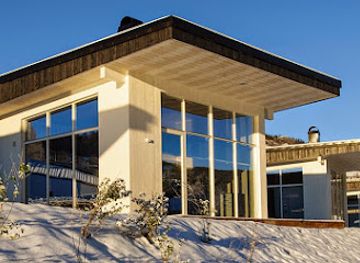
Experience the charm and hospitality of Bardøla Høyfjellshotell, where modern comfort meets the stunning beauty of Norway's mountains.
-
Bar
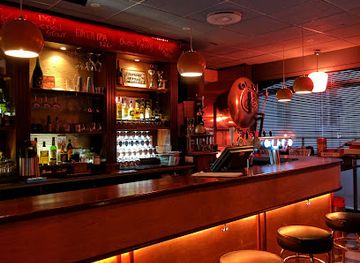
Rekord Bar
Experience the vibrant nightlife of Drammen at Rekord Bar, offering a wide selection of drinks and a lively atmosphere for all visitors.
-
Bar
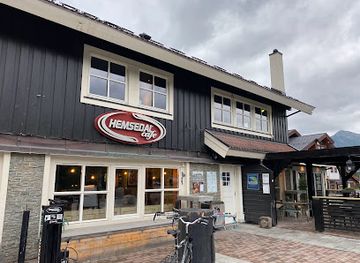
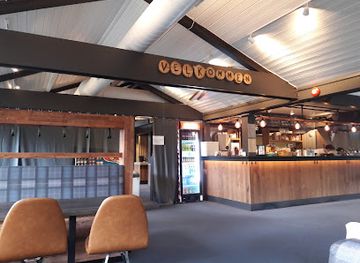
Hemsedal Cafe
Discover the warmth and flavors of Hemsedal Cafe – a cozy bar and restaurant in the heart of Norway’s majestic landscapes.
-
Bar
Fjellkafeen
Experience the best of Norwegian cuisine at Fjellkafeen, where local flavors meet stunning mountain views in Hemsedal.
Best nightclubs in Buskerud
Buskerud’s evening culture is varied but rarely centred on a large club scene. Drammen has the county’s broadest selection of bars, pubs, restaurants, cultural venues and live-music settings, while Kongsberg adds an audience connected with its student, technology and festival life. In the mountain resorts, après-ski venues, hotel bars and restaurants provide the main evening activity during the winter season, with livelier periods around weekends and holidays. Smaller towns and valley communities rely more on traditional pubs, cafés and occasional live music than on dedicated nightclubs. Local breweries and drinks may appear on urban and resort menus, but alcohol is not necessary to enjoy the region’s evening culture. Rural establishments can be widely spaced and may have limited seasonal opening arrangements, so check locally rather than planning a late-night itinerary around assumptions.
-
Live Music
BLÅ
Discover Oslo's lively music scene at BLÅ, a premier venue featuring live performances, a cozy beer garden, and an unforgettable nightlife experience.
-
Pub
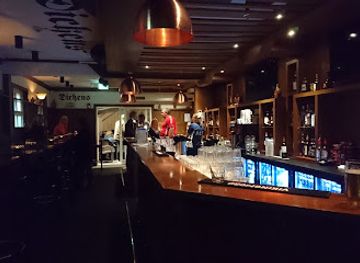
Dickens pub
Unwind at Dickens Pub, where local charm meets a lively atmosphere in the heart of Drammen, perfect for tourists seeking relaxation and good company.
-
Night club
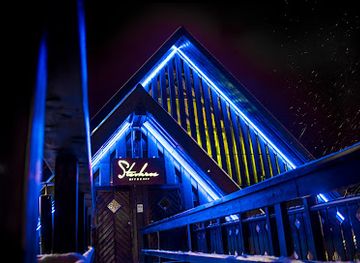
Stavkroa
Experience the vibrant nightlife at Stavkroa in Hemsedal, Norway, where music, dance, and camaraderie create unforgettable moments.
-
Night club
Ingensteds
Immerse yourself in the vibrant nightlife of Oslo at Ingensteds, where great music and an inviting atmosphere await every weekend.

Best shops in Buskerud
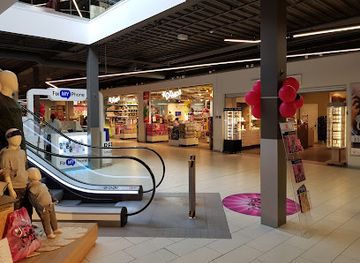
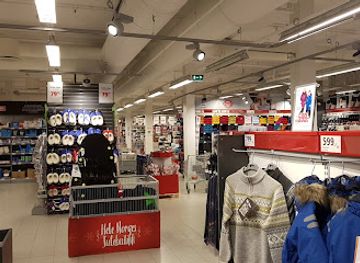
Shopping in Buskerud is strongest in Drammen and Kongsberg, where visitors will find ordinary high-street retail, independent cafés, galleries, bookshops and practical outdoor equipment. The towns are useful places to buy clothing and supplies before travelling into the mountains. In Hallingdal, Numedal and the resort areas, shopping is more closely connected with local food, outdoor life and handicrafts than with large-scale retail. Farm shops and seasonal markets may offer cheeses, cured foods, jams, baked goods and berries, while craft outlets can include woodwork, textiles, ceramics and locally inspired decorative items. Blaafarveværket’s cultural setting provides opportunities to browse art and design alongside its exhibitions, subject to seasonal arrangements. Geilo, Hemsedal and other mountain bases have specialist sports shops and practical souvenirs, but visitors looking for distinctive regional purchases should compare small producers and museum shops rather than expecting a single central market or luxury shopping district.
-
Store
Gulskogen senter
Experience the best of shopping and dining at Gulskogen Senter in Drammen, Norway, a hub of local culture and retail excitement.
-
Shopping mall
Alti Buskerud
Discover Alti Buskerud, a premier shopping mall in Krokstadelva, featuring diverse stores and dining options for an unforgettable shopping experience.
-
Ski resort
Hemsedal skisenter
Discover Hemsedal Skisenter: Norway’s premier ski resort offering stunning slopes, vibrant après-ski, and unforgettable winter adventures.
-
Shopping mall
Strømsø Senter
Discover shopping, dining, and entertainment at Strømsø Senter, the vibrant shopping mall in Drammen, Norway, perfect for a day of leisure.

Get your free copy of our complete guide to Buskerud, delivered straight to you.
Everything on this page, from attractions and restaurants to essentials and local phrases, in one PDF you can read offline, print or share.
Already have an account? Sign in
Your Buskerud guide is ready.
We'll send it to · Not you? Sign out

Getting your guide ready…
We are putting together a fresh copy of the Buskerud guide. This can take up to a minute.
This can take a few moments. If your browser asks, choose Allow so the download can start. You'll find the guide in your Downloads folder.
Nothing happened? Download it again
Sorry, the guide is taking longer than usual. Please try again in a minute, or get it by email instead.
Buskerud essentials
Currency and Payment
Safety
Emergency Situations
Do's and Don'ts
Local Tips
From Eve
Local phrases worth knowing
You don't need to get them perfect. A few words go a long way, and locals appreciate the effort.
Basics
| English | Local | Say it |
|---|---|---|
| Hello | Hei | [hay] |
| Goodbye | Ha det | [huh deh] |
| Yes | Ja | [yah] |
| No | Nei | [nay] |
| Please/You're welcome | Vær så snill | [vair sha snill] |
| Thank you | Takk | [tahk] |
| Excuse me/Sorry | Unnskyld | [oon-shyld] |
| How are you? | Hvordan har du det? | [vor-dahn har doo deh] |
| Fine. And you? | Bra. Og du? | [brah. oh doo?] |
| Do you speak English? | Snakker du engelsk? | [snak-er doo eng-elsk?] |
| I don't understand | Jeg forstår ikke | [yai for-stor ik-ke] |
Eating & Drinking
| English | Local | Say it |
|---|---|---|
| I'd like to see the menu, please | Jeg vil gjerne se menyen, vær så snill | [yai vil yair-na se men-yen, vair sha snill] |
| I don't eat meat | Jeg spiser ikke kjøtt | [yai spee-ser ik-ke shutt] |
| Cheers! | Skål! | [skawl] |
| I would like to pay, please | Jeg vil gjerne betale, vær så snill | [yai vil yair-na be-ta-le, vair sha snill] |
Emergencies
| English | Local | Say it |
|---|---|---|
| Help! | Hjelp! | [yelp] |
| Go away! | Gå vekk! | [gaw vek] |
| Call the Police! | Ring politiet! | [ring po-li-teh] |
| Call a doctor! | Ring en lege! | [ring en leh-ge] |
| I'm lost | Jeg er tapt | [yai air tahpt] |
| I'm ill | Jeg er syk | [yai air seek] |
Shopping
| English | Local | Say it |
|---|---|---|
| I'd like to buy... | Jeg vil gjerne kjøpe... | [yai vil yair-na shuh-pe...] |
| I'm just looking | Jeg bare ser | [yai bar-e ser] |
| How much is it? | Hvor mye koster det? | [vor mee-uh koster deh?] |
| That's too expensive | Det er for dyrt | [deh air for deert] |
| Can you lower the price? | Kan du senke prisen? | [kan doo sen-ke pree-sen] |
Time & Numbers
| English | Local | Say it |
|---|---|---|
| What time is it? | Hva er klokka? | [vah air klok-ka?] |
| It's one o'clock | Det er ett | [deh air ett] |
| Half past (10) | Halv (ti) | [halv (tee)] |
| Morning | Morgen | [mor-gen] |
| Afternoon | Ettermiddag | [et-ter-mid-dahg] |
| Evening | Kveld | [kveld] |
| Yesterday | I går | [ee gor] |
| Today | I dag | [ee dahg] |
| Tomorrow | I morgen | [ee mor-gen] |
| 1 | 1 | [1] |
| 2 | 2 | [2] |
| 3 | 3 | [3] |
| 4 | 4 | [4] |
| 5 | 5 | [5] |
| 6 | 6 | [6] |
| 7 | 7 | [7] |
| 8 | 8 | [8] |
| 9 | 9 | [9] |
| 10 | 10 | [10] |
Transport & Directions
| English | Local | Say it |
|---|---|---|
| Where's a/the...? | Hvor er en...? | [vor air en...?] |
| What's the address? | Hva er adressen? | [vah air ad-dres-sen?] |
| Can you show me (on the map)? | Kan du vise meg (på kartet)? | [kan doo vee-seh mai (paw kar-tet)?] |
| When's the next (bus)? | Når går den neste (bussen)? | [nor gorr den nes-te (bus-sen)?] |
| A ticket (to ....) | En billett (til ....) | [en bil-let (til ....)] |
History of Buskerud
Prehistoric Settlement and Iron-Age Ringerike
Buskerud’s river valleys and lake districts have supported settlement since prehistoric times. Archaeological remains around Ringerike, including the Veien cultural environment near Hønefoss, show the importance of farming, craft production and regional exchange during the Iron Age. The landscape around the Tyrifjorden basin was particularly favourable for communication between eastern Norway and the inland valleys. Later medieval traditions connected Ringerike with powerful regional families and the political world of early Norway. Burial sites, ancient field systems and reconstructed interpretations at local museums help explain how agriculture and long-distance connections shaped the region before the modern county existed.
Medieval Valleys, Churches and Timber Culture
Christianisation and medieval settlement left a particularly visible legacy in Numedal and the adjoining inland valleys. Wooden churches at Flesberg, Rollag, Nore and Uvdal preserve different stages of medieval and later Norwegian church architecture, often incorporating carved decoration and painted interiors. Farming communities developed around valley floors, while timber building, seasonal pasture use and trade linked settlements across mountain routes. The surviving churches and farm landscapes are important not simply as isolated monuments but as evidence of a rural society that adapted to short growing seasons, forest resources and long distances between communities.
Kongsberg Silver and the Seventeenth-Century State
Silver was discovered near Kongsberg in 1623, prompting the Danish-Norwegian crown to establish a mining town and organise large-scale extraction. Kongsberg grew around the mines, smelting works and administrative institutions, attracting skilled workers and investment from across Europe. The industry shaped the town’s street plan, churches and social structure, while the mines transformed the surrounding landscape. Although production declined and eventually ended, the Norwegian Mining Museum and surviving mining sites preserve the story of labour, technology, state finance and the difficult conditions underground.
Timber, River Transport and the Rise of Drammen
The lower Drammenselva became one of eastern Norway’s important routes for timber and other inland commodities. Logs were floated downriver from forest districts, processed near Drammen and exported through the port. This trade encouraged merchants, sawmills, shipowners and later paper industries, giving the town an economic role that extended well beyond the immediate valley. River engineering, railways and industrial expansion altered the waterfront and surrounding communities during the nineteenth and twentieth centuries. Drammen’s contemporary urban redevelopment sits on this commercial and industrial foundation rather than replacing it.
Industrial Modernisation in Modum and the Inland Valleys
Buskerud’s industries were not confined to Kongsberg and Drammen. At Åmot in Modum, the Blaafarveværket cobalt works operated from the late eighteenth century and became an important supplier of pigment for porcelain and other manufactured goods. Mining, forestry, hydroelectric power and small-scale manufacturing later shaped many inland settlements. These activities depended on rivers, mountain resources and transport improvements, and they connected apparently remote valleys to national and international markets. Industrial heritage sites across the county reveal how rural economies combined farming with wage labour and resource extraction.
Railways and Access to the Mountain Districts
Railway construction changed travel and commerce across Buskerud. The Randsfjord Line, the Bergen Railway through the northern county and branch lines towards inland communities reduced the isolation of valleys and encouraged tourism as well as freight transport. The railway helped establish places such as Geilo as mountain resorts and made longer journeys across southern Norway more practical. The Krøderbanen, now preserved as a heritage railway, recalls the role of branch lines in linking agricultural districts with main routes. Roads and buses later expanded access, but rail remains important for reaching several mountain gateways.
Contemporary County and Outdoor Economy
Modern Buskerud combines the urban economy of Drammen with technology and manufacturing around Kongsberg, agriculture and forestry in the central districts, and tourism in the Hallingdal, Numedal and mountain areas. The county’s renewed status from 2024 reflects Norway’s changing administrative geography after the temporary merger of Buskerud into the larger Viken county. Today, skiing, hiking, cycling and nature-based travel complement older industries, while museums, historic churches and restored industrial sites keep the region’s layered history visible.
Buskerud in Photos
Browse through our photo collection highlighting the charm and character of the destination.
Neighbouring regions of Buskerud
The closest regions to Buskerud, if you have time for more than one.
-

-

-

-

-
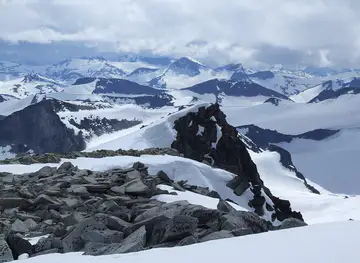


Swipe for more regions
Explore more

Explore more of Norway
Explore Norway's spectacular fjords, vibrant cities, and natural wonders. Experience the Northern Lights, Midnight Sun, and rich cultural heritage in this Scandinavian gem.
Explore Norway