

Free Hocking Hills Travel Guide & Mobile App
Explore Hocking Hills with free travel guides. Discover regional history, expert tips, proposed trips, and audio guides on web or mobile app.


Hocking Hills, Ohio, combines sandstone gorges, forest trails, waterfalls, caves, cabins and rural outdoor adventure southeast of Columbus.
Read more about Hocking Hills
When is the best time to visit Hocking Hills?
Best: June, August–September · 23–27°C| Month | High (°C) | Rainfall (mm) |
|---|---|---|
| January | 3 | 70 |
| February | 5 | 70 |
| March | 11 | 89 |
| April | 16 | 92 |
| May | 22 | 108 |
| June (best) | 26 | 109 |
| July | 28 | 108 |
| August (best) | 27 | 97 |
| September (best) | 23 | 82 |
| October | 16 | 77 |
| November | 10 | 84 |
| December | 5 | 77 |
Getting to and around Hocking Hills
How to get there
Transportation
Destinations in Hocking Hills
Resorts, valleys and scenic spots worth a trip of their own.

Swipe for more destinations
Best attractions in Hocking Hills
Hocking Hills’ main attractions are its protected sandstone landscapes and the trails that reveal them. Old Man’s Cave is the best-known gorge, with Queer Creek, recess caves, bridges and forested paths, while Ash Cave centres on one of the region’s largest natural rock shelters. Cedar Falls is a waterfall reached through a wooded ravine, Rock House is a dramatic cave-like corridor in a cliff, and Conkle’s Hollow and Cantwell Cliffs provide different combinations of narrow gorges, ledges and rim walks. Hocking Hills State Forest broadens the walking and wildlife opportunities beyond the most visited park features. Lake Logan State Park adds boating, fishing and lakeside recreation, and the surrounding countryside is suited to scenic drives, cycling and cabin-based stays. Visitors will also find small museums, local history displays, family-oriented outdoor businesses and seasonal activities around Logan and the wider Hocking County area. The attraction landscape is less about a concentration of formal institutions than about experiencing changing woodland, rock and water environments across several separate sites.
-

Hocking Hills State Park
Explore the stunning landscapes of Hocking Hills State Park, Ohio's premier destination for hiking, nature, and outdoor adventures.
-
Rock House
Discover the stunning beauty of Rock House, Ohio's unique hiking area filled with breathtaking rock formations and scenic trails in Hocking Hills.
-
Rising Park
Experience the natural beauty and rich history of Rising Park in Lancaster, Ohio, a perfect destination for relaxation and outdoor activities.
-
Cantwell Cliffs
Discover the breathtaking beauty of Cantwell Cliffs in Ohio, a premier hiking destination featuring stunning rock formations and lush landscapes.
Best landmarks in Hocking Hills
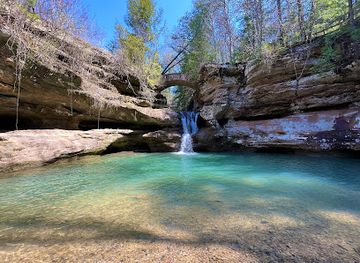
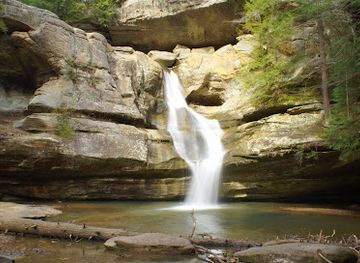
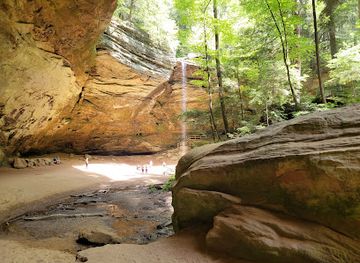
The defining landmarks of Hocking Hills are geological rather than monumental. Old Man’s Cave, within a deeply cut gorge along Queer Creek, is the region’s most recognisable natural feature and combines an overhanging recess with bridges, cliffs and woodland. Ash Cave is distinguished by its broad sandstone amphitheatre and immense rock shelter, whose scale becomes clear from the trail below. Rock House forms a natural, windowed passage in a cliff, while Conkle’s Hollow is marked by high walls enclosing a narrow gorge and by a separate rim landscape. Cantwell Cliffs presents a more irregular arrangement of ledges, ravines and passageways. Cedar Falls is smaller in scale but important as a visual focus within a wooded gorge. Together these landmarks express the effects of water erosion on Black Hand sandstone and give Hocking Hills a coherent geographical identity, even though the protected sites are distributed across separate areas rather than forming one continuous monument.
-
Park
Hocking Hills State Park
Explore the stunning landscapes and diverse wildlife of Hocking Hills State Park, Ohio's premier outdoor adventure destination.
-
State park
Hocking Hills State Park Visitor Center
Experience the beauty and adventure of Hocking Hills State Park, where nature's wonders and scenic trails await every traveler in Ohio.
-
Hiking area
Old Man's Cave
Explore Old Man's Cave in Hocking Hills, Ohio, where stunning landscapes and exhilarating hiking trails await outdoor enthusiasts and nature lovers.
-
Museum
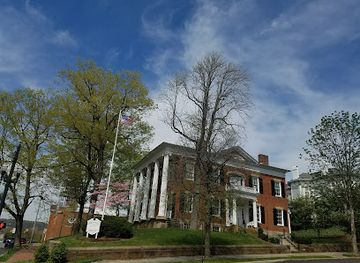
Sherman House Museum
Explore the Sherman House Museum in Lancaster, Ohio, and delve into the life of General Sherman and American history through captivating exhibits.
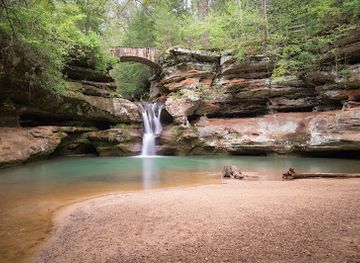
Explore Hocking Hills on the map
Plan your trip on one map. See where the top cities, national parks and sights are, and book hotels and experiences in a few clicks.
Best hotels in Hocking Hills
Best restaurants in Hocking Hills
Dining in Hocking Hills is shaped by its rural setting and outdoor visitor economy. Logan provides the broadest choice of cafés, diners, family restaurants, taverns and takeaway options, while restaurants and inns near the trail areas cater to visitors staying in cabins or campsites. Menus commonly draw on familiar Ohio and American traditions, including burgers, sandwiches, fried fish, barbecue, steaks, soups, baked goods and hearty breakfasts, with seasonal produce appearing at some farm shops and local markets. Coffee shops and casual cafés are useful before or after hiking, and rural restaurants may have limited evening hours or lie several miles from accommodation. The region is not defined by a single signature dish, but local food experiences include maple products, orchard and farm produce, baked goods, craft beer and other Ohio-made specialities when available. Visitors renting cabins often use nearby groceries and prepare meals, particularly for longer stays.
-
Barbecue
Millstone Southern Smoked BBQ
Savor the authentic taste of southern barbecue at Millstone Southern Smoked BBQ in Logan, Ohio - where tradition meets flavor.
-
Traditional American
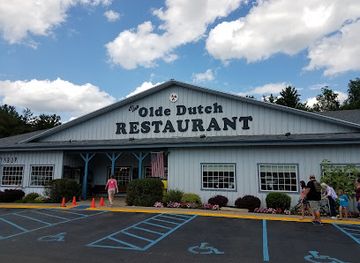
Olde Dutch
Experience the best of traditional American cuisine at Olde Dutch in Logan, Ohio – where hearty meals meet warm hospitality.
-
Pizza
Pizza Crossing Logan
Discover the taste of authentic Italian cuisine at Pizza Crossing Logan – where every slice is crafted with passion.
-
American
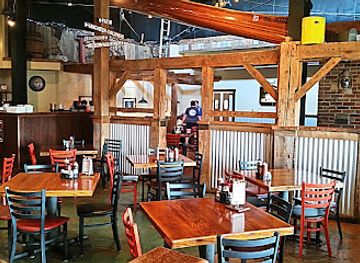
Hungry Buffalo
Discover the heart of American comfort food at Hungry Buffalo in Logan, Ohio - where every bite tells a delicious story.
Best bars in Hocking Hills
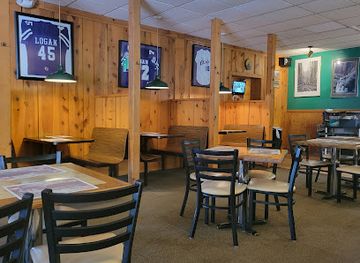
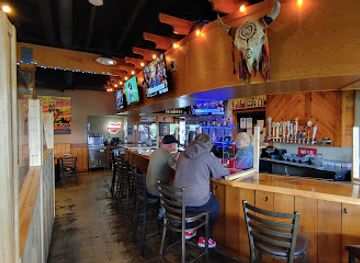
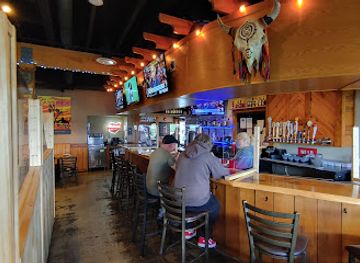
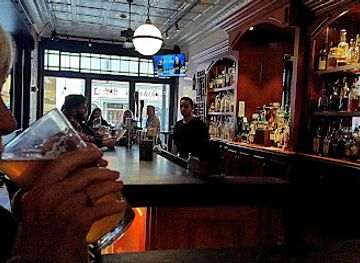
Hocking Hills does not have a large nightclub scene; evening life is concentrated in Logan and in the pubs, taverns, breweries, restaurants and inns serving the cabin and camping market. Expect relaxed meals, local beer, televised sport, occasional live music and conversation rather than a dense late-night entertainment district. Some accommodation properties provide fire-pit areas or outdoor settings, but visitors should follow fire, noise and alcohol rules, especially in residential surroundings and protected landscapes. Logan offers the most dependable choice of places for an evening out, while businesses in the rural parts of Hocking Hills may close earlier or operate seasonally. Craft beer and locally produced drinks can be found alongside familiar national brands, but opening arrangements vary, so check directly on the day.
-
Barbecue
Millstone Southern Smoked BBQ
Experience authentic Southern barbecue at Millstone Southern Smoked BBQ in Logan, Ohio, where every dish is a smoky delight.
-
Olde Dutch
Experience the Heart of American Cuisine at Olde Dutch Restaurant in Logan, Ohio, where tradition meets flavor in every bite.
-
American
Hungry Buffalo
Experience the best of American cuisine with a twist of fun at Hungry Buffalo in Logan, Ohio.
-
Ale House 1890
Discover Ale House 1890 in Lancaster, Ohio – a vibrant bar and restaurant known for its craft drinks and delicious cuisine in a charming atmosphere.
Best nightclubs in Hocking Hills
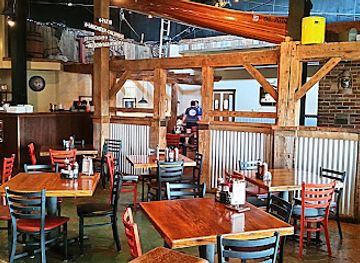
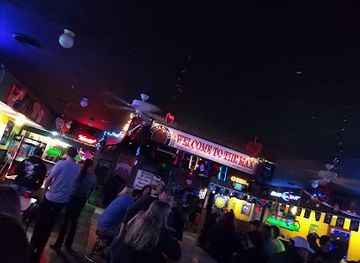
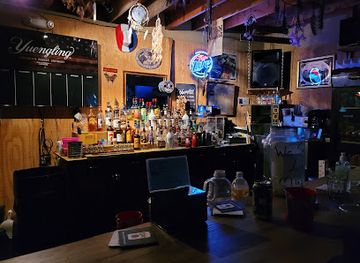
Hocking Hills does not have a large nightclub scene; evening life is concentrated in Logan and in the pubs, taverns, breweries, restaurants and inns serving the cabin and camping market. Expect relaxed meals, local beer, televised sport, occasional live music and conversation rather than a dense late-night entertainment district. Some accommodation properties provide fire-pit areas or outdoor settings, but visitors should follow fire, noise and alcohol rules, especially in residential surroundings and protected landscapes. Logan offers the most dependable choice of places for an evening out, while businesses in the rural parts of Hocking Hills may close earlier or operate seasonally. Craft beer and locally produced drinks can be found alongside familiar national brands, but opening arrangements vary, so check directly on the day.
-
Grill
The Max Bar & Grill
Enjoy delicious food, exciting karaoke, and lively entertainment at The Max Bar & Grill in Logan, Ohio - a must-visit for fun-loving tourists.
-
Bar
Paul's Nite Club
Discover the lively charm of Paul's Nite Club in Lancaster, Ohio, where great drinks and fun times await you every night.
Best shops in Hocking Hills
Shopping in Hocking Hills is practical, small-scale and closely tied to the countryside and visitor economy. Logan has the region’s principal concentration of everyday shops, cafés, galleries and services, while roadside stores and businesses near the trail areas sell souvenirs, clothing, snacks, outdoor supplies and locally themed gifts. Farm stands and markets may offer maple syrup, honey, preserves, baked goods, apples and other Ohio produce in season. Visitors can also look for pottery, woodwork, paintings, photography, handmade soaps and other crafts made by regional artists, although stock and opening days vary. Outdoor equipment, picnic supplies and groceries are useful purchases for cabin stays, but specialist shopping is limited compared with Columbus or major Ohio cities. Buy responsibly from established sellers, particularly when purchasing natural-looking souvenirs, and do not remove rocks, plants or other material from the state park or forest.
-
Park
Hocking Hills State Park
Discover stunning landscapes, hiking trails, and serene waterfalls at Hocking Hills State Park, Ohio's natural wonder.
-
State park
Hocking Hills State Park Visitor Center
Experience the breathtaking beauty and outdoor adventures at Hocking Hills State Park Visitor Center in Ohio's stunning natural landscape.
-
Gift shop
Olde Dutch
Discover the flavors of traditional American cuisine at Olde Dutch, where delicious meals and unique gifts create an unforgettable experience in Logan, Ohio.
-
Park
Ash Cave
Explore Ash Cave, a stunning natural park in Ohio's Hocking Hills, known for its majestic formations, serene hikes, and vibrant wildlife.

Get your free copy of our complete guide to Hocking Hills, delivered straight to you.
Everything on this page, from attractions and restaurants to essentials and local phrases, in one PDF you can read offline, print or share.
Already have an account? Sign in
Your Hocking Hills guide is ready.
We'll send it to · Not you? Sign out

Getting your guide ready…
We are putting together a fresh copy of the Hocking Hills guide. This can take up to a minute.
This can take a few moments. If your browser asks, choose Allow so the download can start. You'll find the guide in your Downloads folder.
Nothing happened? Download it again
Sorry, the guide is taking longer than usual. Please try again in a minute, or get it by email instead.
Hocking Hills essentials
Currency and Payment
Safety
Emergency Situations
Do's and Don'ts
Local Tips
From Eve
Local phrases worth knowing
You don't need to get them perfect. A few words go a long way, and locals appreciate the effort.
Basics
| English | Local | Say it |
|---|---|---|
| Hello | Howdy | [How-dee] |
| Goodbye | See ya | [See ya] |
| Yes | Yep | [Yep] |
| No | Nah | [Nah] |
| Please/You're welcome | Please / No problem | [Please / No prob-lem] |
| Thank you | Thanks a lot | [Thanks a lot] |
| Excuse me/Sorry | Excuse me / Sorry 'bout that | [Ex-cuse me / Sorry 'bout that] |
| How are you? | How ya doin'? | [How ya doin'?] |
| Fine. And you? | Good. And you? | [Good. And you?] |
| Do you speak English? | You speakin' English? | [You speakin' English?] |
| I don't understand | I ain't gettin' it | [I ain't gettin' it] |
Eating & Drinking
| English | Local | Say it |
|---|---|---|
| I'd like to see the menu, please | Can I see the menu, please? | [Can I see the menu, please?] |
| I don't eat meat | I don't do meat | [I don't do meat] |
| Cheers! | Cheers! | [Cheers!] |
| I would like to pay, please | Can I get the check, please? | [Can I get the check, please?] |
Emergencies
| English | Local | Say it |
|---|---|---|
| Help! | Help! | [Help!] |
| Go away! | Leave me be! | [Leave me be!] |
| Call the Police! | Call the cops! | [Call the cops!] |
| Call a doctor! | Get a doctor! | [Get a doctor!] |
| I'm lost | I’m turned around | [I’m turned around] |
| I'm ill | I ain't feelin' good | [I ain't feelin' good] |
Shopping
| English | Local | Say it |
|---|---|---|
| I'd like to buy... | I wanna buy... | [I wanna buy...] |
| I'm just looking | Just lookin’ | [Just lookin’] |
| How much is it? | How much's this? | [How much's this?] |
| That's too expensive | That's a bit pricey | [That's a bit pricey] |
| Can you lower the price? | Can ya knock down the price? | [Can ya knock down the price?] |
Time & Numbers
| English | Local | Say it |
|---|---|---|
| What time is it? | What time ya got? | [What time ya got?] |
| It's one o'clock | It's one o'clock | [It's one o'clock] |
| Half past (10) | Half past ten | [Half past ten] |
| Morning | Mornin' | [Mornin'] |
| Afternoon | Afternoon | [Afternoon] |
| Evening | Evenin' | [Evenin'] |
| Yesterday | Yest'day | [Yest'day] |
| Today | Today | [Today] |
| Tomorrow | Tomorra' | [Tomorra'] |
| 1 | One | [One] |
| 2 | Two | [Two] |
| 3 | Three | [Three] |
| 4 | Four | [Four] |
| 5 | Five | [Five] |
| 6 | Six | [Six] |
| 7 | Seven | [Seven] |
| 8 | Eight | [Eight] |
| 9 | Nine | [Nine] |
| 10 | Ten | [Ten] |
Transport & Directions
| English | Local | Say it |
|---|---|---|
| Where's a/the...? | Where’s a...? | [Where’s a...?] |
| What's the address? | What’s the address? | [What’s the address?] |
| Can you show me (on the map)? | Can ya show me on the map? | [Can ya show me on the map?] |
| When's the next (bus)? | When's the next bus? | [When's the next bus?] |
| A ticket (to ....) | A ticket to ... | [A ticket to ...] |
History of Hocking Hills
Indigenous Landscapes and Ancient Earthworks
The Hocking Hills landscape lies within the traditional homelands of Indigenous peoples, including the Shawnee and Wyandot, and was used for movement, hunting and seasonal activities long before Euro-American settlement. The wider Ohio region also contains earthworks and archaeological legacies associated with earlier Indigenous societies, especially the Hopewell tradition. Although the most famous monumental earthworks are not concentrated in Hocking Hills itself, the region forms part of Ohio’s much older cultural landscape. Visitors should understand the forests and valleys not as an untouched wilderness, but as places shaped by Indigenous presence, knowledge and seasonal use over many centuries.
The Hocking River and Early Settlement
The Hocking River and its tributaries provided routes through the rugged terrain as settlers moved into southeastern Ohio during the late eighteenth and early nineteenth centuries. Logan, founded in the early nineteenth century, became an important local centre and the seat of Hocking County. Roads, mills and farms gradually occupied the valleys, while the surrounding hills remained more lightly settled because of their steep slopes and thin soils. The river’s name derives from an Indigenous term, although historical interpretations of its meaning vary. Today, the pattern of a service town surrounded by wooded hollows still helps define the region.
Canals, Industry and the Nineteenth Century
The Hocking Canal, completed in the nineteenth century, connected the Hocking Valley with the Ohio canal network and encouraged the movement of agricultural goods and raw materials. Its influence helped strengthen Logan and other valley communities, even though the canal’s commercial importance declined as railways expanded. The region’s forests also supplied timber, while sandstone and other natural resources supported local industry. These economic changes tied Hocking Hills more closely to wider markets and transport systems, replacing much of the earlier isolation of the interior valleys with regular commercial connections.
Logging and the Changing Forest
During the late nineteenth and early twentieth centuries, extensive logging altered the forests of southeastern Ohio. Timber was harvested for construction, fuel and industry, and cleared land was often farmed or allowed to regenerate. The resulting second-growth forests differ from the ancient woodland imagined by some visitors, but they now form an important part of the region’s ecological character. Regeneration, conservation and public ownership gradually shifted local priorities from extraction towards protecting scenery, watersheds and habitat. Evidence of the area’s working past remains visible in rural settlements, old road corridors and the relationship between forest and valley.
The Creation of Hocking Hills State Park
Growing interest in scenic preservation led Ohio to protect major sandstone landscapes during the early twentieth century. Hocking Hills State Park developed as a group of distinctive natural areas rather than a single continuous tract, including places now known as Old Man’s Cave, Ash Cave, Cedar Falls, Rock House, Conkle’s Hollow and Cantwell Cliffs. Trails, bridges and visitor facilities made these formations accessible while formal protection limited damaging development. The park system helped establish outdoor recreation as a major part of the local economy and preserved the geological features that define Hocking Hills today.
Modern Recreation and Rural Tourism
From the mid-twentieth century onwards, Hocking Hills increasingly became a destination for hiking, camping, cabins and nature-based holidays within easy driving distance of Columbus and other Ohio cities. The growth of private lodging, restaurants, guide services and outdoor attractions brought new income to rural communities, while public agencies continued to manage heavily visited trails and sensitive habitats. Contemporary Hocking Hills therefore combines working countryside with a substantial visitor economy. The central challenge is balancing access with erosion control, habitat protection, parking management and respect for the quiet character of the surrounding communities.
Hocking Hills in Photos
Browse through our photo collection highlighting the charm and character of the destination.
Neighbouring regions of Hocking Hills
The closest regions to Hocking Hills, if you have time for more than one.
-

-

-

-

-


Swipe for more regions
Explore more

Explore more of Ohio
Explore Ohio's vibrant cities, rich history, and stunning natural landscapes. From bustling urban centers to serene state parks, Ohio offers diverse attractions for every traveler.
Explore Ohio