

Free Springfield Travel Guide & Mobile App
Plan your Springfield trip with Evendo. Get free guides to top attractions, restaurants, hotels, and bars. Web access or download the mobile app.


Springfield, Illinois blends Lincoln history, civic landmarks, Route 66 nostalgia, museums, local food and leafy parks in the heart of the Prairie State.
Lincoln’s City
Springfield is the capital of Illinois and the city most closely associated with Abraham Lincoln, who lived and worked here from 1837 until his presidency took him to Washington in 1861. His former home, law office, the Old State Capitol and his tomb at Oak Ridge Cemetery form a remarkably concentrated historical landscape, while the Abraham Lincoln Presidential Library and Museum presents his life through exhibitions, objects and theatrical displays. The city’s identity is shaped by this legacy, but Springfield is not simply a memorial to one statesman.Read more about Springfield
Civic Architecture and Prairie Life
Route 66 and Local Culture
When is the best time to visit Springfield?
Best: May, September–October · 20–26°C| Month | High (°C) | Rainfall (mm) |
|---|---|---|
| January | 4 | 45 |
| February | 5 | 49 |
| March | 12 | 66 |
| April | 19 | 91 |
| May (best) | 25 | 103 |
| June | 29 | 96 |
| July | 32 | 105 |
| August | 31 | 101 |
| September (best) | 26 | 78 |
| October (best) | 20 | 73 |
| November | 12 | 69 |
| December | 5 | 50 |
Getting to and around Springfield
How to get there
Transportation
Best attractions in Springfield
Springfield’s principal attractions centre on Abraham Lincoln and the political history of Illinois. The Abraham Lincoln Presidential Library and Museum uses documents, artefacts and immersive displays to examine Lincoln’s life and the Civil War era, while Lincoln Home National Historic Site preserves the house and neighbourhood where he lived before becoming president. The Old State Capitol introduces the city’s nineteenth-century political world, including the setting associated with Lincoln’s House Divided speech. At Oak Ridge Cemetery, the Lincoln Tomb provides a quieter memorial experience amid landscaped grounds. Beyond the Lincoln story, the Dana-Thomas House offers an exceptional encounter with Frank Lloyd Wright’s early Prairie architecture, and the Illinois State Museum explores the state’s natural history, archaeology and culture. Washington Park supplies lakes, gardens and walking paths, while Route 66 sites add roadside history, diners and Americana to the sightseeing mix.
-
 Tourist attraction
Lincoln Home National Historic Site
Discover the legacy of Abraham Lincoln at the Lincoln Home National Historic Site, a historic gem in Springfield, Illinois, celebrating America's past.
2 min walk · 0.2 km from city centre
-
Tourist attraction
Washington Park
Explore the natural beauty and family-friendly attractions of Washington Park, a serene oasis in Springfield, Illinois, perfect for relaxation and recreation.
10 min drive · 3.2 km from city centre
-
Tourist attraction
Lincoln Home National Historic Site Visitor Center
Discover the legacy of Abraham Lincoln at the National Historic Site in Springfield, a captivating blend of history, architecture, and culture.
3 min walk · 0.2 km from city centre
-
History museum
Abraham Lincoln Presidential Library and Museum
Explore the rich history of Abraham Lincoln at the Presidential Library and Museum, an engaging destination for all history lovers.
7 min walk · 0.5 km from city centre


Best landmarks in Springfield
The Illinois State Capitol is Springfield’s most prominent civic landmark, its nineteenth-century dome and elaborate interior expressing the political ambitions of a growing state. The Old State Capitol, a Greek Revival building reconstructed on its original site, is closely associated with Lincoln’s Illinois career and the political debates that preceded the Civil War. Lincoln Home National Historic Site preserves the only house Lincoln ever owned, together with part of its surrounding residential neighbourhood. At Oak Ridge Cemetery, the Lincoln Tomb is marked by a tall obelisk, sculptural memorials and a chamber containing the president’s burial site. The Dana-Thomas House provides a contrasting landmark of early twentieth-century design, with Frank Lloyd Wright’s Prairie School principles visible in its geometry, ornament and integrated interiors. Together these buildings trace Springfield’s civic, political, memorial and architectural development.
-
Historical place
Lincoln Home National Historic Site
Visit the only home Abraham Lincoln ever owned, meticulously preserved in Springfield, Illinois, offering a glimpse into his life before the presidency.
2 min walk · 0.2 km from city centre
-
Park
Washington Park
Discover Springfield's historic Washington Park: botanical gardens, carillon concerts, scenic trails, and recreational activities for all ages.
10 min drive · 3.2 km from city centre
-
Historical place
Lincoln Home National Historic Site Visitor Center
Step back in time and explore the life of Abraham Lincoln at his preserved Springfield home and neighborhood.
3 min walk · 0.2 km from city centre
-
History museum
Abraham Lincoln Presidential Library and Museum
Explore the life, legacy, and presidency of Abraham Lincoln at this immersive museum and research library in Springfield, Illinois.
7 min walk · 0.5 km from city centre


Explore Springfield on the map
Plan your Springfield trip on one map. See where the top attractions, landmarks, restaurants, bars and hotels are, find what's near where you're staying, and book hotels and experiences in a few clicks.
Best hotels in Springfield
Best restaurants in Springfield
Springfield’s food culture is rooted in central Illinois traditions, with the horseshoe sandwich serving as its most distinctive speciality. It consists of an open-faced base, commonly toast or another starch, topped with meat or another savoury ingredient, fries and cheese sauce; variations range from classic ham to contemporary versions. Chilli, burgers, diner breakfasts and Midwestern comfort food remain part of the local character, while established restaurants such as Maldaner’s and D’Arcy’s Pint are associated with Springfield dining. The Cozy Dog Drive In is linked to the city’s Route 66 history and its corn-dog tradition. Downtown and the areas around the state capital contain restaurants, cafés, breweries and pubs, with menus extending beyond local staples to contemporary American and international cooking. Farmers’ markets and seasonal produce connect the city’s tables with the surrounding agricultural landscape.
-
Irish pub
D'Arcy's Pint
Discover authentic Irish cuisine at D'Arcy's Pint, where tradition meets modern flair in Springfield, Illinois.
12 min drive · 4.1 km from city centre
-
American
Smokey Bones Springfield
Discover Smokey Bones Springfield: A barbecue haven offering delicious American cuisine in a lively atmosphere perfect for all occasions.
14 min drive · 4.7 km from city centre
-
American
Cracker Barrel Old Country Store
Discover comfort food and Southern hospitality at Cracker Barrel Old Country Store in Springfield - perfect for families and travelers alike.
28 min drive · 9.3 km from city centre
-
Steak
Texas Roadhouse
Discover Texas Roadhouse in Springfield for mouthwatering steaks and an unforgettable American dining experience.
18 min drive · 6.2 km from city centre


Best bars in Springfield
Springfield’s evening scene is more relaxed than that of a major metropolitan centre, with activity concentrated around downtown, the entertainment venues near the capital and a handful of established pubs and breweries. Obed & Isaac’s, housed in a former church near the Old State Capitol, is known for its beer-focused social atmosphere, while other local breweries and taprooms provide spaces for conversation and informal food. Bars associated with restaurants often stay livelier around weekends and events, and live music appears at selected venues rather than in a single large club district. The Hoogland Center for the Arts and other downtown cultural spaces add theatre, concerts and performances to the evening calendar. Route 66 diners and historic drinking establishments contribute a more nostalgic style of nightlife, while campus and civic events can bring additional seasonal activity.
-
Irish pub
D'Arcy's Pint
D'Arcy's Pint: A vibrant Irish pub in Springfield serving a fusion of traditional Irish, Brazilian, and Cuban dishes in a cozy atmosphere.
12 min drive · 4.1 km from city centre
-
American
Finley's Tap House
Experience the vibrant flavors of American cuisine at Finley's Tap House, a must-visit restaurant in Springfield, Illinois.
21 min drive · 7.1 km from city centre
-
Grill
Curve Inn
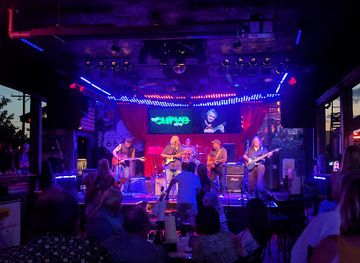
Experience the vibrant atmosphere of Curve Inn in Springfield, a perfect destination for grill lovers and live music enthusiasts.
14 min drive · 4.8 km from city centre
-
Grill
Brickhouse Grill & Pub
Discover the vibrant flavors of Brickhouse Grill & Pub in Springfield, Illinois, where delicious grill fare meets a lively pub atmosphere.
20 min drive · 6.7 km from city centre


Best nightclubs in Springfield
Springfield’s evening scene is more relaxed than that of a major metropolitan centre, with activity concentrated around downtown, the entertainment venues near the capital and a handful of established pubs and breweries. Obed & Isaac’s, housed in a former church near the Old State Capitol, is known for its beer-focused social atmosphere, while other local breweries and taprooms provide spaces for conversation and informal food. Bars associated with restaurants often stay livelier around weekends and events, and live music appears at selected venues rather than in a single large club district. The Hoogland Center for the Arts and other downtown cultural spaces add theatre, concerts and performances to the evening calendar. Route 66 diners and historic drinking establishments contribute a more nostalgic style of nightlife, while campus and civic events can bring additional seasonal activity.
-
Grill
Curve Inn
Experience the lively ambiance of Curve Inn in Springfield: a grill, live music venue, and beer garden for unforgettable evenings.
14 min drive · 4.8 km from city centre
-
Night club
Trading Post Saloon
Discover the lively nightlife of Springfield at Trading Post Saloon, where great drinks and unforgettable experiences await you.
16 min drive · 5.2 km from city centre
-
Social club
Amber's Place
Experience the vibrant nightlife at Amber's Place, a social club in Springfield that offers great drinks, live music, and a friendly atmosphere.
11 min drive · 3.7 km from city centre
-
Bar
Northern Lights Lounge
Experience vibrant karaoke nights and delicious pizza at Northern Lights Lounge, Springfield's go-to bar for fun and entertainment.
10 min drive · 3.5 km from city centre


Best shops in Springfield
Shopping in Springfield combines practical retail with historic-town browsing and Route 66 memorabilia. Downtown streets around the Old State Capitol contain independent businesses, galleries, cafés and shops where visitors may find locally made goods, books, artwork and Lincoln-related gifts. The capital area is particularly suited to purchasing historical publications, prints and souvenirs connected with Illinois politics and the city’s presidential heritage. White Oaks Mall and larger commercial corridors provide mainstream shops and everyday retail beyond the central district. Route 66-associated businesses and roadside stops offer a more nostalgic selection, including signs, apparel and Americana-inspired items where available. Local farmers’ markets and seasonal events are useful for Illinois-grown produce, baked goods and small-scale crafts. As in many American cities, retail districts are spread out, so a car or taxi is often convenient when combining downtown browsing with suburban shopping.
-
Shopping mall
White Oaks Mall
Explore over 100 shops and diverse dining options at White Oaks Mall, Springfield's premier shopping destination for tourists and locals alike.
19 min drive · 6.2 km from city centre
-
Gift shop
Penny Lane Gifts
Explore Penny Lane Gifts: A delightful gift shop in Springfield, IL, offering unique treasures from fashion to novelties for every taste.
12 min drive · 4.1 km from city centre
-
Gift shop
Happy Daze Gift Shop LLC
Explore Happy Daze Gift Shop in Springfield, IL - your one-stop destination for unique gifts, trendy clothing, and vibrant posters that celebrate individuality.
6 min drive · 1.9 km from city centre
-
Shopping mall
Town & Country Shopping Center
Discover the lively Town & Country Shopping Center in Springfield, Illinois, where shopping, dining, and entertainment await you in a vibrant atmosphere.
11 min drive · 3.6 km from city centre


Get your free copy of our complete guide to Springfield, delivered straight to you.
Everything on this page, from attractions and restaurants to essentials and local phrases, in one PDF you can read offline, print or share.
Already have an account? Sign in
Your Springfield guide is ready.
We'll send it to · Not you? Sign out

Getting your guide ready…
We are putting together a fresh copy of the Springfield guide. This can take up to a minute.
This can take a few moments. If your browser asks, choose Allow so the download can start. You'll find the guide in your Downloads folder.
Nothing happened? Download it again
Sorry, the guide is taking longer than usual. Please try again in a minute, or get it by email instead.
Springfield essentials
Currency and Payment
Safety
Emergency Situations
Do's and Don'ts
Local Tips
From Eve
Local phrases worth knowing
You don't need to get them perfect. A few words go a long way, and locals appreciate the effort.
Basics
| English | Local | Say it |
|---|---|---|
| Hello | Howdy | [haw-dee] |
| Goodbye | See ya later | [see ya lay-tur] |
| Yes | Yep | [yep] |
| No | Nah | [na] |
| Please/You're welcome | Please and thank ya | [pleez and thank yuh] |
| Thank you | Thanks a lot | [thanks uh lot] |
| Excuse me/Sorry | Pardon me | [par-dun me] |
| How are you? | How's it goin'? | [hows it goin] |
| Fine. And you? | Doin' good. How 'bout you? | [doin good how bout yuh] |
| Do you speak English? | Ya speak English? | [ya speak ing-lish] |
| I don't understand | I'm lost | [im lost] |
Eating & Drinking
| English | Local | Say it |
|---|---|---|
| I'd like to see the menu, please | Can I check out the menu? | [kan eye chek out the men-yoo] |
| I don't eat meat | I'm vegetarian | [im ve-jah-tear-ee-un] |
| Cheers! | Bottoms up! | [bot-ums up] |
| I would like to pay, please | I'll take the bill | [il take the bil] |
Emergencies
| English | Local | Say it |
|---|---|---|
| Help! | I need a hand! | [i need a hand] |
| Go away! | Get lost! | [get lost] |
| Call the Police! | Get the cops! | [get the cops] |
| Call a doctor! | Get a doc! | [get a doc] |
| I'm lost | I'm turned around | [im turned around] |
| I'm ill | I'm feelin' under the weather | [im feelin under the we-ther] |
Shopping
| English | Local | Say it |
|---|---|---|
| I'd like to buy... | I'm lookin' to purchase... | [im lookin to pur-chase] |
| I'm just looking | Just browsin' | [just browsin] |
| How much is it? | What's the damage? | [whats the dam-ij] |
| That's too expensive | That's a bit steep | [thats a bit steep] |
| Can you lower the price? | Can ya cut me a deal? | [can yuh cut me a deal] |
Time & Numbers
| English | Local | Say it |
|---|---|---|
| What time is it? | What's the time? | [whats the time] |
| It's one o'clock | It's one | [its one] |
| Half past (10) | Ten thirty | [ten thur-tee] |
| Morning | Mornin' | [mornin] |
| Afternoon | Afternoon | [after-noon] |
| Evening | Evenin' | [evenin] |
| Yesterday | Yest'day | [yest-day] |
| Today | Today | [today] |
| Tomorrow | Tomorra | [tomorra] |
| 1 | One | [wun] |
| 2 | Two | [too] |
| 3 | Three | [three] |
| 4 | Four | [four] |
| 5 | Five | [five] |
| 6 | Six | [six] |
| 7 | Seven | [seven] |
| 8 | Eight | [ate] |
| 9 | Nine | [nine] |
| 10 | Ten | [ten] |
Transport & Directions
| English | Local | Say it |
|---|---|---|
| Where's a/the...? | Where's the... at? | [wheres the ... at] |
| What's the address? | What's the addy? | [whats the add-ee] |
| Can you show me (on the map)? | Can ya point it out (on the map)? | [can ya point it out on the map] |
| When's the next (bus)? | When's the next (bus) comin'? | [whens the next bus comin] |
| A ticket (to ....) | A ticket (to ....) | [a ticket to] |
History of Springfield
Kaskaskia and Sangamon Country
The Springfield area lies within the broader homeland of Indigenous peoples, including the Illiniwek confederation and later communities affected by removal and expanding American settlement. In the early nineteenth century, migrants moved into the Sangamon River country, attracted by fertile prairie and woodland. The settlement that became Springfield was established in 1821 as Calhoun, named for Senator John C. Calhoun. Its location near waterways, roads and agricultural land helped it develop as a county seat and trading community, although the region’s growth came at considerable cost to Indigenous communities whose lands were taken through federal and state policies.
From Calhoun to Springfield
The settlement was renamed Springfield in 1832, the same year as the Black Hawk War, which accelerated the removal of Native peoples and opened more land to American settlement. Springfield grew as Sangamon County’s commercial and political centre, serving farmers and merchants from the surrounding prairie. Roads and river transport supported trade, while the arrival of railways later strengthened its position. The town’s development reflected the wider transformation of central Illinois from a frontier region into an agricultural state integrated with national markets.
The Lincoln Years
Abraham Lincoln moved to Springfield in 1837, when it became Illinois’s capital, and established himself as a lawyer and politician. He lived with his family in the house now preserved as Lincoln Home National Historic Site, worked in the city’s law offices and represented Illinois in the state legislature and later in Congress. In 1858, he delivered his famous House Divided speech at the Old State Capitol during his campaign for the US Senate. Springfield was also the setting for his farewell address in 1861 before he left for Washington to assume the presidency.
Capital Building and Civic Growth
Illinois’s government moved from Vandalia to Springfield in 1839, confirming the city’s political importance. The Old State Capitol served as the seat of government until 1876, when the legislature moved to the present Illinois State Capitol, a larger building reflecting the state’s population and economic growth. Rail connections, commerce and manufacturing expanded during the nineteenth century, and Springfield became an important centre for coal mining in central Illinois. The city’s civic institutions, churches, schools and neighbourhoods developed alongside this growth.
Memory, Mourning and Preservation
Lincoln’s assassination in 1865 transformed Springfield into a national site of mourning and commemoration. His funeral procession ended at Oak Ridge Cemetery, where the Lincoln Tomb became the focal point of a large memorial complex. Over time, preservation efforts protected the Lincoln Home, the Old State Capitol and other buildings associated with his career. These sites helped shape the city’s modern identity and made historical tourism a central part of its cultural economy, while also encouraging broader interpretation of nineteenth-century political life, slavery, the Civil War and emancipation.
Modern Springfield and Route 66
During the twentieth century, Springfield continued as Illinois’s administrative capital while adapting to changing transport, industry and patterns of urban growth. US Route 66 brought motorists through the city from 1926, leaving a legacy of diners, service stations and roadside culture that remains part of Springfield’s visitor identity. The opening of the Abraham Lincoln Presidential Library and Museum in 2005 added a major modern institution to the city’s historical landscape. Contemporary Springfield combines state government, education, museums, neighbourhood life and the continuing work of interpreting Lincoln’s complicated era.
Springfield in Photos
Browse through our photo collection highlighting the charm and character of the destination.
Cities near Springfield
The closest cities to Springfield, if you have time for more than one stop.
-

-

-

-

-


Swipe for more cities
Explore more

Explore more of Illinois
Discover Illinois: From Chicago's iconic skyline to the tranquil beauty of its countryside, experience the diverse allure of the Prairie State.
Explore Illinois