

Free Cincinnati Travel Guide & Mobile App
Plan your Cincinnati trip with Evendo. Get free guides to top attractions, restaurants, hotels, and bars. Web access or download the mobile app.


Cincinnati blends Ohio River views, German heritage, historic architecture, acclaimed arts, lively markets and distinctive neighbourhoods for memorable sightseeing.
A City Shaped by the Ohio River
Cincinnati rises from the northern bank of the Ohio River in south-western Ohio, where steep hills, historic neighbourhoods and grand public buildings give the city a distinctive physical character. Its riverfront looks across to Northern Kentucky, while the central districts extend inland through a succession of ridges and valleys. The compact core makes it possible to move between waterfront parks, downtown squares and the restored streets of Over-the-Rhine within a relatively short distance.Read more about Cincinnati
Heritage in Brick, Stone and Iron
Arts, Neighbourhoods and Riverfront Life
When is the best time to visit Cincinnati?
Best: May–June, September · 23–27°C| Month | High (°C) | Rainfall (mm) |
|---|---|---|
| JANUARY | 4 | 76 |
| FEBRUARY | 5 | 71 |
| MARCH | 11 | 91 |
| APRIL | 17 | 97 |
| MAY (best) | 23 | 105 |
| JUNE (best) | 27 | 107 |
| JULY | 29 | 99 |
| AUGUST | 29 | 94 |
| SEPTEMBER (best) | 25 | 87 |
| OCTOBER | 17 | 79 |
| NOVEMBER | 11 | 88 |
| DECEMBER | 5 | 89 |
Getting to and around Cincinnati
How to get there
Transportation
Best attractions in Cincinnati
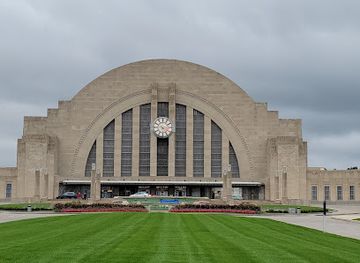
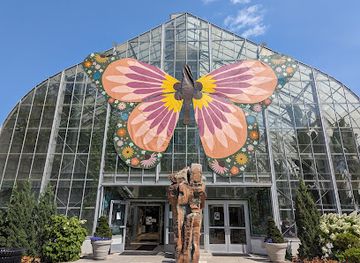
Cincinnati's attractions range from major cultural institutions to lively public spaces and neighbourhood streets. The Cincinnati Museum Center occupies Union Terminal, an Art Deco railway landmark with museums covering local history, science and natural history. At the riverfront, the National Underground Railroad Freedom Center examines slavery, resistance and continuing struggles for freedom, while Smale Riverfront Park provides gardens, play areas and views across the Ohio. Findlay Market brings together food stalls, produce sellers and independent traders in a long-established public market setting. In Over-the-Rhine, restored nineteenth-century buildings frame Washington Park, Music Hall and a dense collection of restaurants and creative businesses. The Cincinnati Art Museum in Eden Park holds international and American collections, and the nearby Krohn Conservatory offers a change of scale with its glasshouse displays. The American Sign Museum presents a colourful history of commercial signs in an adapted industrial building.
-
 Tourist attraction
Cincinnati Zoo & Botanical Garden
Explore the Cincinnati Zoo & Botanical Garden, a captivating blend of wildlife and botanical beauty perfect for family fun and educational adventures.
13 min drive · 4.4 km from city centre
-
Stadium
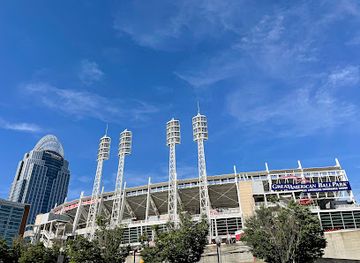
Great American Ball Park
Discover the excitement of Major League Baseball at Great American Ball Park, Cincinnati's iconic stadium with stunning river views and a lively atmosphere.
10 min walk · 0.8 km from city centre
-
Tourist attraction
Newport Aquarium
Explore the mesmerizing marine life at Newport Aquarium, a top tourist attraction in Kentucky offering unforgettable underwater experiences and educational programs.
5 min drive · 1.6 km from city centre
-
Market
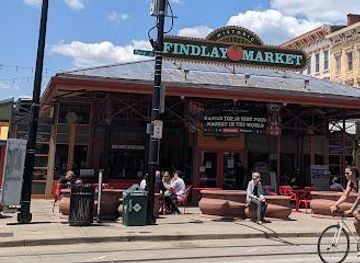
Findlay Market
Discover the heart of Cincinnati at Findlay Market, where fresh produce and local flavors come together in a lively, historic setting.
19 min walk · 1.5 km from city centre

Best landmarks in Cincinnati
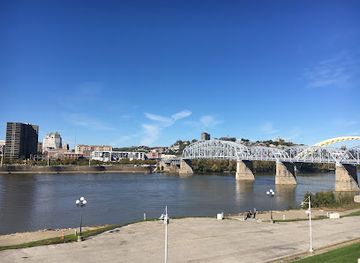
Cincinnati Music Hall is one of the city's defining landmarks, a nineteenth-century civic building noted for its elaborate Victorian architecture and enduring role in musical performance. Union Terminal, completed in 1933, is an outstanding Art Deco structure whose sweeping half-dome and mosaic interiors recall the era of railway travel; it now houses the Cincinnati Museum Center. The John A. Roebling Suspension Bridge crosses the Ohio River to Covington and reflects the engineering development that preceded the Brooklyn Bridge. In the central city, Fountain Square functions as Cincinnati's civic meeting place, while Carew Tower remains a prominent example of early twentieth-century skyscraper design. The Cathedral Basilica of Saint Peter in Chains adds a major religious landmark with a Greek Revival exterior and a richly decorated interior. Together these buildings trace Cincinnati's commercial, cultural, religious and infrastructural growth.
-
Aquarium
Newport Aquarium
Explore the enchanting underwater world at Newport Aquarium, where interactive exhibits bring marine life to life for visitors of all ages.
5 min drive · 1.6 km from city centre
-
Stadium
Great American Ball Park
Discover the excitement of baseball at Great American Ball Park, a landmark venue in Cincinnati offering stunning views and unforgettable experiences.
10 min walk · 0.8 km from city centre
-
Museum
Cincinnati Museum Center
Explore an iconic cultural hub at the Cincinnati Museum Center, offering diverse exhibits in history, science, and art for all ages.
7 min drive · 2.3 km from city centre
-
Botanical garden
Krohn Conservatory
Discover the enchanting Krohn Conservatory in Cincinnati, a botanical garden showcasing diverse plant species and seasonal floral displays in a serene setting.
7 min drive · 2.3 km from city centre
Explore Cincinnati on the map
Plan your Cincinnati trip on one map. See where the top attractions, landmarks, restaurants, bars and hotels are, find what's near where you're staying, and book hotels and experiences in a few clicks.
Neighbourhoods in Cincinnati
-

-

-

-

-


Swipe for more neighbourhoods
Best hotels in Cincinnati
Best restaurants in Cincinnati
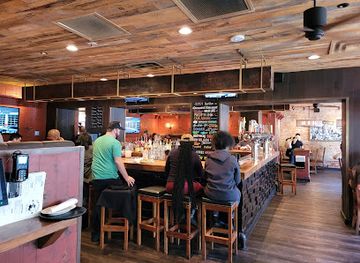
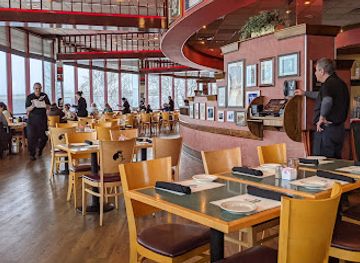
Cincinnati's food identity reflects river commerce, German immigration, industrial history and a strong contemporary craft culture. Cincinnati-style chilli, a spiced meat sauce served over spaghetti and often finished with cheese, is a local institution, while goetta—a breakfast mixture of meat, oats and seasoning—recalls German culinary traditions. German-style sausages, pretzels, bakeries and beer remain part of the city's broader food vocabulary, alongside locally associated ice cream and celebrated regional brands such as Graeter's. Findlay Market is a useful place to sample prepared food, produce and speciality goods, while Over-the-Rhine, downtown, Northside and suburban districts provide restaurants ranging from casual counters to modern dining rooms. Craft breweries and taprooms contribute to the social food scene, and the city's multicultural communities add restaurants shaped by Asian, African, Middle Eastern and Latin American traditions.
-
Chicken
The Eagle OTR
Experience the vibrant flavors of Cincinnati at The Eagle OTR – where Southern comfort meets local charm.
11 min walk · 0.9 km from city centre
-
Barbecue
Montgomery Inn The Boathouse
Experience the best of Cincinnati's barbecue scene at Montgomery Inn The Boathouse with stunning riverside views and mouthwatering dishes.
19 min walk · 1.5 km from city centre
-
American
Incline Public House
Experience delectable American cuisine with stunning views at Incline Public House in Cincinnati's East Price Hill neighborhood.
12 min drive · 3.9 km from city centre
-
German
Hofbräuhaus - Newport
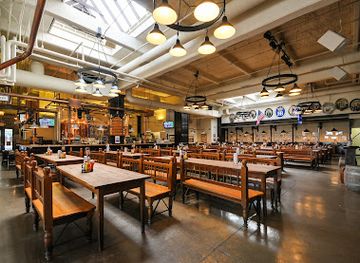
Experience authentic German cuisine and craft beer in a lively atmosphere at Hofbräuhaus Newport - perfect for families and festivities!
5 min drive · 1.8 km from city centre
Best bars in Cincinnati
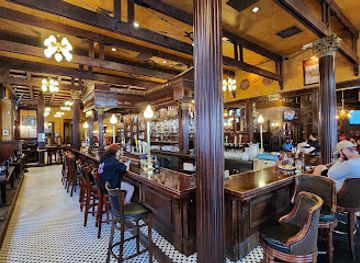
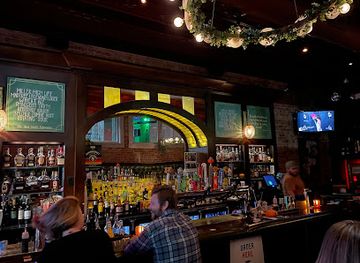
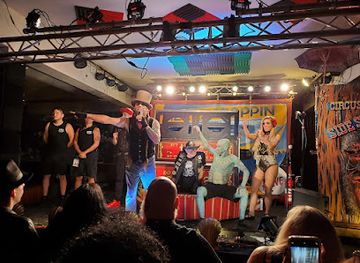
Cincinnati's evening scene is concentrated in several distinct districts rather than one continuous nightlife strip. Over-the-Rhine has the greatest density of bars, breweries, cocktail rooms, live-music venues and restaurants, with Washington Park and nearby streets often forming the setting for public events. Downtown offers sports bars, hotel lounges, theatres and the entertainment complex around The Banks, while Northside is known for independent bars, music venues and a more alternative atmosphere. Mount Adams has long been associated with hillside drinking spots and night-time views, and the city's breweries provide a distinctly local way to spend an evening. Cincinnati Symphony Orchestra performances, Cincinnati Opera, Music Hall programmes and theatre productions offer cultural alternatives to bar-based nightlife. Venue access, alcohol service and late-night transport vary, so checking current arrangements is sensible.
-
German
Hofbräuhaus - Newport
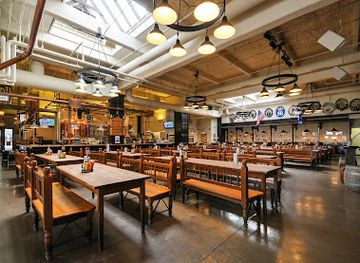
Discover the heart of Bavarian culture at Hofbräuhaus Newport, featuring authentic cuisine, craft beers, and a festive atmosphere.
5 min drive · 1.8 km from city centre
-
Sports bar
Knockback Nats
Experience the thrill of game day at Knockback Nats, Cincinnati's favorite sports bar known for its vibrant atmosphere and delicious grill fare.
3 min walk · 0.2 km from city centre
-
Gastropub
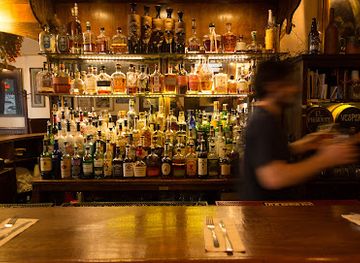
Nicholson's Fine Food & Whiskey
Discover the flavors of Cincinnati at Nicholson's Fine Food & Whiskey, a top-rated gastropub offering gourmet cuisine and an extensive whiskey selection.
1 min walk · 0.1 km from city centre
-
Grill
Arnold's Bar & Grill
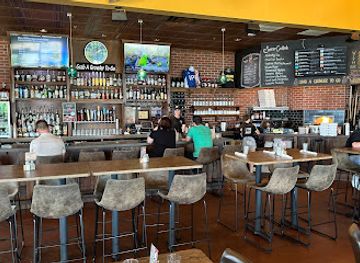
Discover Arnold's Bar & Grill, a lively American grill in Cincinnati's Central Business District, offering delicious food and a vibrant atmosphere.
3 min walk · 0.3 km from city centre
Best nightclubs in Cincinnati
Cincinnati's evening scene is concentrated in several distinct districts rather than one continuous nightlife strip. Over-the-Rhine has the greatest density of bars, breweries, cocktail rooms, live-music venues and restaurants, with Washington Park and nearby streets often forming the setting for public events. Downtown offers sports bars, hotel lounges, theatres and the entertainment complex around The Banks, while Northside is known for independent bars, music venues and a more alternative atmosphere. Mount Adams has long been associated with hillside drinking spots and night-time views, and the city's breweries provide a distinctly local way to spend an evening. Cincinnati Symphony Orchestra performances, Cincinnati Opera, Music Hall programmes and theatre productions offer cultural alternatives to bar-based nightlife. Venue access, alcohol service and late-night transport vary, so checking current arrangements is sensible.
-
Lounge
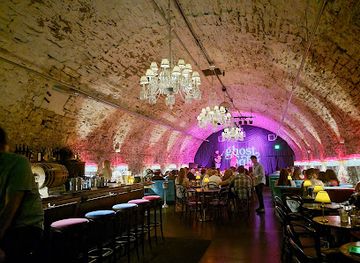
Ghost Baby
Experience the vibrant nightlife at Ghost Baby, Cincinnati's premier lounge and cocktail bar known for its creative drinks and electric atmosphere.
10 min walk · 0.8 km from city centre
-
Night club
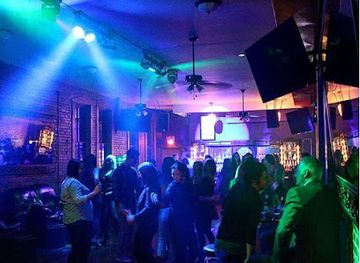
Mr Pitiful's OTR
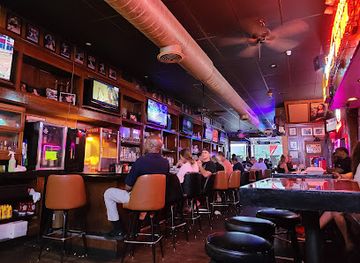
Discover the lively atmosphere of Mr. Pitiful's OTR, a premier night club and bar in Cincinnati's Over-The-Rhine, featuring live music and craft cocktails.
10 min walk · 0.8 km from city centre
-
Lounge
The Lackman
Discover the vibrant atmosphere and creative cocktails at The Lackman, Cincinnati's premier lounge in the Over-The-Rhine district.
9 min walk · 0.7 km from city centre
-
Night club
Legends Bar & Venue
Discover the ultimate nightlife experience at Legends Bar & Venue, where live music and vibrant energy come together for unforgettable evenings in Cincinnati.
31 min drive · 11 km from city centre
Best shops in Cincinnati
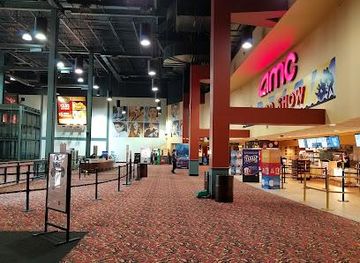
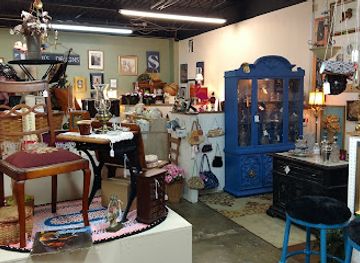
Shopping in Cincinnati combines a working public market tradition with independent retail streets and neighbourhood businesses. Findlay Market is the most distinctive destination for local produce, prepared foods, flowers, baked goods and speciality products, with some traders reflecting the culinary traditions of the surrounding Over-the-Rhine community. Nearby streets contain boutiques, design shops, record stores, galleries and independent food retailers, while downtown offers a more office-oriented central retail environment. Hyde Park Square, Mount Lookout Square and Northside provide smaller clusters of locally owned shops, cafés and services. Visitors looking for regional food products can find chilli-related goods, confectionery, craft beer and bakery items, while the city's arts districts offer handmade objects and design-led gifts. Shopping patterns are neighbourhood-based rather than centred on one extensive luxury boulevard, and individual market and shop schedules vary.
-
Shopping mall
Newport on the Levee
Discover the endless entertainment and dining options at Newport on the Levee, a vibrant shopping mall along the Ohio River in Newport, Kentucky.
5 min drive · 1.6 km from city centre
-
Antique store
Riverside Centre Antique Mall
Explore Riverside Centre Antique Mall, where vintage treasures and unique collectibles await in the heart of Cincinnati.
19 min drive · 6.4 km from city centre
-
Non-profit organization
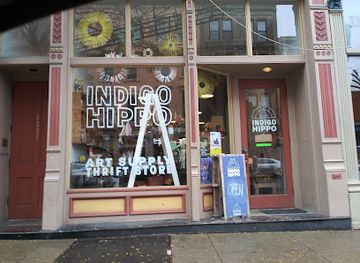
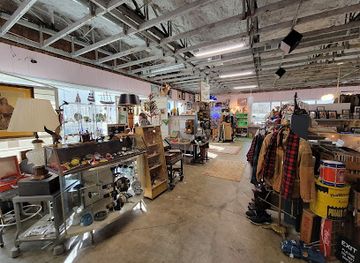
Indigo Hippo
Explore Indigo Hippo in Cincinnati for a unique non-profit art supply experience that inspires creativity and supports local artists.
11 min walk · 0.9 km from city centre
-
Antique store
Flamingo Haven Antique Mall
Explore Flamingo Haven Antique Mall in Cincinnati for an extraordinary selection of vintage treasures and unique collectibles that capture the essence of nostalgia.
23 min drive · 7.5 km from city centre
Get your free copy of our complete guide to Cincinnati, delivered straight to you.
Everything on this page, from attractions and restaurants to essentials and local phrases, in one PDF you can read offline, print or share.
Already have an account? Sign in
Your Cincinnati guide is ready.
We'll send it to · Not you? Sign out

Getting your guide ready…
We are putting together a fresh copy of the Cincinnati guide. This can take up to a minute.
This can take a few moments. If your browser asks, choose Allow so the download can start. You'll find the guide in your Downloads folder.
Nothing happened? Download it again
Sorry, the guide is taking longer than usual. Please try again in a minute, or get it by email instead.
Cincinnati essentials
Currency and Payment
Safety
Emergency Situations
Do's and Don'ts
Local Tips
From Eve
Local phrases worth knowing
You don't need to get them perfect. A few words go a long way, and locals appreciate the effort.
Basics
| English | Local | Say it |
|---|---|---|
| Hello | Howdy | [haw-dee] |
| Goodbye | See ya | [see yah] |
| Yes | Yep | [yep] |
| No | Nah | [naw] |
| Please/You're welcome | Please/No problem | [pl-eez/no prah-bluhm] |
| Thank you | Thanks | [th-anks] |
| Excuse me/Sorry | Excuse me/Sorry | [ex-kyooz mee/sor-ee] |
| How are you? | How's it goin'? | [hows it go-in] |
| Fine. And you? | Fine. And you? | [fine. and yoo?] |
| Do you speak English? | Ya speak English? | [yah speak ing-glish] |
| I don't understand | I don't get it | [eye don't get it] |
Eating & Drinking
| English | Local | Say it |
|---|---|---|
| I'd like to see the menu, please | Can I check out the menu? | [can eye chek out the men-yoo] |
| I don't eat meat | I don't eat meat | [eye don't eat meet] |
| Cheers! | Cheers! | [cheers] |
| I would like to pay, please | I'd like to settle up, please | [eye'd like to set-ul up, please] |
Emergencies
| English | Local | Say it |
|---|---|---|
| Help! | Help! | [help] |
| Go away! | Get lost! | [get lost] |
| Call the Police! | Call the cops! | [call the cops] |
| Call a doctor! | Call a doc! | [call a doc] |
| I'm lost | I'm lost | [eye'm lost] |
| I'm ill | I'm sick | [eye'm sick] |
Shopping
| English | Local | Say it |
|---|---|---|
| I'd like to buy... | I wanna buy... | [eye wanna buy] |
| I'm just looking | Just browsing | [just braow-zing] |
| How much is it? | How much does it cost? | [how much duz it cost] |
| That's too expensive | That's pricey | [thats prahy-see] |
| Can you lower the price? | Can you knock the price down? | [can yoo nok the prahys down] |
Time & Numbers
| English | Local | Say it |
|---|---|---|
| What time is it? | What's the time? | [whats the time] |
| It's one o'clock | It's one o'clock | [its one o'clock] |
| Half past (10) | Half past ten | [half past ten] |
| Morning | Morning | [morn-ing] |
| Afternoon | Afternoon | [af-ter-noon] |
| Evening | Evening | [ee-ven-ing] |
| Yesterday | Yesterday | [yes-ter-day] |
| Today | Today | [to-day] |
| Tomorrow | Tomorrow | [to-mor-row] |
| 1 | One | [wun] |
| 2 | Two | [too] |
| 3 | Three | [three] |
| 4 | Four | [four] |
| 5 | Five | [five] |
| 6 | Six | [six] |
| 7 | Seven | [seven] |
| 8 | Eight | [ate] |
| 9 | Nine | [nine] |
| 10 | Ten | [ten] |
Transport & Directions
| English | Local | Say it |
|---|---|---|
| Where's a/the...? | Where's the...? | [wheres the] |
| What's the address? | What's the address? | [whats the address] |
| Can you show me (on the map)? | Can you show me (on the map)? | [can yoo show me] |
| When's the next (bus)? | When's the next (bus)? | [whens the next bus] |
| A ticket (to ....) | A ticket (to ....) | [a ticket to] |
History of Cincinnati
Settlement at the Ohio River
Cincinnati's modern history began in the late eighteenth century, after the American Revolution and the opening of the Northwest Territory to settlement. In 1788, Mathias Denman, Robert Patterson and Israel Ludlow established Losantiville on the northern bank of the Ohio River. The settlement occupied a strategically useful position opposite the mouth of the Licking River, linking river transport with routes into the interior. In 1790, territorial governor Arthur St Clair renamed it Cincinnati, honouring the Society of the Cincinnati, an organisation associated with officers of the American Revolutionary War. River access, fertile hinterland and proximity to military and commercial routes supported rapid growth, while the surrounding hills influenced the city's later street pattern and neighbourhood development.
River Commerce and Early Growth
During the early nineteenth century, Cincinnati developed from a frontier settlement into a major inland trading centre. Flatboats and later steamboats carried agricultural goods along the Ohio and Mississippi rivers, while local workshops processed pork, flour, timber and other products. The city's nickname, Porkopolis, reflected the scale of its meat-packing industry rather than a single cultural tradition. The Miami and Erie Canal, completed to Cincinnati in 1830, strengthened links with the Great Lakes and widened commercial opportunities. Banks, warehouses and manufacturers followed the expanding trade, and new roads, schools and civic institutions helped establish Cincinnati as one of the most important cities in the antebellum Ohio Valley.
Immigration and German Cincinnati
Large-scale German immigration during the nineteenth century transformed Cincinnati's population, economy and built environment. Many newcomers settled north of the central business district in what became known as Over-the-Rhine, establishing breweries, bakeries, beer gardens, musical societies, churches and craft businesses. Their influence remains visible in the district's dense Italianate architecture and in traditions such as lager brewing, sausage-making and communal festivals. Cincinnati also attracted Irish immigrants and migrants from the rural South and Appalachia, producing a socially varied city whose neighbourhoods reflected different languages, faiths and occupations. Industrial expansion, street railways and new bridges gradually extended the urban area beyond its original riverfront core.
Abolition, Conflict and the Underground Railroad
Cincinnati's position on the border between free and slave states made it an important centre of debate over slavery and a dangerous point of passage for freedom seekers. Abolitionists, African American community leaders and sympathetic residents supported people escaping slavery towards Canada, although assistance was clandestine and contested. The city also experienced violent racial conflict, including major riots in 1829 and 1836, which exposed the hostility faced by Black residents and abolitionists. During the Civil War, Cincinnati became a strategically important Union city and was briefly threatened by Confederate forces in 1862. The National Underground Railroad Freedom Center now interprets these histories within a wider account of slavery, resistance and human rights.
Civic Ambition and Cultural Institutions
Late nineteenth-century Cincinnati invested heavily in institutions that expressed its wealth and civic confidence. Music Hall opened in 1878 and became the home of major performing organisations, including the Cincinnati Symphony Orchestra and Cincinnati Opera. The city's art museum, public library and university expanded its cultural infrastructure, while the construction of the Cincinnati Southern Railway created a direct rail connection to Chattanooga and the wider South. The John A. Roebling Suspension Bridge, opened in 1867, linked Cincinnati with Covington and represented a major advance in bridge engineering. These projects accompanied continued industrialisation, even as crowded working-class districts faced sanitation problems, labour disputes and unequal access to opportunity.
Flood, Decline and Urban Renewal
The twentieth century brought both severe disruption and major reinvention. The Great Flood of 1937 inundated large areas along the Ohio River and prompted extensive investment in flood control, levees and riverfront planning. Suburbanisation, deindustrialisation and the decline of river commerce later weakened the traditional downtown economy, while many older neighbourhoods lost population and buildings deteriorated. Union Terminal, opened in 1933, survived these shifts by serving changing transport and museum roles. From the late twentieth century onwards, restoration in Over-the-Rhine, redevelopment along the riverfront and investment in arts, food, sport and housing renewed parts of the central city, although debates over displacement and inequality remain part of Cincinnati's contemporary urban story.
Cincinnati in Photos
Browse through our photo collection highlighting the charm and character of the destination.
Cities near Cincinnati
The closest cities to Cincinnati, if you have time for more than one stop.
-

-

-

-

-


Swipe for more cities
Explore more

Explore more of Ohio
Explore Ohio's vibrant cities, rich history, and stunning natural landscapes. From bustling urban centers to serene state parks, Ohio offers diverse attractions for every traveler.
Explore Ohio