

Free Atlantic Coast Travel Guide & Mobile App
Explore Atlantic Coast with free travel guides. Discover regional history, expert tips, proposed trips, and audio guides on web or mobile app.


Explore Panama’s Atlantic Coast for Caribbean islands, colonial forts, rainforest wildlife, Afro-Caribbean food and Guna cultural traditions.
Read more about Atlantic Coast
When is the best time to visit Atlantic Coast?
Best: January–March · 28–29°C| Month | High (°C) | Rainfall (mm) |
|---|---|---|
| January (best) | 28 | 30 |
| February (best) | 29 | 25 |
| March (best) | 29 | 20 |
| April | 30 | 60 |
| May | 30 | 80 |
| June | 30 | 110 |
| July | 30 | 100 |
| August | 30 | 90 |
| September | 30 | 70 |
| October | 29 | 50 |
| November | 29 | 40 |
| December | 28 | 35 |
Getting to and around Atlantic Coast
How to get there
Transportation
Top city travel guides in Atlantic Coast
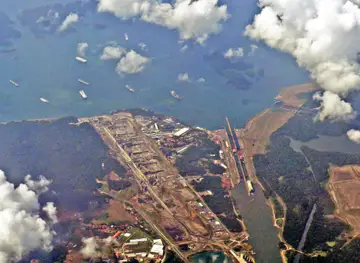
The cities of Atlantic Coast, and the easiest places to base yourself.
-
-

-


Swipe for more cities
Destinations in Atlantic Coast
Resorts, valleys and scenic spots worth a trip of their own.
-

-


Swipe for more destinations
Best attractions in Atlantic Coast
The Atlantic Coast’s attractions range from Spanish colonial fortifications and canal-era port history to coral reefs, rainforest and Indigenous island communities. Around Colón, visitors can explore the Caribbean entrance to the Panama Canal and use the city as a base for excursions towards Portobelo and San Lorenzo. Portobelo National Park combines ruined forts, forested hills, mangroves and Caribbean scenery, while the remains at San Lorenzo occupy a strategic position near the Chagres River. In Bocas del Toro, boat trips lead to beaches, snorkelling sites, diving areas, mangroves and the protected landscapes of Bastimentos National Marine Park. Isla Bastimentos offers rainforest and coastal habitats, while the surrounding waters support marine wildlife and coral communities. Guna Yala offers a different kind of travel experience, centred on small islands, clear coastal waters, local boat journeys and Guna cultural life rather than conventional resort infrastructure. Across the region, kayaking, wildlife watching, surfing, swimming and guided forest walks are possible, but conditions and access vary. Travellers should choose operators that respect protected areas and community rules, as the most valuable attractions are often ecologically fragile or locally managed.
-
Observation deck
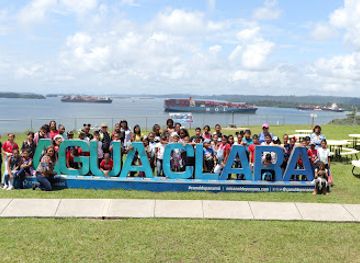
Agua Clara Locks Visitor Center
Discover the engineering marvel of the Panama Canal at the Agua Clara Locks Visitor Center in Colón Province, where history meets innovation.
-
Castillo de San Lorenzo Real de Chagres
Explore the historic Castillo de San Lorenzo Real de Chagres, a UNESCO site in Panama, where history and stunning views converge.
-
Tourist attraction
Butterfly Haven
Experience the magic of Butterfly Haven in El Valle de Antón, where vibrant butterflies and lush gardens create an unforgettable nature escape.
-
Chorro Las Mozas
Experience the natural beauty of Chorro Las Mozas, a stunning waterfall in Anton Valley, Coclé Province, where adventure meets serenity.


Best landmarks in Atlantic Coast
The stone fortifications of Portobelo are among the Atlantic Coast’s most recognisable landmarks. Built to guard Spain’s Caribbean trade, the forts and associated ruins show how military architecture was adapted to tropical terrain and a strategically important harbour. At the mouth of the Chagres River, the remains of San Lorenzo occupy another commanding defensive site, linking river access with the overland routes across the isthmus. Colón’s port landscape and the Caribbean entrance to the Panama Canal represent a different historical layer: modern interoceanic engineering, shipping and an internationally shaped city. In Bocas del Toro, the landmarks are more geographical than monumental, including the forested islands, reef waters and coastal settings protected within Bastimentos National Marine Park. The small islands of Guna Yala are also instantly recognisable, but their importance is cultural as well as visual; they are lived-in communities with their own authorities and traditions, not empty scenic backdrops. Historic churches and colonial remains around Portobelo, together with the coast’s forts, waterways and island settlements, make the region’s identity legible through a combination of built heritage and maritime landscape.
-
Visitor center
Miraflores Visitor's Center
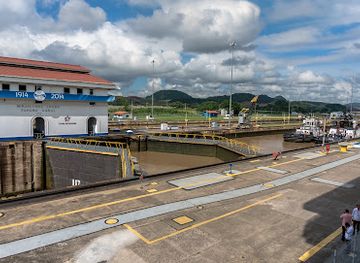
Uncover the wonders of the Panama Canal at Miraflores Visitor's Center, an educational hub with stunning views and interactive exhibits.
-
Historical place
Panamá Viejo
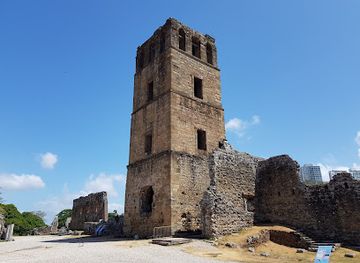
Explore Panamá Viejo, the first European settlement on the Pacific coast, a UNESCO World Heritage site full of history and captivating ruins.
-
Boat ramp
Miraflores Locks
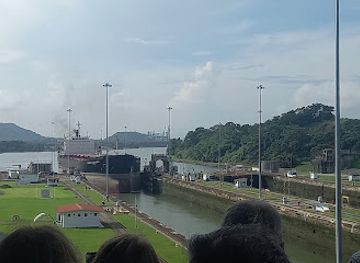
Explore the Miraflores Locks, a historical engineering marvel in Panama City, where the Atlantic meets the Pacific through the Panama Canal.
-
Tourist attraction
France Square
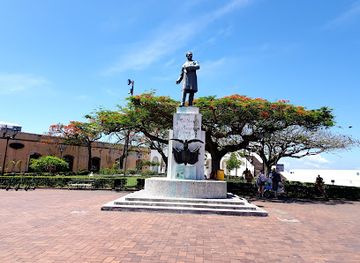
Explore France Square in Panama City, where lush greenery meets cultural heritage in a vibrant urban park experience.
Explore Atlantic Coast on the map
Plan your trip on one map. See where the top cities, national parks and sights are, and book hotels and experiences in a few clicks.
Best hotels in Atlantic Coast
Best restaurants in Atlantic Coast
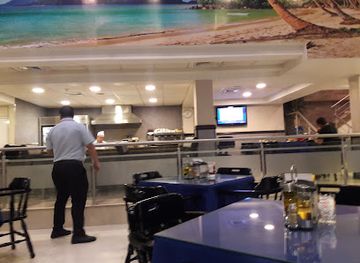
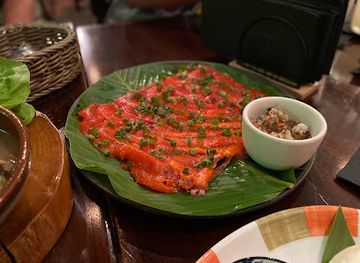
Caribbean cooking is one of the Atlantic Coast’s defining pleasures, with seafood, coconut, plantain, rice, cassava, fresh fruit and chilli appearing in many local meals. Around Colón and Portobelo, Afro-Caribbean influence is evident in fish dishes, stews, rice-based plates and coconut-rich sauces, while simple seafood restaurants and local eateries often reflect the working character of the coast. Bocas del Toro offers a broad mixture of Panamanian, Caribbean and international cooking, with fish, prawns, lobster where seasonally and legally available, ceviche and island-style rice commonly found near the waterfronts. In smaller communities, menus may depend on the day’s catch and available supplies rather than a fixed restaurant list. Guna Yala has its own food traditions, often based on fish, plantain, coconut and rice, and visitors should expect community-scale dining rather than extensive choice. Markets and small shops are useful for fruit, snacks and drinks, particularly before boat journeys. Imported products can be expensive on the islands, so local seasonal ingredients are often the more practical and authentic choice.
-
Caribbean
La Tapa Del Coco
Experience authentic Caribbean flavors at La Tapa Del Coco in Panama City - a culinary delight awaits you!
-
Restaurant
La Pulpería - Casco Antiguo
Experience the vibrant flavors of Latin America at La Pulpería - your culinary destination in Casco Antiguo.
-
Restaurant
Restaurante Costa Azul
Experience authentic Panamanian flavors at Restaurante Costa Azul - a must-visit culinary destination in Panama City.
-
Restaurant
Fonda Lo Que Hay
Discover authentic Panamanian cuisine at Fonda Lo Que Hay in Panama City - where tradition meets flavor in every dish.
Best bars in Atlantic Coast
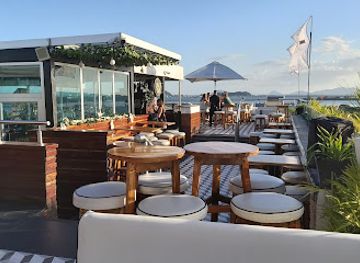
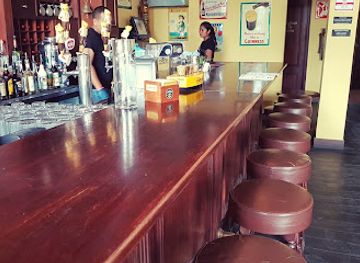
Evening life on Panama’s Atlantic Coast is varied but rarely resembles the large-scale club scene of Panama City. Colón has bars, restaurants and music venues serving local residents and port-related communities, while Portobelo’s evenings are generally quieter and oriented towards restaurants, small bars and community life. Bocas Town is the region’s main nightlife centre, with waterfront bars, casual restaurants, live music and venues that attract an international mix of visitors, particularly during busier travel periods. Other islands are more subdued, with evenings shaped by guesthouse dining, beach bars and the sounds of the sea rather than late-night entertainment. In Guna Yala, nightlife is generally limited and should not be expected to follow a resort timetable; community customs and local rules take precedence. Craft beer, rum-based drinks and fresh juices are available in established visitor areas, but alcohol is not central to every coastal experience, and boat travel after drinking should be avoided.
-
Grill
CasaCasco
Experience the vibrant culinary scene and nightlife at CasaCasco, Panama City’s premier grill and cocktail bar.
-
Caribbean
La Tapa Del Coco
Experience the vibrant Caribbean flavors of La Tapa Del Coco in Panama City, where culinary excellence meets a warm and inviting atmosphere.
-
Brewpub
La Rana Dorada Casco
Discover La Rana Dorada Casco, where craft beer meets the vibrant history of Panama City’s iconic Casco Antiguo.
-
Restaurant
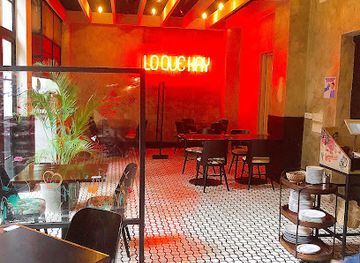
Fonda Lo Que Hay
Experience the flavors of Panama at Fonda Lo Que Hay, a culinary haven in Panama City serving authentic dishes in a vibrant atmosphere.

Best nightclubs in Atlantic Coast
Evening life on Panama’s Atlantic Coast is varied but rarely resembles the large-scale club scene of Panama City. Colón has bars, restaurants and music venues serving local residents and port-related communities, while Portobelo’s evenings are generally quieter and oriented towards restaurants, small bars and community life. Bocas Town is the region’s main nightlife centre, with waterfront bars, casual restaurants, live music and venues that attract an international mix of visitors, particularly during busier travel periods. Other islands are more subdued, with evenings shaped by guesthouse dining, beach bars and the sounds of the sea rather than late-night entertainment. In Guna Yala, nightlife is generally limited and should not be expected to follow a resort timetable; community customs and local rules take precedence. Craft beer, rum-based drinks and fresh juices are available in established visitor areas, but alcohol is not central to every coastal experience, and boat travel after drinking should be avoided.
-
Disco club
Casa Jaguar
Discover the vibrant nightlife at Casa Jaguar, Panama City's premier disco club and restaurant, where great music and delicious food await.
-
Disco club
Chill out discotheque
Dive into the vibrant nightlife of Panama City at Chill Out Discotheque, where music, dance, and unforgettable memories await.
-
Disco club
Moloko Plus
Discover the pulse of Panama City's nightlife at Moloko Plus - a vibrant disco club, bar, and concert hall all in one unforgettable venue.
-
Bar
La Tana
Discover La Tana, a dynamic bar and nightclub in Panama City, offering an unforgettable nightlife experience with vibrant music and a lively atmosphere.

Best shops in Atlantic Coast
Shopping on the Atlantic Coast is shaped more by local produce, craft and practical island commerce than by luxury retail. Colón has the region’s largest urban concentration of shops and commercial activity, while Portobelo and other coastal communities offer small businesses, food products and locally made items rather than extensive high-street selection. In Bocas del Toro, Bocas Town has independent shops, galleries, beachwear suppliers, handicrafts and retailers serving marine activities, with availability changing between seasons. Guna Yala is especially known for mola textiles, whose layered appliqué designs are made by Guna artists; buy directly and respectfully, and remember that designs and prices vary by maker. Local markets and small shops are useful for tropical fruit, snacks, spices and provisions before travelling by boat. Regional souvenirs may include woven goods, paintings, jewellery and Caribbean food products, but visitors should never buy coral, shells, archaeological material or products made from protected wildlife. Cash remains useful for small purchases and community sellers, particularly away from Colón and Bocas Town.
-
Shopping mall
Albrook Mall
Discover Albrook Mall, Panama City's premier shopping destination with over 700 stores, diverse dining options, and family-friendly entertainment.
-
Shopping mall
Multiplaza Panamá
Discover a blend of luxury shopping and local charm at Multiplaza Panamá, the ultimate retail destination in Panama City.
-
Shopping mall
Metromall Panamá
Discover Metromall Panamá, the ultimate shopping and dining experience in Panama City with a vibrant atmosphere and diverse offerings.
-
Shopping mall
AltaPlaza Mall
Explore AltaPlaza Mall: a shopping paradise in Panama City with diverse stores, delightful dining, and fantastic entertainment options.
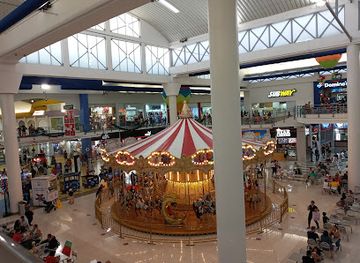
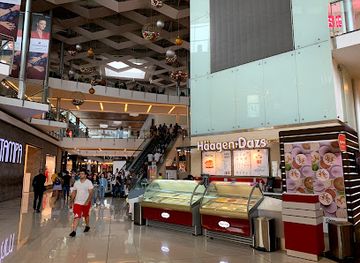

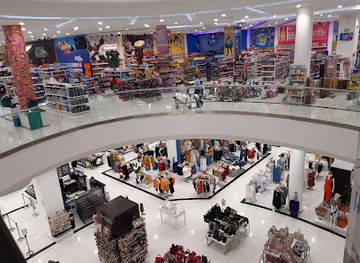
Get your free copy of our complete guide to Atlantic Coast, delivered straight to you.
Everything on this page, from attractions and restaurants to essentials and local phrases, in one PDF you can read offline, print or share.
Already have an account? Sign in
Your Atlantic Coast guide is ready.
We'll send it to · Not you? Sign out

Getting your guide ready…
We are putting together a fresh copy of the Atlantic Coast guide. This can take up to a minute.
This can take a few moments. If your browser asks, choose Allow so the download can start. You'll find the guide in your Downloads folder.
Nothing happened? Download it again
Sorry, the guide is taking longer than usual. Please try again in a minute, or get it by email instead.
Atlantic Coast essentials
Currency and Payment
Safety
Emergency Situations
Do's and Don'ts
Local Tips
From Eve
Local phrases worth knowing
You don't need to get them perfect. A few words go a long way, and locals appreciate the effort.
Basics
| English | Local | Say it |
|---|---|---|
| Hello | Hola | [oh-lah] |
| Goodbye | Adiós | [ah-dee-ohs] |
| Yes | Sí | [see] |
| No | No | [noh] |
| Please/You're welcome | Por favor | [por fah-vor] |
| Thank you | Gracias | [grah-see-as] |
| Excuse me/Sorry | Perdón | [pair-dohn] |
| How are you? | ¿Cómo estás? | [koh-moh es-tahs] |
| Fine. And you? | Bien. ¿Y tú? | [byen. ee too] |
| Do you speak English? | ¿Hablas inglés? | [ah-blahs een-glehs] |
| I don't understand | No entiendo | [noh en-tee-en-doh] |
Eating & Drinking
| English | Local | Say it |
|---|---|---|
| I'd like to see the menu, please | Me gustaría ver el menú, por favor | [meh goo-stah-ree-ah vehr el meh-noo, por fah-vor] |
| I don't eat meat | No como carne | [noh koh-moh kar-neh] |
| Cheers! | ¡Salud! | [sah-lood] |
| I would like to pay, please | Me gustaría pagar, por favor | [meh goo-stah-ree-ah pah-gar, por fah-vor] |
Emergencies
| English | Local | Say it |
|---|---|---|
| Help! | ¡Ayuda! | [ah-yoo-dah] |
| Go away! | ¡Vete! | [veh-teh] |
| Call the Police! | ¡Llama a la policía! | [yah-mah ah lah poh-lee-see-ah] |
| Call a doctor! | ¡Llama a un doctor! | [yah-mah ah oon dok-tor] |
| I'm lost | Estoy perdido | [es-toy pair-dee-doh] |
| I'm ill | Estoy enfermo | [es-toy en-fair-moh] |
Shopping
| English | Local | Say it |
|---|---|---|
| I'd like to buy... | Quisiera comprar... | [kee-syeh-rah kom-prar] |
| I'm just looking | Solo estoy mirando | [soh-loh es-toy mee-ran-doh] |
| How much is it? | ¿Cuánto cuesta? | [kwahn-toh kwes-tah] |
| That's too expensive | Eso es demasiado caro | [eh-so es deh-mah-see-ah-doh kah-roh] |
| Can you lower the price? | ¿Puedes bajar el precio? | [pweh-des bah-har el preh-syoh] |
Time & Numbers
| English | Local | Say it |
|---|---|---|
| What time is it? | ¿Qué hora es? | [keh oh-rah es] |
| It's one o'clock | Es la una | [es lah oo-nah] |
| Half past (10) | Y diez y media | [ee dyez ee meh-dee-ah] |
| Morning | Mañana | [mah-nyah-nah] |
| Afternoon | Tarde | [tahr-deh] |
| Evening | Noche | [noh-cheh] |
| Yesterday | Ayer | [ah-yer] |
| Today | Hoy | [oy] |
| Tomorrow | Mañana | [mah-nyah-nah] |
| 1 | Uno | [oo-no] |
| 2 | Dos | [dohs] |
| 3 | Tres | [trays] |
| 4 | Cuatro | [kwah-troh] |
| 5 | Cinco | [seen-koh] |
| 6 | Seis | [says] |
| 7 | Siete | [syeh-teh] |
| 8 | Ocho | [oh-choh] |
| 9 | Nueve | [nweh-veh] |
| 10 | Diez | [dyehs] |
Transport & Directions
| English | Local | Say it |
|---|---|---|
| Where's a/the...? | ¿Dónde está...? | [dohn-deh es-tah] |
| What's the address? | ¿Cuál es la dirección? | [kwahl es lah dee-rek-syohn] |
| Can you show me (on the map)? | ¿Puedes mostrarme (en el mapa)? | [pweh-des mos-trar-meh en el mah-pah] |
| When's the next (bus)? | ¿Cuándo es el próximo (autobús)? | [kwahn-doh es el prohk-see-moh au-toh-boos] |
| A ticket (to ....) | Un billete (a ....) | [oon bee-yeh-teh ah] |
History of Atlantic Coast
Indigenous Caribbean societies before European rule
Long before Spanish colonisation, Panama’s Caribbean shores supported coastal, riverine and forest communities with distinct languages, economies and political traditions. The area now associated with Guna Yala remains the homeland of the Guna people, whose society developed through strong connections between mainland forests, islands and marine resources. Other Indigenous peoples, including Ngäbe communities in western Panama, have longstanding ties to the Caribbean lowlands. Archaeological evidence across the wider isthmus records exchange networks linking coastal and inland settlements, although the surviving historical record is uneven and many local traditions are preserved principally through community knowledge.
Spanish ports and Caribbean fortifications, sixteenth to eighteenth centuries
After the Spanish conquest, the Caribbean coast became a gateway for imperial commerce across the isthmus. Portobelo was founded in 1597 and developed into the principal Caribbean terminus for treasure fleets and fairs that connected Spain with South America. Because bullion and other goods were vulnerable to attack, the Spanish built substantial defences at Portobelo and at the mouth of the Chagres River, including San Lorenzo. Raids by privateers and rival imperial powers repeatedly exposed the strategic importance of the coast. The surviving fortifications are among the clearest physical records of Panama’s colonial trading system.
Portobelo’s decline and the changing trade route
Portobelo’s importance diminished during the eighteenth century as Spanish imperial trade routes and methods changed, particularly after the interruption of the annual fairs. The town did not disappear, but its role as a major trans-shipment centre weakened. The Caribbean coast continued to matter militarily and commercially, while the Chagres route and other crossings remained part of the long contest over movement across the isthmus. Today, Portobelo’s reduced scale helps reveal the contrast between the ambitions of the Spanish empire and the physical constraints of tropical ports, rivers and difficult inland routes.
Railway, ports and the creation of modern Colón
The construction of the Panama Railway in the mid-nineteenth century transformed the Caribbean side of the isthmus. Completed in 1855, it linked the Atlantic port of Aspinwall, later known as Colón, with Panama City on the Pacific, providing a rapid overland connection between two oceans. The railway supported the movement of people and goods during the California Gold Rush and laid foundations for the port economy that followed. Colón’s development brought together workers and migrants from the Caribbean, Europe, Asia and elsewhere, creating a strongly multicultural urban society whose history remains central to Panama’s Atlantic identity.
Canal construction and the twentieth-century Caribbean economy
The building and operation of the Panama Canal reshaped the Caribbean entrance and the surrounding lowlands. Colón became part of the Canal Zone’s system of ports, administration and transport, while nearby communities experienced the effects of a highly international workforce and an economy organised around interoceanic movement. Canal construction also altered landscapes through excavation, drainage and engineering works, and encouraged new patterns of settlement. The canal remains nationally important, but its Caribbean-side history is also a story of labour, segregation, migration and the growth of Afro-Caribbean communities.
Bocas del Toro, plantations and Afro-Caribbean migration
From the late nineteenth century, Bocas del Toro became associated with commercial agriculture, especially banana production, and with shipping links to the wider Caribbean. Companies and plantations changed land use and tied the islands and mainland to international markets. Workers arrived from Caribbean islands and other parts of the region, contributing languages, religious practices, music and foodways that remain visible in Bocas communities. Plantation economies also brought environmental pressures and social inequalities. The contemporary visitor economy, based on accommodation, marine activities and food, is layered over this earlier history rather than replacing it.
Guna autonomy and contemporary cultural identity
Guna communities defended their autonomy through sustained political organisation, culminating in the 1925 Guna Revolution against policies and officials that threatened local authority and customs. Panama subsequently recognised the Comarca Guna Yala, an autonomous Indigenous territory administered through Guna institutions alongside the national state. The territory’s island settlements, mainland forests, language and artistic traditions are therefore part of a living political and cultural landscape. Visitors encounter not a conventional resort zone but communities with their own rules, responsibilities and expectations about access, photography, commerce and environmental care.
Atlantic Coast in Photos
Browse through our photo collection highlighting the charm and character of the destination.
Neighbouring regions of Atlantic Coast
The closest regions to Atlantic Coast, if you have time for more than one.
-

-

-

-
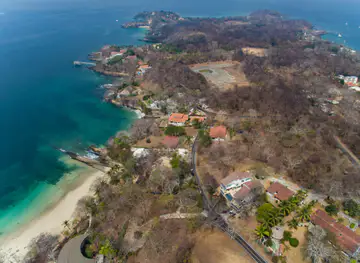
-


Swipe for more regions
Explore more

Explore more of Panama
Discover Panama: A vibrant blend of modernity and nature, where historic charm, tropical rainforests, and pristine beaches come together in the heart of Central America.
Explore Panama