

Free Bodø Travel Guide & Mobile App
Plan your Bodø trip with Evendo. Get free guides to top attractions, restaurants, hotels, and bars. Web access or download the mobile app.


Bodø combines Arctic coastal scenery, aviation history, Saltstraumen, cultural venues and access to Lofoten for Norway sightseeing and adventures.
An Arctic Coastal City
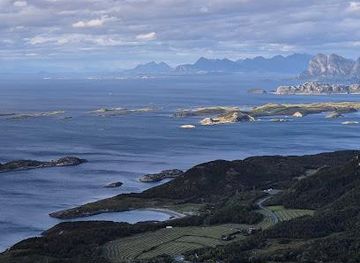
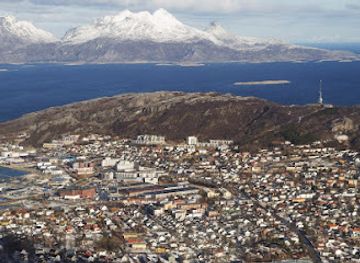
Bodø stands on a peninsula above the Arctic Circle, facing the open waters of the Norwegian Sea and the jagged outline of the Børvasstindan mountains. Its setting is elemental: islands and skerries lie offshore, ferries and express boats connect the coast, and the changing light gives the city a different character in every season. In summer, the midnight sun keeps the streets bright late into the night; during winter, the surrounding landscape offers opportunities to see the northern lights when conditions are favourable.Read more about Bodø
History Written in the Landscape
Culture, Coast and Wider Horizons
When is the best time to visit Bodø?
Best: June–August · 15–18°C| Month | High (°C) | Rainfall (mm) |
|---|---|---|
| January | 6 | 55 |
| February | 5 | 45 |
| March | 4 | 45 |
| April | 7 | 40 |
| May | 11 | 35 |
| June (best) | 15 | 35 |
| July (best) | 18 | 40 |
| August (best) | 17 | 45 |
| September | 13 | 50 |
| October | 9 | 60 |
| November | 5 | 65 |
| December | 4 | 60 |
Getting to and around Bodø
How to get there
Transportation
Best attractions in Bodø
Bodø's principal attractions range from aviation and maritime history to open coastal landscapes. The Norwegian Aviation Museum presents Norway's civil and military flying history through aircraft and displays, while the Jektefartsmuseet at Bodøsjøen explores the Nordland jekt and the trading networks that connected northern communities with the rest of the country. Stormen Library and Stormen Concert Hall bring contemporary architecture and cultural programming to the waterfront district. The harbour is a natural place to watch coastal vessels and express boats, and nearby Bodøsjøen combines museum visits with shoreline views. Saltstraumen, outside the central city, offers a powerful natural spectacle created by the movement of tides through a narrow strait; its surrounding area also provides opportunities for fishing and outdoor excursions. For broader scenery, the coast and mountains around Bodø offer beaches, viewpoints and marked walking routes that reveal the city's Arctic setting.
-
Museum
Norwegian Aviation Museum
Discover Norway's aviation heritage at the Norwegian Aviation Museum in Bodø, featuring interactive exhibits and a vast collection of historic aircraft.
5 min drive · 1.8 km from city centre
-
Lutheran church
Bodø Cathedral
Explore Bodø Cathedral, a stunning Lutheran church in Norway, where history, architecture, and spirituality converge amidst breathtaking landscapes.
3 min walk · 0.3 km from city centre
-
Tourist attraction
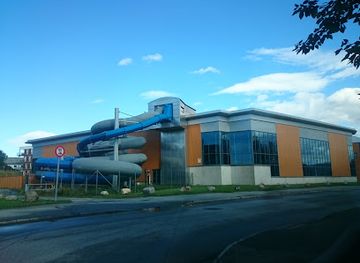
Nordlandsbadet (Endret åpningstider i skolefriperioder)
Experience the ultimate fun at Bodø's Nordlandsbadet, a water park featuring thrilling slides, relaxing pools, and family-friendly activities for all ages.
5 min drive · 1.7 km from city centre
-
Tourist attraction
Nordlandsbadet (Endret åpningstider i skolefriperioder)
Experience the excitement of water at Nordlandsbadet, Bodø's premier water park with thrilling slides and relaxing pools for all ages.
5 min drive · 1.7 km from city centre


Best landmarks in Bodø
Bodø Cathedral is one of the city's defining post-war buildings, having been completed in 1956 after the wartime destruction of the earlier town; its modern design and prominent tower reflect the character of the rebuilt centre. The Norwegian Aviation Museum is another landmark of Bodø's identity, representing the city's long association with military and civil aviation rather than a traditional historic style. At Bodøsjøen, the Jektefartsmuseet gives physical form to the maritime history of the Nordland coast and the vessels that carried stockfish and supplies. Stormen Concert Hall and Stormen Library mark the contemporary waterfront with a cultural complex shaped by the city's modern civic ambitions. Beyond the urban buildings, Saltstraumen is a natural landmark of regional importance: tidal water surges through its narrow sound, creating powerful currents that have influenced local travel, fishing and the surrounding landscape.
-
 Hotel
HotelScandic Havet
Experience the beauty of Bodø from Scandic Havet, a modern hotel offering stunning views, exceptional dining, and easy access to local attractions.
2 min walk · 0.2 km from city centre
-
Gastropub
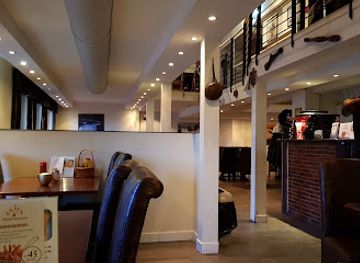
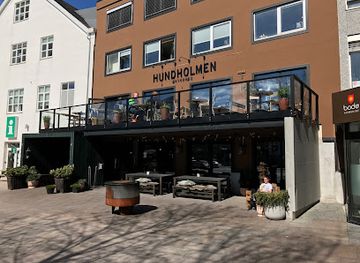
Hundholmen Brygghus
Experience the essence of Norwegian cuisine and craft beer at Hundholmen Brygghus, a lively gastropub in the heart of Bodø.
3 min walk · 0.3 km from city centre
-
Restaurant
Restaurant Bjørk
Experience authentic Italian cuisine and delectable pizzas in the heart of Bodø at Restaurant Bjørk, where every meal is a celebration of flavor.
2 min walk · 0.2 km from city centre
-
Airport
Bodø Airport
Discover the wonders of Northern Norway through Bodø Airport, your gateway to stunning landscapes, vibrant culture, and unforgettable adventures.
15 min walk · 1.2 km from city centre
Explore Bodø on the map
Plan your Bodø trip on one map. See where the top attractions, landmarks, restaurants, bars and hotels are, find what's near where you're staying, and book hotels and experiences in a few clicks.
Best hotels in Bodø
Best restaurants in Bodø
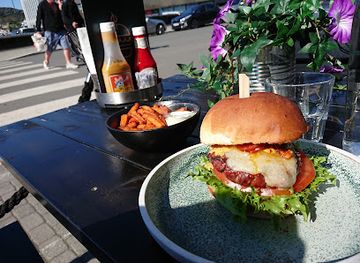
Bodø's dining culture reflects its position between fishing communities, northern farms and the open sea. Local menus commonly draw on cod, halibut, salmon, shellfish and other seasonal seafood, while lamb, reindeer and produce from northern Norway may appear in more contemporary cooking. Stockfish is especially important to the region's maritime history, even when it is presented in modern forms rather than as a simple traditional dish. Restaurants and cafés are concentrated around the central streets, harbour and cultural quarter, with bakeries and casual venues providing practical options during the day. The city also has a growing interest in carefully sourced Nordic ingredients and international cooking, reflecting its student, aviation and coastal population. Food markets and seasonal events, when operating, offer a useful way to encounter regional products, though availability and opening patterns change throughout the year.
-
Restaurant
Scandic Havet
Experience exceptional dining and comfortable stays at Scandic Havet in Bodø—where local flavors meet breathtaking views.
2 min walk · 0.2 km from city centre
-
Pizza
Orion Pizza og Restaurant
Savor authentic Italian flavors at Orion Pizza og Restaurant in Bodø - where every pizza is a slice of heaven.
7 min walk · 0.6 km from city centre
-
Gastropub
Hundholmen Brygghus
Discover the essence of Norwegian cuisine at Hundholmen Brygghus – where craft beer meets gourmet dining in Bodø's vibrant gastropub.
3 min walk · 0.3 km from city centre
-
Hamburger
BURGASM BODØ
Discover culinary bliss at Burgasm Bodø - where gourmet burgers meet local charm in Norway's stunning coastal town.
5 min walk · 0.4 km from city centre
Best bars in Bodø
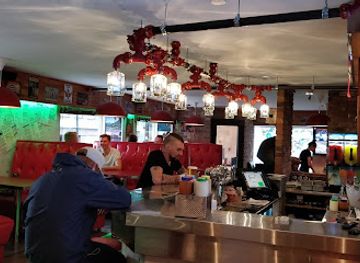
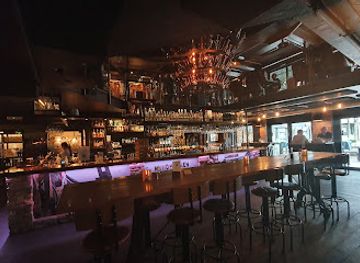
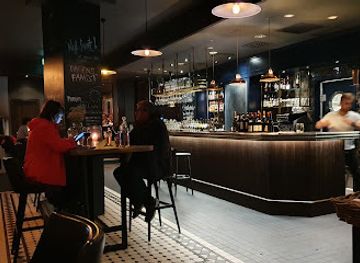
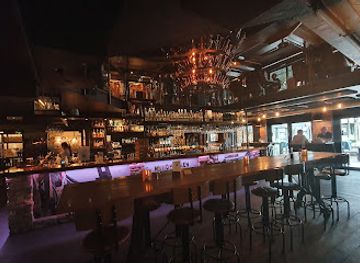
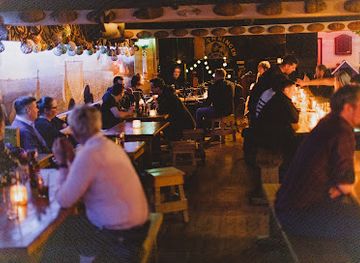
Bodø's evening scene is sizeable for a northern regional centre but remains more relaxed than that of Norway's largest cities. Central venues around the harbour and town streets include pubs, casual bars and places associated with live music, while the Stormen complex brings concerts and other performances to the city. Local nightlife is shaped by students, maritime workers, cultural events and weekend visitors, producing a mixture of informal social drinking and organised entertainment rather than one concentrated club district. Summer's midnight sun creates unusually long, light evenings for waterfront walks, whereas winter encourages indoor performances and convivial bars. Norway's licensing rules are strict, and alcohol prices are high by international standards; visitors should also remember that venues may have different age requirements and schedules, particularly outside the busiest periods.
-
Gastropub
Hundholmen Brygghus
Experience the vibrant atmosphere and exquisite flavors at Hundholmen Brygghus, Bodø’s premier gastropub, brewpub, and restaurant.
3 min walk · 0.3 km from city centre
-
Restaurant
Bryggerikaia
Discover the flavors of Norway at Bryggerikaia, a culinary treasure in Bodø offering fresh seafood and local delicacies with stunning waterfront views.
1 min walk · 0.1 km from city centre
-
Cocktail bar
Gatsby
Discover the vibrant atmosphere of Gatsby, a premier cocktail bar in Bodø, offering American cuisine, expertly crafted cocktails, and fun dart games.
2 min walk · 0.1 km from city centre
-
Sushi
Tiger Sushi Bar
Discover the essence of Japanese cuisine at Tiger Sushi Bar, Bodø's premier destination for fresh and innovative sushi dishes.
1 min walk · 0.1 km from city centre
Best nightclubs in Bodø
Bodø's evening scene is sizeable for a northern regional centre but remains more relaxed than that of Norway's largest cities. Central venues around the harbour and town streets include pubs, casual bars and places associated with live music, while the Stormen complex brings concerts and other performances to the city. Local nightlife is shaped by students, maritime workers, cultural events and weekend visitors, producing a mixture of informal social drinking and organised entertainment rather than one concentrated club district. Summer's midnight sun creates unusually long, light evenings for waterfront walks, whereas winter encourages indoor performances and convivial bars. Norway's licensing rules are strict, and alcohol prices are high by international standards; visitors should also remember that venues may have different age requirements and schedules, particularly outside the busiest periods.
-
Night club
Hundholmen Brygghus
Discover Hundholmen Brygghus, Bodø's vibrant night club, bar, and brewpub offering local brews and delicious cuisine in a lively atmosphere.
3 min walk · 0.3 km from city centre
-
Bar
Dama Di AS
Experience the vibrant nightlife of Bodø at Dama Di AS, where art, music, and great drinks combine for an unforgettable evening.
5 min walk · 0.4 km from city centre
-
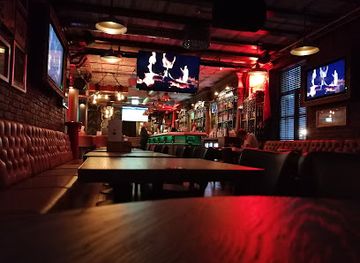
Sports bar
Kaptein Larsen
Experience the vibrant atmosphere at Kaptein Larsen, Bodø's premier sports bar, offering delicious burgers and a lively social scene.
1 min walk · 0.1 km from city centre
-
Pub
Norlænningen
Discover the heartbeat of Bodø's nightlife at Norlænningen, where live music, karaoke, and a vibrant atmosphere await.
4 min walk · 0.3 km from city centre

Best shops in Bodø
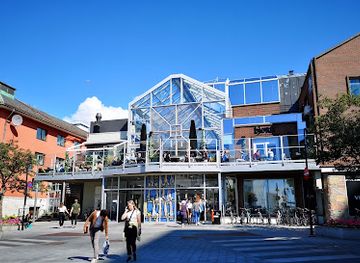
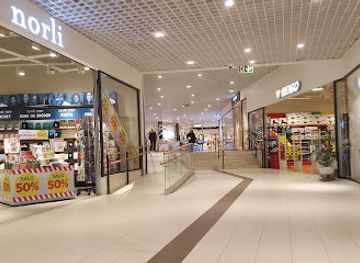
Shopping in Bodø centres on the pedestrian-friendly streets of the town centre, the Glasshuset shopping quarter and larger retail areas such as City Nord outside the historic core. Independent shops, cafés and practical outdoor retailers reflect the city's role as a regional service centre for residents and travellers heading into the mountains or along the coast. Visitors may find locally produced food, woollen goods, outdoor clothing, northern handicrafts and maritime-themed souvenirs, although the selection is more connected with regional life than with a single signature craft. The harbour and cultural quarter provide opportunities to browse alongside sightseeing, while supermarkets are useful for provisions before excursions. Prices in Norway are comparatively high, so shopping is often more rewarding for distinctive local products or practical equipment than for inexpensive general goods.
-
Shopping mall
City Nord
Explore City Nord, Bodø's largest shopping mall with diverse stores, dining options, and vibrant events, perfect for all shopping enthusiasts.
6 min drive · 2.1 km from city centre
-
Shopping mall
Trekanten Kjøpesenter
Explore Trekanten Kjøpesenter, Bodø's vibrant shopping mall featuring diverse shops, delicious eateries, and a perfect blend of local culture.
6 min drive · 1.9 km from city centre
-
Store
Koch Shopping
Discover the vibrant shopping scene at Koch Shopping in Bodø, where local charm meets global brands in a lively retail environment.
4 min walk · 0.3 km from city centre
-
Shopping mall
Glasshuset
Discover the vibrant shopping experience at Glasshuset in Bodø, where local charm meets international brands in a bustling atmosphere.
3 min walk · 0.2 km from city centre
Get your free copy of our complete guide to Bodø, delivered straight to you.
Everything on this page, from attractions and restaurants to essentials and local phrases, in one PDF you can read offline, print or share.
Already have an account? Sign in
Your Bodø guide is ready.
We'll send it to · Not you? Sign out

Getting your guide ready…
We are putting together a fresh copy of the Bodø guide. This can take up to a minute.
This can take a few moments. If your browser asks, choose Allow so the download can start. You'll find the guide in your Downloads folder.
Nothing happened? Download it again
Sorry, the guide is taking longer than usual. Please try again in a minute, or get it by email instead.
Bodø essentials
Currency and Payment
Safety
Emergency Situations
Do's and Don'ts
Local Tips
From Eve
Local phrases worth knowing
You don't need to get them perfect. A few words go a long way, and locals appreciate the effort.
Basics
| English | Local | Say it |
|---|---|---|
| Hello | Hei | [hay] |
| Goodbye | Ha det | [ha deh] |
| Yes | Ja | [yah] |
| No | Nei | [nay] |
| Please/You're welcome | Vær så god | [vair soh goh] |
| Thank you | Takk | [tahk] |
| Excuse me/Sorry | Unnskyld | [oon-shyoold] |
| How are you? | Hvordan har du det? | [vohr-dahn har doo deh] |
| Fine. And you? | Bra. Og du? | [bra oh doo] |
| Do you speak English? | Snakker du engelsk? | [snah-kair doo eng-elsk] |
| I don't understand | Jeg forstår ikke | [yay for-stor eek-keh] |
Eating & Drinking
| English | Local | Say it |
|---|---|---|
| I'd like to see the menu, please | Kan jeg få se menyen, takk | [kahn yay foh seh meh-nyen tahk] |
| I don't eat meat | Jeg spiser ikke kjøtt | [yay spee-ser eek-keh chyurt] |
| Cheers! | Skål! | [skohl] |
| I would like to pay, please | Jeg vil gjerne betale, takk | [yay veer yern-eh bet-ah-leh tahk] |
Emergencies
| English | Local | Say it |
|---|---|---|
| Help! | Hjelp! | [yelp] |
| Go away! | Gå bort! | [goh bohrt] |
| Call the Police! | Ring politiet! | [ring poh-lee-tee-eh] |
| Call a doctor! | Ring en lege! | [ring ehn lay-geh] |
| I'm lost | Jeg er lost | [yay air lost] |
| I'm ill | Jeg er syk | [yay air sook] |
Shopping
| English | Local | Say it |
|---|---|---|
| I'd like to buy... | Jeg vil kjøpe... | [yay veel shoh-peh] |
| I'm just looking | Jeg bare ser | [yay bah-reh sair] |
| How much is it? | Hvor mye koster det? | [vohr mee-yeh kuss-tehr deh] |
| That's too expensive | Det er for dyrt | [deh air fohr deert] |
| Can you lower the price? | Kan du senke prisen? | [kahn doo sen-keh pree-sen] |
Time & Numbers
| English | Local | Say it |
|---|---|---|
| What time is it? | Hva er klokka? | [vah air klok-kah] |
| It's one o'clock | Klokken er ett | [klok-ehn air eht] |
| Half past (10) | Halv ti | [hahlv tee] |
| Morning | Morgen | [mohr-gehn] |
| Afternoon | Ettermiddag | [et-tehr-meed-dahg] |
| Evening | Kveld | [kvehld] |
| Yesterday | I går | [ee gohr] |
| Today | I dag | [ee dahg] |
| Tomorrow | I morgen | [ee mohr-gehn] |
| 1 | En | [ehn] |
| 2 | To | [too] |
| 3 | Tre | [treh] |
| 4 | Fire | [fee-reh] |
| 5 | Fem | [fem] |
| 6 | Seks | [sehks] |
| 7 | Sju | [shoo] |
| 8 | Åtte | [oh-teh] |
| 9 | Ni | [nee] |
| 10 | Ti | [tee] |
Transport & Directions
| English | Local | Say it |
|---|---|---|
| Where's a/the...? | Hvor er...? | [vohr air] |
| What's the address? | Hva er adressen? | [vah air ah-drah-sehn] |
| Can you show me (on the map)? | Kan du vise meg (på kartet)? | [kahn doo vee-seh may (poh kahr-teh)] |
| When's the next (bus)? | Når går neste (buss)? | [nahr gohr neh-steh (boos)] |
| A ticket (to ....) | En billett (til ...) | [ehn bee-let (teel)] |
History of Bodø
Coastal Settlement Before Bodø
The Bodø area has been shaped by coastal settlement, fishing, farming and maritime movement for centuries. The nearby island of Tuv, in present-day Bodø municipality, is associated with early agricultural settlement, while the wider Salten region contains archaeological evidence of long human activity. The sea provided food and routes between communities, and seasonal fishing shaped settlement patterns long before the modern town was established. The landscape's importance is also visible in the region's boat-building and trading traditions, later represented by the Nordland jekt, a broad sailing vessel used to transport dried fish and other goods along the coast. These maritime networks connected northern communities with markets farther south and helped establish the economic foundations of the region.
The Foundation of Bodø
Bodø was founded as a town in 1816, during a period when the Norwegian state sought to strengthen trade and administration in the north. Its position on a sheltered stretch of coast, close to productive fishing grounds and maritime routes, made it a useful centre for commerce. The town grew through fishing, small-scale trade and public administration, while the surrounding settlements continued to depend on agriculture and the sea. Bodø's development was linked to the wider commercial importance of dried cod, or stockfish, which was exported from northern Norway for centuries. Although the new town was modest in size, its establishment gave the Salten region a more concentrated civic and trading centre.
Fishing, Trade and Coastal Networks
During the nineteenth and early twentieth centuries, Bodø expanded as a market town serving fishing communities and inland settlements. Merchants, boats and seasonal workers connected the port with the wider Norwegian coast, while the annual fisheries brought economic activity and a changing population. The Nordland jekt was central to this system: these sailing vessels carried stockfish southwards and returned with supplies for northern communities. Bodø's role was not based on heavy industry but on exchange, administration and maritime logistics. The town's later museums preserve this history, showing how coastal trade depended on local knowledge, seafaring skills and a close relationship with the surrounding waters.
War and the Destruction of 1940
Bodø suffered severe destruction during the German invasion of Norway in May 1940. A German air raid on 27 May destroyed much of the town centre, leaving large numbers of residents homeless and transforming the urban landscape. The attack formed part of the military struggle for control of northern Norway during the Second World War, when the region's ports, airfields and coastal routes held strategic importance. After the war, Bodø was rebuilt according to modern planning principles rather than restored as an old town. This explains the relative scarcity of historic urban fabric in the centre, while the city's wartime history remains an important part of local memory.
Aviation and Post-War Expansion
Bodø became increasingly important to Norwegian aviation and defence after the Second World War. Bodø Airport opened in 1952, and the city developed as a significant base for the Royal Norwegian Air Force, whose presence influenced employment, infrastructure and its wider national significance. The Norwegian Aviation Museum, opened in 1994, reflects this development through its presentation of Norwegian civil and military aviation. Post-war reconstruction also produced new residential districts, roads and public buildings as Bodø grew beyond its original town centre. In the twenty-first century, cultural institutions, maritime transport and tourism have added new dimensions to a city still closely connected with aviation, fishing and the sea.
Travel experiences inspired by this city
-
 10 Day Trip
Bodø with the Family: 10 Days of Midnight Sun, Fjords, and Arctic Culture
Family journey to Bodø, Norway: midnight sun hikes, sea eagle safaris, Saltstraumen's maelstrom, and cozy Nordic culture, based at Comfort Hotel Bodo.
10 Day Trip
Bodø with the Family: 10 Days of Midnight Sun, Fjords, and Arctic Culture
Family journey to Bodø, Norway: midnight sun hikes, sea eagle safaris, Saltstraumen's maelstrom, and cozy Nordic culture, based at Comfort Hotel Bodo.
 20 Jul 2026
By Jennifer Smith -
 12 Day Trip
Midnight Sun Family Escape to Bodø, Norway
Family-friendly Bodø escape with midnight sun hikes, white-sand beaches, Saltstraumen, sea eagle spotting, museums, and a cozy stay in the city center.
12 Day Trip
Midnight Sun Family Escape to Bodø, Norway
Family-friendly Bodø escape with midnight sun hikes, white-sand beaches, Saltstraumen, sea eagle spotting, museums, and a cozy stay in the city center.
 15 Jul 2026
By Guðrún Halldórsdóttir
Swipe for more travel diaries
Bodø in Photos
Browse through our photo collection highlighting the charm and character of the destination.
Cities near Bodø
The closest cities to Bodø, if you have time for more than one stop.
-

-
-

-

-


Swipe for more cities
Explore more

Explore more of Norway
Explore Norway's spectacular fjords, vibrant cities, and natural wonders. Experience the Northern Lights, Midnight Sun, and rich cultural heritage in this Scandinavian gem.
Explore Norway