

Free Ephesus Travel Guide & Mobile App
Plan your Ephesus trip with Evendo. Get free guides to top attractions, restaurants, hotels, and bars. Web access or download the mobile app.


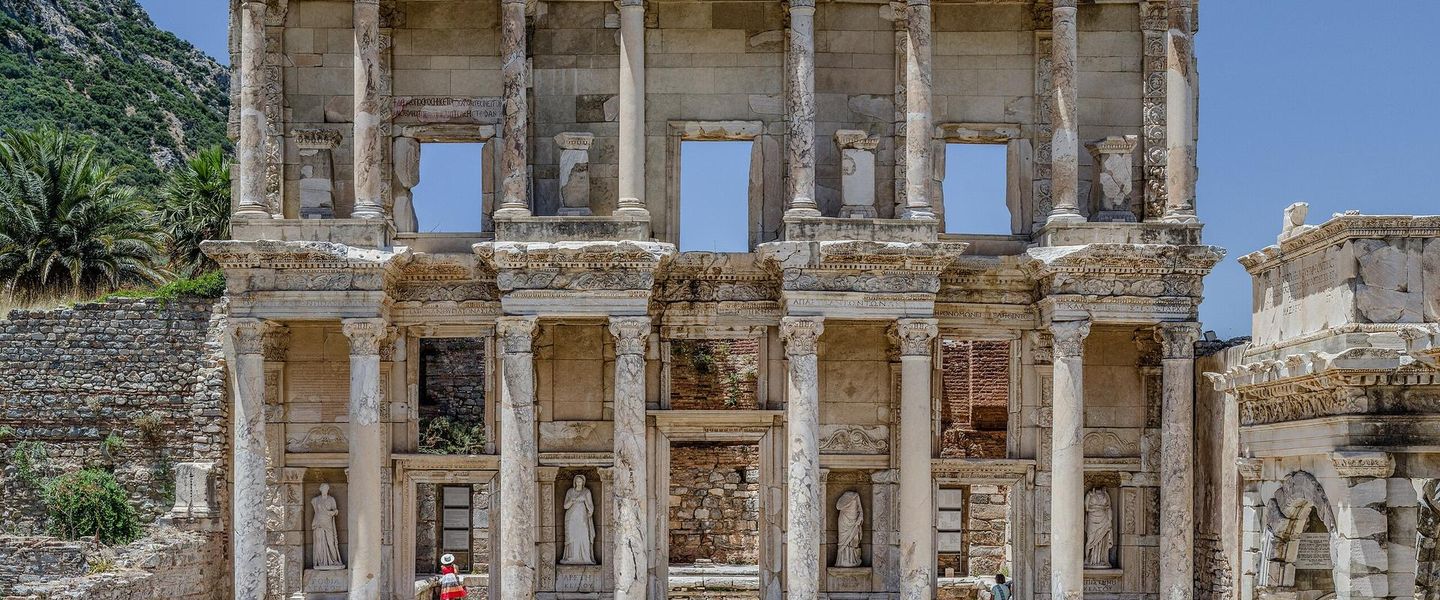


Ephesus in Turkiye reveals ancient streets, monumental temples and theatre ruins, with Selçuk, museums and Aegean culture nearby for enriching sightseeing.
A City Preserved in Stone
Ephesus is one of the Mediterranean world's most evocative archaeological sites, an ancient Ionian and Roman city spread across the hills and plain near Selçuk in western Turkiye. Marble streets lead past the Library of Celsus, the Great Theatre and the remains of the Temple of Hadrian, while fragments of colonnades and civic buildings reveal the scale of a city that once ranked among the eastern Roman Empire's most important urban centres. Ephesus is not a modern inhabited city; visitors generally stay in Selçuk, the nearby town whose hilltop castle, railway station and museums provide the practical base for exploring the ruins.Read more about Ephesus
History, Faith and Archaeology
The Selçuk Setting
When is the best time to visit Ephesus?
Best: May, September–October · 25–31°C| Month | High (°C) | Rainfall (mm) |
|---|---|---|
| January | 14 | 150 |
| February | 15 | 122 |
| March | 16 | 93 |
| April | 23 | 53 |
| May (best) | 27 | 26 |
| June | 33 | 9 |
| July | 35 | 4 |
| August | 36 | 3 |
| September (best) | 31 | 12 |
| October (best) | 25 | 53 |
| November | 20 | 100 |
| December | 14 | 130 |
Getting to and around Ephesus
How to get there
Transportation
Best attractions in Ephesus
The principal attraction is the Ephesus archaeological site, where visitors follow Curetes Street through an extraordinary ensemble of Roman monuments. The Library of Celsus forms the most recognisable façade, while the Great Theatre reveals the scale of public entertainment and civic life in antiquity. The Terrace Houses offer a closer view of elite domestic interiors, with mosaics, frescoes and courtyards preserved beneath protective roofing. The Odeon, Hellenistic Theatre, Temple of Hadrian and ancient agoras add further layers to the walk. In Selçuk, the Ephesus Archaeological Museum places statues and smaller finds in context, while Ayasuluk Castle, the Basilica of St John and the remains of the Temple of Artemis show how the area continued to evolve after the Roman city declined. The House of the Virgin Mary, on Mount Koressos outside the main ruins, attracts pilgrims and visitors interested in the region's Christian traditions.
-
Historical landmark
Ephesus Ancient Greek Theatre
Explore the magnificent Ephesus Ancient Greek Theatre, a historical landmark showcasing the splendor of ancient Greek architecture and culture in Selçuk, İzmir.
2 min walk · 0.2 km from city centre
-
Archaeological museum
Ephesus Archaeological Site
Explore Ephesus Archaeological Site, an ancient marvel in Turkey, showcasing Roman architecture and rich history amidst stunning ruins.
10 min walk · 0.8 km from city centre
-
 Historical place
Library of Celsus
Visit the Library of Celsus in Ephesus, a stunning ancient marvel showcasing Roman architecture and rich history, a must-see for every traveler.
3 min walk · 0.2 km from city centre
-
Historical landmark
The Temple of Artemis
Explore the historic Temple of Artemis in Selçuk, a must-visit site showcasing the grandeur of ancient architecture and rich cultural heritage.
7 min drive · 2.2 km from city centre


Best landmarks in Ephesus
Ephesus's landmarks express the city's transformation from Greek settlement to Roman provincial capital and later Christian centre. The Library of Celsus is both a monumental façade and the tomb of the Roman official Tiberius Julius Celsus Polemaeanus, while the Great Theatre remains a powerful symbol of civic assembly and performance. The Temple of Hadrian presents a refined Roman frontage on Curetes Street, and the Terrace Houses preserve the private architecture of wealthy residents. Beyond the ancient streets, the Basilica of St John on Ayasuluk Hill marks the area's Byzantine religious importance, while the nearby Isa Bey Mosque represents the architectural culture of fourteenth-century Anatolia. The surviving column of the Temple of Artemis, one of the ancient world's celebrated sanctuaries, is modest compared with its historical reputation but important in understanding Ephesus's earlier religious and economic prominence.
-
Historical landmark
Ephesus Ancient City
Explore the timeless beauty of Ephesus Ancient City, a UNESCO World Heritage site filled with history, stunning architecture, and ancient wonders.
1 min walk · 0.1 km from city centre
-
Archaeological museum
Ephesus Archaeological Museum
Explore the Ephesus Archaeological Museum, where ancient history comes alive through incredible artifacts and captivating exhibits in Selçuk.
8 min drive · 2.5 km from city centre
-
Historical landmark
Ephesus Ancient Greek Theatre
Explore the Ephesus Ancient Greek Theatre, a stunning historical landmark that showcases the architectural genius of the ancient Greeks and the vibrant culture of Ephesus.
2 min walk · 0.2 km from city centre
-
Historical landmark
The Temple of Artemis
Explore the remnants of the Temple of Artemis, a monumental historical site in Selçuk, Turkey, and one of the Seven Wonders of the Ancient World.
7 min drive · 2.2 km from city centre


Explore Ephesus on the map
Plan your Ephesus trip on one map. See where the top attractions, landmarks, restaurants, bars and hotels are, find what's near where you're staying, and book hotels and experiences in a few clicks.
Best hotels in Ephesus
Best restaurants in Ephesus
Dining in the Ephesus area is centred on Selçuk rather than the archaeological site itself. Local restaurants and family-run eateries reflect the Aegean character of western Turkiye, with olive oil, seasonal vegetables, herbs, grilled fish, yoghurt, pulses and fresh bread appearing frequently. Meze, gözleme, köfte and pide are widely encountered, while breakfast often includes cheeses, olives, eggs, tomato, cucumber and preserves. Selçuk's cafés provide a relaxed setting for Turkish coffee, tea and pastries, and market shopping reveals the importance of local produce, including figs, olives and regional cheeses. Şirince, a nearby hillside village, is known for fruit-based drinks and village-style dining, though it is a separate settlement rather than part of Ephesus. Menus vary from simple lokantas serving home-style plates to restaurants designed for archaeological-site visitors.
-
Kofta restaurant
Selcuk Koftecisi
Discover authentic Turkish kofta at Selcuk Koftecisi - a culinary gem in Selçuk offering delicious flavors and warm hospitality.
8 min drive · 2.7 km from city centre
-
Restaurant
Yavuz's Restaurant
Discover authentic Turkish cuisine at Yavuz's Restaurant in Selçuk - where every dish tells a story.
16 min walk · 1.3 km from city centre
-
Chophouse restaurant
Petek Çöp Şiş
Experience authentic Turkish cuisine at Petek Çöp Şiş in Selçuk; savor grilled meats and local flavors in a welcoming atmosphere.
8 min drive · 2.6 km from city centre
-
Turkish
Agora Restaurant
Savor the essence of Turkey at Agora Restaurant - where every meal tells a story through authentic flavors.
8 min drive · 2.5 km from city centre


Best bars in Ephesus
Evenings around Ephesus are generally low-key and concentrated in Selçuk rather than in the ancient site, which closes before late-night entertainment begins. The town's cafés, tea gardens and small bars provide places for conversation, Turkish tea, coffee, beer and local wine, with outdoor seating particularly pleasant in warmer weather. Some restaurants continue serving dinner after sunset, while guesthouse courtyards and hotel terraces create a quieter social atmosphere. Nightclubs and large-scale nightlife are not a defining feature of Selçuk; visitors seeking a more extensive club scene usually look towards larger Aegean resorts or İzmir. Cultural evenings may include traditional music or seasonal events, but programmes are variable, so current local information is more reliable than assuming a permanent entertainment schedule.
-
Restaurant
Yavuz's Restaurant
Experience authentic Turkish cuisine at Yavuz's Restaurant in Selçuk, where every dish tells a story of flavor and tradition.
16 min walk · 1.3 km from city centre
-
Chophouse restaurant
Petek Çöp Şiş
Savor the authentic taste of Turkey at Petek Çöp Şiş in Selçuk, renowned for its delicious grilled skewers and warm hospitality.
8 min drive · 2.6 km from city centre
-
Turkish
Agora Restaurant
Discover the culinary delight of Turkish cuisine at Agora Restaurant in Selçuk, an essential stop for every food lover exploring Turkey.
8 min drive · 2.5 km from city centre
-
Restaurant
Ayasoluk Restaurant
Experience the rich flavors of Turkish cuisine at Ayasoluk Restaurant, a culinary haven in Selçuk, ideal for a delightful dining experience.
8 min drive · 2.6 km from city centre


Best shops in Ephesus
Shopping is focused on Selçuk's central streets and weekly market rather than on the archaeological site, where official souvenirs and books are more prominent than everyday retail. Market stalls offer seasonal fruit, olives, spices, herbs, textiles, clothing and household goods, providing a useful glimpse of local trade alongside souvenir buying. Shops around the town sell Turkish ceramics, leather goods, woven fabrics, jewellery, tea, dried fruit and packaged Aegean produce, although quality and provenance vary. Handcrafted Nazar boncuğu, the blue glass eye traditionally used as a protective symbol, is common across the region, as are small reproductions of Ephesus sculptures and architectural motifs. Şirince offers additional village-style products and fruit preserves, but it should be treated as a nearby excursion rather than a shopping district within Ephesus.
-
Historical landmark
Ephesus Ancient City
Discover the mesmerizing ruins of Ephesus Ancient City, a UNESCO World Heritage site that brings history to life in the heart of Turkey.
1 min walk · 0.1 km from city centre
-
Clothing store
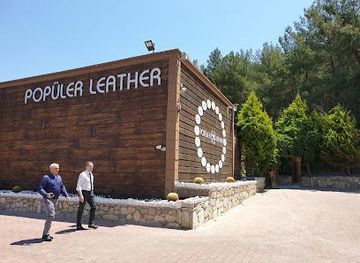
Popüler Leather
Explore exquisite leather craftsmanship at Popüler Leather in Selçuk, where tradition meets style in every handcrafted piece.
8 min drive · 2.8 km from city centre
-
Clothing store
Kırcılar Leather Art
Discover exquisite handcrafted leather goods at Kırcılar Leather Art in Selçuk, where traditional Turkish craftsmanship meets modern elegance.
8 min drive · 2.5 km from city centre
-
Home goods store
Nakkaş Ephesus
Explore Nakkaş Ephesus, a charming home goods store in Selçuk, Turkey, offering a unique selection of traditional and modern Turkish crafts.
8 min drive · 2.7 km from city centre



Get your free copy of our complete guide to Ephesus, delivered straight to you.
Everything on this page, from attractions and restaurants to essentials and local phrases, in one PDF you can read offline, print or share.
Already have an account? Sign in
Your Ephesus guide is ready.
We'll send it to · Not you? Sign out

Getting your guide ready…
We are putting together a fresh copy of the Ephesus guide. This can take up to a minute.
This can take a few moments. If your browser asks, choose Allow so the download can start. You'll find the guide in your Downloads folder.
Nothing happened? Download it again
Sorry, the guide is taking longer than usual. Please try again in a minute, or get it by email instead.
Ephesus essentials
Currency and Payment
Safety
Emergency Situations
Do's and Don'ts
Local Tips
From Eve
Local phrases worth knowing
You don't need to get them perfect. A few words go a long way, and locals appreciate the effort.
Basics
| English | Local | Say it |
|---|---|---|
| Hello | Merhaba | [Mer-ha-ba] |
| Goodbye | Hoşça kal | [Hosh-cha kal] |
| Yes | Evet | [Eh-vet] |
| No | Hayır | [Ha-yuhr] |
| Please/You're welcome | Lütfen | [Loot-fen] |
| Thank you | Teşekkür ederim | [Te-shek-kur ed-er-im] |
| Excuse me/Sorry | Affedersiniz | [Af-fed-er-sin-iz] |
| How are you? | Nasılsınız? | [Nas-uhl-suh-nuhz] |
| Fine. And you? | İyiyim. Ya siz? | [Ee-yee-yim. Ya siz?] |
| Do you speak English? | İngilizce konuşuyor musunuz? | [Ing-ee-leez-je ko-noo-shu-yor mus-oo-nooz] |
| I don't understand | Anlamıyorum | [Ahn-la-muh-yor-um] |
Eating & Drinking
| English | Local | Say it |
|---|---|---|
| I'd like to see the menu, please | Menüyü görmek istiyorum, lütfen | [Men-oo-yu ger-mek is-tee-yor-um, loot-fen] |
| I don't eat meat | Et yemem | [Et ye-mem] |
| Cheers! | Şerefe! | [She-re-fe] |
| I would like to pay, please | Ödemek istiyorum, lütfen | [Er-de-mek is-tee-yor-um, loot-fen] |
Emergencies
| English | Local | Say it |
|---|---|---|
| Help! | Yardım! | [Yar-duhm] |
| Go away! | Uzaklaş! | [Oo-zahk-lash] |
| Call the Police! | Polisi arayın! | [Po-lee-see a-rah-yun] |
| Call a doctor! | Doktor çağırın! | [Dok-tor cha-ee-run] |
| I'm lost | Kayboldum | [Kai-bol-dum] |
| I'm ill | Hastayım | [Has-tai-yum] |
Shopping
| English | Local | Say it |
|---|---|---|
| I'd like to buy... | Satın almak istiyorum... | [Sat-un al-mak is-tee-yor-um] |
| I'm just looking | Sadece bakıyorum | [Sah-deh-je bah-ku-yor-um] |
| How much is it? | Kaç lira? | [Katch lee-ra] |
| That's too expensive | Bu çok pahalı | [Boo choak pah-ha-luh] |
| Can you lower the price? | Fiyatı indirebilir misiniz? | [Fee-yat-uh in-deh-re-bee-leer mees-ee-neez] |
Time & Numbers
| English | Local | Say it |
|---|---|---|
| What time is it? | Saat kaç? | [Saat katch] |
| It's one o'clock | Saat bir | [Saat beer] |
| Half past (10) | On buçuk | [On boo-chook] |
| Morning | Sabah | [Sah-bah] |
| Afternoon | Öğleden sonra | [Er-ler-den ah-sor-ah] |
| Evening | Akşam | [Ahk-sham] |
| Yesterday | Dün | [Doon] |
| Today | Bugün | [Boo-goon] |
| Tomorrow | Yarın | [Yai-run] |
| 1 | Bir | [Beer] |
| 2 | İki | [Ee-kee] |
| 3 | Üç | [Ooch] |
| 4 | Dört | [Dohrt] |
| 5 | Beş | [Besh] |
| 6 | Altı | [Ahl-tuh] |
| 7 | Yedi | [Yeh-dee] |
| 8 | Sekiz | [Seh-keez] |
| 9 | Dokuz | [Doh-kooz] |
| 10 | On | [On] |
Transport & Directions
| English | Local | Say it |
|---|---|---|
| Where's a/the...? | ...nerede? | [Neh-reh-deh] |
| What's the address? | Adresi ne? | [Ad-reh-see neh] |
| Can you show me (on the map)? | (Haritada) gösterebilir misiniz? | [(Ha-ree-ta-da) ger-ste-re-bee-leer mees-ee-neez] |
| When's the next (bus)? | Sonraki (otobüs) ne zaman? | [Son-rah-kee (o-to-booos) neh zah-man] |
| A ticket (to ....) | Bir bilet (....'a) | [Beer bee-let (....'a)] |
History of Ephesus
Early Settlements and Ionian Ephesus
The wider Ephesus area was occupied long before the classical city, with prehistoric settlement evidence found around Ayasuluk Hill, the later centre of Selçuk. Ancient literary traditions associate the city's Greek foundation with Ionian settlers, although the precise stages of migration and settlement remain complex. Ephesus gradually developed around the sanctuary of Artemis, whose cult became central to the city's religious and economic life. The harbour on the Aegean coast supported maritime trade, while the fertile plain connected the settlement with the interior of western Anatolia. Over time, shifting coastlines and silting altered the relationship between the city and the sea, a process that would eventually contribute to Ephesus's decline as a major port.
Persian Rule and Regional Powers
During the sixth and fifth centuries BC, Ephesus existed within the political sphere of the Persian Achaemenid Empire, as did much of western Anatolia. The city remained an important religious and commercial centre but was affected by the changing struggles between Persian authority and the Greek cities of Ionia. After the campaigns of Alexander the Great in the late fourth century BC, Ephesus entered the Hellenistic world and became involved in the rivalries of successor kingdoms. These political shifts brought new rulers, administrative arrangements and cultural influences, while the sanctuary of Artemis continued to draw worshippers and wealth. The city's position between the Aegean and the Anatolian interior ensured that it remained strategically significant.
Lysimachus and the Hellenistic City
In the early third century BC, Lysimachus, one of Alexander's successors, reorganised Ephesus and moved its principal settlement to a new location between Mounts Coressus and Pion. Defensive walls were constructed around the enlarged urban area, whose broad streets, agora and civic buildings established much of the layout later developed by Rome. The relocation also responded to the gradual silting of the older harbour. After the end of the Hellenistic dynasties, Ephesus passed to the Attalid Kingdom of Pergamum and then to Rome in 133 BC, when Attalus III bequeathed his kingdom to the Roman Republic. The city's transition into Roman rule laid the foundation for its greatest architectural expansion.
Roman Capital of Asia
Under Roman administration, Ephesus became the capital of the province of Asia and a major centre of commerce, law and imperial culture. Its harbour, though increasingly threatened by silt, connected the city with Mediterranean trade, while public buildings expressed the wealth of civic benefactors and Roman officials. The Library of Celsus was erected in the early second century AD as a monumental tomb and repository, and the Great Theatre was enlarged for public performances and assemblies. Marble-paved Curetes Street, fountains, baths and the Terrace Houses show the sophistication of urban life. The city's prosperity was supported by trade, administration and pilgrimage to the sanctuary of Artemis, even as Christianity began to challenge older religious traditions.
Christianity and Late Antiquity
Christian communities became established in Ephesus during the Roman period, and the city is associated with the missionary journeys of Paul, who is traditionally linked with the city's early Christian history. The sanctuary of Artemis lost influence as Christianity gained official support in the late Roman Empire. Ephesus remained an important ecclesiastical centre, and the Council of Ephesus met in 431 in the Church of Mary to debate the nature of Christ and the status of Mary, with major consequences for Christian theology. Earthquakes, political change, harbour silting and economic contraction weakened the urban fabric during late antiquity. Some monumental buildings were adapted or dismantled, while Christian churches became prominent within the ancient city.
Ayasuluk, Seljuks and Ottoman Change
As the harbour receded and the ancient urban centre declined, settlement and authority shifted towards Ayasuluk Hill, around the Basilica of St John. The town became part of the Seljuk realm in the medieval period and later came under Ottoman rule, when the surviving population and commercial focus continued to centre on the hill and its surroundings rather than the abandoned Roman streets. The Isa Bey Mosque, built in 1375, reflects the architectural culture of the Anatolian beyliks and stands near the remains of earlier religious monuments. Archaeological investigation at Ephesus began in the nineteenth century and has continued to reveal the city's successive layers, helping preserve its importance as a major site for the study of Greek, Roman, Byzantine and Anatolian history.
Travel experiences inspired by this city
-
 8 Day Trip
Eleni's Solo Journey to the Ancient City of Ephesus
Explore Ephesus: Dive into ancient history and culture on Eleni's solo adventure in Turkey, experiencing the wonders of this legendary city.
 25 Apr 2026
By Eleni Papadopoulou-Schmidt -
 10 Day Trip
Exploring Ancient Ephesus with Friends
Discover the ancient wonders of Ephesus with friends, exploring historical sites and soaking up rich culture while staying at the welcoming Hotel Bella.
 20 Feb 2026
By Juma Juma -
 11 Day Trip
Family Adventure in Ancient Ephesus
Explore the wonders of Ephesus with your family, diving into ancient history and vibrant culture in Turkey's enchanting historical site.
 10 Feb 2026
By Eman Hassan
Swipe for more travel diaries
Ephesus in Photos
Browse through our photo collection highlighting the charm and character of the destination.
Cities near Ephesus
The closest cities to Ephesus, if you have time for more than one stop.
-
-

-

-

-


Swipe for more cities
Explore more
Explore more of Turkiye
Discover Turkiye: Where ancient history, stunning landscapes, and vibrant culture come together to create an unforgettable travel experience.
Explore Turkiye