Free Marmaris Travel Guide & Mobile App
Plan your Marmaris trip with Evendo. Get free guides to top attractions, restaurants, hotels, and bars. Web access or download the mobile app.


Marmaris blends turquoise bays, pine-clad hills, a historic castle and lively marina life, with Turkish cuisine, boat trips and Aegean coast culture.
A Harbour Between Mountains and Sea
Marmaris occupies a sheltered bay on Türkiye’s south-western coast, where forested mountains descend towards the Aegean and Mediterranean waters. The town’s long waterfront curves around a busy natural harbour, linking a modern marina, excursion boats, ferries, restaurants and promenades with the compact old quarter. Beyond the built-up centre, the coastline breaks into coves framed by pine woodland, while the Datça Peninsula and the Gulf of Gökova extend towards quieter maritime landscapes.Read more about Marmaris
Castle, Old Town and Coastal Life
Beyond the Resort Front
When is the best time to visit Marmaris?
Best: April–May, October · 25–31°C| Month | High (°C) | Rainfall (mm) |
|---|---|---|
| January | 16 | 151 |
| February | 17 | 116 |
| March | 20 | 88 |
| April (best) | 25 | 64 |
| May (best) | 31 | 38 |
| June | 37 | 10 |
| July | 38 | 3 |
| August | 39 | 5 |
| September | 35 | 27 |
| October (best) | 29 | 71 |
| November | 22 | 107 |
| December | 17 | 131 |
Getting to and around Marmaris
How to get there
Transportation
Best attractions in Marmaris
Marmaris Castle anchors the old town, where steep lanes lead between traditional houses, small shops and viewpoints over the harbour. Its museum adds archaeological and historical context to the town’s strategic setting. Along the waterfront, the marina and promenade offer an easy way to experience the scale of the bay, from fishing and excursion boats to polished sailing yachts. Daily boat trips explore coves and islands around the Gulf of Marmaris, often stopping for swimming in clear, sheltered water; these are organised excursions rather than independent beaches within the town. The Marmaris National Park landscapes begin beyond the urban centre, with pine-covered hills and coastal roads providing a striking backdrop. İçmeler, a separate resort settlement west of Marmaris, offers another developed beach area, while the nearby Nimara Cave on Heaven Island provides a more unusual excursion within the wider bay. The covered bazaar and old harbour add a slower, commercial side to sightseeing.
-
Beach
Akyaka Plajı
Discover the serene beauty of Akyaka Beach, a hidden gem on the Aegean coast, perfect for relaxation, adventure, and cultural exploration.
42 min drive · 22 km from city centre
-
Akyaka River Romp
Explore the scenic Akyaka River Romp, a hidden gem in Muğla offering stunning landscapes, water sports, and a tranquil escape into nature.
-
Beach pavillion
İZTUZU PLAJI
Discover the natural beauty of İztuzu Beach in Muğla, where golden sands meet crystal-clear waters, offering a perfect escape for nature lovers and sun-seekers.
53 min drive · 33 km from city centre
-
National park
Marmaris National Park
Explore Marmaris National Park, a stunning Turkish gem filled with diverse wildlife, crystal-clear waters, and breathtaking landscapes perfect for nature lovers.
14 min drive · 4.6 km from city centre



Best landmarks in Marmaris
Marmaris Castle is the town’s defining historic structure, occupying a rise above the old harbour and associated with the Ottoman preparations for Süleyman the Magnificent’s 1522 campaign against Rhodes. Its stone walls and elevated position express the defensive importance of the bay, while the museum inside provides a compact introduction to local archaeology and history. The old town’s narrow streets preserve the scale of the pre-resort settlement, even though many buildings have been adapted for shops and cafés. The harbour and long waterfront are landmarks of a different kind: they represent Marmaris’s continuing maritime identity and the transition from working port to tourism centre. Netsel Marina extends that nautical character with a more formal yachting environment. Outside the centre, the forested slopes of Marmaris National Park form a powerful natural backdrop, while the nearby Nimara Cave on Heaven Island reflects the archaeological and geological interest of the wider bay.
-
Tourist attraction
Marmaris Castle and Archeology Museum
Explore the captivating Marmaris Castle and Archeology Museum, where history meets stunning views in the heart of Turkey's picturesque coast.
7 min walk · 0.6 km from city centre
-
National park
Marmaris National Park
Explore Marmaris National Park: A breathtaking escape into nature's beauty with stunning landscapes, diverse wildlife, and endless outdoor adventures.
14 min drive · 4.6 km from city centre
-
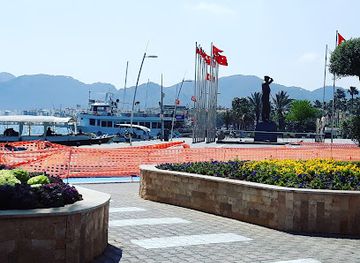
Sculpture
Atatürk Heykeli
Discover Marmaris' Atatürk Heykeli, a stunning sculpture honoring the founder of Turkey, surrounded by vibrant local life and picturesque views.
3 min walk · 0.2 km from city centre
-
Beach
Marmaris Halk Plajı
Experience the sun-kissed shores and vibrant atmosphere at Marmaris Halk Plajı, where relaxation meets adventure in a stunning Mediterranean setting.
8 min walk · 0.6 km from city centre


Explore Marmaris on the map
Plan your Marmaris trip on one map. See where the top attractions, landmarks, restaurants, bars and hotels are, find what's near where you're staying, and book hotels and experiences in a few clicks.
Neighbourhoods in Marmaris
-

-


Swipe for more neighbourhoods
Best hotels in Marmaris
Best restaurants in Marmaris
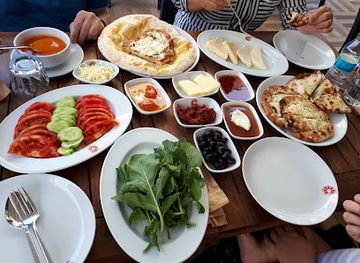
Marmaris’s food scene combines Aegean Turkish cooking with the practical, international character of a coastal resort. Seafood restaurants around the harbour and marina serve local fish, calamari and meze, while meze—small shared dishes—may include aubergine, yoghurt, herbs, olive oil and seasonal vegetables. Grilled köfte, kebabs, pide and gözleme provide familiar Turkish staples, with gözleme traditionally prepared as a thin filled flatbread. Breakfast tables often feature cheeses, olives, bread, eggs, tomatoes and preserves, reflecting the produce of the Aegean region. The old town and central streets contain lokantas and casual eateries, while the waterfront offers restaurants shaped more by views and evening dining. Fresh fruit, nuts, Turkish delight and pastries appear in the bazaar, and smaller cafés serve tea, Turkish coffee and cold drinks throughout the day. Menus may also include international dishes for the resort market.
-
Kebab shop
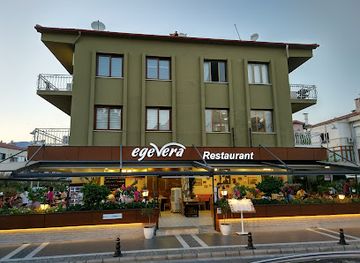
Ege Vera
Experience the true taste of Turkish cuisine at Ege Vera in Marmaris – where delicious kebabs meet warm hospitality.
1 min walk · 0.1 km from city centre
-
Restaurant
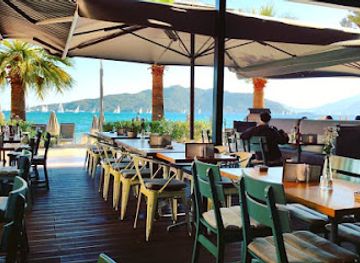
Bono Good Times Beach
Experience family-friendly dining at Bono Good Times Beach in Marmaris - where delicious food meets stunning seaside views.
11 min walk · 0.9 km from city centre
-
Restaurant
Kircicegi
Discover the flavors of Turkey at Kircicegi in Marmaris – where every dish tells a story.
1 min walk · 0.1 km from city centre
-
Restaurant
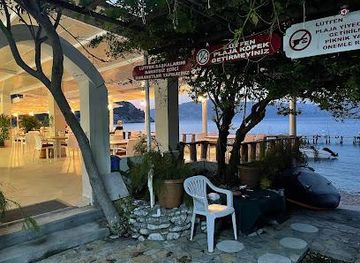
Amos Beach Restoran
Secluded beachfront eatery in Amos Bay serving authentic Turkish feasts amid turquoise waters, olive groves, and unforgettable Marmaris sunsets—a true hidden paradise.
31 min drive · 11 km from city centre
Best bars in Marmaris
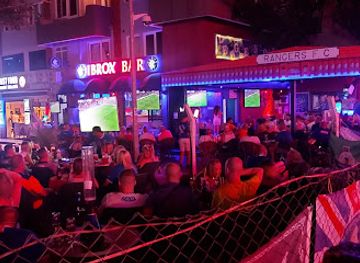
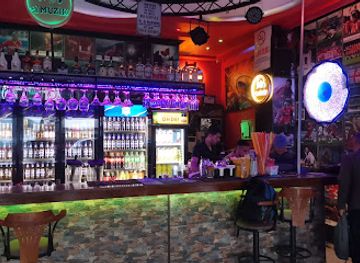
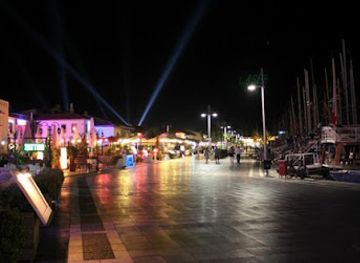
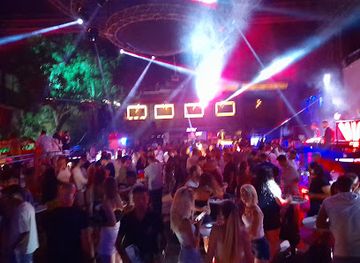
Marmaris has one of the liveliest evening scenes on Türkiye’s south-western coast, particularly during the summer season. Bar Street, behind the harbour in the old-town area, is associated with late-night venues, music and dancing, while the waterfront and marina provide a calmer setting for cocktails, beer, Turkish wine and long evenings beside the boats. The central resort strip contains a mixture of hotel bars, casual pubs and venues aimed at international holidaymakers, with atmosphere varying sharply between quieter lounges and high-energy clubs. Traditional tea gardens and cafés offer a more restrained alternative, especially for visitors interested in harbour views rather than nightlife. Live music, televised sport and seasonal entertainment are common in larger venues, but exact opening patterns change with the time of year. Nearby İçmeler has its own smaller evening scene and should not be confused with Marmaris’s central Bar Street.
-
Bar
BAR Ibrox
Discover the vibrant ambiance of BAR Ibrox, a must-visit bar in Marmaris with stunning views, great drinks, and a friendly atmosphere.
5 min drive · 1.7 km from city centre
-
Sports bar
Anfield Bar marmaris turkey
Experience the thrill of live sports at Anfield Bar in Marmaris, where fans unite for unforgettable moments in a vibrant atmosphere.
5 min drive · 1.7 km from city centre
-
Bar
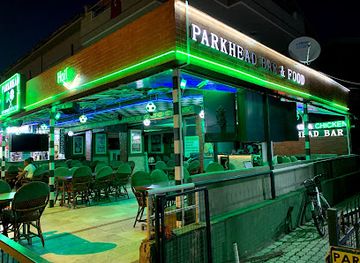
PARKHEAD BAR MARMARIS
Experience the lively atmosphere, diverse drinks, and friendly service at Parkhead Bar in Marmaris, a perfect spot for relaxation and entertainment.
5 min drive · 1.6 km from city centre
-
Bar
Green House Bar
Green House Bar in Marmaris: Where Vibrant Nights and Refreshing Cocktails Come Together for Unforgettable Experiences.
6 min walk · 0.5 km from city centre
Best nightclubs in Marmaris
Marmaris has one of the liveliest evening scenes on Türkiye’s south-western coast, particularly during the summer season. Bar Street, behind the harbour in the old-town area, is associated with late-night venues, music and dancing, while the waterfront and marina provide a calmer setting for cocktails, beer, Turkish wine and long evenings beside the boats. The central resort strip contains a mixture of hotel bars, casual pubs and venues aimed at international holidaymakers, with atmosphere varying sharply between quieter lounges and high-energy clubs. Traditional tea gardens and cafés offer a more restrained alternative, especially for visitors interested in harbour views rather than nightlife. Live music, televised sport and seasonal entertainment are common in larger venues, but exact opening patterns change with the time of year. Nearby İçmeler has its own smaller evening scene and should not be confused with Marmaris’s central Bar Street.
-
 Disco club
Joy Club
Discover the electrifying nightlife at Joy Club, Marmaris' premier disco club, where the music, dance, and vibrant atmosphere will keep you coming back for more.
6 min walk · 0.5 km from city centre
-
Night club
Club areena
Experience the electrifying nightlife of Marmaris at Club Areena, where music, dance, and vibrant atmosphere come together.
7 min walk · 0.6 km from city centre
-
Night club
Back Street Bar
Experience the electrifying nightlife of Marmaris at Back Street Bar, where music, dance, and culture come alive in a vibrant atmosphere.
7 min walk · 0.6 km from city centre
-
Night club
Back Garden Club
Experience the vibrant nightlife at Back Garden Club in Marmaris, where electrifying beats and a lively atmosphere come together for unforgettable nights.
6 min walk · 0.5 km from city centre


Best shops in Marmaris
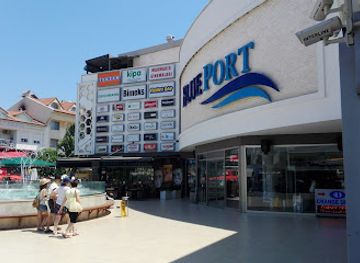
Shopping in Marmaris ranges from the traditional covered bazaar behind the waterfront to resort-oriented streets lined with leather, jewellery, textiles, footwear and souvenir shops. The bazaar is useful for Turkish delight, spices, tea, cotton goods, ceramics and small decorative objects, although quality and prices vary and bargaining is more relevant in some independent shops than in fixed-price businesses. Market days bring a more local atmosphere, with clothing, household goods, fruit and vegetables sold alongside holiday merchandise; confirm the current location locally because arrangements can change. The central streets and resort strip focus on visitors, whereas the old town retains smaller shops and practical businesses. Aegean olive oil, soaps, herbs, dried fruit and regional food products make more distinctive purchases than generic souvenirs, while Turkish textiles and handmade items can reflect local craft traditions. Keep receipts for higher-value goods and pack food products according to customs rules.
-
Shopping mall
Blue Port
Experience the vibrant shopping scene at Blue Port in Marmaris, featuring local boutiques and international brands in a lively atmosphere.
5 min drive · 1.7 km from city centre
-
Clothing store
LC Waikiki
Shop the latest trends at LC Waikiki in Marmaris, where fashion meets affordability in a vibrant shopping atmosphere.
1 min walk · 0.1 km from city centre
-
Shopping mall
Caprice Premium Mall
Discover Caprice Premium Mall in Marmaris: Your ultimate shopping destination for luxury brands, delightful dining, and exciting entertainment under one roof.
5 min drive · 1.5 km from city centre
-
Clothing store
Zeyn Clothes Shop
Discover trendy fashion and unique styles at Zeyn Clothes Shop in Marmaris, where quality meets contemporary design in a vibrant shopping atmosphere.
7 min drive · 2.5 km from city centre


Get your free copy of our complete guide to Marmaris, delivered straight to you.
Everything on this page, from attractions and restaurants to essentials and local phrases, in one PDF you can read offline, print or share.
Already have an account? Sign in
Your Marmaris guide is ready.
We'll send it to · Not you? Sign out

Getting your guide ready…
We are putting together a fresh copy of the Marmaris guide. This can take up to a minute.
This can take a few moments. If your browser asks, choose Allow so the download can start. You'll find the guide in your Downloads folder.
Nothing happened? Download it again
Sorry, the guide is taking longer than usual. Please try again in a minute, or get it by email instead.
Marmaris essentials
Currency and Payment
Safety
Emergency Situations
Do's and Don'ts
Local Tips
From Eve
Local phrases worth knowing
You don't need to get them perfect. A few words go a long way, and locals appreciate the effort.
Basics
| English | Local | Say it |
|---|---|---|
| Hello | Merhaba | [Mehr-ha-ba] |
| Goodbye | Hoşçakal | [Hosh-cha-kal] |
| Yes | Evet | [Eh-vet] |
| No | Hayır | [Ha-yuhr] |
| Please/You're welcome | Lütfen | [Loot-fen] |
| Thank you | Teşekkür ederim | [Te-she-kur ed-air-im] |
| Excuse me/Sorry | Özür dilerim | [O-zoor dee-lair-im] |
| How are you? | Nasılsınız? | [Nah-suhl-suh-nuhz] |
| Fine. And you? | İyiyim. Ya siz? | [Ee-yee-yim. Yah siz?] |
| Do you speak English? | İngilizce konuşuyor musunuz? | [Ing-ee-leez-jay ko-noo-shu-yor moos-oo-nooz] |
| I don't understand | Anlamıyorum | [An-lah-muh-yor-um] |
Eating & Drinking
| English | Local | Say it |
|---|---|---|
| I'd like to see the menu, please | Menüyü görmek istiyorum, lütfen | [Men-oo-yu gor-mek is-tee-yor-um, loot-fen] |
| I don't eat meat | Et yemem | [Et ye-mem] |
| Cheers! | Şerefe! | [She-reh-feh] |
| I would like to pay, please | Ödemek istiyorum, lütfen | [O-de-mek is-tee-yor-um, loot-fen] |
Emergencies
| English | Local | Say it |
|---|---|---|
| Help! | Yardım! | [Yar-duhm] |
| Go away! | Uzaklaş! | [Oo-zahk-lash] |
| Call the Police! | Polisi arayın! | [Poh-lee-see ah-rah-yun] |
| Call a doctor! | Doktor çağırın! | [Dok-tor cha-ee-ruhn] |
| I'm lost | Kayboldum | [Kah-yohl-doom] |
| I'm ill | Hastayım | [Hah-stah-yuhm] |
Shopping
| English | Local | Say it |
|---|---|---|
| I'd like to buy... | Satın almak istiyorum... | [Sat-uhn al-mak is-tee-yor-um] |
| I'm just looking | Sadece bakıyorum | [Sah-deh-je bah-ku-yor-um] |
| How much is it? | Ne kadar? | [Neh kah-dar?] |
| That's too expensive | Bu çok pahalı | [Boo chook pah-ha-luh] |
| Can you lower the price? | Fiyatı indirebilir misiniz? | [Fiyat-uh in-deh-reh-bee-leer mee-see-neez] |
Time & Numbers
| English | Local | Say it |
|---|---|---|
| What time is it? | Saat kaç? | [Saat kahch] |
| It's one o'clock | Saat bir | [Saat beer] |
| Half past (10) | Saat on buçuk | [Saat on boo-chuk] |
| Morning | Sabah | [Sah-bah] |
| Afternoon | Öğleden sonra | [O-led-den ah-so-ra] |
| Evening | Akşam | [Ahk-sham] |
| Yesterday | Dün | [Doon] |
| Today | Bugün | [Boo-goon] |
| Tomorrow | Yarın | [Yah-ruhn] |
| 1 | Bir | [Beer] |
| 2 | İki | [Ee-kee] |
| 3 | Üç | [Ooch] |
| 4 | Dört | [Durt] |
| 5 | Beş | [Besh] |
| 6 | Altı | [Ahl-tuh] |
| 7 | Yedi | [Yeh-dee] |
| 8 | Sekiz | [Seh-keez] |
| 9 | Dokuz | [Doh-kooz] |
| 10 | On | [Oon] |
Transport & Directions
| English | Local | Say it |
|---|---|---|
| Where's a/the...? | ...nerede? | [Neh-reh-deh?] |
| What's the address? | Adres nedir? | [A-dres neh-deer?] |
| Can you show me (on the map)? | (Haritada) gösterebilir misiniz? | [(Ha-ree-ta-da) gor-steh-reh-bee-leer mee-see-neez] |
| When's the next (bus)? | Bir sonraki (otobüs) ne zaman? | [Beer son-rah-kee (oh-toe-booos) neh zah-man?] |
| A ticket (to ....) | Bir bilet (....'a) | [Beer bee-let (....'a)] |
History of Marmaris
Ancient Physkos and Carian Origins
Marmaris developed around the sheltered harbour of ancient Physkos, a settlement associated with Caria, the south-western Anatolian region whose communities occupied the coast and inland valleys. Its position on maritime routes between the Aegean islands, the Anatolian mainland and the eastern Mediterranean encouraged seafaring and exchange. Ancient sources connect Physkos with the wider political world of Rhodes and the Rhodian Peraea, the mainland territory controlled by Rhodes at different periods. Although much of the ancient settlement has been absorbed by the modern town, the harbour’s geography still explains Marmaris’s historical importance: a protected anchorage backed by mountains and linked to routes across the sea.
Hellenistic and Roman Maritime Networks
During the Hellenistic period, Marmaris’s harbour belonged to a region shaped by the influence of Rhodes and competing powers in the eastern Aegean. Greek-speaking institutions, commerce and maritime administration left their mark on coastal settlements, while local Carian traditions continued within the wider cultural landscape. Under Roman rule, the area became part of a stable imperial trading system connecting Asia Minor with the islands and ports of the Mediterranean. The harbour served practical coastal traffic rather than developing into one of the ancient world’s largest cities, but its strategic setting ensured continued relevance as political control shifted around the Aegean.
Byzantine and Medieval Transformations
After the division of the Roman world, the coast remained within the Byzantine sphere, although maritime insecurity and changing regional powers affected settlement and trade. From the medieval period, Turkish beyliks and other powers competed for control of south-western Anatolia, while Rhodes emerged as a major fortified island under the Knights Hospitaller from 1309. Marmaris’s bay consequently retained strategic value as an anchorage opposite the island. The town’s medieval history is less fully represented by surviving monuments than its ancient geography or Ottoman castle, yet the succession of Byzantine, Turkish and Rhodian influences established the political setting for the settlement’s later military importance.
Ottoman Marmaris and the Castle
Marmaris came firmly under Ottoman rule in the fifteenth century, and the town gained renewed strategic importance during Sultan Süleyman the Magnificent’s campaign against Rhodes in 1522. Marmaris Castle was rebuilt or substantially strengthened during this period as part of the preparations for the expedition, and the harbour supported Ottoman naval operations. The settlement remained a modest port rather than a major inland centre, serving maritime movement, local trade and communication with the islands and the coast. The castle and the old quarter are the clearest surviving reminders of this Ottoman phase, even though later rebuilding altered much of the town around them.
From Port Town to Coastal Resort
For centuries Marmaris depended mainly on maritime activity, agriculture, fishing and the resources of its wooded hinterland. Roads and improved transport gradually connected the harbour more closely with the wider region, while tourism began to transform the town during the second half of the twentieth century. Hotels, restaurants, excursion boats and marinas expanded along the bay, making leisure travel central to the local economy. The severe earthquake of 1957 affected parts of the wider region and contributed to rebuilding, while subsequent development reshaped the shoreline. Today, Marmaris retains traces of its port-town and Ottoman past within a modern resort whose identity remains tied to the bay.
Travel experiences inspired by this city


Swipe for more travel diaries
Marmaris in Photos
Browse through our photo collection highlighting the charm and character of the destination.
Cities near Marmaris
The closest cities to Marmaris, if you have time for more than one stop.
-

-

-

-
-


Swipe for more cities