

Ionia, Turkiye Travel Guide
Discover the ancient wonders and stunning landscapes of Ionia, Turkiye, a historical region that offers a unique blend of history, nature, and culinary delights.
Ionia, a historical region on the western coast of Turkiye, is a treasure trove for history lovers and casual tourists alike. Known for its rich cultural heritage and ancient ruins, this destination offers a unique glimpse into the past. The ancient cities of Ionia, such as Ephesus, Miletus, and Priene, are some of the most well-preserved archaeological sites in the world. Walking through these ruins, you can almost hear the echoes of ancient philosophers like Heraclitus and Thales. The grand Library of Celsus in Ephesus is particularly awe-inspiring, standing as a testament to the advanced architectural and scholarly achievements of the Ionian people. Beyond its historical significance, Ionia also boasts stunning natural landscapes. The Aegean coastline is dotted with beautiful beaches and crystal-clear waters, perfect for those looking to relax and soak up the sun. The region is also known for its delicious cuisine, featuring fresh seafood and locally grown produce. A visit to a local market or a traditional Turkish restaurant will leave your taste buds delighted. Whether you're a history buff, a nature lover, or a foodie, Ionia has something to offer. Its blend of ancient wonders and modern-day charm makes it a must-visit destination in Turkiye.

Know before you go
Hi, I'm Eve. Here are a few practical things to know before exploring Ionia.
- Visit early in the morning to avoid the crowds and the midday heat, especially during the summer months.
- Wear comfortable walking shoes, as the ancient sites have uneven terrain and require a lot of walking.
- Don't miss the Ephesus Museum in Selçuk to see artifacts found in the ancient city.
- Try the local seafood dishes at coastal restaurants for an authentic taste of the region.
- Consider hiring a local guide to enrich your understanding of the historical sites.
Top City Travel Guides in Ionia
The cities of Ionia, and the easiest places to base yourself.


Destinations in Ionia
Resorts, valleys and scenic spots worth a trip of their own.


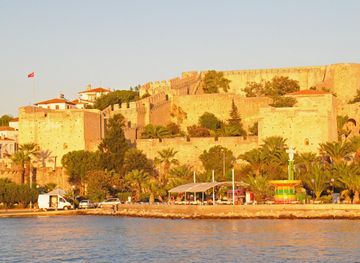
Explore Ionia: Things to Do, Places to Eat, Hotels & More
Handpicked recommendations for top attractions, local dining, accommodations, and more

Top Attractions & Sightseeing in Ionia
Top-rated picks
Best Attractions

Selimiye Mosque
Discover the breathtaking Selimiye Mosque in Edirne, a masterpiece of Ottoman architecture and a UNESCO World Heritage site.

Golcuk Nature Park
Experience the natural beauty of Golcuk Nature Park, a serene national reserve in Bolu, perfect for hiking, picnicking, and enjoying the great outdoors.

Ankara Castle
Discover Ankara Castle: A historical gem in the heart of Turkey, offering stunning views and a journey through time.

Ladies Beach
Discover the charm of Ladies Beach in Kuşadası, a perfect blend of relaxation, local culture, and stunning coastal views.

Best landmarks in Ionia
Top-rated picks
Best Landmarks

Galata Tower
Experience breathtaking views and rich history at Galata Tower, one of Istanbul's most iconic historical landmarks, located in the heart of the city.

Anıtkabir
Explore Anıtkabir, the grand mausoleum of Atatürk, a symbol of Turkish independence, offering rich history and stunning architecture in Ankara.

Hagia Sophia Grand Mosque
Explore the Hagia Sophia Grand Mosque, a historical landmark in Istanbul that beautifully blends stunning architecture and rich cultural heritage.

Topkapi Palace Museum
Explore the opulence of the Ottoman Empire at Topkapi Palace Museum, a UNESCO World Heritage site rich in history and stunning architecture.

Best restaurants in Ionia
Top-rated picks
Best Restaurants

Hanzade Terrace Restaurant
Experience authentic Turkish cuisine at Hanzade Terrace Restaurant with breathtaking views and delightful flavors in Istanbul.

ANTAKYA RESTAURANT
Experience authentic Turkish flavors at Antakya Restaurant in Istanbul – a culinary delight for every food lover!

Old Ottoman Cafe & Restaurant
Experience authentic Ottoman cuisine in an enchanting atmosphere at Old Ottoman Cafe & Restaurant in Istanbul.

Divella Bistro Restaurant
Experience the best of Turkish and Mediterranean cuisine at Divella Bistro in Istanbul - where every dish tells a story.

Best bars in Ionia
Top-rated picks
Best Bars

Kıtır
Discover Kıtır, a lively pub in Ankara offering a delightful mix of local beers and delicious dishes in a vibrant atmosphere.

Loti Roof Lounge
Discover Loti Roof Lounge, where exquisite sushi, cocktails, and breathtaking views of Istanbul's skyline meet in an unforgettable dining experience.

Şirince Artemis Restaurant ve Şarap evi
Experience authentic Turkish cuisine and exquisite wines at Artemis Restaurant in the charming village of Şirince, a true taste of Turkey.

KoruMar Ephesus Beach & Spa Resort
Experience luxury and adventure at KoruMar Ephesus Beach & Spa Resort, where relaxation meets vibrant nightlife on the stunning Aegean coast.

Best nightclubs in Ionia
Top-rated picks
Best Nightclubs

KoruMar Ephesus Beach & Spa Resort
Experience luxurious beachfront living at KoruMar Ephesus Beach & Spa Resort, where relaxation meets recreation in the heart of the Aegean.

Club Summer Garden
Unleash your nights at Club Summer Garden, Alanya's vibrant night club offering the best in music and atmosphere for unforgettable nightlife experiences.

Dionys Club
Discover Istanbul's nightlife at Dionys Club, where electrifying music and an unforgettable atmosphere await you.

Jade Beach Club
Discover the energetic vibes and stunning seaside views at Jade Beach Club, a top destination for nightlife in Kuşadası.

Best shops in Ionia
Top-rated picks
Best Shops

Egyptian Bazaar
Discover the Egyptian Bazaar, Istanbul's historic market filled with spices, sweets, and traditional crafts, offering a vibrant cultural experience.

İstanbul Cevahir Shopping Mall
Explore İstanbul Cevahir Shopping Mall: Your ultimate shopping, dining, and entertainment destination in the heart of the city.

Zorlu Center
Explore Zorlu Center, Istanbul's ultimate shopping and entertainment hub, where luxury meets culture in a stunning architectural masterpiece.

Kemeraltı Bazaar
Explore Kemeraltı Bazaar, İzmir's historic market, where vibrant culture meets an array of local crafts, delicious food, and unforgettable experiences.

Explore Ionia on the Map
A handpicked selection of must-see spots in Ionia, mapped for you.
Ionia Essentials
-
Ionia, located in the western part of modern-day Turkey, is accessible via several means. The closest major airport is Izmir Adnan Menderes Airport (ADB), which is well-connected to various international and domestic destinations. From Izmir, you can take a bus or rent a car to reach different parts of Ionia, such as Ephesus, Miletus, and Priene. Alternatively, you can also use the Turkish State Railways (TCDD) for a scenic journey from Istanbul or Ankara to Izmir, and then continue your journey by road.
-
Once in Ionia, getting around is relatively easy. Car rentals are available in major towns and cities, offering flexibility to explore at your own pace. Public buses and minibuses (dolmuş) connect most towns and key archaeological sites. Taxis are also an option, though it is advisable to agree on the fare beforehand. For shorter distances within towns, walking or cycling can be enjoyable, especially in areas with pedestrian-friendly streets.
-
The official currency in Turkey is the Turkish Lira (TRY). Credit and debit cards are widely accepted in hotels, restaurants, and larger shops. However, it is advisable to carry some cash, especially when visiting smaller towns and local markets. ATMs are readily available in cities and towns across Ionia. It’s also a good idea to inform your bank of your travel plans to avoid any issues with card transactions.
-
Ionia is generally a safe destination for tourists. However, as with any travel destination, it is important to take standard precautions. Avoid walking alone at night in unfamiliar areas and be cautious of your belongings in crowded places. Areas with higher tourist traffic, such as Ephesus, are generally safe but be wary of petty theft. Neighborhoods to exercise caution in include some parts of Izmir’s old town after dark. Always stay aware of your surroundings and use common sense to stay safe.
-
In case of an emergency, dial 112 for immediate assistance. This number will connect you to emergency medical services, police, and fire departments. Major towns in Ionia have hospitals and medical facilities that cater to emergencies. Pharmacies (eczane) are widespread and can provide over-the-counter medications. It is highly recommended to have travel insurance that covers medical emergencies and other unexpected events.
-
Fashion: Do dress modestly, especially when visiting religious sites. Avoid wearing overly revealing clothing. Religion: Do respect local customs and traditions. When visiting mosques, cover your head (for women) and remove your shoes. Public Transport: Do be respectful and give up your seat to elderly passengers. Don’t eat or drink on public transportation. Greetings: Do greet people with a handshake or a nod. A common greeting is 'Merhaba' (Hello). Eating & Drinking: Do try local delicacies and accept food offerings graciously. Don’t refuse hospitality, as it is considered impolite.
-
To experience Ionia like a local, consider visiting local markets where you can buy fresh produce, spices, and traditional goods. Engage with locals who are often friendly and willing to share stories about their culture and history. Don’t miss the chance to attend local festivals and events, which provide unique insights into the region’s traditions. For a unique experience, visit less crowded archaeological sites like Priene and Miletus during early mornings or late afternoons for a more peaceful exploration.
When is the best time to visit Ionia?
Useful Local Phrases for Ionia
You don't need to speak the language perfectly. Even learning a few simple words can make conversations warmer—and locals usually appreciate the effort.
— Eve

Here are the phrases I use most often in Ionia. Try a few—you'll be surprised how far they go! 😊
❤️
-
- HelloMerhaba
[mehr-HAH-bah] - GoodbyeHoşça kal
[hosh-CHA kal] - YesEvet
[eh-VET] - NoHayır
[HAH-yuhr] - Please/You're welcomeLütfen
[LOOT-fen] - Thank youTeşekkür ederim
[teh-shehk-KOOR eh-DEH-rim] - Excuse me/SorryAffedersiniz
[ahf-feh-DER-see-neez] - How are you?Nasılsınız?
[NAH-suhl-suhn-uhz] - Fine. And you?İyiyim. Siz nasılsınız?
[EE-yee-yim. SEEZ NAH-suhl-suhn-uhz] - Do you speak English?İngilizce biliyor musunuz?
[een-GI-liz-je bee-lee-YOR moo-SOO-nuz] - I don't understandAnlamıyorum
[ahn-LAH-muh-YOHR-uhm]
- HelloMerhaba
-
- I'd like to see the menu, pleaseMenüyü görmek isterim, lütfen
[meh-NOO-yoo GOHR-mehk ees-TEH-rim, LOOT-fen] - I don't eat meatEt yemiyorum
[et YEH-mee-YOHR-uhm] - Cheers!Şerefe!
[sheh-REH-feh] - I would like to pay, pleaseÖdemek istiyorum, lütfen
[uh-DEH-mehk ees-TEH-yohr-uhm, LOOT-fen]
- I'd like to see the menu, pleaseMenüyü görmek isterim, lütfen
-
- Help!Yardım edin!
[YAHR-duhm EH-deen] - Go away!Defol!
[DEH-fol] - Call the Police!Polisi çağırın!
[poh-LEE-see CHAH-uh-ruhn] - Call a doctor!Doktor çağırın!
[dok-TOHR CHAH-uh-ruhn] - I'm lostKayboldum
[KAI-bol-doom] - I'm illHastayım
[has-TAH-yim]
- Help!Yardım edin!
-
- I'd like to buy...Satın almak istiyorum...
[sah-TUHN AHL-mak ees-TEH-yohr-uhm] - I'm just lookingSadece bakıyorum
[SAH-deh-jeh bah-KI-yohr-uhm] - How much is it?Bu ne kadar?
[boo NEH kah-DAR] - That's too expensiveBu çok pahalı
[boo CHOK pah-HAH-luh] - Can you lower the price?Fiyatı indirmez misiniz?
[fee-YAH-tuh een-DEER-mez MEE-see-niz]
- I'd like to buy...Satın almak istiyorum...
-
- What time is it?Saat kaç?
[sah-AT kahch] - It's one o'clockSaat bir
[sah-AT beer] - Half past (10)On buçuk
[on boo-CHOOK] - MorningSabah
[sah-BAH] - AfternoonÖğleden sonra
[uh-LEH-den sohn-RAH] - EveningAkşam
[ahk-SHAHM] - YesterdayDün
[doon] - TodayBugün
[boo-GOON] - TomorrowYarın
[YAH-ruhn] - 1Bir
[beer] - 2İki
[ee-KEE] - 3Üç
[ewch] - 4Dört
[duhrt] - 5Beş
[besh] - 6Altı
[ahl-TUH] - 7Yedi
[yeh-DEE] - 8Sekiz
[seh-KEEZ] - 9Dokuz
[doh-KOOZ] - 10On
[on]
- What time is it?Saat kaç?
-
- Where's a/the...?Nerede bir ...?
[NEH-reh-deh beer ...?] - What's the address?Adres nedir?
[ah-DRES NEH-deer] - Can you show me (on the map)?Haritada gösterebilir misiniz?
[HAH-ree-tah-dah GOES-teh-reh-bee-LIR mee-see-niz] - When's the next (bus)?Bir sonraki (otobüs) ne zaman?
[beer SOHN-rah-kee (o-toh-BÜS) neh ZAH-mahn] - A ticket (to ....)Bir bilet (....)
[beer bee-LET (....)]
- Where's a/the...?Nerede bir ...?
History of Ionia
-
Ionia, located on the western coast of modern-day Turkey, was a significant center of Greek civilization. The region saw the rise of the Ionian city-states around 1000 BCE, established by Greek settlers from the mainland. These city-states, including Miletus, Ephesus, and Smyrna, became vibrant centers of trade, culture, and philosophical thought.
-
During the 6th century BCE, Ionia experienced a period of intellectual flourishing known as the Ionian Enlightenment. This era saw the emergence of pre-Socratic philosophers such as Thales of Miletus, Anaximander, and Heraclitus. Their groundbreaking ideas in science, mathematics, and metaphysics laid the foundation for Western philosophy.
-
In the late 6th century BCE, Ionia fell under Persian rule. The Ionian Revolt (499-493 BCE) marked the beginning of the Greco-Persian Wars. The Ionian city-states, with the support of Athens and Eretria, rebelled against Persian domination. Although the revolt was ultimately unsuccessful, it set the stage for the subsequent conflicts between Greece and Persia.
-
After the Persian Wars, Ionia came under the influence of the Delian League, led by Athens. The Classical Period saw the construction of monumental structures such as the Temple of Artemis at Ephesus, one of the Seven Wonders of the Ancient World. The Ionian cities continued to prosper, contributing to the cultural and intellectual life of the Greek world.
-
Following the conquests of Alexander the Great in the 4th century BCE, Ionia became part of the Hellenistic world. The region experienced a fusion of Greek and Eastern cultures. During the Roman period, Ionia flourished as part of the Roman province of Asia. Cities like Ephesus became major urban centers, known for their grand theaters, libraries, and temples.
-
In the early Christian era, Ionia played a significant role in the spread of Christianity. Ephesus, in particular, was an important center for early Christian communities. The city is famously associated with the Apostle Paul, who preached there, and the Virgin Mary, who is believed to have spent her last years nearby.
-
Under Byzantine rule, Ionia continued to be an important region, though it faced challenges from external invasions and internal strife. By the 11th century, the Seljuk Turks began to encroach upon the region. The Battle of Manzikert in 1071 marked a significant turning point, leading to increased Turkish influence and the eventual establishment of the Seljuk Sultanate of Rum.
-
Ionia was incorporated into the Ottoman Empire in the 15th century. The region's cities, such as Smyrna (modern-day Izmir), became important commercial hubs within the empire. The Ottoman period saw a blend of Turkish, Greek, and other cultures, contributing to the rich tapestry of Ionia's heritage.
Neighbouring Regions of Ionia
The closest regions to Ionia, if you have time for more than one.


Your all‑in‑one travel companion app
Explore expert travel guides, compare and book tours, experiences, hotels, and more—all from the palm of your hand. Download now for seamless trip planning wherever your wanderlust takes you.


Explore More of Turkiye
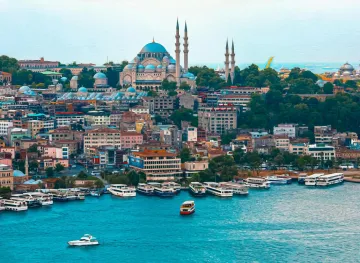
Looking beyond Ionia? Discover Turkiye for broader travel guides, local hot-spots, and regional highlights.
Explore TurkiyeIonia in Photos
Browse through our photo collection highlighting the charm and character of the destination.

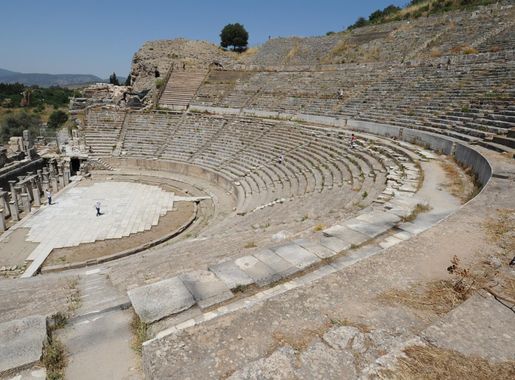


Ionia: The Ancient Gem of Turkiye
Ionia, a historical region on the western coast of Turkiye, is a treasure trove for history lovers and casual tourists alike. Known for its rich cultural heritage and ancient ruins, this destination offers a unique glimpse into the past. The ancient cities of Ionia, such as Ephesus, Miletus, and Priene, are some of the most well-preserved archaeological sites in the world. Walking through these ruins, you can almost hear the echoes of ancient philosophers like Heraclitus and Thales. The grand Library of Celsus in Ephesus is particularly awe-inspiring, standing as a testament to the advanced architectural and scholarly achievements of the Ionian people. Beyond its historical significance, Ionia also boasts stunning natural landscapes. The Aegean coastline is dotted with beautiful beaches and crystal-clear waters, perfect for those looking to relax and soak up the sun. The region is also known for its delicious cuisine, featuring fresh seafood and locally grown produce. A visit to a local market or a traditional Turkish restaurant will leave your taste buds delighted. Whether you're a history buff, a nature lover, or a foodie, Ionia has something to offer. Its blend of ancient wonders and modern-day charm makes it a must-visit destination in Turkiye.