

Aegean Region, Turkiye Travel Guide
Discover the Aegean Region in Turkiye: a coastal haven rich in ancient history, stunning beaches, and delicious cuisine, perfect for a diverse travel experience.
The Aegean Region in Turkiye is a captivating blend of ancient history, stunning beaches, and vibrant culture. This coastal paradise offers a diverse range of experiences, from exploring ancient ruins to lounging on pristine beaches. The region is home to some of the most well-preserved ancient cities in the world, including Ephesus and Pergamon. History enthusiasts will be enthralled by the grandeur of these ancient sites, where you can walk through ruins that date back thousands of years. Beyond its historical treasures, the Aegean Region is famed for its beautiful coastline. The turquoise waters and golden sands are perfect for swimming, sunbathing, and water sports. Towns like Bodrum, Cesme, and Kusadasi offer lively beach scenes, with plenty of restaurants and bars to enjoy. The region's cuisine is another highlight, with fresh seafood, olive oil-based dishes, and local wines that are sure to delight your taste buds. Be sure to try the mezes, small dishes that are perfect for sharing and sampling a variety of flavors. Whether you're a history buff, a beach lover, or a foodie, the Aegean Region in Turkiye has something for everyone. It's a destination that promises a rich and rewarding travel experience.

Know before you go
Hi, I'm Eve. Here are a few practical things to know before exploring Aegean Region.
- Visit ancient ruins early in the morning to avoid crowds and the midday heat.
- Rent a car to explore the region's hidden beaches and less accessible historical sites.
- Try local seafood dishes in coastal towns for a true taste of the Aegean cuisine.
- Stay in boutique hotels or guesthouses for a more authentic and personal experience.
- Bring comfortable walking shoes for exploring historical sites and uneven terrains.
Top City Travel Guides in Aegean Region
The cities of Aegean Region, and the easiest places to base yourself.


Destinations in Aegean Region
Resorts, valleys and scenic spots worth a trip of their own.


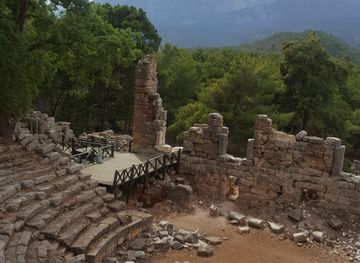
Explore Aegean Region: Things to Do, Places to Eat, Hotels & More
Handpicked recommendations for top attractions, local dining, accommodations, and more

Top Attractions & Sightseeing in Aegean Region
Top-rated picks
Best Attractions

Clock Tower of İzmir
Discover the Clock Tower of İzmir, a stunning historical landmark in Konak Square, blending rich culture with vibrant city life.

Buyuk Menderes National Park
Explore the stunning landscapes and diverse wildlife of Buyuk Menderes National Park, a natural reserve in Aydın, Turkey, perfect for hiking and outdoor adventures.

Temple of Apollo
Explore the iconic Temple of Apollo in Didim, a historical gem that showcases the glory of ancient Greek architecture and spirituality.

El Heykeli
Discover the beauty of El Heykeli in Kuşadası, a stunning sculpture surrounded by breathtaking views and a vibrant atmosphere perfect for all travelers.

Best landmarks in Aegean Region
Top-rated picks
Best Landmarks

The Blue Mosque
Explore the stunning beauty and rich history of The Blue Mosque, a must-see landmark in Istanbul's vibrant cultural landscape.

Dolmabahçe Palace
Explore the grandeur of Dolmabahçe Palace, a stunning blend of Ottoman and European architecture on the Bosphorus in Istanbul's historic heart.

Basilica Cistern
Explore the Basilica Cistern, an iconic historical landmark in Istanbul, showcasing ancient architecture and rich Byzantine history.

Apollon Temple
Explore the ancient wonders of the Apollon Temple in Side, Turkey, where history, mythology, and stunning architecture converge.

Best restaurants in Aegean Region
Top-rated picks
Best Restaurants

Hanzade Terrace Restaurant
Experience authentic Turkish cuisine with stunning views at Hanzade Terrace Restaurant in Istanbul.

Hidden Garden
Experience Istanbul's Hidden Garden - A Culinary Gem Blending Turkish Tradition with Global Flavors in an Enchanting Outdoor Setting.

Garden 1897 Restaurant
Experience exquisite Turkish cuisine in an elegant setting at Garden 1897 Restaurant in Istanbul's charming Küçük Ayasofya district.

ANTAKYA RESTAURANT
Experience authentic Turkish cuisine at Antakya Restaurant in Istanbul—where tradition meets flavor in every dish.

Best bars in Aegean Region
Top-rated picks
Best Bars

La Puerta Alsancak
Experience the vibrant flavors of İzmir at La Puerta Alsancak, a culinary destination for breakfast, lunch, and cocktails.

Red River Pub
Discover the lively Red River Pub in Istanbul, where delicious food meets a vibrant atmosphere perfect for tourists and locals alike.

Eko Pub
Experience the vibrant culture of İzmir at Eko Pub, where local flavors meet a lively atmosphere in the heart of Konak.

Buzz Beach Bar
Experience the vibrant atmosphere, exquisite cuisine, and breathtaking views at Buzz Beach Bar in the beautiful Ölüdeniz region of Turkey.

Best nightclubs in Aegean Region
Top-rated picks
Best Nightclubs

Escape Club İstanbul
Experience the vibrant nightlife of Istanbul at Escape Club, where electrifying music and an energetic atmosphere come together for an unforgettable night.

Taksim Club IQ
Immerse Yourself in Istanbul's Nightlife at Taksim Club IQ - Where Music and Fun Unite!

Ritim
Experience the vibrant nightlife at Ritim, Istanbul's premier night club offering stunning views, lively music, and unforgettable moments.

Club Lupe
Discover the vibrant nightlife of Istanbul at Club Lupe, where music, dance, and unforgettable experiences collide in the heart of Beyoğlu.

Best shops in Aegean Region
Top-rated picks
Best Shops

İstanbul Cevahir Shopping Mall
Experience the ultimate shopping and entertainment destination at İstanbul Cevahir Shopping Mall, where tradition meets modernity.

İstinye Park Alışveriş Merkezi
Experience luxury shopping, fine dining, and stunning architecture at İstinye Park, Istanbul's premier shopping destination.

TerraCity
Discover TerraCity, Antalya's ultimate shopping destination with luxury brands, diverse dining, and vibrant entertainment options for every traveler.

Konak Pier
Explore the vibrant shopping and dining scene at Konak Pier, where stunning Aegean Sea views meet local culture in İzmir.

Explore Aegean Region on the Map
A handpicked selection of must-see spots in Aegean Region, mapped for you.
Aegean Region Essentials
-
The Aegean Region in Turkiye is well-connected by air, road, and sea. The main international airport is Izmir Adnan Menderes Airport (ADB), which has flights from major cities around the world. Additionally, Bodrum Milas Airport (BJV) and Dalaman Airport (DLM) serve the southwestern parts of the region. From Istanbul, you can take domestic flights, high-speed trains, or long-distance buses to various cities within the Aegean Region. Ferries also connect several Greek islands to the Turkish coast, offering scenic sea routes.
-
Travel within the Aegean Region is convenient with various transportation options. Major cities like Izmir, Bodrum, and Kusadasi have extensive public transport networks, including buses, minibuses (dolmuş), and taxis. Car rentals are widely available and can be a great way to explore the region at your own pace. For intercity travel, consider using the Turkish State Railways (TCDD) or long-distance bus services, which connect most cities and towns.
-
The official currency in Turkiye is the Turkish Lira (TRY). Credit and debit cards are widely accepted in hotels, restaurants, and larger shops. However, it is advisable to carry some cash, especially when visiting smaller towns and rural areas. ATMs are plentiful in urban areas, but be sure to notify your bank of your travel plans to avoid any issues with card usage.
-
The Aegean Region is generally safe for tourists. However, it is important to exercise standard precautions. Be mindful of your belongings in crowded places and avoid isolated areas at night. While the region does not have specific high-crime areas targeting tourists, petty theft can occur in busy tourist spots. Always use reputable transportation services and avoid accepting rides from strangers.
-
In case of an emergency, dial 112 for medical assistance, fire, or police services. Major cities have well-equipped hospitals and clinics. It is recommended to have travel insurance that covers medical emergencies. For minor health issues, pharmacies (eczane) are available and staffed with knowledgeable personnel who can provide over-the-counter medications.
-
Fashion: Do dress modestly, especially when visiting religious sites. Avoid wearing overly revealing clothing. Religion: Do respect local customs and traditions. Remove your shoes and cover your head when entering mosques. Public Transport: Do be courteous and offer your seat to elderly passengers. Don't talk loudly or eat on public transport. Greetings: Do greet people with a handshake. A smile and a polite 'Merhaba' (Hello) are appreciated. Eating & Drinking: Do try local dishes and accept food offerings graciously. Don’t refuse hospitality, as it is considered impolite.
-
To experience the Aegean Region like a local, visit the local markets (pazar) where you can buy fresh produce and traditional Turkish goods. Engage with locals who are often friendly and willing to share stories about their culture and history. Don't miss trying the local specialties such as seafood, olive oil dishes, and famous Aegean mezzes. For a unique experience, explore the lesser-known villages and coastal towns that offer a more authentic glimpse into regional life.
When is the best time to visit Aegean Region?
Useful Local Phrases for Aegean Region
You don't need to speak the language perfectly. Even learning a few simple words can make conversations warmer—and locals usually appreciate the effort.
— Eve

Here are the phrases I use most often in Aegean Region. Try a few—you'll be surprised how far they go! 😊
❤️
-
- HelloMerhaba
[Mehr-hah-bah] - GoodbyeHoşça kal
[Hosh-chah kahl] - YesEvet
[Eh-vet] - NoHayır
[Hah-yuhr] - Please/You're welcomeLütfen/Rica ederim
[Lüt-fen/Ree-jah eh-deh-rim] - Thank youTeşekkür ederim
[Teh-shehk-kur eh-deh-rim] - Excuse me/SorryAffedersiniz/Üzgünüm
[Ahf-feh-dehr-see-neez/Üz-gü-nüm] - How are you?Nasılsınız?
[Nah-suhl-suhn-uhz] - Fine. And you?İyiyim. Ya siz?
[Ee-yee-yim. Yah seez?] - Do you speak English?İngilizce biliyor musunuz?
[Eeng-gee-leez-jeh bee-lee-yor moo-soo-nooz?] - I don't understandAnlamıyorum
[Ahn-lah-muh-yor-um]
- HelloMerhaba
-
- I'd like to see the menu, pleaseMenüyü görmek istiyorum, lütfen
[Meh-nü-yü gör-mehk ees-tee-yo-rum, lüt-fen] - I don't eat meatEt yemiyorum
[Et ye-mee-yor-um] - Cheers!Şerefe!
[Sheh-reh-feh] - I would like to pay, pleaseÖdemek istiyorum, lütfen
[Öh-deh-mehk ees-tee-yo-rum, lüt-fen]
- I'd like to see the menu, pleaseMenüyü görmek istiyorum, lütfen
-
- Help!Yardım edin!
[Yahr-dum eh-deen!] - Go away!Defol!
[Deh-fol!] - Call the Police!Polisi çağırın!
[Poh-lee-see chah-uh-ruhn!] - Call a doctor!Doktor çağırın!
[Dohk-tor chah-uh-ruhn!] - I'm lostKayboldum
[Kah-y-bol-doom] - I'm illHastayım
[Has-tah-yum]
- Help!Yardım edin!
-
- I'd like to buy...Satın almak istiyorum...
[Sah-tuhn ahl-mahk ees-tee-yo-rum] - I'm just lookingSadece bakıyorum
[Sah-deh-jeh bahk-uh-yor-um] - How much is it?Bu ne kadar?
[Boo neh kah-dahr?] - That's too expensiveBu çok pahalı
[Boo chok pah-hah-luh] - Can you lower the price?Fiyatı indirebilir misiniz?
[Fee-yah-tuh een-deh-ree-bee-leer mee-see-neez?]
- I'd like to buy...Satın almak istiyorum...
-
- What time is it?Saat kaç?
[Sah-aht kahch?] - It's one o'clockSaat bir
[Sah-aht beer] - Half past (10)On buçuk
[Ohn boo-chook] - MorningSabah
[Sah-bah] - AfternoonÖğleden sonra
[Öh-leh-den sohn-rah] - EveningAkşam
[Ahk-shahm] - YesterdayDün
[Doon] - TodayBugün
[Boo-goon] - TomorrowYarın
[Yah-ruhn] - 1Bir
[Beer] - 2İki
[Ee-kee] - 3Üç
[Üch] - 4Dört
[Dört] - 5Beş
[Besh] - 6Altı
[Ahl-tuh] - 7Yedi
[Yeh-dee] - 8Sekiz
[Seh-keez] - 9Dokuz
[Doh-kooz] - 10On
[Ohn]
- What time is it?Saat kaç?
-
- Where's a/the...?Nerede bir...?
[Neh-reh-de beer...?] - What's the address?Adres nedir?
[Ah-dres neh-deer?] - Can you show me (on the map)?Bana (haritada) gösterebilir misiniz?
[Bah-nah (hah-ree-tah-dah) gö-stair-eh-bee-leer mee-see-neez?] - When's the next (bus)?Sonraki (otobüs) ne zaman?
[Sohn-rah-kee (oh-toh-büs) neh zah-mahn?] - A ticket (to ....)Bir bilet (....)
[Beer bee-let (....)]
- Where's a/the...?Nerede bir...?
History of Aegean Region
-
Troy, known as Troia in Turkish, is one of the most famous archaeological sites in the world. Located near the Aegean coast, it dates back to the early Bronze Age. The city is immortalized in Homer's epic poem, the Iliad, and is believed to be the site of the legendary Trojan War. Excavations have revealed multiple layers of ancient cities, providing a wealth of information about ancient civilizations.
-
Ephesus, an ancient Greek city, is one of the most well-preserved archaeological sites in the Aegean Region. It was home to the Temple of Artemis, one of the Seven Wonders of the Ancient World. The city was a major hub of commerce and culture, and its ruins include the grand Library of Celsus, the Great Theatre, and the Temple of Hadrian.
-
Pergamon, now known as Bergama, was an ancient Greek city famous for its impressive acropolis, which housed the Altar of Zeus. The city was a major center of learning and culture during the Hellenistic period and later became the capital of the Roman province of Asia. The ruins of Pergamon include a magnificent theatre, a library that rivaled Alexandria's, and the Asclepion, an ancient healing center.
-
Sardis was the capital of the ancient kingdom of Lydia and is renowned for its wealth and luxury. It was here that coinage was invented, revolutionizing trade and economy. The city's ruins include the impressive Temple of Artemis, a large gymnasium, and the remains of Roman baths. Sardis is also notable for its significant Jewish and early Christian history.
-
Hierapolis, an ancient city founded by the Phrygians, is situated near the stunning natural thermal pools of Pamukkale. The city's ruins include a large necropolis, Roman baths, and a well-preserved theatre. Pamukkale, meaning 'Cotton Castle' in Turkish, is famous for its white travertine terraces formed by mineral-rich thermal waters, making it a unique and mesmerizing landscape.
-
Miletus was one of the oldest and wealthiest cities in ancient Ionia, known for its contributions to philosophy, science, and architecture. The city's ruins feature a large theatre, the Delphinium, and the Baths of Faustina. Nearby Didyma was home to the Temple of Apollo, an important religious sanctuary with its colossal columns and intricate architecture.
-
The Ionian League was a confederation of twelve ancient Greek city-states in the Aegean Region, including Miletus, Ephesus, and Smyrna. Formed in the 7th century BCE, the league played a crucial role in the spread of Greek culture and the development of democracy. The cities in the league were known for their intellectual achievements and contributions to art, science, and philosophy.
-
The Battle of Manzikert in 1071 CE was a pivotal event in the history of the Aegean Region. The Seljuk Turks defeated the Byzantine Empire, leading to the gradual Turkification of the region. This battle marked the beginning of the end for Byzantine control in Anatolia and paved the way for the rise of the Seljuk and later the Ottoman Empires.
-
Smyrna, now known as Izmir, is one of the oldest continuously inhabited cities in the Mediterranean. It has a rich history that spans Greek, Roman, and Ottoman periods. The city was an important trade hub, and its diverse cultural heritage is evident in its architecture and historical sites, such as the ancient Agora, the Kadifekale fortress, and the Clock Tower. Izmir continues to be a vibrant and cosmopolitan city in modern Turkey.
-
The Aegean Region played a significant role in the Turkish War of Independence (1919–1923). The region saw numerous battles between Turkish forces and occupying Greek troops. The liberation of Izmir on September 9, 1922, marked a turning point in the war, leading to the establishment of the Republic of Turkey. The war's impact is still remembered and commemorated in the region today.
Neighbouring Regions of Aegean Region
The closest regions to Aegean Region, if you have time for more than one.


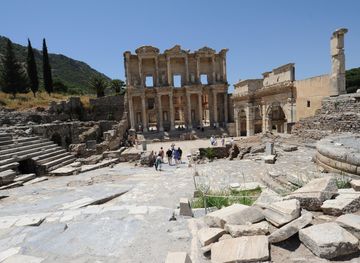


Your all‑in‑one travel companion app
Explore expert travel guides, compare and book tours, experiences, hotels, and more—all from the palm of your hand. Download now for seamless trip planning wherever your wanderlust takes you.


Explore More of Turkiye
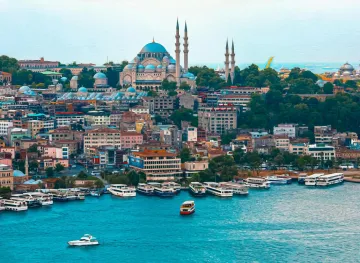
Looking beyond Aegean Region? Discover Turkiye for broader travel guides, local hot-spots, and regional highlights.
Explore TurkiyeAegean Region in Photos
Browse through our photo collection highlighting the charm and character of the destination.

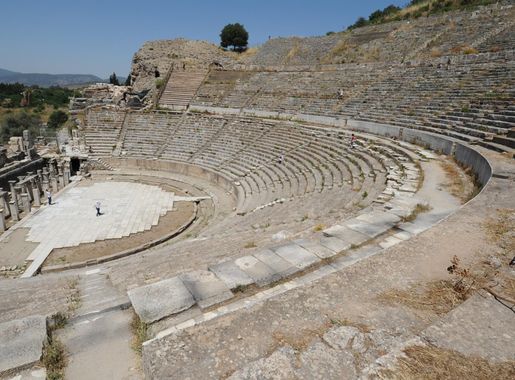


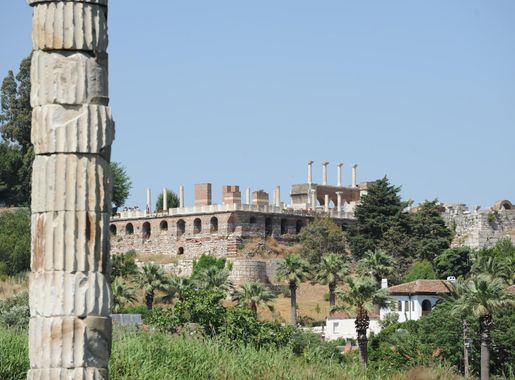
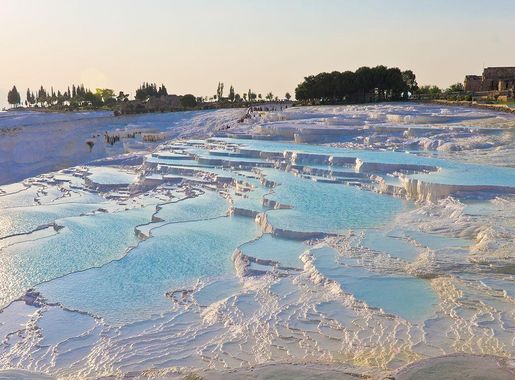


Aegean Region: Turkiye's Coastal Gem
The Aegean Region in Turkiye is a captivating blend of ancient history, stunning beaches, and vibrant culture. This coastal paradise offers a diverse range of experiences, from exploring ancient ruins to lounging on pristine beaches. The region is home to some of the most well-preserved ancient cities in the world, including Ephesus and Pergamon. History enthusiasts will be enthralled by the grandeur of these ancient sites, where you can walk through ruins that date back thousands of years. Beyond its historical treasures, the Aegean Region is famed for its beautiful coastline. The turquoise waters and golden sands are perfect for swimming, sunbathing, and water sports. Towns like Bodrum, Cesme, and Kusadasi offer lively beach scenes, with plenty of restaurants and bars to enjoy. The region's cuisine is another highlight, with fresh seafood, olive oil-based dishes, and local wines that are sure to delight your taste buds. Be sure to try the mezes, small dishes that are perfect for sharing and sampling a variety of flavors. Whether you're a history buff, a beach lover, or a foodie, the Aegean Region in Turkiye has something for everyone. It's a destination that promises a rich and rewarding travel experience.