

Free Aeolis Travel Guide & Mobile App
Explore Aeolis with free travel guides. Discover regional history, expert tips, proposed trips, and audio guides on web or mobile app.


Explore Aeolis in western Türkiye through Pergamon’s ruins, Foça’s seafaring heritage, olive country, archaeological sites and northern Aegean shores.
Read more about Aeolis
When is the best time to visit Aeolis?
Best: May–June, September · 25–30°C| Month | High (°C) | Rainfall (mm) |
|---|---|---|
| January | 8 | 60 |
| February | 9 | 50 |
| March | 14 | 45 |
| April | 20 | 41 |
| May (best) | 25 | 30 |
| June (best) | 30 | 20 |
| July | 34 | 15 |
| August | 33 | 18 |
| September (best) | 28 | 25 |
| October | 21 | 35 |
| November | 14 | 46 |
| December | 8 | 55 |
Getting to and around Aeolis
How to get there
Transportation
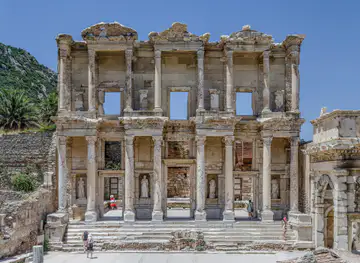
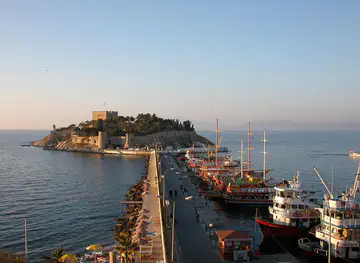
Top city travel guides in Aeolis
The cities of Aeolis, and the easiest places to base yourself.
-

-
-

-

-
-


Swipe for more cities
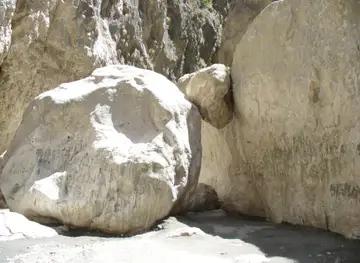
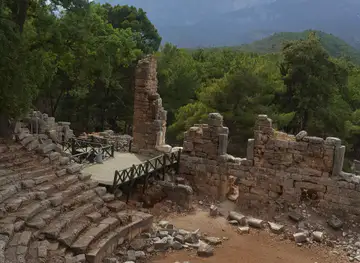
Destinations in Aeolis
Resorts, valleys and scenic spots worth a trip of their own.
-
-

-

-

-
-


Swipe for more destinations
Best attractions in Aeolis
Aeolis offers a varied but dispersed collection of attractions, led by the archaeological landscape around Bergama. The Acropolis of Pergamon presents monumental Hellenistic and Roman remains above the town, while the nearby Asklepion explains the region’s ancient healing traditions through its processional way, courtyards and treatment spaces. Bergama itself adds mosques, market streets and traditional urban fabric. On the coast, Foça combines the remains and maritime setting of ancient Phocaea with a working harbour, swimming coves and boat excursions. The ancient city of Kyme, near Aliağa, provides a quieter archaeological encounter, although the surrounding district also contains substantial modern industry. Dikili and the northern shoreline appeal to visitors seeking beaches, sea air and olive-growing countryside rather than dense monument complexes. Shorter walks, coastal viewpoints and rural roads connect the main historic centres, while nearby sites in the wider northern Aegean can be added only with careful attention to geography. The region is particularly suited to travellers who prefer combining archaeology with local markets, seafront towns and agricultural landscapes instead of following a single urban sightseeing itinerary.
-
Tourist attraction
Travertines of Pamukkale
Discover Pamukkale's magnificent travertine terraces and ancient ruins, a breathtaking blend of natural beauty and rich history in Turkey.
-
Tourist attraction
Apollon Temple
Explore the stunning Apollon Temple in Side, a historical landmark showcasing ancient Roman architecture and rich cultural heritage.
-
Tourist attraction
Saklikent National Park
Explore the natural beauty and thrilling adventures at Saklikent National Park, a stunning national park in Turkey with breathtaking landscapes.
-
 Tourist attraction
Alanya Castle
Discover the rich history and stunning views at Alanya Castle, a medieval fortress overlooking the Mediterranean Sea.


Best landmarks in Aeolis
The Acropolis of Pergamon is Aeolis’ defining landmark, rising above Bergama with a theatre cut into the hillside and the remains of temples, royal buildings and terraces spread across the summit. Its elevated position explains the ancient city’s defensive and ceremonial power as well as its visual command of the Bakırçay plain. The Asklepion, approached along a substantial ancient way, is distinct from the acropolis and is significant as one of the ancient world’s best-known healing sanctuaries. In Foça, the old harbour and rocky coastal setting preserve the geographical character of ancient Phocaea, a city whose prosperity depended on maritime connections. The Beşkapılar area and surviving fortification elements add a later historical layer to the waterfront, although visitors should distinguish restored or later structures from ancient remains. Kyme’s archaeological site near Aliağa marks another important Aeolian settlement, while the broad Bakırçay landscape remains a geographical landmark in its own right: fertile fields and low hills explain why Pergamon and other cities flourished here. The most meaningful landmarks are therefore not only isolated monuments but the relationship between hilltop cities, river plains and protected Aegean harbours.
-
Historical landmark
Galata Tower
Discover the breathtaking views and rich history of Galata Tower, an iconic landmark that captures the essence of Istanbul's vibrant culture.
-
Monument
Anıtkabir
Explore Anıtkabir, a monumental mausoleum honoring Atatürk, a symbol of modern Turkey's spirit and resilience, nestled in Ankara's heart.
-
Mosque
Hagia Sophia Grand Mosque
Explore the Hagia Sophia Grand Mosque, a stunning blend of history and architecture in Istanbul, showcasing incredible mosaics and a rich cultural legacy.
-
Museum
Topkapi Palace Museum
Discover the rich history and opulence of the Ottoman Empire at Topkapi Palace Museum in Istanbul, a must-visit heritage site for travelers.


Explore Aeolis on the map
Plan your trip on one map. See where the top cities, national parks and sights are, and book hotels and experiences in a few clicks.
Best hotels in Aeolis
Best restaurants in Aeolis
Dining in the Aeolian mainland follows the broader Aegean traditions of western Türkiye, with olive oil, seasonal vegetables, herbs, legumes, yoghurt, fresh bread and grilled fish appearing frequently. Bergama’s restaurants and lokantas are useful places to sample home-style cooking, regional pastries and produce from the surrounding Bakırçay plain, while Foça and Dikili have a stronger emphasis on seafood, meze and relaxed waterfront meals. Look for dishes built around aubergine, courgette, artichoke, wild greens and pulses, particularly in spring and early summer when local produce is abundant. Olive oil from the northern Aegean is an important regional product, and village markets may offer cheeses, olives, honey and preserves. Cafés serve Turkish tea and coffee throughout the day, and modest bakeries provide savoury pastries and breads. Menus vary seasonally, so ask what is locally available rather than assuming that a coastal restaurant’s entire selection comes from nearby waters. In smaller settlements, lunch may be more dependable than late evening dining outside the summer season.
-
Turkish
Hanzade Terrace Restaurant
Experience authentic Turkish cuisine with breathtaking views at Hanzade Terrace Restaurant in Istanbul's Fatih district.
-
Restaurant
Garden 1897 Restaurant
Discover the enchanting flavors of Turkey at Garden 1897 Restaurant in Istanbul's historic Küçük Ayasofya neighborhood.
-
Turkish
Las Tapas Restaurant
Discover authentic Turkish flavors at Las Tapas Restaurant in Istanbul - a culinary delight for every food lover.
-
Restaurant
Old Ottoman Cafe & Restaurant
Savor authentic Ottoman flavors at Old Ottoman Cafe & Restaurant in Istanbul's historic Fatih district.


Best bars in Aeolis
Evening life in Aeolis is concentrated in Foça, Bergama and the larger coastal towns rather than spread across a major club circuit. Foça’s waterfront has cafés, meyhane-style restaurants and relaxed bars where visitors can sit beside the harbour, with the busiest atmosphere during the summer season. Bergama’s nightlife is more local and generally centres on tea gardens, cafés, restaurants and small bars than on late-night clubs. Dikili develops a livelier seafront rhythm in summer, when residents and visitors gather for dinner, ice cream and evening walks. Aliağa has a working-town character and a selection of everyday restaurants and cafés rather than a heritage-focused nightlife scene. Live music and seasonal entertainment may appear along the coast, but programmes and opening arrangements change. In smaller villages, evenings are quiet and social life often takes place around family restaurants or cafés. Alcohol is available in licensed establishments, while tea and coffee culture remains central to the region’s broader evening routine.
-
Pub
Old English Pub Cafe & Restaurant
Discover the charm of English dining at the Old English Pub Cafe & Restaurant in Kadıköy, İstanbul, where tradition meets modern comforts.
-
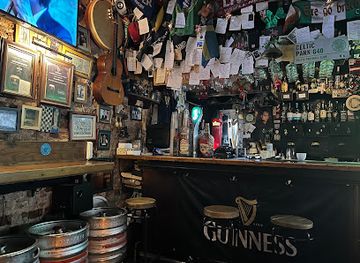
Irish pub
U2 Istanbul Irish Pub
Discover the vibrant U2 Istanbul Irish Pub for an unforgettable Irish experience with live music, delicious food, and a lively atmosphere in the heart of Istanbul.
-
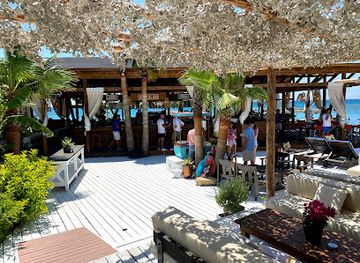
Bar
Fly-Inn Beach Club
Experience the vibrant atmosphere of Fly-Inn Beach Club, where relaxation meets lively entertainment on the stunning Çeşme coastline.
-
Gastropub
Karma Restaurant & Night Club
Experience exquisite seafood and vibrant nightlife at Karma Restaurant & Night Club in Side, Antalya, where culinary artistry meets energetic entertainment.


Best nightclubs in Aeolis
Evening life in Aeolis is concentrated in Foça, Bergama and the larger coastal towns rather than spread across a major club circuit. Foça’s waterfront has cafés, meyhane-style restaurants and relaxed bars where visitors can sit beside the harbour, with the busiest atmosphere during the summer season. Bergama’s nightlife is more local and generally centres on tea gardens, cafés, restaurants and small bars than on late-night clubs. Dikili develops a livelier seafront rhythm in summer, when residents and visitors gather for dinner, ice cream and evening walks. Aliağa has a working-town character and a selection of everyday restaurants and cafés rather than a heritage-focused nightlife scene. Live music and seasonal entertainment may appear along the coast, but programmes and opening arrangements change. In smaller villages, evenings are quiet and social life often takes place around family restaurants or cafés. Alcohol is available in licensed establishments, while tea and coffee culture remains central to the region’s broader evening routine.
-
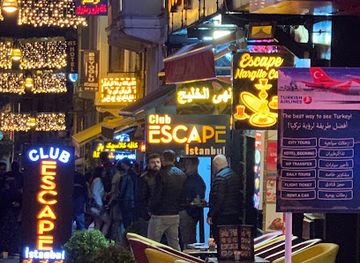
Night club
Escape Club İstanbul
Discover the exhilarating nightlife of Istanbul at Escape Club, where electrifying music and vibrant crowds create unforgettable memories.
-
Night club
Taksim Club IQ
Discover the heart of Istanbul's nightlife at Taksim Club IQ, where live music and vibrant energy create unforgettable nights.
-
Night club
Ritim
Experience the vibrant nightlife of Istanbul at Ritim, a premier night club and bar where music and dancing come alive.
-
Night club
Çiçek Pera İstanbul
Discover the electrifying nightlife of Çiçek Pera İstanbul, where tradition meets modern entertainment in the heart of Istanbul's vibrant scene.


Best shops in Aeolis
Shopping in Aeolis is primarily local and practical, with Bergama serving as the principal market town for produce, household goods, textiles and everyday supplies. Its bazaars and small shops are more useful for seeing regional life than for luxury retail, and visitors may find olive oil, olives, honey, dried herbs, cheeses and local preserves from the surrounding countryside. Foça’s older streets and harbour area contain independent shops selling ceramics, jewellery, woven goods, artwork and holiday clothing, while Dikili has a seasonal coastal retail scene shaped by summer visitors. Weekly markets vary by town and day, so confirm locally rather than relying on a fixed timetable. Small galleries and craft shops are more common in the coastal settlements than inland. Bergama is also associated with handwoven textiles and regional handicrafts, although quality and provenance differ between sellers. Bargaining may be possible in some informal markets but is not expected in every shop. Choose food products that are properly packaged for travel, and remember that archaeological objects, stones and ancient fragments must never be purchased or removed.
-
Shopping mall
Venezia Mega Outlet
Discover unbeatable deals at Venezia Mega Outlet, Istanbul's premier shopping destination featuring top brands and an unforgettable shopping experience.
-
Shopping mall
İstinye Park Alışveriş Merkezi
Discover luxury shopping, gourmet dining, and vibrant entertainment at İstinye Park, Istanbul's premier shopping mall.
-
Shopping mall
Antalya Migros Shopping Center
Antalya Migros Shopping Center: A top shopping destination featuring local brands, global cuisine, and family-friendly entertainment in Antalya.
-
Shopping mall
Nova Mall
Experience the best of shopping, dining, and entertainment at Nova Mall in Manavgat, a top destination for tourists in Antalya.


Get your free copy of our complete guide to Aeolis, delivered straight to you.
Everything on this page, from attractions and restaurants to essentials and local phrases, in one PDF you can read offline, print or share.
Already have an account? Sign in
Your Aeolis guide is ready.
We'll send it to · Not you? Sign out

Getting your guide ready…
We are putting together a fresh copy of the Aeolis guide. This can take up to a minute.
This can take a few moments. If your browser asks, choose Allow so the download can start. You'll find the guide in your Downloads folder.
Nothing happened? Download it again
Sorry, the guide is taking longer than usual. Please try again in a minute, or get it by email instead.
Aeolis essentials
Currency and Payment
Safety
Emergency Situations
Do's and Don'ts
Local Tips
From Eve
Local phrases worth knowing
You don't need to get them perfect. A few words go a long way, and locals appreciate the effort.
Basics
| English | Local | Say it |
|---|---|---|
| Hello | Merhaba | [mehr-HAH-bah] |
| Goodbye | Hoşça kal | [hosh-CHA kal] |
| Yes | Evet | [EH-vet] |
| No | Hayır | [HAH-yuhr] |
| Please/You're welcome | Lütfen | [LEWT-fen] |
| Thank you | Teşekkür ederim | [teh-shehk-KOOR eh-deh-REEM] |
| Excuse me/Sorry | Affedersiniz | [ahf-feh-DER-sin-iz] |
| How are you? | Nasılsınız? | [NAH-suhl-suhn-iz] |
| Fine. And you? | İyiyim. Ya siz? | [EE-yee-yim. YAH siz?] |
| Do you speak English? | İngilizce biliyor musunuz? | [een-GEE-leez-jeh bee-LEE-yor moo-SOO-nuz] |
| I don't understand | Anlamıyorum | [AHN-lah-muh-yor-um] |
Eating & Drinking
| English | Local | Say it |
|---|---|---|
| I'd like to see the menu, please | Menüyü görmek isterim, lütfen | [meh-NOO-yoo GOR-mehk ees-TEH-rim, LEWT-fen] |
| I don't eat meat | Et yemiyorum | [ET YEH-mee-yor-um] |
| Cheers! | Şerefe! | [sheh-REH-feh] |
| I would like to pay, please | Ödemek isterim, lütfen | [oh-DEH-mehk ees-TEH-rim, LEWT-fen] |
Emergencies
| English | Local | Say it |
|---|---|---|
| Help! | Yardım edin! | [YAHR-duhm EH-deen] |
| Go away! | Defol! | [DEH-fohl] |
| Call the Police! | Polisi çağırın! | [POH-lee-see CHAH-uh-rin] |
| Call a doctor! | Doktor çağırın! | [DOK-tor CHAH-uh-rin] |
| I'm lost | Kayboldum | [KAHY-bol-doom] |
| I'm ill | Hastayım | [HAS-tah-yim] |
Shopping
| English | Local | Say it |
|---|---|---|
| I'd like to buy... | Almak istiyorum... | [AHL-mahk ees-TEE-yor-um] |
| I'm just looking | Sadece bakıyorum | [SAH-deh-jeh bah-KEE-yor-um] |
| How much is it? | Bu ne kadar? | [BOO neh kah-DAHR] |
| That's too expensive | Bu çok pahalı | [BOO chohk pah-HAH-luh] |
| Can you lower the price? | Fiyatı düşürebilir misiniz? | [FEE-yah-tuh DOO-shew-reh-bee-LIR mee-SIH-niz] |
Time & Numbers
| English | Local | Say it |
|---|---|---|
| What time is it? | Saat kaç? | [SAH-at kahch] |
| It's one o'clock | Saat bir | [SAH-at beer] |
| Half past (10) | On buçuk | [ON boo-CHUK] |
| Morning | Sabah | [SAH-bah] |
| Afternoon | Öğleden sonra | [UR-geh-den SOHN-rah] |
| Evening | Akşam | [AK-shahm] |
| Yesterday | Dün | [DOON] |
| Today | Bugün | [BOO-gun] |
| Tomorrow | Yarın | [YAH-ruhn] |
| 1 | Bir | [beer] |
| 2 | İki | [EE-kee] |
| 3 | Üç | [OOSH] |
| 4 | Dört | [DURT] |
| 5 | Beş | [BESH] |
| 6 | Altı | [AHL-tuh] |
| 7 | Yedi | [YEH-dee] |
| 8 | Sekiz | [SEH-keez] |
| 9 | Dokuz | [DOH-kooz] |
| 10 | On | [ON] |
Transport & Directions
| English | Local | Say it |
|---|---|---|
| Where's a/the...? | Nerede...? | [NEH-reh-deh...?] |
| What's the address? | Adres nedir? | [AH-dress NEH-deer?] |
| Can you show me (on the map)? | Haritada gösterebilir misiniz? | [HAH-ree-tah-dah GYOH-steh-reh-bee-LIR mee-SIH-niz] |
| When's the next (bus)? | Sonraki (otobüs) ne zaman? | [SOHN-rah-kee (OH-toh-boos) neh ZAH-mahn?] |
| A ticket (to ....) | Bir bilet (....) | [Beer bee-LET (....)] |
History of Aeolis
Bronze Age Anatolia and the Aegean Coast
Before the historical Aeolians appeared as a distinct Greek-speaking population, western Anatolia was inhabited by communities connected to the wider Bronze Age Aegean and Anatolian worlds. The coastal plains and river valleys around the modern Bakırçay and Gediz systems supported farming, exchange and fortified settlements, while maritime routes linked the mainland with nearby islands. Knowledge of this period is drawn from archaeology and the wider historical record rather than from a single continuous political identity called Aeolis. The landscape’s later importance rested partly on these long-established agricultural corridors and harbours.
Aeolian Settlement and the Twelve Cities
During the early first millennium BC, Greek-speaking Aeolian communities established or reshaped settlements along the northern Aegean mainland and on nearby islands. Ancient writers associated the Aeolian world with a group of important cities, traditionally described as the twelve cities, although the membership and political relationships changed over time. Phocaea, Cyme and Smyrna were among the best-known mainland centres, while the region maintained close links with Lesbos. These communities combined agriculture, craft production and seaborne trade, creating a culture that was Greek in language but deeply rooted in the geography and populations of Anatolia.
Lydian and Persian Rule
Aeolian cities became involved in the political struggles of western Anatolia as the Lydian kingdom expanded towards the coast. In the sixth century BC, Lydian power was displaced by the Achaemenid Persian Empire, bringing the coastal cities into a larger imperial system. Local institutions and traditions did not simply disappear, but political autonomy varied and the region became entangled in the conflicts between Persia and the Greek mainland. Phocaea’s maritime history, the movement of settlers and the strategic value of the river plains all illustrate the importance of the northern Aegean during this period.
The Rise of Pergamon
Pergamon emerged as the centre of a powerful Hellenistic kingdom under the Attalid dynasty from the third century BC. Its acropolis was developed with monumental temples, theatres, libraries and royal buildings, while the surrounding plain supported the kingdom’s economy. The Attalids cultivated links with the wider Greek intellectual world, but their state was also a firmly Anatolian power with practical interests in agriculture, roads and regional administration. The remains at Bergama provide the clearest surviving expression of this transformation, when a local hilltop settlement became one of the eastern Mediterranean’s major political and cultural capitals.
Roman Pergamon and the Sanctuary of Asklepion
Pergamon passed to Rome in 133 BC after the last Attalid king bequeathed his kingdom to the Roman people. The city continued to prosper as a major centre of administration, religion and culture, while the sanctuary of Asklepion outside the city became renowned for healing practices associated with the god Asklepios. Roman planners expanded roads, public buildings and water infrastructure, and the city remained important during the imperial period. The Asklepion’s colonnaded approaches, treatment spaces and ceremonial architecture show how medicine, religious belief and urban display were closely connected in Roman Anatolia.
Late Antiquity and the Byzantine Centuries
Christianity transformed the region’s religious landscape during late antiquity. Pergamon became one of the seven churches addressed in the Book of Revelation, a reference that gives the ancient city continuing importance in Christian history. Churches and changing settlement patterns reflected the political and economic adjustments of the later Roman and Byzantine worlds. Coastal towns and inland routes remained connected to the eastern Mediterranean, although regional power was less concentrated than it had been under the Attalids or Rome. The surviving archaeological layers around Pergamon preserve this transition from pagan civic monumentalism to a Christianised urban environment.
Turkish and Ottoman Landscapes
Turkish rule developed in western Anatolia over several centuries, and the northern Aegean was eventually incorporated into the Ottoman Empire. Pergamon became a regional market town rather than an imperial capital, while coastal settlements continued to depend on fishing, agriculture, shipping and trade. Ottoman-era houses, mosques, bazaars and rural production remain part of the modern cultural landscape, although preservation varies from town to town. In the nineteenth and twentieth centuries, port activity, industrial development and population movements reshaped places such as Foça and Aliağa, creating the mixture of archaeological, agricultural and modern coastal environments visible today.
Aeolis in Photos
Browse through our photo collection highlighting the charm and character of the destination.
Neighbouring regions of Aeolis
The closest regions to Aeolis, if you have time for more than one.
-

-

-

-

-


Swipe for more regions
Explore more
Explore more of Turkiye
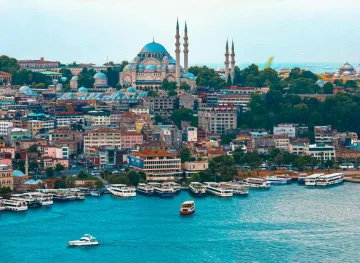
Discover Turkiye: Where ancient history, stunning landscapes, and vibrant culture come together to create an unforgettable travel experience.
Explore Turkiye