

Uludag Travel Guide - Free Web & App
Your ultimate guide to Uludag. Discover top landmarks, proposed trips, and local tips. Free on the web or via the Evendo companion app.


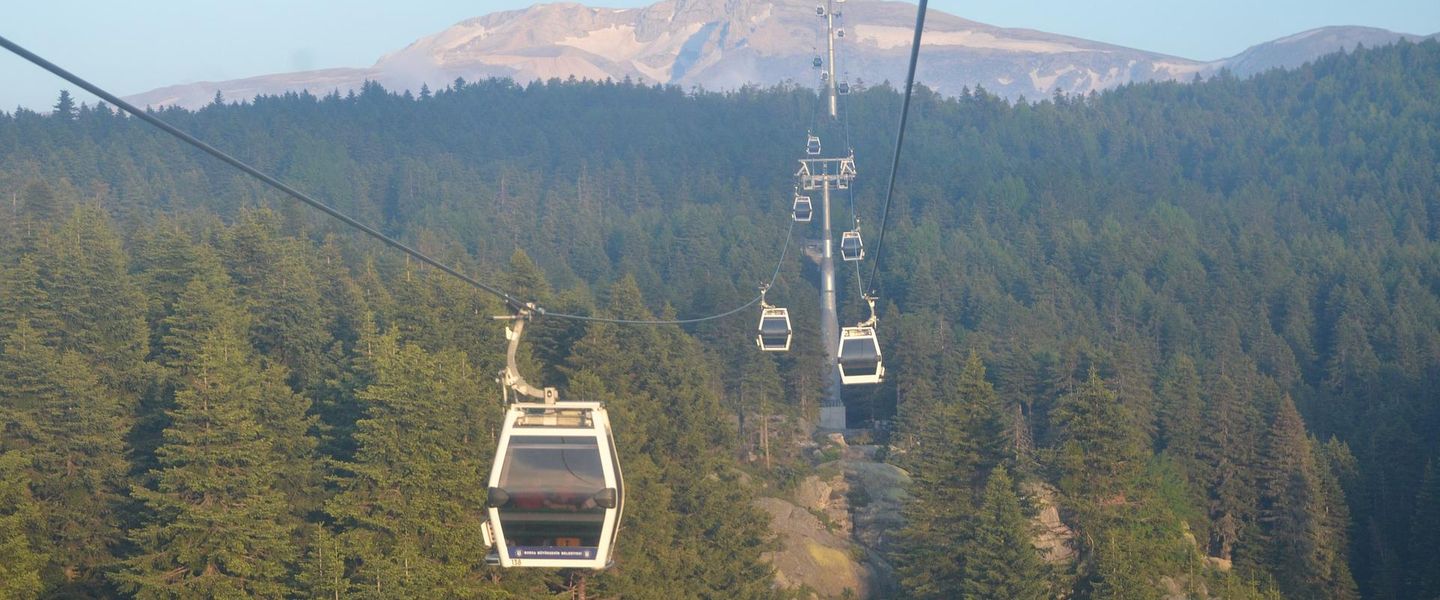


Uludağ, Türkiye’s premier mountain escape, combines Bursa heritage, winter skiing, alpine trails, cable-car views and protected forests near the Marmara Sea.
Mountain Landscape
Rising south of Bursa in north-western Türkiye, Uludağ is the highest mountain in the Marmara region, reaching 2,543 metres at its summit. Much of the mountain lies within Uludağ National Park, a broad protected landscape of coniferous and deciduous forests, alpine meadows, rocky high ground and seasonal streams. Its northern slopes look towards Bursa and the plains beyond, while higher ground becomes increasingly open and exposed. In winter, the mountain is Türkiye’s best-established ski destination, with a concentration of hotels, pistes and snow-sports facilities in the Uludağ resort area.Read more about Uludag
Seasons and Outdoor Life
Bursa’s Mountain Setting
When is the best time to visit Uludag?
Best: June–August · 23–26°C| Month | High (°C) | Rainfall (mm) |
|---|---|---|
| January | 1 | 100 |
| February | 2 | 81 |
| March | 5 | 71 |
| April | 12 | 50 |
| May | 18 | 34 |
| June (best) | 23 | 12 |
| July (best) | 26 | 7 |
| August (best) | 25 | 11 |
| September | 20 | 23 |
| October | 15 | 51 |
| November | 11 | 84 |
| December | 6 | 107 |
Getting to and around Uludag
How to get there
Transportation
Best attractions in Uludag
Uludağ National Park is the destination’s principal attraction, combining dense mountain forest, open alpine terrain and scenic roads leading above Bursa. The upper resort area is the focus of winter skiing and snowboarding, with pistes and lift-served slopes operated according to seasonal conditions. In warmer months, visitors explore forest tracks, picnic areas and mountain paths around Sarıalan and Çobankaya, where clearings provide a contrast to the surrounding woodland. The Bursa Teleferik offers a memorable ascent from the city towards the mountain, while the road approach gives access to viewpoints and recreation areas at different elevations. Softaboğan Waterfall is among the better-known natural sights associated with the national park, although access conditions should be checked locally. The mountain is also valued for its flora, forests and highland atmosphere rather than a long sequence of built attractions, and many visits centre on combining outdoor time in Uludağ with Bursa’s historic urban sights below.
-
Nature preserve
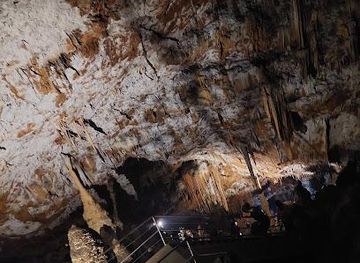
Oylat Cave
Explore the breathtaking Oylat Cave in İnegöl, Bursa, a mesmerizing natural wonder filled with stunning formations and serene surroundings.
Best landmarks in Uludag
The defining natural landmark is Uludağ itself, whose 2,543-metre summit and broad forested mass dominate the landscape south of Bursa. The mountain’s upper meadows, rocky slopes and snowfields create a marked contrast with the wooded lower elevations, while the protected status of Uludağ National Park reflects the ecological importance of this transition. Sarıalan and Çobankaya are recognisable recreation areas within the mountain landscape, and Softaboğan Waterfall is a notable water feature associated with the park. The Bursa Teleferik is a significant modern landmark of access, linking the historic city with the high mountain through a conspicuous aerial route. Beneath Uludağ, Bursa’s Ottoman mosques, külliyes, bazaars and thermal heritage form the cultural counterpart to the natural landmark, although these urban monuments lie in the foothill city rather than within the national park.
-
Nature preserve
Oylat Cave
Explore the stunning Oylat Cave in Bursa, a natural wonder filled with captivating formations and serene landscapes perfect for nature lovers.
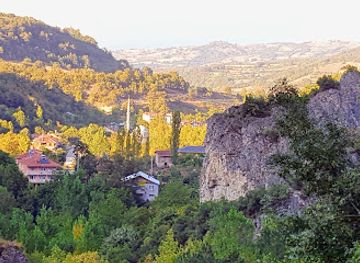
Explore Uludag on the map
Plan your trip on one map. See where the top attractions, landmarks, restaurants and hotels are, and book hotels and experiences in a few clicks.
Best hotels in Uludag
Get your free copy of our complete guide to Uludag, delivered straight to you.
Everything on this page, from attractions and restaurants to essentials and local phrases, in one PDF you can read offline, print or share.
Already have an account? Sign in
Your Uludag guide is ready.
We'll send it to · Not you? Sign out

Getting your guide ready…
We are putting together a fresh copy of the Uludag guide. This can take up to a minute.
This can take a few moments. If your browser asks, choose Allow so the download can start. You'll find the guide in your Downloads folder.
Nothing happened? Download it again
Sorry, the guide is taking longer than usual. Please try again in a minute, or get it by email instead.
Uludag essentials
Currency and Payment
Safety
Emergency Situations
Do's and Don'ts
Local Tips
From Eve
Local phrases worth knowing
You don't need to get them perfect. A few words go a long way, and locals appreciate the effort.
Basics
| English | Local | Say it |
|---|---|---|
| Hello | Merhaba | [Mer-ha-ba] |
| Goodbye | Hoşçakal | [Hosh-cha-kal] |
| Yes | Evet | [Eh-vet] |
| No | Hayır | [Ha-yir] |
| Please/You're welcome | Lütfen | [Loot-fen] |
| Thank you | Teşekkür ederim | [Teh-shek-kur eh-deh-rim] |
| Excuse me/Sorry | Özür dilerim | [O-zur dee-leh-rim] |
| How are you? | Nasılsınız? | [Na-suhl-suh-nuhz] |
| Fine. And you? | İyiyim. Ya siz? | [Ee-yee-yim. Ya siz?] |
| Do you speak English? | İngilizce konuşuyor musunuz? | [Ing-ee-leez-jeh ko-noo-shoo-yor moos-oo-nooz] |
| I don't understand | Anlamıyorum | [An-la-muh-yor-um] |
Eating & Drinking
| English | Local | Say it |
|---|---|---|
| I'd like to see the menu, please | Menüyü görmek istiyorum, lütfen | [Men-ew-yew gore-mehk is-tee-yor-um, loot-fen] |
| I don't eat meat | Ben et yemem | [Ben et ye-mem] |
| Cheers! | Şerefe! | [She-re-fe] |
| I would like to pay, please | Ödemek istiyorum, lütfen | [O-de-mek is-tee-yor-um, loot-fen] |
Emergencies
| English | Local | Say it |
|---|---|---|
| Help! | Yardım! | [Yar-duhm] |
| Go away! | Uzaklaş! | [Oo-zak-lash] |
| Call the Police! | Polisi arayın! | [Po-lee-see ah-rah-yun] |
| Call a doctor! | Doktor çağırın! | [Dok-tor cha-ee-run] |
| I'm lost | Kayboldum | [Kai-bol-dum] |
| I'm ill | Hastaım | [Has-tai-um] |
Shopping
| English | Local | Say it |
|---|---|---|
| I'd like to buy... | Satın almak istiyorum... | [Sat-un al-mak is-tee-yor-um] |
| I'm just looking | Sadece bakıyorum | [Sa-deh-je ba-ku-yor-um] |
| How much is it? | Kaç lira? | [Kach lee-rah] |
| That's too expensive | Çok pahalı | [Chok pa-ha-luh] |
| Can you lower the price? | Fiyatı düşürebilir misiniz? | [Fee-yat-uh doo-she-re-bee-leer mee-see-neez] |
Time & Numbers
| English | Local | Say it |
|---|---|---|
| What time is it? | Saat kaç? | [Sa-at kach] |
| It's one o'clock | Saat bir | [Sa-at beer] |
| Half past (10) | On buçuk | [On boo-chook] |
| Morning | Sabah | [Sa-bah] |
| Afternoon | Öğleden sonra | [O-led-en or-sah] |
| Evening | Akşam | [Ak-shahm] |
| Yesterday | Dün | [Doon] |
| Today | Bugün | [Boo-goon] |
| Tomorrow | Yarın | [Ya-run] |
| 1 | Bir | [Beer] |
| 2 | İki | [Ee-kee] |
| 3 | Üç | [Ooch] |
| 4 | Dört | [Durt] |
| 5 | Beş | [Besh] |
| 6 | Altı | [Al-tuh] |
| 7 | Yedi | [Ye-dee] |
| 8 | Sekiz | [Seh-keez] |
| 9 | Dokuz | [Do-kooz] |
| 10 | On | [On] |
Transport & Directions
| English | Local | Say it |
|---|---|---|
| Where's a/the...? | ...nerede? | [Neh-reh-deh] |
| What's the address? | Adres nedir? | [Ad-res neh-deer] |
| Can you show me (on the map)? | (Harita üzerinde) gösterebilir misiniz? | [(Ha-ree-ta u-zer-in-de) gos-te-re-bee-leer mee-see-neez] |
| When's the next (bus)? | Sonraki (otobüs) ne zaman? | [Son-rah-kee (o-to-boos) neh za-man] |
| A ticket (to ....) | Bir bilet (....'a) | [Beer bee-let (....'a)] |
History of Uludag
A Mountain of Ancient Names
Uludağ is a long-established landmark of north-western Anatolia. In antiquity it was associated with Mysian Olympus, a name reflecting the ancient Greek habit of identifying prominent mountains with Olympus. The mountain’s geology and present form belong to far older natural processes than human history, while its forests, uplands and watercourses helped define the landscape around Bursa. Ancient and later communities used the mountain’s lower slopes and passes, but the high terrain remained a demanding environment shaped more by seasonal pastoral and forest use than by dense settlement.
Monastic Retreat and Keşiş Dağı
During the Byzantine period, the mountain became associated with Christian monastic life and retreat. Its former Turkish name, Keşiş Dağı, meaning ‘Monks’ Mountain’, preserves this religious association. Monasteries and hermitages were connected with the wider Bursa region, although surviving evidence is uneven and the high mountain should not be imagined as a continuous monastic settlement. After the Ottoman conquest of Bursa in 1326, the mountain remained part of the city’s natural hinterland, supplying forest resources, summer pasture and a dramatic setting for the expanding Ottoman capital.
From Ottoman Hinterland to Recreation Ground
For centuries, Uludağ’s relationship with Bursa centred on woodland, water, grazing and seasonal movement rather than organised tourism. Bursa’s importance as an Ottoman capital and later as a centre of trade and industry increased interest in the mountain’s climate and scenery. Roads and improved access gradually made excursions more practical, while the healing reputation of Bursa’s thermal springs complemented the cooler uplands. The modern recreational role of Uludağ developed during the twentieth century, when winter sports and mountain accommodation began to replace occasional visits as the principal reason for travelling upwards.
National Park and Modern Skiing
Uludağ National Park was established in 1961, giving formal protection to a substantial area of the mountain’s forests, meadows and highland environment. Modern winter tourism expanded around the resort zone, supported by hotels, ski infrastructure and road access from Bursa. The original Bursa cable-car connection, opened in the 1960s and later substantially renewed, strengthened the mountain’s relationship with the city. Today, Uludağ combines a protected natural landscape with one of Türkiye’s longest-established ski areas, making visitor management and environmental protection important as year-round use continues.
Uludag in Photos
Browse through our photo collection highlighting the charm and character of the destination.
Neighbouring destination travel guides
The closest destinations to Uludag, if you have time for more than one.
-

-

-

-

-


Swipe for more destinations
Explore more

Explore more of Bithynia
Discover Bithynia in Turkiye: A captivating blend of ancient history, stunning natural beauty, and rich culinary traditions awaiting exploration.
Explore Bithynia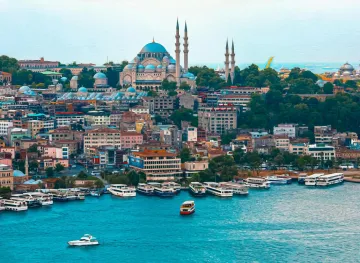
Explore more of Turkiye
Discover Turkiye: Where ancient history, stunning landscapes, and vibrant culture come together to create an unforgettable travel experience.
Explore Turkiye