

Trostyan Travel Guide - Free Web & App
Your ultimate guide to Trostyan. Discover top landmarks, proposed trips, and local tips. Free on the web or via the Evendo companion app.


Trostyan, Ukraine, rises above Slavske in the Carpathians, offering ski slopes, forest walks, mountain views and a gateway to Halychyna’s highlands.
Mountain Landscape
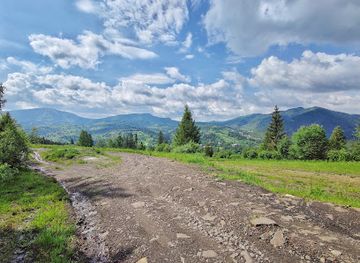
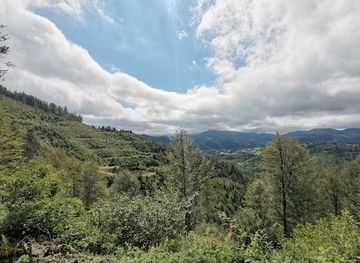
Trostyan is a prominent mountain in Ukraine’s Skole Beskids, a forested section of the Carpathians in Lviv Oblast. Rising to about 1,232 metres, it stands above the resort settlement of Slavske and is known mainly for its broad ski slopes, upland pastures and open ridges. The mountain is not an isolated wilderness destination with a large permanent settlement of its own; most visitors reach it from Slavske, which provides accommodation, food, transport connections and seasonal mountain facilities.Read more about Trostyan
Winter and Summer Character
Slavske and the Wider Region
When is the best time to visit Trostyan?
Best: June–August · 23–25°C| Month | High (°C) | Rainfall (mm) |
|---|---|---|
| January | -1 | 16 |
| February | -1 | 12 |
| March | 4 | 8 |
| April | 13 | 6 |
| May | 19 | 4 |
| June (best) | 23 | 3 |
| July (best) | 25 | 4 |
| August (best) | 25 | 6 |
| September | 17 | 8 |
| October | 12 | 12 |
| November | 6 | 16 |
| December | 2 | 16 |
Getting to and around Trostyan
How to get there
Transportation
Best attractions in Trostyan
-
Hiking area
Hora Pohar
Explore the stunning vistas and rich biodiversity at Hora Pohar, a premier hiking area in Lviv Oblast, Ukraine, perfect for nature lovers and adventurers.
-
Tourist attraction
Sukilʹ-Nabyvkivsʹkyy Vodospad
Experience the natural beauty of Sukilʹ-Nabyvkivsʹkyy Vodospad, a stunning waterfall in Ivano-Frankivsk Oblast, perfect for adventure and tranquility.
-
Historical landmark
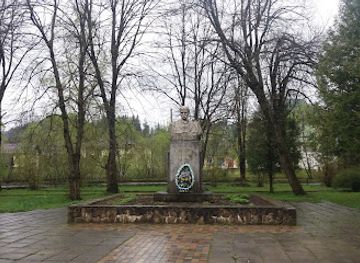
Monument to Taras Shevchenko
Explore the Monument to Taras Shevchenko in Slavs'ke, a historical landmark celebrating Ukrainian heritage and the life of its national poet.
-
Wildlife refuge
Tracts Tuhlyanske
Explore the enchanting Tracts Tuhlyanske, a wildlife refuge in Lviv Oblast, where nature and tranquility await every visitor.

Explore Trostyan on the map
Plan your trip on one map. See where the top attractions, landmarks, restaurants and hotels are, and book hotels and experiences in a few clicks.
Best hotels in Trostyan
Get your free copy of our complete guide to Trostyan, delivered straight to you.
Everything on this page, from attractions and restaurants to essentials and local phrases, in one PDF you can read offline, print or share.
Already have an account? Sign in
Your Trostyan guide is ready.
We'll send it to · Not you? Sign out

Getting your guide ready…
We are putting together a fresh copy of the Trostyan guide. This can take up to a minute.
This can take a few moments. If your browser asks, choose Allow so the download can start. You'll find the guide in your Downloads folder.
Nothing happened? Download it again
Sorry, the guide is taking longer than usual. Please try again in a minute, or get it by email instead.
Trostyan essentials
Currency and Payment
Safety
Emergency Situations
Do's and Don'ts
Local Tips
From Eve
Local phrases worth knowing
You don't need to get them perfect. A few words go a long way, and locals appreciate the effort.
Basics
| English | Local | Say it |
|---|---|---|
| Hello | Привіт | [Privit] |
| Goodbye | До побачення | [Do pobachennya] |
| Yes | Так | [Tak] |
| No | Ні | [Ni] |
| Please/You're welcome | Будь ласка | [Bud' laska] |
| Thank you | Дякую | [Dyakuyu] |
| Excuse me/Sorry | Вибачте | [Vybachte] |
| How are you? | Як справи? | [Yak spravy?] |
| Fine. And you? | Добре. А ви? | [Dobre. A vy?] |
| Do you speak English? | Ви говорите англійською? | [Vy hovoryte anhliys'koyu?] |
| I don't understand | Я не розумію | [Ya ne rozumiyu] |
Eating & Drinking
| English | Local | Say it |
|---|---|---|
| I'd like to see the menu, please | Я хочу подивитися меню, будь ласка | [Ya khochu podyvytysya menyoo, bud' laska] |
| I don't eat meat | Я не їм м'ясо | [Ya ne yim m'yaso] |
| Cheers! | Будьмо! | [Bud'mo!] |
| I would like to pay, please | Я хочу заплатити, будь ласка | [Ya khochu zaplatyty, bud' laska] |
Emergencies
| English | Local | Say it |
|---|---|---|
| Help! | Допоможіть! | [Dopomozhit'!] |
| Go away! | Ідіть геть! | [Idit' het'] |
| Call the Police! | Викличте поліцію! | [Vyklіchte polіtsіyu!] |
| Call a doctor! | Викличте лікаря! | [Vyklіchte lіkarya!] |
| I'm lost | Я загубився | [Ya zahubyvsya] |
| I'm ill | Я хворий | [Ya khvoryy] |
Shopping
| English | Local | Say it |
|---|---|---|
| I'd like to buy... | Я хочу купити... | [Ya khochu kupity...] |
| I'm just looking | Я просто дивлюсь | [Ya prosto dyvlyus'] |
| How much is it? | Скільки це коштує? | [Skil'ky tse koshtuye?] |
| That's too expensive | Це занадто дорого | [Tse zanadto doroho] |
| Can you lower the price? | Чи можете ви знизити ціну? | [Chy mozhete vy znyzyty tsinu?] |
Time & Numbers
| English | Local | Say it |
|---|---|---|
| What time is it? | Котра година? | [Kotra hodyna?] |
| It's one o'clock | Одна година | [Odnа hodina] |
| Half past (10) | Пів на (10) | [Piv na (10)] |
| Morning | Ранок | [Ranok] |
| Afternoon | Пополудні | [Popoludni] |
| Evening | Вечір | [Vechir] |
| Yesterday | Вчора | [Vchora] |
| Today | Сьогодні | [S'ohodni] |
| Tomorrow | Завтра | [Zavtra] |
| 1 | один | [odyn] |
| 2 | два | [dva] |
| 3 | три | [try] |
| 4 | чотири | [chotyry] |
| 5 | п'ять | [p'yat'] |
| 6 | шість | [shist'] |
| 7 | сім | [sim] |
| 8 | вісім | [visim] |
| 9 | дев'ять | [dev'yat'] |
| 10 | десять | [desyat'] |
Transport & Directions
| English | Local | Say it |
|---|---|---|
| Where's a/the...? | Де є/знаходиться...? | [De ye/znakhodytsya...?] |
| What's the address? | Яка адреса? | [Yaka adresa?] |
| Can you show me (on the map)? | Чи можете ви показати мені (на мапі)? | [Chy mozhete vy pokazaty meni (na mapi)?] |
| When's the next (bus)? | Коли наступний (автобус)? | [Koly nastupnyy (avtobus)?] |
| A ticket (to ....) | Квиток (до ...) | [Kvytok (do ...)] |
History of Trostyan
The Skole Beskids Landscape
Trostyan belongs to the Skole Beskids, a north-western Carpathian mountain group shaped by long geological processes rather than by a single dramatic volcanic event. The surrounding ridges, valleys and forested slopes created the physical setting for the settlement patterns and resource-based economy that developed in the region. The mountain’s present appearance is also influenced by human use: woodland management, grazing, paths and winter-sports infrastructure have all modified parts of the slopes while leaving the wider landscape predominantly rural.
Mountain Communities and Halychyna
The valleys around modern Slavske were historically used by Carpathian communities whose livelihoods depended on small-scale farming, livestock, forestry and seasonal movement between settlements and higher pastures. The area formed part of the historical region of Halychyna, whose cultural landscape developed through changing political administrations and the interaction of local East Slavic traditions with wider Central European influences. Wooden churches, vernacular buildings and rural customs in the broader region reflect this layered history, although Trostyan itself is primarily a natural and recreational landmark rather than a historic town.
Slavske as a Mountain Gateway
Slavske grew in importance as a settlement serving the surrounding mountain valleys and as a stopping point on the railway linking the Carpathian region with larger urban centres. Improved transport helped connect the area with visitors from Lviv and other parts of Ukraine, gradually changing mountain recreation from a predominantly local activity into a regional tourism tradition. Trostyan became one of the best-known slopes associated with Slavske, its open terrain making it suitable for organised winter recreation as well as seasonal walking.
The Development of Winter Sport
Skiing in the Slavske area expanded during the twentieth century, when mountain resorts across the Ukrainian Carpathians received new sporting facilities and wider public recognition. Trostyan became identified with downhill skiing and training, and its slopes remain central to the area’s winter reputation. The mountain’s tourism history is closely tied to changing snow conditions, investment in lifts and accommodation, and the capacity of the local community to support visitors. Today, the landscape continues to combine recreational use with forestry, pasture and the everyday life of a Carpathian settlement.
Trostyan in Photos
Browse through our photo collection highlighting the charm and character of the destination.
Neighbouring destination travel guides
The closest destinations to Trostyan, if you have time for more than one.
-
-
-

-
 Divnogorie National Park
 is in Russia, not Moldova; verify the country before planning transport, attractions, accommodation, and visits to this protected landscape.
Divnogorie National Park
Divnogorie National Park is in Russia, not Moldova; verify the country before planning transport, attractions, accommodation, and visits to this protected landscape.
-


Swipe for more destinations
Explore more

Explore more of Sloboda Ukraine
Explore Sloboda Ukraine: A region where history, culture, and nature converge, offering an authentic Ukrainian experience filled with peace and charm.
Explore Sloboda Ukraine
Explore more of Ukraine
Explore Ukraine: From Kyiv's golden domes to the Carpathian Mountains, discover a country rich in history, culture, and natural beauty in the heart of Eastern Europe.
Explore Ukraine