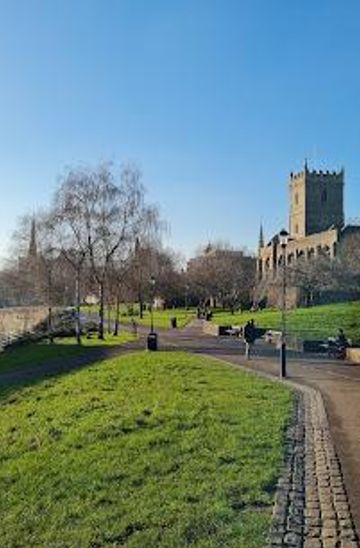
Bristol Bridge
A historic stone bridge spanning the River Avon, linking Bristol’s medieval past with its modern cityscape.
Spanning the River Avon in the heart of Bristol, Bristol Bridge is a historic stone crossing that has linked the city’s north and south for centuries. Originally a fortified medieval bridge lined with houses and a chapel, it was rebuilt in the 18th century and widened in the Victorian era. Today it carries modern traffic across the river, standing as a quiet monument to Bristol’s maritime past and urban evolution, with layers of history visible in its stonework and iron railings.
A brief summary to Bristol Bridge
- Victoria St, Bristol, BS1 6DT, GB
- Duration: 0.25 to 1 hours
- Free
-
 Outdoor
- Mobile reception: 5 out of 5

Know before you go
Hi, I'm Eve. Here are a few practical things to know before exploring Bristol Bridge.
- Visit in the late afternoon to see the bridge lit against the dusk sky, with reflections in the Avon adding atmosphere.
- Combine your visit with a walk along the Floating Harbour to appreciate how the river shaped Bristol’s development.
- Look closely at the stonework and ironwork to spot the different construction periods – medieval foundations, Georgian arches, and Victorian widening.
Do you manage this location?
Take control to get all the benefits, like improved information, better appearance, and stronger visibility across AI-powered discovery. Learn more
Activate your presenceGetting There
-
Walking
From Bristol Temple Meads station, follow signs toward the city centre and the Floating Harbour; the bridge is about 15–20 minutes on foot along a mostly flat, paved route with clear signage.
-
Bus
Several local bus routes serve stops near Victoria Street and the Old City; journey times from central Bristol are typically 5–15 minutes depending on origin, with frequent daytime service.
-
Cycling
Bristol’s cycle network includes routes along the Floating Harbour and into the city centre; the bridge is accessible by bike via signed paths, with cycle lanes on adjacent roads.
For the on-the-go comforts that matter to you
-
 Restrooms
-
 Drink Options
-
 Food Options
-
 Seating Areas
-
 Trash Bins
-
 Information Boards
Discover more about Bristol Bridge
A Crossing at the Heart of Bristol
Bristol Bridge spans the River Avon at a pivotal point in the city’s historic core, where the medieval town expanded from its original northern bank into the growing southern districts. This crossing has been a vital artery since at least the 13th century, when a fortified stone bridge replaced earlier timber structures. Its position made it a natural gateway, controlling access into the city and shaping the layout of surrounding streets. Over the centuries, the bridge has been rebuilt and widened, but its location has remained constant, anchoring the city’s commercial and civic life.Medieval Origins and Georgian Rebirth
The original Bristol Bridge, constructed between 1247 and 1248, was a substantial fortified crossing with houses and shops lining both sides, rising several stories above the river. In 1361, a large chapel dedicated to the Virgin Mary was added in the middle, effectively forming a gatehouse with gates at each end. By the 18th century, this crowded medieval structure had become outdated and obstructive to trade. An Act of Parliament in 1760 authorized its replacement, and a new three-arched stone bridge, inspired by Westminster Bridge in London, was built by Thomas Paty to designs by James Bridges. Completed in 1768, this Georgian bridge formed the basis of the structure still in use today.From Toll Riots to Victorian Widening
The new bridge was financed by tolls, which remained deeply unpopular. In 1793, when the Bristol Corporation announced that tolls would continue beyond an expected end date, protests erupted into what became known as the Bristol Bridge Riot. A crowd attacked the toll houses, and militia opened fire, resulting in multiple deaths and injuries. The bridge’s role in civic unrest underscored its importance as a chokepoint in the city. In the 1870s, the bridge was widened with Courtfeld Limestone ashlar and cast-iron pillars and deck, adapting it for 19th-century traffic while preserving its Georgian core. The current metal railings date from a later 20th-century update.Layers of History in Stone and Iron
Today’s Bristol Bridge is a palimpsest of Bristol’s development. Beneath the waterline, medieval foundations survive; the main structure is Georgian, built from stone sourced from the Courtfield estate on the River Wye; and the widened sections with iron columns and deck are Victorian additions. The bridge’s evolution reflects the city’s three great ages of overseas trade: medieval, Georgian, and Victorian. Its current form, a busy road bridge, contrasts with its earlier life as a densely built, almost street-like crossing, but its presence continues to shape the rhythm of movement through central Bristol.Modern Role and Urban Context
Bristol Bridge now carries Victoria Street and other major routes across the Avon, connecting the Old City with Temple Meads and the eastern districts. It sits near key landmarks such as the former Tramways Generating Station and the site of the medieval Temple Church, destroyed in the Bristol Blitz. The surrounding area has been reshaped by wartime bombing and post-war redevelopment, yet the bridge remains a constant. Proposals in recent decades to pedestrianise parts of the city centre and restore historic features like the High Cross hint at ongoing debates about how to balance heritage, traffic, and public space around this enduring crossing.Explore the best of what Bristol Bridge has to offer















More about Gwent
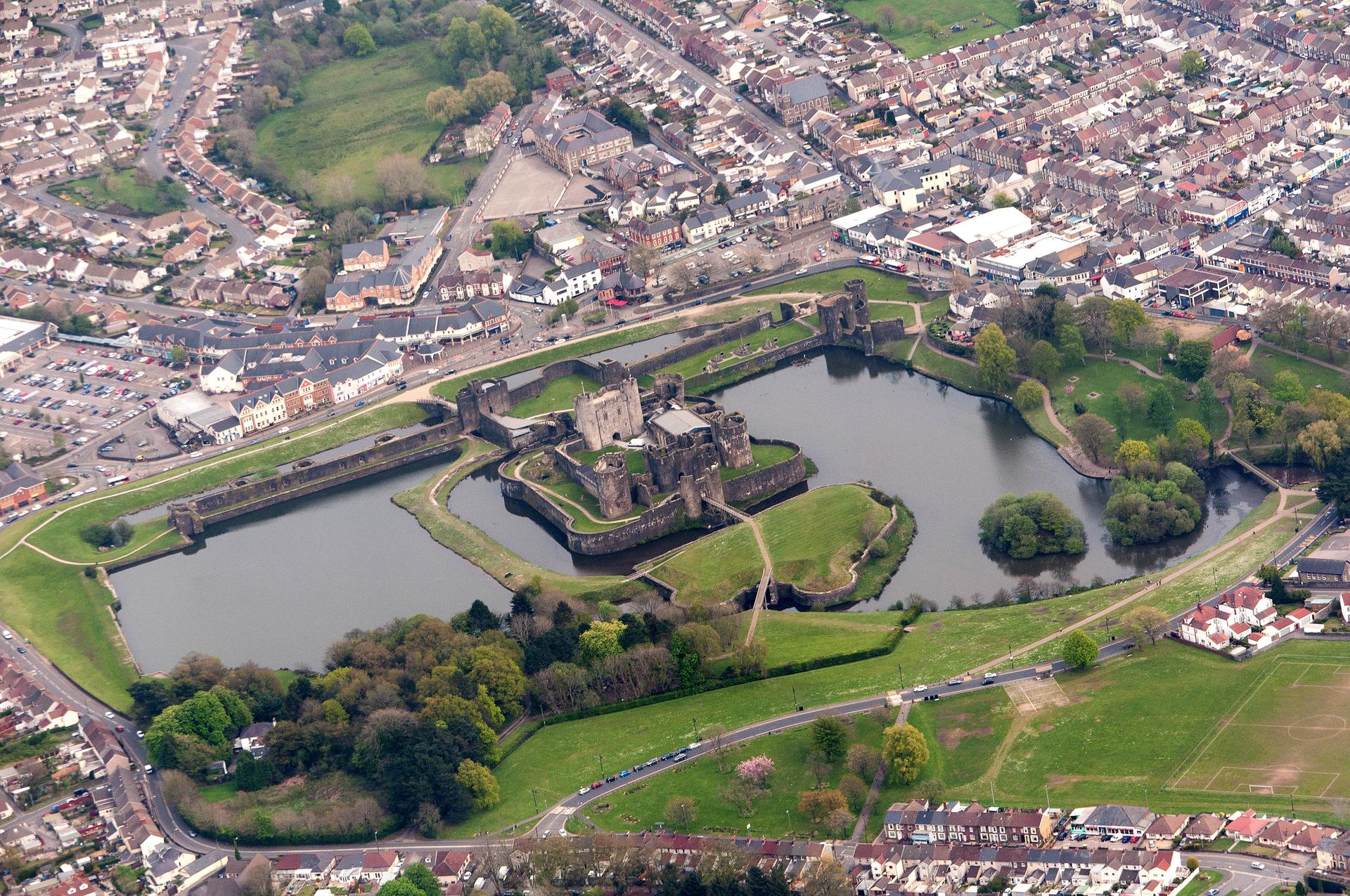
Explore Gwent, a captivating blend of ancient history, picturesque landscapes, and vibrant culture in the heart of Wales.
Tell me more about Gwent