Penrith Castle Travel Guide
Free Guide: Explore the evocative ruins of Penrith Castle, a historic fortress turned royal residence nestled in a scenic park in Cumbria.


A brief summary of Penrith Castle
Explore the evocative ruins of Penrith Castle, a historic fortress turned royal residence nestled in a scenic park in Cumbria.
Penrith Castle, begun in the late 14th century by Ralph Neville, stands as a striking ruin in Penrith, Cumbria. Originally built to defend against relentless Scottish raids, it later became a royal residence for Richard, Duke of Gloucester (later Richard III). Its walls, rising to their full height within a public park, offer a glimpse into centuries of border conflicts, noble power, and eventual peaceful decline. Today, the site is free to explore and surrounded by a scenic park with picnic areas.
On-site amenities
 Restrooms
 Drink options
 Food options
 Seating areas
 Information boards
Opening hours
- Every day9 am–5 pm
Opening hours as listed on the venue’s Google Business Profile. Hours can change for services and special events, so check with the venue before you go.
- Address
- Ullswater Rd, Penrith CA11 7EG
- Phone
- Website
Getting there
Train
Car
Bus
Walking
Discover more about Penrith Castle
Origins and Strategic Importance
Penrith Castle was constructed at the close of the 14th century by Ralph Neville, 1st Earl of Westmorland, who was granted the manor of Penrith in 1396. Its primary purpose was to serve as a stronghold against the frequent and devastating raids by Scottish forces across the Anglo-Scottish border. The castle was part of a network of fortifications designed to protect the region’s inhabitants and maintain English control over this turbulent frontier. The Nevilles, one of England’s most powerful noble families, used Penrith as a key administrative and military base, reinforcing the castle with additions such as the Red Tower and improved gatehouses.
Residence of Royalty and Transformation
In the 15th century, Penrith Castle became the residence of Richard, Duke of Gloucester, who later ascended the throne as King Richard III. Between 1471 and 1483, Richard intermittently lived here, transforming the fortress from a purely defensive structure into a more comfortable and luxurious domestic palace. He added large windows, improved living quarters, and likely constructed the moat and a new gatehouse. During this period, the castle symbolized royal authority and governance in a region long marked by chaos and conflict.
Decline and Military Relevance
Following the union of the English and Scottish crowns in 1603, the castle’s military significance diminished as border warfare ceased. Over time, Penrith Castle fell into disuse and decay. Its stones were quarried for local buildings, and the structure deteriorated. However, it briefly regained military importance during the English Civil War in 1648, serving as headquarters for Parliamentarian General John Lambert. Soon after, the castle was deliberately dismantled to prevent further military use, leaving the ruins visible today.
Present-Day Setting and Visitor Experience
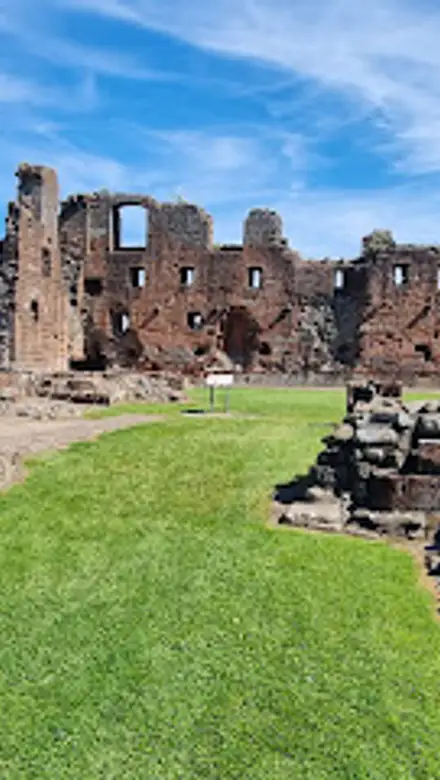
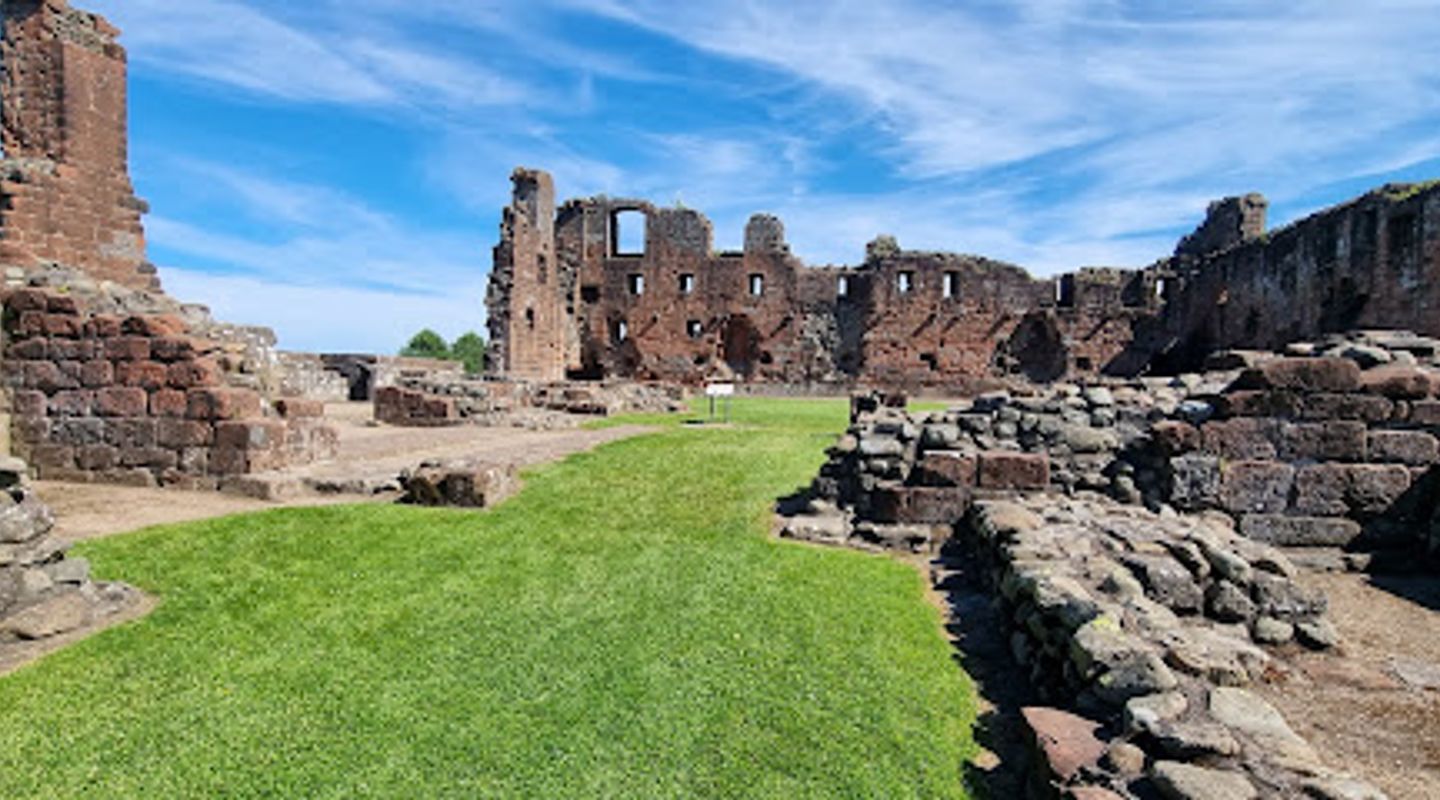
Today, Penrith Castle’s impressive red sandstone ruins stand within a public park that bears its name. The castle walls survive to their full height in places, including notable architectural features like projecting corbels and large vaulted spaces once possibly used as prisons. The surrounding park offers grassy meadows ideal for picnics and leisure, with additional amenities such as tennis courts, mini golf, and a children’s playground nearby. Entry to the castle and park is free, making it accessible for all visitors. Informational boards provide historical context, and occasional volunteer-led talks enrich the experience.
Architectural Highlights and Legacy
While the castle no longer functions as a fortress, its ruins are remarkable for their extent and the perspective they offer of medieval military architecture. The surviving walls and towers reflect the layered history of border defense, noble residence, and civil war involvement. Penrith Castle is a Grade I listed building, maintained by English Heritage, preserving an important chapter of northern England’s heritage. It also features memorials such as the War Memorial Gateway and the Black Angel Memorial, commemorating local military history.
Community and Cultural Significance
Penrith Castle remains a focal point for local culture and history. It connects visitors to the stories of powerful families like the Nevilles and the turbulent Anglo-Scottish border conflicts. The castle’s transformation from a military bastion to a peaceful parkland reflects the broader historical shifts in the region. Its proximity to Penrith town center and railway station makes it a convenient and enriching destination for history enthusiasts, families, and casual visitors alike.
Evendo Review Centre
 Google
Guest reviews
Best time to go
Quietest: Jan, Feb & Dec · before 6am or from 8pm
Busy times are Evendo estimates for a typical year, to help you plan. Actual crowds vary with events, school holidays and the weather.
Explore Penrith Castle on the map
A handpicked selection of must-see spots near Penrith Castle, mapped for you.
Get your free copy of our complete guide to Penrith Castle, delivered straight to you.
Everything on this page, from opening hours and how to get there to Eve’s tips and the best time to go, in one PDF you can read offline, print or share.
Already have an account? Sign in
Your Penrith Castle guide is ready.
We'll send it to · Not you? Sign out

Getting your guide ready…
We are putting together a fresh copy of the Penrith Castle guide. This can take up to a minute.
This can take a few moments. If your browser asks, choose Allow so the download can start. You'll find the guide in your Downloads folder.
Nothing happened? Download it again
Sorry, the guide is taking longer than usual. Please try again in a minute, or get it by email instead.
Other nearby places you may find interesting
The closest places of the same kind, if this one is not quite what you had in mind.
-
-
-
-
-


Swipe for more places
More to explore near Penrith Castle

 Best experiences near Penrith Castle
 Best hotels near Penrith Castle
 Best landmarks near Penrith Castle
 Best attractions near Penrith Castle
 Best shops near Penrith Castle
 Best restaurants near Penrith Castle
 Best bars near Penrith Castle
Do you manage this location?
Take control to get all the benefits, like improved information, better appearance, and stronger visibility across AI-powered discovery.
Explore more

Explore more of Cumbria
Discover the natural beauty and rich heritage of Cumbria, from the stunning Lake District to historic landmarks and vibrant local culture.
Explore Cumbria
Explore more of United Kingdom
Discover the United Kingdom: A blend of rich history, stunning landscapes, and vibrant cities, offering a unique travel experience for every visitor.
Explore United Kingdom