Nelson Monument, Liverpool Travel Guide
Free Guide: Liverpool’s Nelson Monument: A neo-classical tribute capturing Admiral Nelson’s naval victories and legacy in the heart of the city’s maritime heritage.


A brief summary of Nelson Monument
Liverpool’s Nelson Monument: A neo-classical tribute capturing Admiral Nelson’s naval victories and legacy in the heart of the city’s maritime heritage.
The Nelson Monument in Liverpool is a striking neo-classical tribute to Admiral Horatio Nelson, commemorating his four major naval victories. Situated at Exchange Flags, this historic monument features symbolic sculptures including chained prisoners, captured flags, and figures representing Victory and Death, capturing a pivotal moment in British naval history. It offers visitors a profound connection to Liverpool’s maritime heritage and Nelson’s enduring legacy.
On-site amenities
 Seating areas
 Information boards
Opening hours
- Every dayOpen 24 hours
Opening hours as listed on the venue’s Google Business Profile. Hours can change for services and special events, so check with the venue before you go.
- Address
- Liverpool L2 3PF
Getting there
Public Transport
Bus
Car
Walking
Discover more about Nelson Monument
A Monument Honoring a Naval Hero
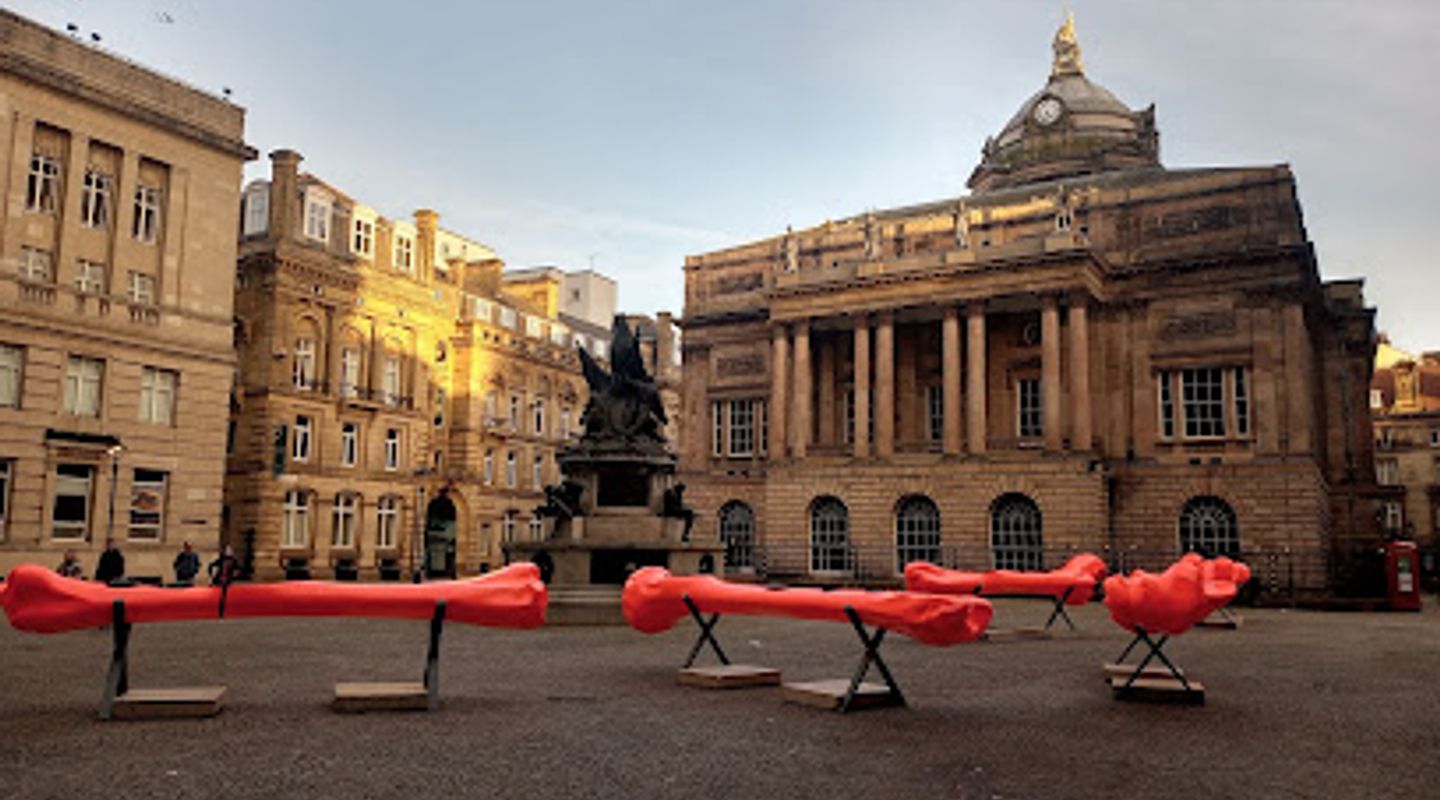
The Nelson Monument in Liverpool stands as a powerful tribute to Admiral Horatio Nelson, one of Britain's most celebrated naval heroes. Commissioned shortly after Nelson's death in 1805 and unveiled in 1813, the monument was designed to honor his leadership and victories during the Napoleonic Wars. It is located in Exchange Flags, a historic open courtyard behind Liverpool Town Hall, symbolizing the city's deep maritime connections and pride in its naval heritage.
Symbolism and Artistic Details
The monument is a neo-classical sculpture rich with symbolism. Central to the design is Nelson himself, depicted in an idealized form, receiving a fourth naval crown from the figure of Victory. This crown represents his four great victories at Cape St Vincent, the Nile, Copenhagen, and Trafalgar. Around the base are four chained prisoners symbolizing the defeated enemies, with their chains held by the British Lion, embodying British naval dominance. Captured flags of Spain, France, Denmark, and Norway adorn the pedestal, one of which is draped over Nelson’s missing right arm, highlighting his sacrifice.
Expressions of Triumph and Loss
Behind the statue stands a forlorn Britannia, holding a laurel wreath and Nelson’s medals, representing the nation mourning its fallen hero. A skeletal hand emerges from beneath a flag, symbolizing death reaching out at the moment of Nelson’s final victory at Trafalgar. This poignant imagery captures both the triumph and the cost of war, making the monument not only a celebration but also a solemn remembrance.
Historical Context and Local Significance
Liverpool’s role as a major port and naval city is deeply intertwined with the monument. The inclusion of chained prisoners may also reflect the city’s wartime role as a host to French prisoners. The monument’s design and placement underscore Liverpool’s commercial and maritime interests during the early 19th century. It remains Liverpool’s first significant public sculpture and a landmark reflecting the city’s historical identity.
Architectural and Artistic Merit
The monument is noted for its neo-classical style, combining romantic and idealized elements. It diverges from more formal tributes found elsewhere, such as London’s Trafalgar Square statue, by capturing a dramatic moment in history rather than a static portrait. The intricate bronze bas-reliefs depict key naval battles, adding depth and narrative to the monument’s artistic composition.
Visiting the Nelson Monument Today
Today, the Nelson Monument is a must-see for those interested in British naval history and Liverpool’s cultural heritage. Its location within the historic Exchange Flags area places it among other significant civic buildings and landmarks, making it a focal point for exploring the city’s past. The monument’s detailed symbolism invites reflection on heroism, sacrifice, and national identity.
Evendo Review Centre
 Google
Guest reviews
Best time to go
Quietest: Jan, Feb & Dec · before 6am or at 10pm
Busy times are Evendo estimates for a typical year, to help you plan. Actual crowds vary with events, school holidays and the weather.
Explore Nelson Monument on the map
A handpicked selection of must-see spots near Nelson Monument, mapped for you.
Get your free copy of our complete guide to Nelson Monument, delivered straight to you.
Everything on this page, from opening hours and how to get there to Eve’s tips and the best time to go, in one PDF you can read offline, print or share.
Already have an account? Sign in
Your Nelson Monument guide is ready.
We'll send it to · Not you? Sign out

Getting your guide ready…
We are putting together a fresh copy of the Nelson Monument guide. This can take up to a minute.
This can take a few moments. If your browser asks, choose Allow so the download can start. You'll find the guide in your Downloads folder.
Nothing happened? Download it again
Sorry, the guide is taking longer than usual. Please try again in a minute, or get it by email instead.
Unlock the best of Nelson Monument
Skip-the-line tickets, guided tours with entry, and walking tours of the area, booked in a few clicks.

Other nearby places you may find interesting
The closest places of the same kind, if this one is not quite what you had in mind.
-
-
-
-
-


Swipe for more places
More to explore near Nelson Monument

 Best experiences near Nelson Monument
 Best hotels near Nelson Monument
 Best landmarks near Nelson Monument
 Best attractions near Nelson Monument
 Best shops near Nelson Monument
 Best restaurants near Nelson Monument
 Best bars near Nelson Monument
Do you manage this location?
Take control to get all the benefits, like improved information, better appearance, and stronger visibility across AI-powered discovery.
Explore more

Explore more of Liverpool
Discover Liverpool: A city where maritime heritage meets modern culture, music legends, and sporting glory. An unforgettable destination in the heart of northwest England.
Explore Liverpool
Explore more of United Kingdom
Discover the United Kingdom: A blend of rich history, stunning landscapes, and vibrant cities, offering a unique travel experience for every visitor.
Explore United Kingdom