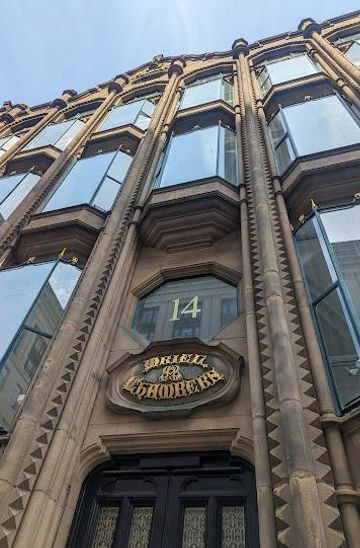
Oriel Chambers: The Birthplace of the Modern Curtain Wall
Oriel Chambers: Liverpool’s revolutionary 1864 office building that pioneered the metal-framed glass curtain wall and modern skyscraper design.
Oriel Chambers, located at 14 Water Street in Liverpool, is a pioneering office building completed in 1864 by architect Peter Ellis. It is renowned as the world's first metal-framed glass curtain wall building, a revolutionary design that paved the way for modern skyscrapers. Despite initial criticism, it is now Grade I listed for its architectural innovation and historic significance.
A brief summary to Oriel Chambers
- 14 Water St, Liverpool, L2 8TD, GB
- Duration: 0.5 to 1.5 hours
- Free
-
 Outdoor
- Mobile reception: 4 out of 5

Know before you go
Hi, I'm Eve. Here are a few practical things to know before exploring Oriel Chambers.
- Admire the intricate cast iron oriel windows and stone mullions that define the building’s unique façade.
- Look for the inscription ‘stand sure’ atop the building, symbolizing its resilience through history.
- Visit nearby 16 Cook Street to see another pioneering glass curtain wall building by Peter Ellis.
- Consider the building’s historical context and how it influenced modern skyscraper architecture worldwide.
Do you manage this location?
Take control to get all the benefits, like improved information, better appearance, and stronger visibility across AI-powered discovery. Learn more
Activate your presence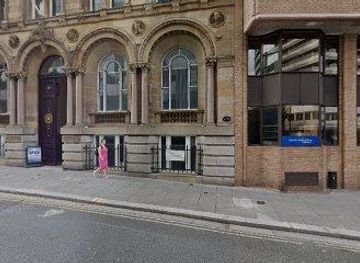

Getting There
-
Bus
Take local buses from Liverpool Lime Street Station to stops near Water Street; journey times range from 10 to 15 minutes. Services run frequently during the day, with tickets costing around £2-£3. Note that buses may be less frequent in the evenings.
-
Train and Walk
From Liverpool Lime Street Station, walk approximately 15 minutes through the city center to reach Oriel Chambers. The route is mostly flat and accessible, passing through pedestrian-friendly streets.
-
Taxi
A taxi ride from Liverpool Lime Street Station to Oriel Chambers takes about 5 to 10 minutes depending on traffic, with fares typically between £5 and £8. Taxis are readily available at the station.
For the on-the-go comforts that matter to you
-
 Restrooms
-
 Drink Options
-
 Food Options
-
 Seating Areas
-
 Information Boards
Discover more about Oriel Chambers
Architectural Innovation Ahead of Its Time
Oriel Chambers stands as a landmark of architectural innovation, designed by Peter Ellis and completed in 1864. It was the first building in the world to feature a metal-framed glass curtain wall, a construction technique that allowed for expansive glass facades supported by a cast iron frame rather than traditional load-bearing masonry. This breakthrough enabled much greater natural light to flood the interior spaces, a stark contrast to the dim, heavy Victorian buildings of its era. The building’s distinctive grid of protruding oriel windows maximizes daylight and ventilation, giving it a unique façade that was initially controversial but later celebrated for its elegance and functionality.Historical Context and Reception
Commissioned after a fire destroyed the previous building on the site, Oriel Chambers was completed in a period dominated by Gothic and classical architectural styles. Contemporary critics derided it as a "great abortion" and mocked its glass-heavy design, which diverged sharply from the prevailing aesthetic norms. However, its innovative use of iron and glass foreshadowed modernist architecture and skyscraper design. The building suffered damage during World War II bombings, which exposed its iron frame and further highlighted its groundbreaking structural system. A sensitive post-war restoration preserved its character, ensuring its survival as a treasured historic site.Design Features and Structural Details
The building covers approximately 43,000 square feet over five storeys. Its façade is characterized by a regular grid of cast iron oriel windows, intricately detailed with slender stone mullions and dog-tooth carving. The internal courtyard features cantilevered cladding, an early example of this technique that allowed the glass curtain walls to extend beyond the supporting frame. The iron columns are set between stone cross walls, supporting floors and cladding while allowing for large uninterrupted glass surfaces. Atop the building, the motto "stand sure" is inscribed, symbolizing resilience and stability.Legacy and Influence on Modern Architecture
Oriel Chambers is widely regarded as a precursor to the modern skyscraper. Its metal frame and glass curtain wall inspired architects worldwide, notably influencing American proto-modernist John Wellborn Root, who studied in Liverpool during its construction. The building’s emphasis on light, transparency, and structural honesty anticipated key principles of the Modern Movement in architecture. Today, it is Grade I listed and praised by scholars like Nikolaus Pevsner as one of the most remarkable buildings of its time in Europe.Location and Surroundings
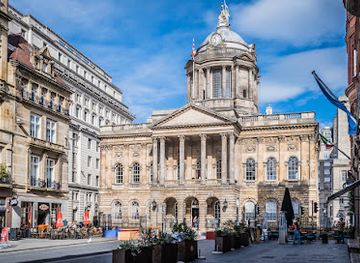
Situated on Water Street near Liverpool Town Hall and the iconic Liver Building, Oriel Chambers contrasts with the heavy classical architecture nearby through its light and delicate glass façade. It remains in use as office space, maintaining its original function over 150 years later. The building’s urban context enhances its significance, nestled among Liverpool’s historic commercial and civic landmarks.Preservation and Modern-Day Appreciation
Despite early disdain, Oriel Chambers is now celebrated for its pioneering design and historical importance. The building underwent careful restoration after wartime damage, including a sympathetic addition in the late 1950s that respects Ellis’s original vision. It stands as a testament to Victorian innovation and continues to attract attention from architects, historians, and visitors interested in the evolution of modern architecture.Explore the best of what Oriel Chambers has to offer















More about Chester
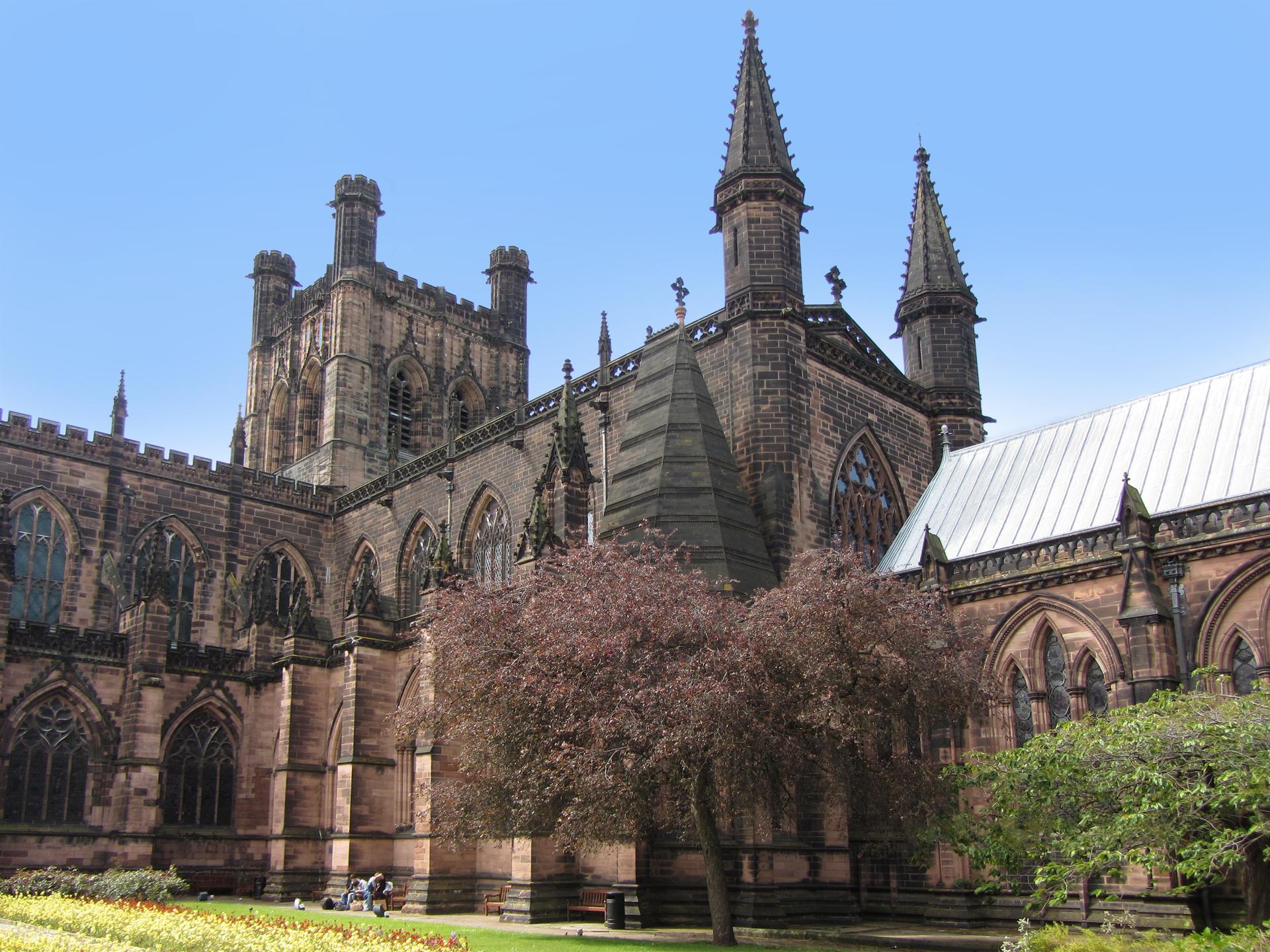
Discover Chester: A perfect blend of ancient history and modern charm, with its Roman walls, stunning cathedral, and unique shopping experiences.
Tell me more about Chester