

Cunard Building, Liverpool Travel Guide
Free Guide: Liverpool’s Cunard Building: Majestic headquarters of a legendary ocean liner, anchoring the city’s maritime legacy on the historic Pier Head.


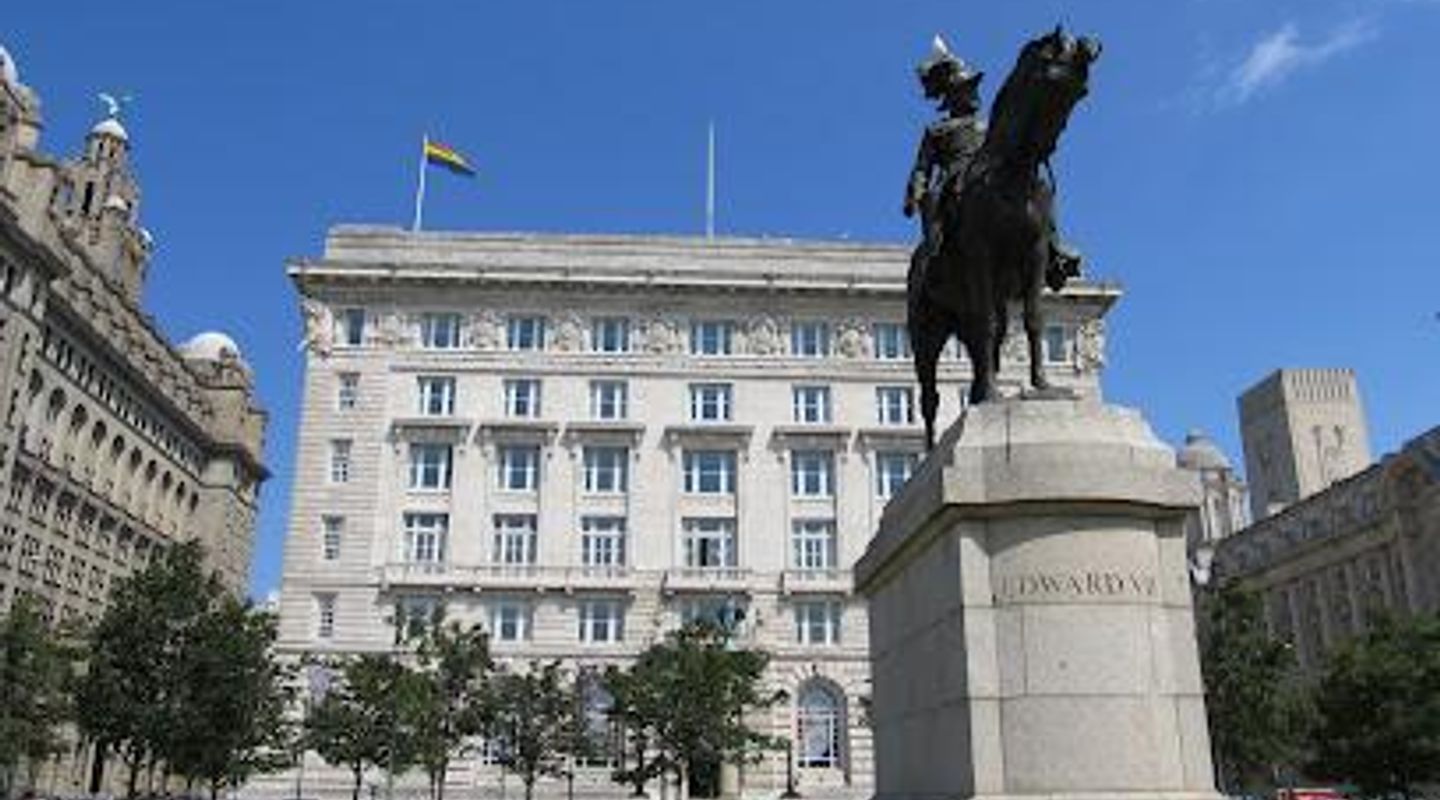
A brief summary of Cunard Building
Liverpool’s Cunard Building: Majestic headquarters of a legendary ocean liner, anchoring the city’s maritime legacy on the historic Pier Head.
The Cunard Building, an iconic Grade II* listed structure in Liverpool, is one of the city's famed Three Graces on the Pier Head. Built between 1914 and 1917 as the headquarters for the Cunard Steamship Company, it blends Italian Renaissance and Greek Revival architectural styles. The building served as a bustling hub for transatlantic travel, housing passenger facilities and offices, and remains a symbol of Liverpool's rich maritime heritage and global shipping legacy.
On-site amenities
 Restrooms
 Drink options
 Food options
 Seating areas
 Information boards
- Address
- Liverpool
Getting there
Train
Bus
Taxi
Discover more about Cunard Building
Architectural Grandeur Reflecting Maritime Power
The Cunard Building stands proudly on Liverpool’s Pier Head as a testament to the city’s golden era of maritime commerce. Designed by architects William Edward Willink and Philip Coldwell Thicknesse, its construction spanned from 1914 to 1917. The building’s style is a sophisticated fusion of Italian Renaissance and Greek Revival influences, inspired by the Farnese Palace in Rome. Its exterior is clad in 180,000 cubic feet of Portland stone, complemented by 50,000 cubic feet of Italian marble inside, creating an imposing yet elegant presence. Ornate sculptures and architectural details adorn the façade, symbolizing the grandeur and reliability of the Cunard Line’s ocean liners.
Heart of Transatlantic Travel and Operations
Originally built as the headquarters for the Cunard Steamship Company, the building was the nerve centre of one of the world’s most prestigious shipping lines. From here, Cunard managed its fleet of luxury ocean liners, including famous vessels like the RMS Queen Mary and RMS Queen Elizabeth. The lower floors were dedicated to passenger services, featuring segregated waiting rooms for first, second, and third-class travelers, canteens, luggage storage, and currency exchange facilities. The building also housed offices for land and sea-based Cunard employees, facilitating the complex logistics of transatlantic voyages.
Historic Role During Conflict and Change
During World War II, the Cunard Building’s sub-basement served as an air raid shelter, protecting workers and the city’s maritime administration. The basement also functioned as the central Air Raid Precautions headquarters for Liverpool. Despite the challenges of wartime, the building remained a hive of activity, symbolizing resilience. After Cunard relocated its headquarters to Southampton in the 1960s, the building transitioned to accommodate various public and private organizations, including Liverpool City Council and the British Music Experience.
Symbol of Liverpool’s Maritime Legacy and Urban Identity
The Cunard Building forms the central piece of Liverpool’s iconic Three Graces, alongside the Royal Liver Building and the Port of Liverpool Building. This trio defines the city’s UNESCO World Heritage waterfront and embodies Liverpool’s historic importance as a global port. The building’s commanding position overlooking the River Mersey allowed Cunard directors to watch their fleet come and go, reinforcing the city’s identity as a gateway to the world. Today, it remains a cherished landmark that connects Liverpool’s past maritime prowess with its vibrant present.
Preservation and Contemporary Use
Recognized for its architectural and historical significance, the Cunard Building holds Grade II* listed status. Ownership has passed through several hands, including the Merseyside Pension Fund and Liverpool City Council, which have maintained its preservation. While plans to convert it into a cruise terminal were abandoned due to security costs, the building continues to serve as office space and cultural venue. Its enduring presence on the waterfront ensures that the spirit of Cunard and Liverpool’s seafaring heritage lives on for future generations.
Legacy of Luxury and Innovation
The Cunard Building not only housed administrative offices but also the naval architects’ department responsible for designing some of the most famous ocean liners in history. It was a place where innovation met tradition, supporting Cunard’s reputation for speed, safety, and luxury on the high seas. The building’s grandeur reassured passengers of the company’s stability and prestige, making it a powerful symbol of the golden age of ocean travel and Liverpool’s pivotal role in it.
Evendo Review Centre
 Google
Guest reviews
Best time to go
Quietest: Jan, Feb & Dec · before 6am or at 10pm
Busy times are Evendo estimates for a typical year, to help you plan. Actual crowds vary with events, school holidays and the weather.
Explore Cunard Building on the map
A handpicked selection of must-see spots near Cunard Building, mapped for you.
Get your free copy of our complete guide to Cunard Building, delivered straight to you.
Everything on this page, from opening hours and how to get there to Eve’s tips and the best time to go, in one PDF you can read offline, print or share.
Already have an account? Sign in
Your Cunard Building guide is ready.
We'll send it to · Not you? Sign out

Getting your guide ready…
We are putting together a fresh copy of the Cunard Building guide. This can take up to a minute.
This can take a few moments. If your browser asks, choose Allow so the download can start. You'll find the guide in your Downloads folder.
Nothing happened? Download it again
Sorry, the guide is taking longer than usual. Please try again in a minute, or get it by email instead.
Unlock the best of Cunard Building
Skip-the-line tickets, guided tours with entry, and walking tours of the area, booked in a few clicks.


Other nearby places you may find interesting
The closest places of the same kind, if this one is not quite what you had in mind.
-
-
-
-
-


Swipe for more places
More to explore near Cunard Building

 Best experiences near Cunard Building
 Best hotels near Cunard Building
 Best landmarks near Cunard Building
 Best attractions near Cunard Building
 Best shops near Cunard Building
 Best restaurants near Cunard Building
 Best bars near Cunard Building
Do you manage this location?
Take control to get all the benefits, like improved information, better appearance, and stronger visibility across AI-powered discovery.
Explore more

Explore more of Liverpool
Discover Liverpool: A city where maritime heritage meets modern culture, music legends, and sporting glory. An unforgettable destination in the heart of northwest England.
Explore Liverpool
Explore more of United Kingdom
Discover the United Kingdom: A blend of rich history, stunning landscapes, and vibrant cities, offering a unique travel experience for every visitor.
Explore United Kingdom
