

Belgrave Square, London Travel Guide
Free Guide: A private Regency square in Belgravia, where embassy façades, formal terraces, and a resident-only garden define one of London’s most ordered streetscapes.


A brief summary of Belgrave Square
A private Regency square in Belgravia, where embassy façades, formal terraces, and a resident-only garden define one of London’s most ordered streetscapes.
Belgrave Square is one of central London’s most polished Regency squares, known for its embassy-fronted terraces, private central garden, and calm, residential atmosphere. You come here less for activities than for a measured walk along the perimeter, where symmetry, stucco façades, and diplomatic addresses create a distinctly formal London streetscape. It is best treated as a short architectural stop within a wider Belgravia or Victoria walk.
On-site amenities
 Seating areas
 Information boards
- Address
- London
Getting there
Tube
Bus
Taxi
Walk
Discover more about Belgrave Square
What it is
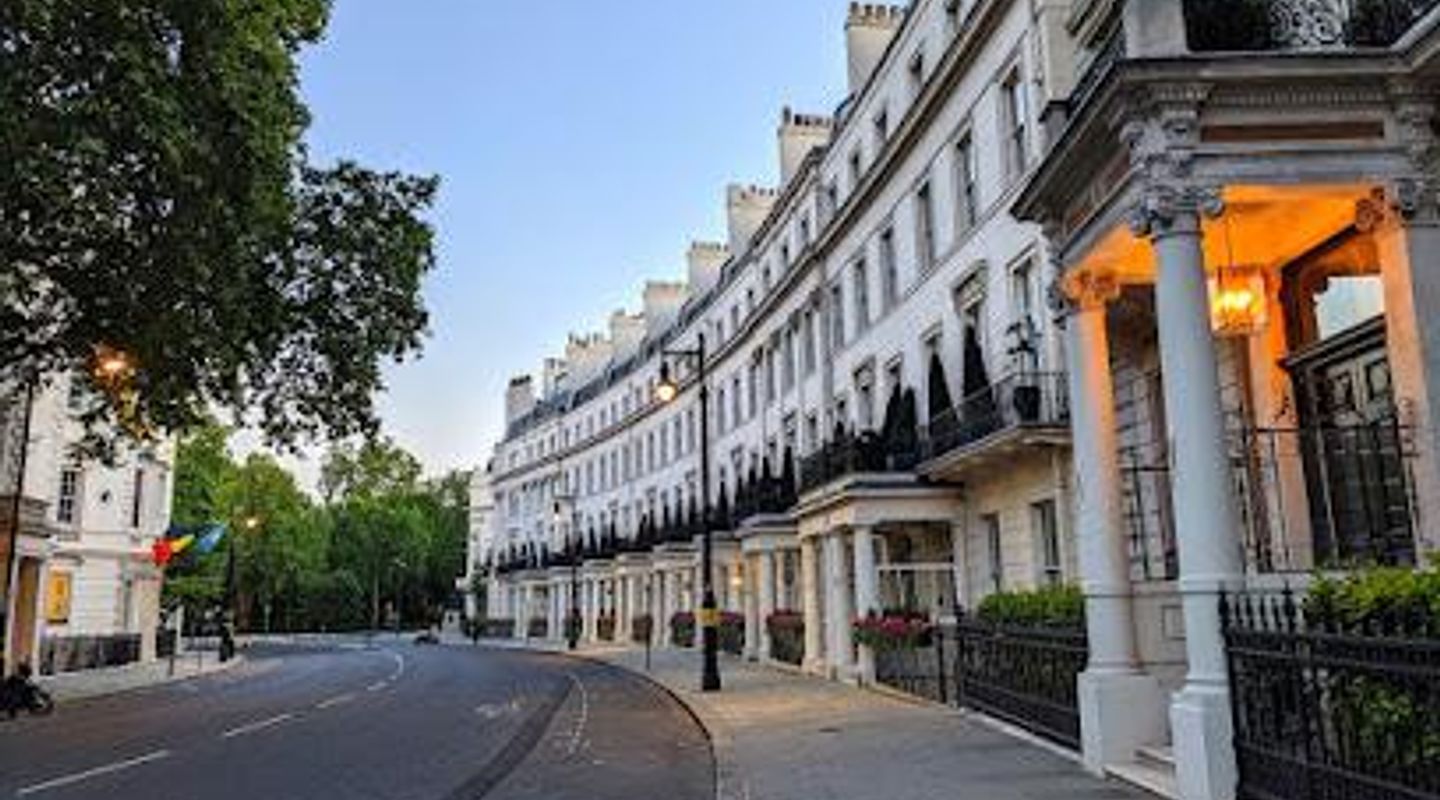
Belgrave Square is a large garden square in Belgravia, laid out in the 1820s as part of the Grosvenor estate’s planned expansion of west London. It is not a public park in the usual sense. The central garden is private and access is restricted to residents, so most visitors experience the square from the surrounding streets. What you get is a carefully composed urban scene: long stucco terraces, embassy façades, and a broad, formal open space at the centre.
Atmosphere and setting
The square feels quiet, affluent, and controlled. Traffic is present but rarely intrusive, and the mood is more residential than touristy. The architecture does most of the work here: five- and six-storey houses arranged in a strict Regency rhythm, with pale façades and a sense of order that is rare even in central London. The square sits on level ground in a dense grid of Belgravia streets, close to Victoria, Hyde Park Corner, and Knightsbridge, yet it feels removed from the pace of the nearby shopping and transport corridors.
What visitors actually do
A visit is usually brief and observational. Travellers walk the perimeter, pause for photographs, and take in the symmetry of the square and the diplomatic frontage. It works well as part of a longer architectural stroll through Belgravia, especially for people interested in historic urban planning, embassy districts, or classic London residential streets. There is little in the way of on-site activity, and that is part of its character: this is a place for looking rather than doing. The best visits are slow and unhurried, with time to notice the scale of the terraces and the contrast between the private garden and the public street.
History and character
Belgrave Square is one of the clearest examples of the grand planned neighbourhoods that made Belgravia famous. Its development reflects the early 19th-century ambition to create a disciplined, high-status residential district west of the old city. The square’s listed terraces and embassy use reinforce that identity. It remains a working residential and diplomatic address rather than a museum piece, which gives it a lived-in quality beneath the formal exterior. That mix of heritage, privacy, and prestige is what draws architecture-minded visitors.
Practical expectations
Do not expect public garden access, visitor facilities, or a long stay. The square is best for a 15- to 30-minute perimeter visit, or longer if combined with nearby streets and squares. It is easy to reach by Tube, bus, taxi, or on foot from central London, and it suits dry, bright weather best. Rain and winter shorten the visit, while spring and summer make the façades and planting easier to appreciate. It is a strong fit for photographers, urban walkers, and travellers who prefer quiet detail over headline attractions.
Evendo Review Centre
 Google
Guest reviews
Best time to go
Quietest: Jan, Feb & Dec · before 6am
Busy times are Evendo estimates for a typical year, to help you plan. Actual crowds vary with events, school holidays and the weather.
Explore Belgrave Square on the map
A handpicked selection of must-see spots near Belgrave Square, mapped for you.
Get your free copy of our complete guide to Belgrave Square, delivered straight to you.
Everything on this page, from opening hours and how to get there to Eve’s tips and the best time to go, in one PDF you can read offline, print or share.
Already have an account? Sign in
Your Belgrave Square guide is ready.
We'll send it to · Not you? Sign out

Getting your guide ready…
We are putting together a fresh copy of the Belgrave Square guide. This can take up to a minute.
This can take a few moments. If your browser asks, choose Allow so the download can start. You'll find the guide in your Downloads folder.
Nothing happened? Download it again
Sorry, the guide is taking longer than usual. Please try again in a minute, or get it by email instead.
Unlock the best of Belgrave Square
Skip-the-line tickets, guided tours with entry, and walking tours of the area, booked in a few clicks.


Other nearby places you may find interesting
The closest places of the same kind, if this one is not quite what you had in mind.
-
-
-
-
-


Swipe for more places
More to explore near Belgrave Square

 Best experiences near Belgrave Square
 Best hotels near Belgrave Square
 Best landmarks near Belgrave Square
 Best attractions near Belgrave Square
 Best shops near Belgrave Square
 Best restaurants near Belgrave Square
 Best bars near Belgrave Square
Do you manage this location?
Take control to get all the benefits, like improved information, better appearance, and stronger visibility across AI-powered discovery.
Explore more

Explore more of London
Explore London: A city of iconic landmarks, rich history, vibrant culture, and endless attractions that cater to every taste, making it a must-visit destination.
Explore London
Explore more of United Kingdom
Discover the United Kingdom: A blend of rich history, stunning landscapes, and vibrant cities, offering a unique travel experience for every visitor.
Explore United Kingdom
